

Telugu Varalakshmi Vratam Katha: The Story of Charumati (Full Katha & Meaning)
The Telugu Varalakshmi Vratam Katha in full — the Skanda Purana story of Charumati of Kundina to whom Goddess Varalakshmi appeared, the related legend of Queen Shyamabala, and why listening to the katha completes the vrat.
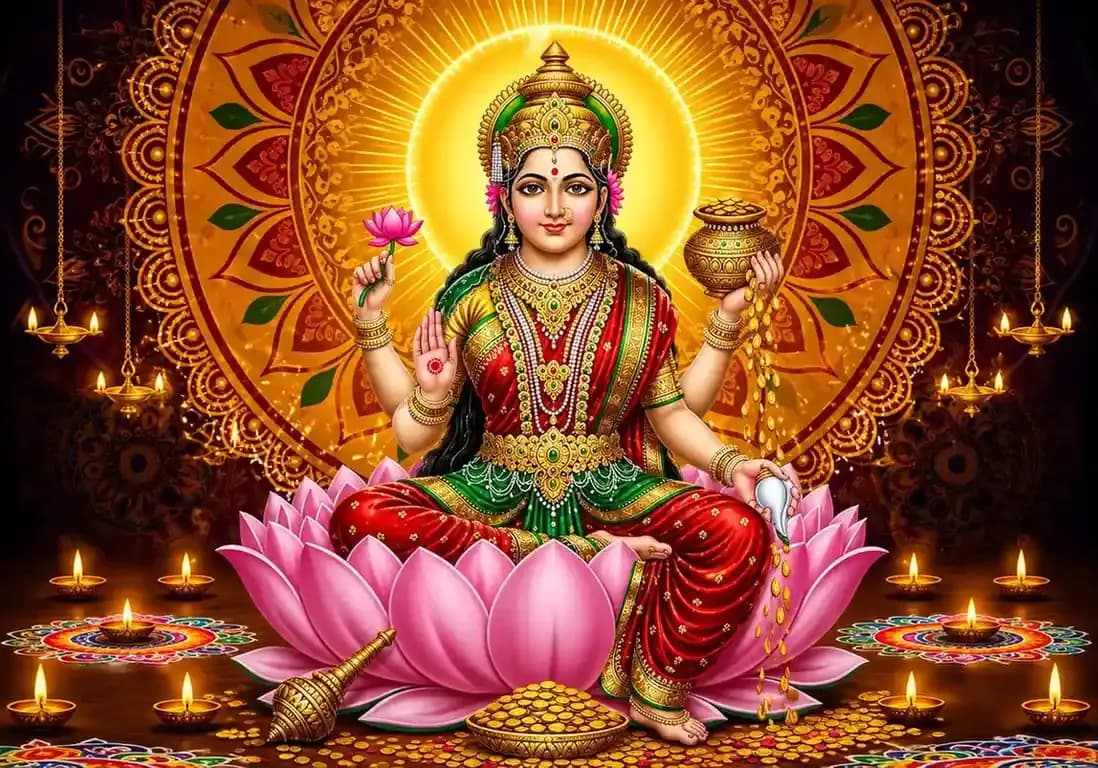
The Telugu Varalakshmi Vratam Katha in full — the Skanda Purana story of Charumati of Kundina to whom Goddess Varalakshmi appeared, the related legend of Queen Shyamabala, and why listening to the katha completes the vrat.
Quick answer: In the Telugu tradition, the Varalakshmi Vratam Katha is the Skanda Purana story of Charumati, a virtuous Brahmin woman of Kundina to whom Goddess Varalakshmi appeared in a dream. When she and the town’s women performed the vrat, they were blessed with wealth and prosperity.
The Varalakshmi Vratam Katha is an essential part of the ritual. After the puja, married women traditionally listen to or recite this sacred story. In the Telugu tradition of Andhra Pradesh and Telangana, the most widely followed katha is the story of Charumati, as narrated in the Skanda Purana.
How the katha is framed
The story begins with the great sages, led by Shaunaka, asking Suta Maharshi about a powerful vrata that can bring complete auspiciousness to women. Suta Maharshi replies that Lord Shiva once explained this sacred vrata to Goddess Parvati. When Parvati asked whether there was a vrata that could bless women with prosperity, health, the longevity of the husband and family happiness, Lord Shiva named the Varalakshmi Vratam, to be observed on the Friday before Shravana Purnima, and narrated the story of the devotee who first performed it.
The story of Charumati
In ancient times, in the kingdom of Magadha, stood a beautiful and prosperous city named Kundina (Kundinapuram), with golden walls and lovely homes. There lived a virtuous Brahmin woman named Charumati, known for her humility, devotion and pure character. Each morning she rose early, offered respects to her husband, completed her household duties with love, and served her in-laws with great care — living a life of simplicity, purity and deep devotion.
Pleased with her sincere devotion and righteous conduct, Goddess Varalakshmi appeared in Charumati’s dream one night and said: “O Charumati, I am Varalakshmi. I am pleased with your devotion and good character. On the Friday before the full moon in the month of Shravana, worship me with full faith, and I shall grant you all the boons you desire — and your family and the women of your town will be blessed with prosperity.”
Charumati woke filled with joy and gratitude, and shared the divine dream with her mother-in-law and the women of the neighbourhood. All agreed it was a highly auspicious vision and resolved to perform the vrata as the Goddess had instructed.
On the appointed Friday, Charumati and the women cleaned and decorated their homes, set up a beautiful mandapam, spread raw rice, placed a decorated kalasham with mango leaves and a coconut, and invoked Goddess Varalakshmi. They worshipped with shodashopachara — the sixteen offerings — offered naivedyam, and tied the sacred threads (dorak/kankanam).
As Charumati performed the pradakshinas (circumambulations), miraculous events unfolded: divine ornaments appeared on the women, and their homes overflowed with wealth, gold and auspicious things. Prosperity filled not only Charumati’s house but the entire town. From that day, the women of Kundina observed Varalakshmi Vratam every year, blessed with health, wealth, long life and progeny, living happily under the continuous grace of Goddess Varalakshmi.
The related legend of Shyamabala
Some traditions also tell of Queen Shyamabala, who respectfully listened to an old woman — in truth Goddess Lakshmi in disguise — and performed the vrata, while her mother ignored the advice. Shyamabala’s kingdom flourished, and later her mother too received the Goddess’s blessings after performing the vrata, showing that sincere faith, not status, invites the grace of Lakshmi.
Significance of listening to the katha
- Listening to or reading the katha with devotion completes the vrata.
- Those who hear the story, perform the vrata, or even witness it being performed are believed to receive the Goddess’s blessings.
- After the katha, women traditionally sprinkle akshata (blessed rice) on their heads, exchange tambulam, and distribute prasadam.
The katha teaches that pure devotion, good character and sincere service attract the grace of Goddess Lakshmi. See our Varalakshmi Vratam step-by-step puja vidhi and the Telugu-states guide. జై వరలక్ష్మీ మాత! Jai Varalakshmi Mata!
Frequently Asked Questions
What is the Telugu Varalakshmi Vratam Katha?
In the Telugu tradition it is the Skanda Purana story of Charumati, a virtuous Brahmin woman of Kundina to whom Goddess Varalakshmi appeared in a dream and revealed the vrat, which brought her and the town prosperity.
Who narrated the katha originally?
Within the story, Lord Shiva explained the Varalakshmi Vratam to Goddess Parvati, and Suta Maharshi later narrated it to the sages led by Shaunaka, as recorded in the Skanda Purana.
Where did Charumati live?
Charumati lived in the beautiful and prosperous city of Kundina (Kundinapuram) in the kingdom of Magadha, known for her humility, devotion and pure character.
What happened when Charumati performed the vrata?
As she performed the pradakshinas, divine ornaments appeared on the women and their homes overflowed with wealth, and prosperity filled the entire town of Kundina.
Who was Shyamabala?
Shyamabala was a queen who respectfully performed the vrata after an old woman — Goddess Lakshmi in disguise — advised it. Her kingdom flourished, and her mother too was later blessed after performing it.
When should the katha be recited?
It is recited at the end of the puja, after which women sprinkle akshata on their heads, exchange tambulam and distribute prasadam.
On which day is the vrat performed in the katha?
The katha specifies the Friday before Shravana Purnima, which is why the vrat is observed on that Friday each year — 21 August in 2026 in the Telugu tradition.
What is the moral of the katha?
That Goddess Lakshmi is pleased not by elaborate ritual alone but by a pure heart, good character and sincere service to family, granting prosperity, health and happiness to the devout.
You might also like

Uma Maheshwara Vratam: Significance, Puja Vidhi & Importance
Rama Ekadashi 2026: Date, Vrat Katha, Puja Vidhi & Significance
Ganesh Chaturthi in India: Celebrations Across the Country (2026 Guide)