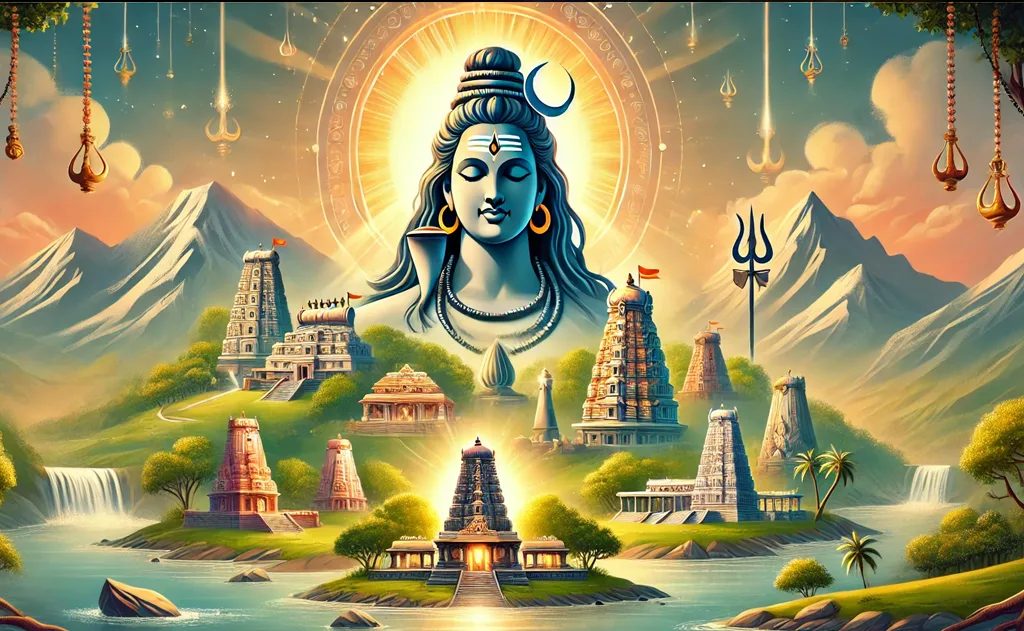
Shiva and Shakti: The Cosmic Union Behind the Mantra 'I AM'
IntroductionIn the heart of every spiritual awakening lies a single, thunderous realization: "I AM".
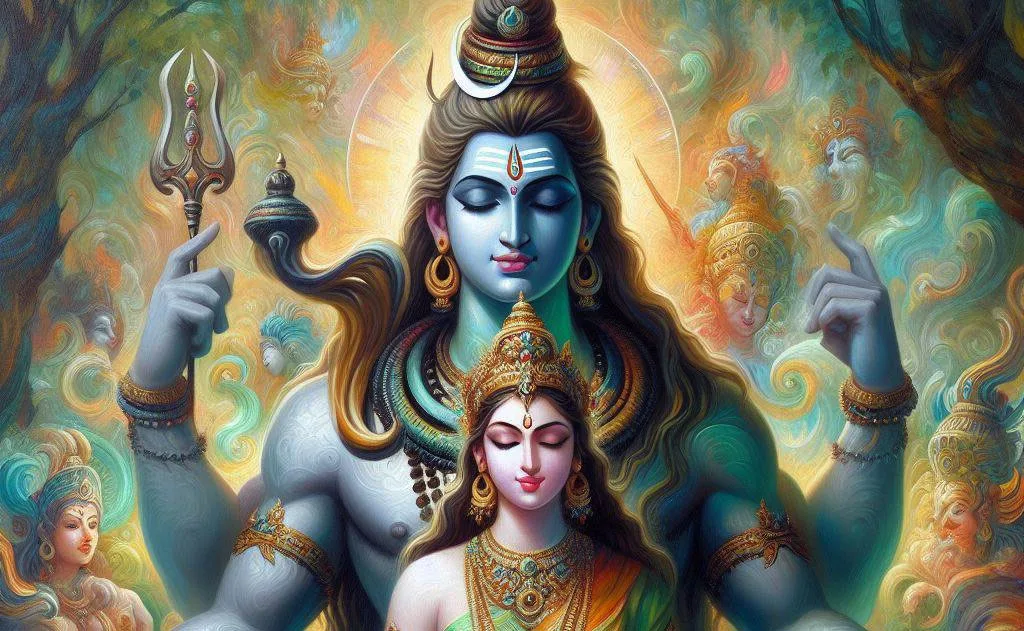
IntroductionIn the heart of every spiritual awakening lies a single, thunderous realization: "I AM".
Introduction
In the heart of every spiritual awakening lies a single, thunderous realization: "I AM". This primordial mantra, echoing from the void of creation, holds within it the pulse of consciousness itself. At its core lies the eternal dance of Shiva and Shakti—pure awareness and dynamic energy—whose sacred union births universes. At www.hindutone.com, we explore this profound concept as both a mystical insight and a practical key to inner transformation.
The Nature of Shiva: The Infinite 'I'
Shiva represents the formless, the unchanging witness, the absolute Self. He is the infinite 'I'—the unconditioned awareness that perceives all but is beyond all perception. In yogic philosophy, Shiva is consciousness, untouched by time, space, or causality. His silence is not emptiness but the rich fullness of being.
Shakti: The Power of 'Am'
Where Shiva is stillness, Shakti is movement. She is the dynamic power of manifestation, the pulsation of the universe, the creative force behind every thought, emotion, and atom. Shakti is the 'Am'—the becoming, the presence that gives identity to the formless. Without her, Shiva remains potential; with her, He becomes the cosmos.
'I AM': The Mantra of Creation
The fusion of Shiva and Shakti gives rise to the divine utterance: "I AM"—the mantra of manifestation. It is not merely affirmation; it is realization. 'I' is the eternal presence (Shiva); 'Am' is the existence in form (Shakti). Together, they declare existence itself, forming the foundation of all other expressions.
Philosophical Roots in Vedanta and Tantra
In Advaita Vedanta, 'Aham Brahmasmi' (I am Brahman) reflects this inner truth. In Tantra, the union of Shiva and Shakti is symbolized through Yantras, mantras, and inner alchemy, all aiming to awaken the self-recognition of "I AM" as divine.
Thunderous Silence: The Paradox of Being
"Thunderous silence" may seem contradictory, but in spiritual experience, it is deeply resonant. This phrase captures the power of inner stillness that vibrates with infinite potential. When one abides in the 'I AM', there's no need for external noise—the entire universe resounds in that silent awareness.
Shiva-Shakti in Daily Life
Understanding this cosmic polarity empowers us in daily life. When we meditate on "I AM", we align with both inner peace (Shiva) and inspired action (Shakti). We become creators of our reality, not victims of circumstance.
Conclusion
Shiva is the infinite 'I'; Shakti is the power of 'Am'. Together, they form the sacred pulse of existence—"I AM"—the original mantra, the seed of all creation. At Hindutone, we invite seekers to embody this truth, not just as knowledge, but as living experience.
Aham and Spanda: The Tantric Science of Cosmic Vibration
In the non-dual Shaiva tradition of Kashmir Shaivism, the concept of Spanda — meaning 'the divine throb' or 'sacred pulsation' — explains precisely how the silent 'I' of Shiva becomes the vibrating 'Am' of Shakti. The Spanda Karikas, composed by Vasugupta and elaborated by Kallata in the ninth century, describe Spanda as the very heartbeat of consciousness: not a secondary movement within awareness, but the first stirring of 'I AM' within the absolute. Every mantra, every breath, every thought is a ripple of this original pulsation.
The term 'Aham' in Sanskrit is not accidental in its structure. In the Pratyabhijna school of Tantric philosophy, the letter 'A' (अ) represents Shiva, the first letter and the ground of all sound, while 'Ha' (ह) represents Shakti, the last consonant of the Sanskrit alphabet, the outbreath of creation. Together as 'Aham,' they form a complete arc of manifestation — from pure awareness to its full energetic expression. The Maha-Mantra of self-recognition, therefore, encodes the entire cosmos within a single syllable cluster.
Ardhanarishvara: The Living Icon of the I AM Union
The Ardhanarishvara form — literally 'the Lord who is half woman' — is perhaps the most visually immediate expression of the Shiva-Shakti union that underlies the 'I AM' realization. In this iconic murti, the right half is Shiva (marked by matted locks, a trident, and ash-smeared skin) and the left half is Parvati (adorned with jewelry, silken garments, and a lotus). This is not a mythological compromise but a precise metaphysical statement: awareness and energy are never actually separate; their apparent division is the starting point of creation.
The Linga Purana and the Skanda Purana both contain accounts of how Brahma and Vishnu, unable to comprehend the ultimate nature of reality, were granted a vision of Ardhanarishvara, after which their understanding of creation and dissolution became complete. The great temple at Tiruchengode (Ardhanareeswarar Temple) in Tamil Nadu is specifically consecrated to this form, where the deity is worshipped as the synthesis of all opposites. Philosophically, meditating on Ardhanarishvara is considered a direct path to experiencing 'Aham Brahmasmi,' because it dissolves the practitioner's tendency to see consciousness and energy as two separate realities.
The Shri Yantra: Sacred Geometry of the I AM Mantra
The Shri Yantra, revered across Shakta and Shaiva-Shakta Tantric traditions, is the geometric body of the 'I AM' realization. Its nine interlocking triangles — four pointing upward (representing Shiva, purusha, pure consciousness) and five pointing downward (representing Shakti, prakriti, dynamic energy) — generate 43 smaller triangles that map every level of cosmic manifestation. The Saundarya Lahari, attributed to Adi Shankaracharya, describes the Shri Yantra as the very form of Lalita Tripura Sundari, the supreme Shakti who is inseparable from Shiva.
At the center of the Shri Yantra sits the Bindu — a dimensionless point that represents the undivided 'I AM' before subject and object arise. The practitioner's meditative journey through the Yantra is therefore a journey inward through all layers of creation (from gross matter at the outermost square to pure awareness at the central Bindu), mirroring the upward movement of consciousness from Anamaya Kosha to Anandamaya Kosha described in the Taittiriya Upanishad. Worshipping the Shri Yantra at the Kamakhya Temple in Assam or the Sri Chakra at the Kanchi Kamakshi Temple is understood by devotees as a practice of reclaiming the primal 'I AM.'
Nataraja and the Dance That Holds the Cosmos in the 'I AM'
The iconic image of Nataraja — Shiva as the cosmic dancer — is an embodied expression of how the 'I AM' mantra continuously sustains and dissolves creation. At the Thillai Nataraja Temple in Chidambaram, Tamil Nadu, this dance (known as the Ananda Tandava, the 'dance of bliss') is understood not as Shiva acting upon an external world, but as pure consciousness expressing itself through Shakti's energy, with no distinction between the dancer and the dance. The Chidambara Rahasya — the 'secret of Chidambaram' — is said to be precisely this non-dual truth, symbolized by the empty space (Akasha) at the heart of the sanctum.
The five actions of Nataraja — Srishti (creation), Sthiti (preservation), Samhara (dissolution), Tirobhava (concealment), and Anugraha (grace) — correspond to the five functions of the mantra 'I AM' in Tantric cosmology. The upraised foot and the Abhaya mudra (gesture of fearlessness) simultaneously represent the liberation available to the devotee who recognizes their own awareness as Shiva. This image was celebrated in the Tevaram hymns of the Nayanmars, particularly Thirugnana Sambandar, who described Nataraja as the selfhood of all beings — the universal 'I' dancing in every 'Am.'
Soham: The Mantra of Breath as the Living Proof of I AM
The mantra Soham — 'So' on the inhalation, 'Ham' on the exhalation — is described in the Vijnanabhairava Tantra (verse 155) and the Shiva Sutras as the natural, involuntary mantra that every living being repeats approximately 21,600 times each day without conscious effort. 'Sah' means 'That' (pure Shiva-consciousness), and 'Aham' means 'I am.' Reversed, Soham becomes Hamsa — the sacred swan that symbolizes the liberated soul navigating between pure being and manifest existence.
What makes Soham extraordinary as a spiritual practice is its grounding of the abstract 'I AM' in the most intimate bodily reality: the breath. Pranayama traditions within both Shaiva and Shakta lineages teach that by consciously aligning awareness with Soham during breath retention (Kumbhaka), the practitioner briefly touches the gap between inhalation and exhalation — the Shiva-state, the pure 'I' before 'Am' arises. The Vigyan Bhairav Tantra specifically calls this gap a doorway to Turiya, the fourth state of consciousness that underlies waking, dreaming, and deep sleep, and which the Mandukya Upanishad identifies as the ground of the Mahavakya 'Aham Brahmasmi.'
Kundalini Shakti: The I AM Mantra Awakening from Within the Body
Kundalini Shakti — described in the Tantraloka of Abhinavagupta and the Sat-Chakra-Nirupana of Purnananda Yati — is coiled dormant Shakti residing at the Muladhara chakra at the base of the spine, waiting to reunite with Shiva at the Sahasrara (crown chakra). This upward journey of Kundalini through the six main chakras is, in experiential terms, the body's own enactment of the 'I AM' mantra: the energy (Am) rising to merge with pure awareness (I), producing the non-dual recognition that the Shiva Sutras call Chiti — 'the power of absolute consciousness.'
Each chakra through which Kundalini passes corresponds to a progressively subtler layer of identity. At Muladhara, identity is bound to matter and survival; at Anahata (heart chakra), it opens into universal love; at Ajna (the third eye), the distinction between the individual 'I' and the cosmic 'I' begins to dissolve. When Kundalini finally rests in Sahasrara, the Sharada Tilaka Tantra describes the experience as the permanent establishment of the 'I AM' realization — Shivoham ('I am Shiva') — which is not a belief adopted intellectually but a living recognition that the meditator's own awareness was always and already the infinite, unbounded Shiva.
Frequently Asked Questions
What is the Shiva and Shakti?
Introduction In the heart of every spiritual awakening lies a single, thunderous realization: "I AM". This primordial mantra , echoing from the void of creation, holds within it the pulse of consciousness itself.
How many times should the Shiva and Shakti be chanted?
It is traditionally chanted 108 times using a rudraksha or tulsi mala. Even 11 or 21 sincere repetitions daily are considered beneficial — steady, focused practice matters more than the count.
What is the best time to chant the Shiva and Shakti?
Dawn (Brahma Muhurta) after a bath is considered ideal, though it may be chanted any time with a calm, focused mind. Many devotees keep a fixed daily time to build consistency.
Who can chant the Shiva and Shakti?
Anyone may chant it with faith and a pure mind, regardless of age, gender or background. Beginners benefit from first hearing the correct pronunciation and understanding its meaning.
What are the benefits of chanting the Shiva and Shakti?
Devotees chant it to invoke Lord Shiva's grace — for inner peace, protection, focus and spiritual progress.
You might also like
Om Namah Shivaya: 108 Times Chanting Benefits & Method — Complete Panchakshara Mantra Guide
Shiva Vrats of June 2026: Kalashtami (June 8) & Masik Shivaratri (June 13)
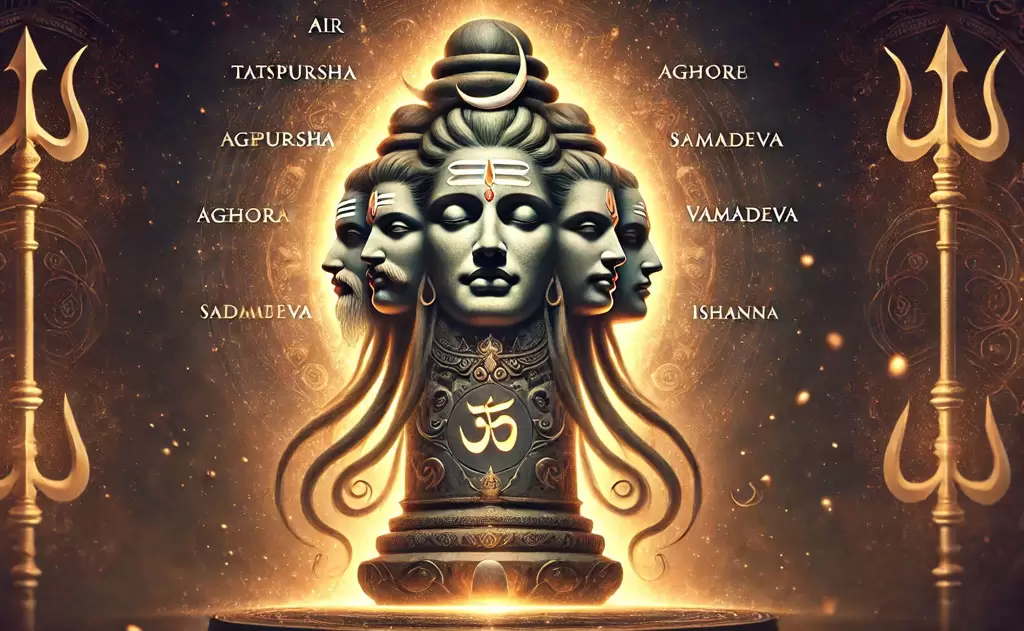
Lord Shiva: The Three Faces NRI Devotees Should Know in 2026