Death in Kashi: Why Moksha Is Guaranteed for the Departed
Introduction: Where Death Becomes Divine In the ancient lanes of Varanasi, where time itself seems to dissolve into the sacred waters of the Ganges, death is…
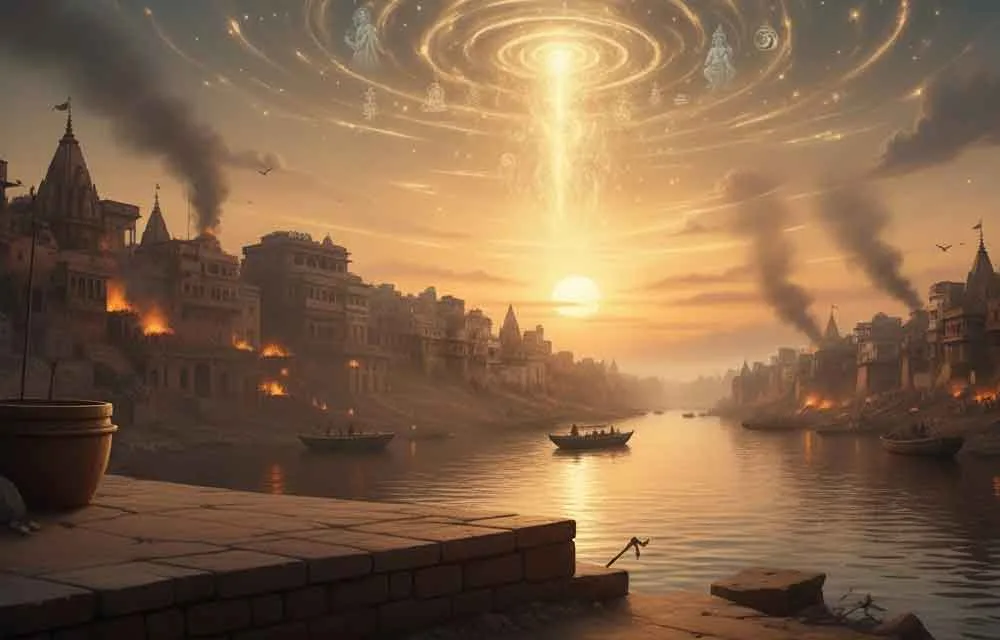
Introduction: Where Death Becomes Divine
In the ancient lanes of Varanasi, where time itself seems to dissolve into the sacred waters of the Ganges, death is not feared—it is welcomed. While most cities celebrate life, Kashi celebrates both life and death with equal reverence. Here, the boundary between the mortal and the divine blurs, and the promise of moksha (liberation) transforms death from an end into a glorious beginning.
This is the story of why Kashi, also known as Varanasi or Benares, holds the unique spiritual distinction of guaranteeing moksha to those who breathe their last within its sacred boundaries. It is a belief so profound, so deeply rooted in Hindu philosophy and scripture, that for millennia, devotees have journeyed here not to live, but to die.
Understanding Moksha: The Ultimate Goal of Hindu Life
What is Moksha?
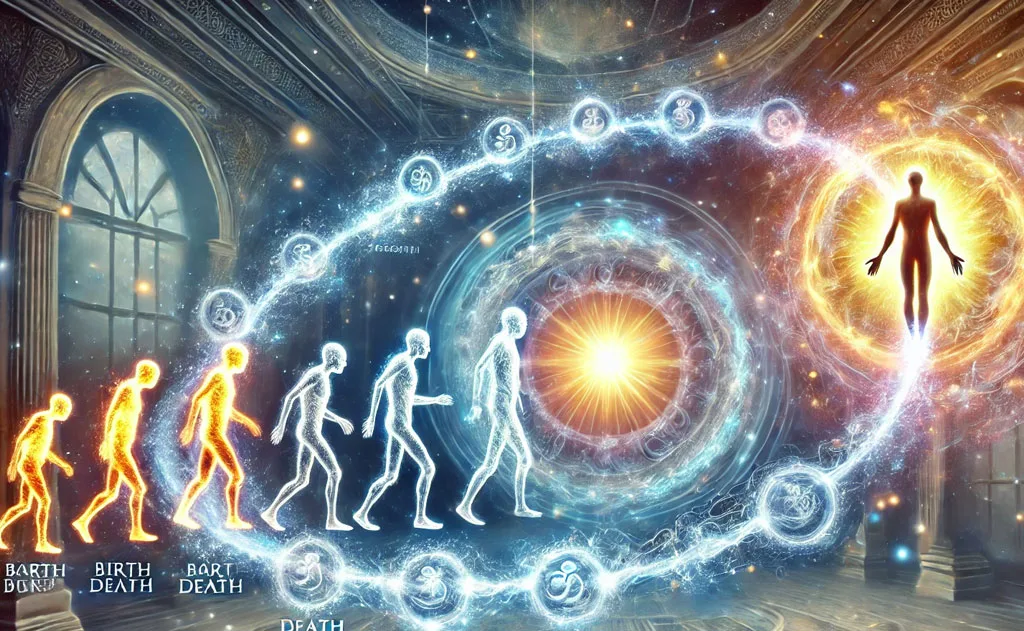
Moksha, also called vimoksha, vimukti, and mukti, is a term in Hinduism for emancipation, liberation, or release from samsara—the cycle of death and rebirth. It represents the soul's complete freedom from the karmic bonds that dictate reincarnation, allowing the individual to merge with the universal essence, Brahman.
The Four Purusharthas
In Hinduism, moksha is one of the four main goals of human life, termed Purusharthas. These four aims are:
1. Dharma - Living a righteous, moral, and virtuous life 2. Artha - Material prosperity, wealth, and economic security 3. Kama - Pleasure, emotional fulfillment, and desire 4. Moksha - Liberation from the cycle of rebirth
While the first three goals pertain to worldly existence, moksha represents the ultimate spiritual achievement—the transcendence of worldly concerns and union with the divine.
The Burden of Karma and Samsara
Hindus believe that the souls of all things are reincarnated into another form after their bodies die, a process known as samsara, the repeated cycles of birth and death caused by karma. Karma—the accumulated effect of one's actions across lifetimes—determines the nature of each rebirth.
The Karmic Cycle:
- Good karma leads to rebirth in higher forms
- Bad karma results in rebirth in lower forms
- Both good and bad karma keep the soul bound to samsara
- A being's ultimate goal is to escape samsara by achieving moksha
Two Stages of Moksha
According to Hindu philosophy, moksha has two distinct stages:
Jivanmukti - Liberation achieved while still alive
- The person becomes a jivanmukta (self-realized soul)
- Experiences freedom from fear, ignorance, and worldly attachments
- Lives in a state of divine consciousness
Videhamukti - Liberation after death
- The soul's complete release after the physical body perishes
- Union with Brahman, the Supreme Reality
- End of all karmic cycles and rebirth
Kashi: The City That Never Dies
The Eternal City of Lord Shiva
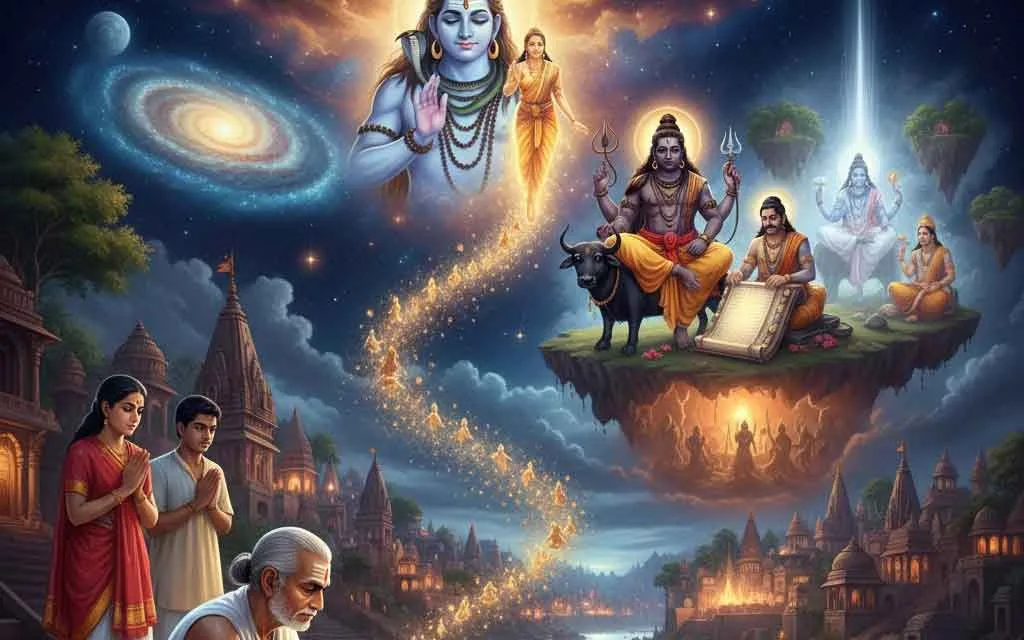
Kashi is known as Avimukta Kshetra—the "never-forsaken" or "never-abandoned" realm, signifying that Lord Shiva never leaves this city, and therefore, it is perpetually infused with his protective and liberating energies.
According to ancient beliefs, even during cosmic dissolution (pralaya), when the entire universe is destroyed and recreated, Kashi remains intact, held aloft by Lord Shiva's trident. This eternal nature gives the city its timeless spiritual power.
The Geography of the Sacred
Kashi's spiritual significance is intrinsically linked to its geographical location:
The Holy Ganges
- The Ganges is revered as a celestial goddess, Ganga Ma (Mother Ganges), whose waters are believed to possess immense purifying powers
- Bathing in the Ganges washes away sins accumulated over lifetimes
- The river serves as the celestial pathway for departed souls
The Sacred Ghats
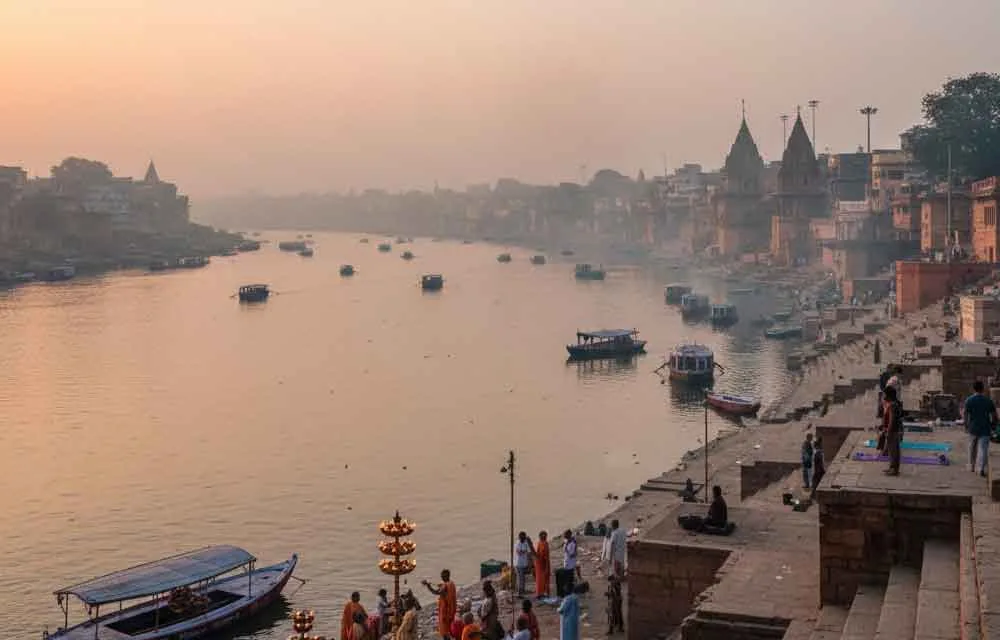
- Over 80 ghats line Varanasi's riverfront
- Each ghat serves as a threshold between the mundane and the sacred
- Dashashwamedh, Manikarnika, and Harishchandra Ghats are particularly significant
Kashi Vishwanath Temple
- Houses the Jyotirlinga of Lord Vishwanath
- One of the twelve most sacred Shiva temples in India
- The spiritual epicenter of the city's liberation promise
The Divine Promise: How Moksha is Guaranteed in Kashi
The Taraka Mantra: Shiva's Sacred Whisper
The most profound aspect of Kashi's promise lies in the Taraka Mantra—the mantra of liberation. It is widely believed that when a person is on their deathbed in Kashi, Lord Shiva himself whispers this sacred mantra into their right ear.
What is the Taraka Mantra?
The exact syllables of the Taraka Mantra vary according to different scriptures and traditions:
- Pranava (OM) - According to Shiva Purana and various Upanishads, the most ancient and powerful form
- "Om Namo Narayanaya" - From the Muktika Upanishad
- "Sri Rama" or variations - According to Padma Purana and Narada Pancharatra
According to the Shiva Purana, Lord Shiva recites the Tarak Mantra for those who die at Manikarnika Ghat, guiding them toward their final liberation.
Scriptural Evidence
From Skanda Purana (4.1.25.73): "When the soul comes out of the body, then Mahadev himself gives Tarak Brahm to the dying person"
From Padma Purana (3.33.47): "Mahadev who is himself Ishwar gives Tarak mantra at the time of death while residing in Kashi"
From Shiva Samhita (2.18): "Shiv himself gives Tarak mantra to those jivas who didn't get moksh in Kashi"
The Power of the Taraka Mantra
This divine intervention is said to purify the soul, absolving it of all accumulated sins and karmic baggage, thereby paving the way for its immediate liberation.
The Taraka Mantra:
- Destroys accumulated karma from countless lifetimes
- Grants instant liberation regardless of past deeds
- Acts as a divine passport across the ocean of samsara
- Enables the soul to merge with the Absolute
Unique Grace: This personal intervention by Lord Shiva is a unique grace bestowed only upon those who breathe their last in this holy city—a privilege not available anywhere else on Earth.
Manikarnika Ghat: The Great Cremation Ground
The Legend of Manikarnika
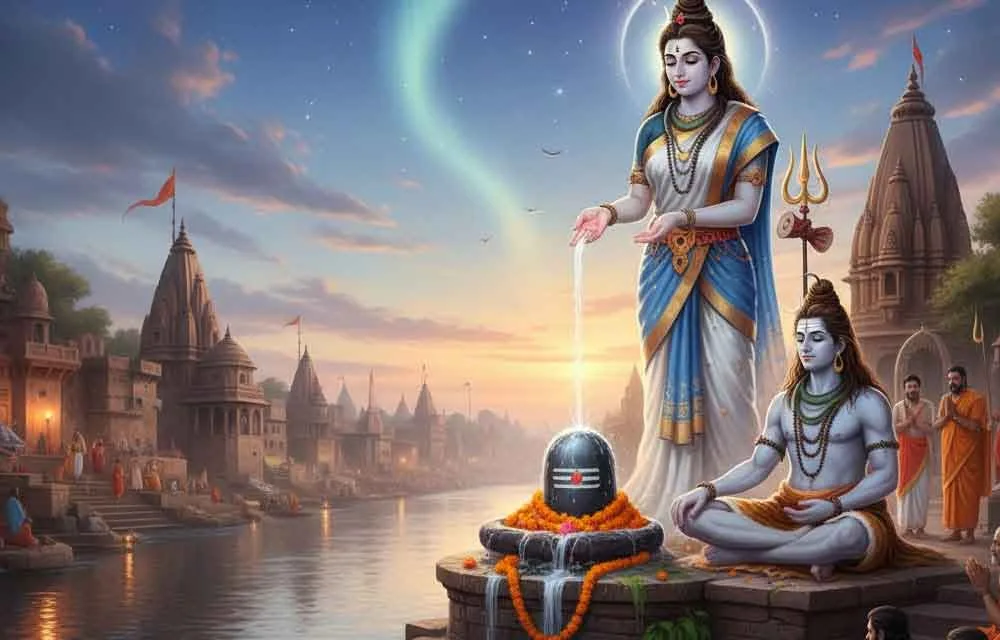
The ghat derives its name from the legend of Lord Shiva and Goddess Parvati. It is said that Parvati lost her earring (Manikarnika) here, giving the place its sacred name.
According to another legend, Lord Vishnu performed austerities here, digging a pit with his Sudarshana Chakra and filling it with his sweat. Lord Shiva then made a profound promise: anyone who bathes in the Manikarnika Kund with true devotion would attain liberation from the cycle of birth and death.
The Eternal Flames
Manikarnika Ghat is known as Mahashmashana—the great cremation ground. The flames here are believed to have been burning continuously for thousands of years, tended by the Dom Raja's family, the traditional custodians of the sacred fire.
Why Cremation at Manikarnika Guarantees Moksha:
- Direct Divine Intervention: Lord Shiva vowed to personally whisper the Taraka Mantra into the ears of those who die here, ensuring their passage to moksha
- Sacred Geography: The cremation grounds become a place of spiritual solace, where grieving families find comfort in the belief that their departed loved ones are closer to attaining moksha
- Purification by Fire: The sacred flames consume not just the physical body but also the karmic residues, leaving the soul pure
- Yama Cannot Enter: Unlike other places, Yama (the God of Death) has no jurisdiction in Kashi. Kala Bhairava, an aspect of Shiva himself, takes charge of the departed
The Manikarnika Kund
The small sacred pool adjacent to the ghat holds special significance:
- Believed to have been created by Lord Vishnu's discus
- Bathing here cleanses all sins
- One of the holiest tirthas (pilgrimage spots) in Varanasi
- Essential part of pre-cremation rituals
Who Gets Moksha in Kashi? Universal Grace
Beyond Caste, Creed, and Karma
One of the most revolutionary aspects of Kashi's promise is its universal application. This unique promise makes Kashi the most coveted place for Hindus to die, with liberation granted regardless of the person's past deeds, social standing, or spiritual advancement in that lifetime.
This means:
- A person who lived a sinful life can attain moksha
- Social status, caste, and wealth become irrelevant
- Previous bad karma is dissolved by Shiva's grace
- No prerequisite of spiritual advancement is needed
The Boundaries of Sacred Kashi
According to Hindu texts, there is a special four-kilometer (about 2.5-mile) zone that defines ancient Kashi. Death within this sacred boundary ensures moksha, while death outside it, even within modern Varanasi, may grant heaven but not immediate liberation from rebirth.
The Panchakroshi Yatra: A 50-kilometer circumambulation that marks the sacred boundaries of Kashi, undertaken by pilgrims to invoke Shiva's blessings and understand the extent of the liberation zone.
Kashi-vasa: The Tradition of Dying in Kashi
Living to Die
For centuries, devout Hindus have followed the sacred tradition of Kashi-vasa—deliberately choosing to live in Varanasi with the sole intention of dying there to attain moksha.
Who Practices Kashi-vasa:
- Elderly seeking spiritual liberation
- Terminally ill patients hoping for moksha
- Spiritual seekers wanting to end the karmic cycle
- Devotees fulfilling family traditions spanning generations
Mukti Bhawan: The House of Salvation
The most poignant expression of Kashi-vasa is found in the salvation houses that exist solely for those in their final days.
Kashi Labh Mukti Bhawan
Kashi Labh Mukti Bhawan, commonly known as Moksha Bhawan, is like a guest house for seekers of salvation where people come to spend the last days of their lives in the holy city of Kashi.
Established: 1908 Location: Geeta Mandir Road, near Girja Ghar Road, Varanasi Rooms: 12 sparse rooms Cost: ₹20 ($0.24) for electricity (waived for those who cannot pay)
Rules and Traditions
Guests who are not medically fit and within days of dying are allowed to take shelter in the house for two weeks with minimal charges.
The Two-Week Rule:
- Maximum stay is 15 days
- If the person's health improves, they are asked to return home
- The belief: those truly ready for moksha will pass within this period
- Over 15,000 people have died at Mukti Bhawan since its inception
Bhairav Nath Shukla, who has been Mukti Bhawan's caretaker for more than four decades, said most of his residents pass away within a few days.
Daily Rituals at Mukti Bhawan
Morning, Afternoon, and Evening:
- Devotional bhajans and prayers
- Chanting of sacred mantras
- Ganga water offered to the dying
- Family members encouraged to help the person focus on the divine
No Medical Interventions:
- No life-saving equipment
- No medicines to prolong life
- Focus entirely on spiritual preparation
- Death welcomed as liberation, not fought against
Stories from Mukti Bhawan
Bhairav Nath Shukla has been the Manager of Mukti Bhawan for 44 years and has witnessed 12,000 deaths, each one teaching profound lessons about life, death, and the human condition.
From Many:
- People travel thousands of kilometers, sometimes from foreign countries
- Some arrive in cars, some on stretchers, barely breathing
- Families come together to support their loved one's final journey
- Rich and poor receive equal treatment in death's democracy
The Philosophy Behind Kashi's Promise
Why Only Kashi?
Several spiritual and philosophical reasons explain why moksha is guaranteed only in Kashi:
1. Shiva's Eternal Presence
- Kashi is Shiva's abode on Earth
- His consciousness permeates every molecule of the city
- He remains present even during cosmic dissolution
2. Triple Confluence (Triveni)
- Three sacred rivers meet at Kashi (though two are subtle)
- Within the body, three energy channels meet at the third eye (inner Kashi)
- This convergence creates a powerful spiritual vortex
3. Sacred Geography
- The Ganges flows north here, considered especially auspicious
- The city's energy field facilitates spiritual awakening
- Alignment with cosmic forces favorable for liberation
4. Accumulated Merit
- Millennia of prayers, cremations, and spiritual practices
- Countless enlightened beings have lived and died here
- Collective spiritual energy amplifies liberation potential
The Role of Death Awareness
The sight of funeral pyres burning at Manikarnika Ghat evokes a profound reflection on the impermanence of life, teaching that life is fleeting and our mortal existence is just a temporary phase in the eternal journey of the soul.
Living in proximity to death:
- Reduces attachment to material world
- Increases spiritual awareness
- Dissolves ego and pride
- Focuses mind on ultimate reality
- Prepares consciousness for liberation
The Cremation Rituals at Manikarnika
The Sacred Journey
The rituals begin with the holy dip in the Ganges, believed to purify the soul. Following this, the body is taken in a procession through the city's winding streets to the cremation grounds, all the while chanting sacred hymns and prayers.
Pre-Cremation Rituals:
- Ganga Snan - Bathing the deceased in holy Ganges water
- Chanting - Continuous recitation of sacred mantras
- Procession - Journey through Kashi's ancient lanes
- Final Offerings - Flowers, sandalwood, ghee placed on the body
The Dom Raja's Sacred Duty
The actual cremation is meticulously performed by the Dom Raja's family, who have traditionally been the caretakers of the sacred fire at Manikarnika Ghat.
The Dom Community:
- Hereditary guardians of the sacred cremation fire
- Considered essential for moksha to occur
- Perform the final rites with ancient precision
- Maintain the eternal flames day and night
The Kapal Kriya
During cremation, a crucial ritual called Kapal Kriya is performed:
- The eldest son cracks the skull at the crown (Brahmarandhra)
- Releases the soul from its final attachment to the body
- Creates the pathway for the soul's ascent
- Ensures the Prana (life force) exits completely
What Happens to the Ashes
Traditional Practice:
- Ashes collected after cremation is complete
- Immersed in the holy Ganges
- It is believed that scattering ashes into the Ganga brings comfort in the afterlife or leads to Moksha, a state of liberation
- Some families preserve a portion for pilgrimage sites
Scientific and Psychological Perspectives
The Psychology of a "Good Death"
Modern psychology recognizes the importance of death awareness and acceptance:
Psychological Benefits of Kashi's Approach:
- Reduces death anxiety through community support
- Provides meaning and purpose to life's end
- Maintains dignity and agency for the dying
- Offers closure for family members
- Creates acceptance rather than denial
Environmental Considerations
The continuous cremations at Manikarnika have raised environmental concerns:
- Wood consumption and carbon emissions
- River pollution from partially cremated remains
- Introduction of electric crematoriums as alternatives
- Balancing tradition with environmental responsibility
The Anthropology of Death Rituals
Researchers studying Kashi have noted:
- Death is integrated into daily life, not hidden away
- Public cremations normalize mortality
- Community participation in death rituals
- Spiritual framework transforms grief into hope
- Cultural practices provide coping mechanisms
Modern Kashi: Tradition Meets Contemporary Reality
Challenges and Changes
While the ancient belief remains strong, modern Kashi faces several challenges:
Urban Development:
- Expansion beyond sacred boundaries
- Hospital locations outside the moksha zone
- Families rushing patients to Mukti Bhawan from hospitals
Medical Ethics:
- Conflict between prolonging life and ensuring "good death"
- Doctors uncomfortable with families removing patients to die
- Questions about patient autonomy and informed consent
Commercialization:
- Rising costs of cremation
- Dom Raja charging fees for services
- Guest houses converting to tourist hotels
- Authenticity concerns
Keeping the Faith Alive
Despite modern challenges, the faith remains vibrant:
Millions of pilgrims continue to flock to the city each year, their faith undiminished. The ghats still resonate with sacred chants, the pyres at Manikarnika burn ceaselessly, and the promise of Shiva's Taraka Mantra continues to offer solace and hope to countless souls.
Contemporary Practices:
- Families still bring elderly to Kashi for final days
- Mukti Bhawan and similar facilities continue operating
- Cremations at Manikarnika proceed 24/7
- Pilgrims from around the world seek Kashi's blessings
- Young people increasingly interested in spiritual heritage
Beyond Kashi: Other Liberation Sites
While Kashi is supreme, other places are also believed to grant moksha:
Chidambaram (Tamil Nadu)
- Seeing the Nataraja (cosmic dancer) form of Shiva grants liberation
Thiruvarur (Tamil Nadu)
- Being born here is considered spiritually auspicious
Thiruvannamalai (Arunachalam)
- Merely thinking of this sacred mountain grants moksha
Prayagraj (Allahabad)
- Confluence of three rivers, especially during Kumbh Mela
However, Kashi remains unique because several places assert that a person is not reborn if they die there and mukti is achieved, but Kashi's promise is considered the most powerful and unconditional.
Life Lessons from the City of Death
What Kashi Teaches Us
The tradition of dying in Kashi offers profound wisdom for the living:
1. Death is Natural, Not Fearful
- Acceptance of mortality brings peace
- Death is transition, not termination
- Preparing for death enriches life
2. Impermanence of Material World
- Wealth, status, and possessions don't follow us
- Spiritual preparation matters most
- Living with detachment brings freedom
3. Importance of Family and Community
- Death should not be lonely or isolating
- Supporting the dying is sacred duty
- Shared rituals create collective healing
4. Living Consciously
- Every moment could be the last
- Actions have consequences beyond this life
- Spiritual growth should be life's priority
5. Divine Grace Exists
- Salvation is available to all
- Past mistakes can be forgiven
- Compassion of the divine is boundless
The Manager's Wisdom
From witnessing 12,000 deaths at Mukti Bhawan, caretaker Bhairav Nath Shukla shares that death teaches life lessons about acceptance, compassion, forgiveness, and the importance of living with awareness.
His Recurring Observations:
- People regret time wasted on trivial matters
- Family relationships matter most in the end
- Spiritual preparation cannot be rushed
- Dying peacefully requires living consciously
- Those who accept death die most peacefully
Frequently Asked Questions
Does Everyone Who Dies in Kashi Get Moksha?
According to traditional belief, yes—regardless of their past karma, social status, or spiritual advancement. The promise is unconditional, based on Lord Shiva's grace and the power of the Taraka Mantra.
However, some philosophical interpretations suggest that while the opportunity is universal, the soul must be receptive to receive the divine wisdom whispered by Shiva.
What About Those Who Die Accidentally in Kashi?
The scriptures don't distinguish between intentional Kashi-vasa and accidental deaths. The divine promise applies to all who die within the sacred boundaries, whether they came seeking moksha or not.
Can Non-Hindus Attain Moksha in Kashi?
The spiritual promise of Kashi transcends religious boundaries. Anyone who dies with devotion in their heart, regardless of their religious label, can receive Shiva's grace. The city welcomes all seekers of truth.
Is Cremation Necessary for Moksha?
While cremation at Manikarnika or Harishchandra Ghat is considered ideal, merely dying within Kashi's boundaries is sufficient. The location of death matters more than the method of body disposal.
What If Someone Dies in a Hospital in Varanasi?
The hospital must be within the boundaries of ancient Kashi. If outside this zone, it is said one can go to heaven but will be reborn. This is why families often remove patients from hospitals to ensure death occurs within the sacred perimeter.
How Long Must One Live in Kashi to Get Moksha?
Duration doesn't matter. Whether someone lives in Kashi for decades or arrives just hours before death, the promise remains the same. The key is dying within the sacred boundaries.
Conclusion: The Eternal Promise Lives On
Kashi's promise of guaranteed moksha represents one of Hinduism's most compassionate and radical spiritual concepts—that liberation from the endless cycle of suffering is available to all, not just the spiritually advanced or morally perfect.
The Living Tradition
In an age of medical technology and material rationalism, thousands still choose to follow the ancient path. Every year, hordes of believers flock to this holy city, hoping to attain redemption in death.
The practice continues because:
- Faith transcends modern skepticism
- The need for meaning at life's end is universal
- Community support makes dying less fearful
- Spiritual traditions provide comfort that medicine cannot
- The promise of liberation offers hope beyond earthly existence
More Than Superstition
Whether one views Kashi's promise as literal truth or powerful metaphor, its impact is undeniable:
Psychological Impact:
- Reduces death anxiety
- Provides meaningful framework for dying
- Creates acceptance of mortality
- Offers hope and dignity
Social Impact:
- Maintains multigenerational traditions
- Strengthens family bonds
- Creates supportive communities
- Preserves cultural heritage
Spiritual Impact:
- Encourages life lived with awareness
- Promotes detachment from materialism
- Focuses attention on ultimate questions
- Offers path to peace
The Message for Modern Times
In a world increasingly disconnected from death, where dying often happens in isolated hospital rooms with machines beeping, Kashi offers an alternative vision:
Death as:
- Natural part of life's journey
- Community affair, not isolated event
- Spiritual opportunity, not medical failure
- Liberation, not end
Final Reflection
Manikarnika Ghat stands as a testament to the ancient wisdom and profound spiritual beliefs of Hinduism, reminding us of the transient nature of life and the eternal cycle of death and rebirth.
Whether one accepts the literal promise of moksha or appreciates it as profound spiritual symbolism, Kashi's gift to humanity is clear: death need not be feared, suffering can end, and ultimate peace is possible for all.
The Sacred Promise Endures:
In the flickering flames of Manikarnika, in the flowing waters of Mother Ganga, in the ancient chants echoing through the ghats, in the quiet rooms of Mukti Bhawan where families gather around the dying, in the eternal presence of Lord Shiva watching over his beloved city—the promise lives on.
For those who seek it, for those who believe it, for those who need it—Kashi awaits with open arms, ready to fulfill its ancient vow: death here is not an end, but the doorway to eternal freedom.
Har Har Mahadev!
Bibliography and Scriptural Sources
Primary Scriptures Referenced:
- Skanda Purana - Kashi Khanda
- Padma Purana - Swargarohana Parva
- Shiva Purana - Vidyeshwara Samhita
- Shiva Samhita
- Narada Pancharatra
- Katha Upanishad
- Muktika Upanishad
- Brihadaranyaka Upanishad
Key Concepts Explained:
- Moksha - Liberation from cycle of rebirth
- Samsara - Cycle of birth, death, and rebirth
- Karma - Law of cause and effect
- Taraka Mantra - Mantra of liberation
- Avimukta - The never-forsaken realm
- Mahashmashana - The great cremation ground
- Jyotirlinga - Pillar of divine light
- Kashi-vasa - Living in Kashi to die there
This comprehensive guide has been prepared for www.hindutone.com to help readers understand the profound spiritual significance of death in Kashi and the ancient promise of moksha. May this knowledge bring peace, understanding, and spiritual awareness to all who seek it.
Share this article with those interested in Hindu philosophy, death and dying practices, and the eternal wisdom of Kashi!
Share this with family and friends
Send it on WhatsApp, post it, or copy the link.
More from Hinduism
- AI and the Sanskrit Revival in 2026: Language Models, Manuscript OCR, Translation Tools and What AI Still Gets Wrong
- Can a Robot Perform Puja? Robot Aarti, AI in Rituals and What Hindu Tradition Says
- GitaGPT and AI Bhagavad Gita Chatbots: How Accurate Are They, and What Does Hindu Tradition Say?
- Robotic Elephants and AI in Hindu Temples: Kerala's Mechanical Tuskers, Tirumala's AI Command Centre and the Debate
- Quantum Computing Explained for Hindus: Qubits, Superposition and Entanglement, with Vedanta Analogies (Not Equivalences)