India's Contributions to Mathematics & Science 🙏🚩🇮🇳📚
Pi (π): Indian mathematician Aryabhata approximated the value of pi around 500 CE.Zero: Invented by Brahmagupta in the 7th century, the concept of zero…
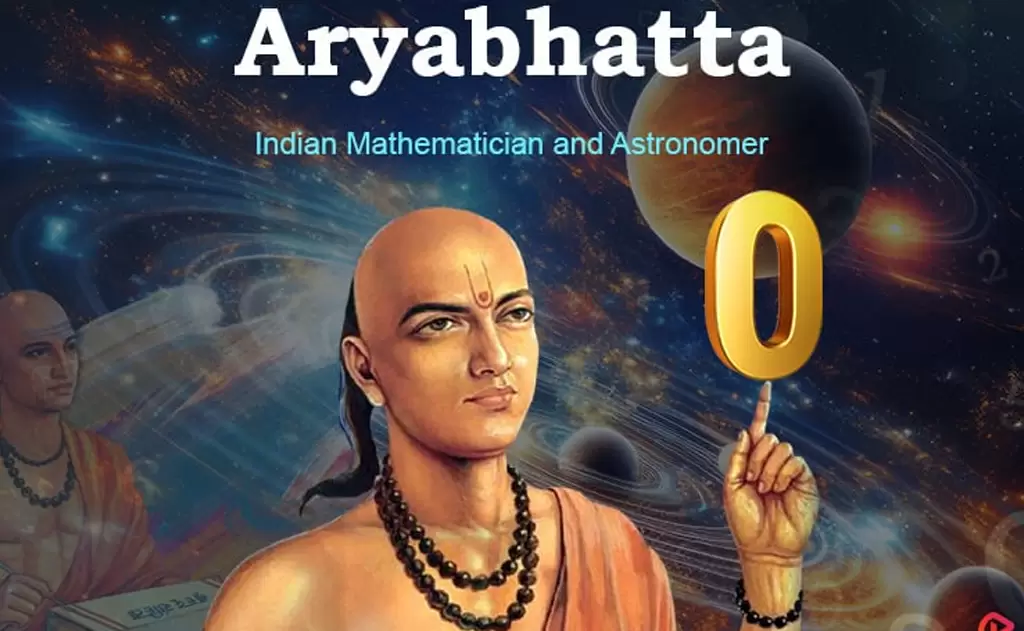
Pi (π): Indian mathematician Aryabhata approximated the value of pi around 500 CE.
Zero: Invented by Brahmagupta in the 7th century, the concept of zero revolutionized mathematics and computing.
Decimal System: India developed the place-value system and decimal notation, forming the basis of modern arithmetic.
Trigonometry: Scholars like Aryabhata and Bhaskara made significant contributions to trigonometric functions.
Fibonacci Numbers: The sequence, later popularized in Europe, was described earlier in Indian texts like Pingala’s Chandaḥśāstra.
✨ Medicine & Surgery
Ayurveda: India’s ancient system of healing continues to influence holistic medicine globally.
Surgery: Sushruta (600 BCE) pioneered surgical techniques like rhinoplasty (plastic surgery) and cataract extraction.
✨ Technology & Innovations
Ink: Ancient Indian manuscripts contributed to the development of ink.
Optics & Data Transmission: Foundational principles of light and material use in modern technologies like USBs and fiber optics trace back to India.
Pentium Chip: Vinod Dham, an Indian-American engineer, was instrumental in the development of the Pentium processor.
✨ Games & Culture
Chess: Originated as “Chaturanga” in India and evolved into modern chess.
Snakes & Ladders: Known as Moksha Patam, it was initially a game of moral teachings.
Yoga: A 5,000-year-old spiritual and physical discipline that has gained global recognition.
AncientIndia #IndianInnovation #Mathematics #Science #Ayurveda #SanatanDharma #WorldHeritage #ProudIndian
What did Aryabhata and Brahmagupta actually write, and where?
Aryabhata composed the Aryabhatiya in 499 CE at Kusumapura (modern Patna), a concise Sanskrit treatise of 118 verses covering arithmetic, algebra, plane and spherical trigonometry, and astronomy. In verse 2.10 he states that the ratio of a circle's circumference to its diameter is approximately 62,832 to 20,000 — giving π ≈ 3.1416, accurate to four decimal places and remarkably close to the value used today.
Brahmagupta's Brahmasphutasiddhanta (628 CE), composed at the astronomical observatory of Bhillamala (modern Bhinmal, Rajasthan), is the first text to define zero as a number in its own right and to codify rules for arithmetic operations involving zero and negative numbers. His statement that 'the sum of zero and zero is zero' and rules for multiplying negatives predated European engagement with these ideas by nearly a millennium.
How did the Kerala School of Mathematics anticipate calculus centuries before Newton and Leibniz?
Between the 14th and 16th centuries, a remarkable lineage of mathematician-astronomers centered on the Nilambur region of present-day Kerala developed infinite series expansions for trigonometric functions. Madhava of Sangamagrama (c. 1340–1425 CE) derived what are now called the Leibniz formula for π and the Taylor series for sine, cosine, and arctangent — results Europe would not reach until the 17th century.
His successors Nilakantha Somayaji (Tantrasangraha, 1501 CE) and Jyesthadeva (Yuktibhasa, c. 1530 CE) rigorously explained the logic behind these series in Malayalam prose, making the Yuktibhasa arguably the world's first calculus textbook. The school worked within the Vedic astronomical tradition, motivated by the need for precise planetary calculations aligned with the siddhantic framework inherited from Aryabhata.
Scholars such as the late K. V. Sarma documented these manuscripts extensively, and their findings have been published in peer-reviewed history-of-mathematics journals. The Kerala contributions do not diminish the independent genius of Newton and Leibniz but firmly establish that the conceptual core of calculus was alive in India well before the 17th-century European formulation.
What is the Vedic and Vedanga foundation behind Indian scientific inquiry?
The Vedangas — the six auxiliary disciplines of the Vedas — include Jyotisha (astronomy and timekeeping), Kalpa (ritual geometry), and Shiksha (phonetics). The Vedic Shulba Sutras (c. 800–500 BCE), composed by sages such as Baudhayana, Apastamba, and Katyayana, contain precise geometric instructions for constructing fire altars (yajnavedi). Baudhayana's Shulba Sutra states the relationship between the diagonal and sides of a rectangle — the principle independently known in the West as the Pythagorean theorem — predating Pythagoras by several centuries.
Pingala's Chandahshastra (c. 300–200 BCE), a treatise on Sanskrit prosody, introduces a binary numbering system and the meru-prastarah — a triangular arrangement of combinatorial numbers identical to what Europe later called Pascal's Triangle. The same work describes what would become known as Fibonacci numbers in the context of counting short and long syllables in poetic metres, showing how India's mathematical discoveries were deeply embedded in its literary and spiritual traditions.
This integration of the sacred and the scientific is a hallmark of the Sanatana Dharma worldview, where rigorous inquiry (anviksiki) was never seen as opposed to spiritual life but as a complementary path toward understanding Brahman's ordered creation.
How did Sushruta's surgical knowledge get codified, and what does the Sushruta Samhita actually describe?
The Sushruta Samhita, compiled and redacted across centuries within the Dhanvantari lineage of Ayurveda, describes over 300 surgical procedures and 120 surgical instruments (shastra and yantra) made from steel, wood, and plant materials. The text's description of rhinoplasty — reconstructing a nose using a flap of skin from the forehead — is strikingly similar to the 'Indian method' that British surgeons documented in the Madras Gazette in 1794 and subsequently introduced to European surgery.
Beyond plastic surgery, the Samhita details cataract couching (needle depression of the lens), lithotomy (removal of bladder stones), cesarean procedure guidelines, and the use of wine and cannabis-based preparations as proto-anesthetics. Sushruta also emphasises cadaveric dissection for anatomical knowledge, a practice he calls savadhyayana, stressing that a surgeon must know the body from direct observation.
The text is available in several critical Sanskrit editions and remains a living reference within the Ayurvedic educational curriculum recognised by India's Central Council of Indian Medicine (CCIM), ensuring that this ancient knowledge continues in a structured institutional form.
What role did ancient Indian astronomers play in understanding the cosmos?
Aryabhata proposed in the Aryabhatiya that the Earth rotates on its own axis — an idea he expressed by stating that the apparent westward movement of stars is caused by the eastward rotation of the Earth, much as a person on a moving boat sees stationary objects moving backward. This heliocentric intuition preceded Copernicus by over a thousand years and was elaborated by Nilakantha Somayaji, who proposed a partial heliocentric model in which the inner planets Mercury and Venus orbit the Sun.
Brahmagupta, Varahamihira (Panchasiddhantika, 6th century CE), and later Bhaskara II (Siddhantashiromani, 1150 CE) calculated the length of the solar year, the circumference of the Earth, and the gravitational pull of the Earth on objects — Bhaskara's term gurutvaakarshan (attraction of heaviness) anticipating the concept later formalised by Newton. Varahamihira's work at Ujjain, home to the Mahakaleshwar Jyotirlinga, shows how major temples served as centres of astronomical observation and scholarship.
The Jantar Mantar observatories built by Maharaja Sawai Jai Singh II in the 18th century at Delhi, Jaipur, Ujjain, Mathura, and Varanasi represent the most recent chapter of this unbroken astronomical tradition, using massive masonry instruments to achieve arc-second precision in naked-eye measurements.
How did India's numerical and mathematical heritage travel to the rest of the world?
The transmission of the Indian decimal place-value system to the Arab world occurred primarily through the translation movement of the 8th–9th centuries CE. The scholar Muhammad ibn Musa al-Khwarizmi drew directly on Brahmagupta's Brahmasphutasiddhanta — translated into Arabic at the House of Wisdom in Baghdad — to write his treatise on Hindu numerals, which Europeans later knew as 'algorismus,' giving us the word 'algorithm.'
Fibonacci (Leonardo of Pisa) encountered these numerals in North Africa and introduced them to Europe through his Liber Abaci (1202 CE), explicitly crediting 'the nine Indian figures' and zero. What Europe called 'Arabic numerals' are, in the full historical chain, Indian numerals transmitted via Arabic scholarship — a fact that modern historians of mathematics widely acknowledge.
This journey — from the Vedic altar geometers of the Indus-Gangetic plain, through Aryabhata and Brahmagupta, through Baghdad, to medieval Europe and ultimately to the binary logic underlying every digital computer today — is one of the most consequential intellectual transmissions in human history, and it originates squarely within the Sanatana Dharma civilisation.
Frequently Asked Questions
Who first defined zero as a number and in which text?
Brahmagupta's Brahmasphutasiddhanta (628 CE), composed at Bhillamala (modern Bhinmal, Rajasthan), is the first text to define zero as a number in its own right. It also codifies rules for arithmetic with zero and negative numbers.
What value of pi did Aryabhata give?
In the Aryabhatiya, composed in 499 CE at Kusumapura (modern Patna), Aryabhata gives the ratio of circumference to diameter as 62,832 to 20,000. That is pi of about 3.1416, accurate to four decimal places.
How did the Kerala School anticipate calculus?
Between the 14th and 16th centuries, Madhava of Sangamagrama and successors like Nilakantha Somayaji and Jyesthadeva developed infinite series for sine, cosine and arctangent. Jyesthadeva's Yuktibhasa explained the logic in Malayalam prose.
What did the Sushruta Samhita describe in surgery?
It describes over 300 surgical procedures and 120 instruments, including rhinoplasty using a forehead skin flap, cataract couching and lithotomy. Sushruta also stressed cadaveric dissection to learn anatomy.
How did Indian numerals reach Europe?
Al-Khwarizmi drew on Brahmagupta's work, translated at the House of Wisdom in Baghdad, to write on Hindu numerals, which gave us the word algorithm. Fibonacci then introduced them to Europe through Liber Abaci in 1202 CE.
Share this with family and friends
Send it on WhatsApp, post it, or copy the link.
More from Hinduism
- AI and the Sanskrit Revival in 2026: Language Models, Manuscript OCR, Translation Tools and What AI Still Gets Wrong
- Can a Robot Perform Puja? Robot Aarti, AI in Rituals and What Hindu Tradition Says
- GitaGPT and AI Bhagavad Gita Chatbots: How Accurate Are They, and What Does Hindu Tradition Say?
- Robotic Elephants and AI in Hindu Temples: Kerala's Mechanical Tuskers, Tirumala's AI Command Centre and the Debate
- Quantum Computing Explained for Hindus: Qubits, Superposition and Entanglement, with Vedanta Analogies (Not Equivalences)
You might also like

Yogi Adityanath’s Vision: Transforming Ayodhya into India’s Premier City

Annie Besant: Theosophy, Hinduism, and India’s Spiritual & Political Revival

The Role of Hindu Youth in Nation-Building: Shaping India’s Future