Role of Tithi in Ancestor Rites – Garuda Purana Spiritual Guide
In Hindu tradition, Tithi (lunar day) plays a pivotal role in Shraddha and Pitru Tarpana rituals, as detailed in the Garuda Purana.

In Hindu tradition, Tithi (lunar day) plays a pivotal role in Shraddha and Pitru Tarpana rituals, as detailed in the Garuda Purana. Tithi is more than a date on the calendar—it represents a cosmic alignment that enhances the receptivity of Pitris (ancestors) to offerings, ensuring their nourishment, peace, and blessings for descendants.
Performing Shraddha on the appropriate Tithi expiates sins, promotes longevity, prosperity, progeny, and ultimately leads to moksha (salvation) for both ancestors and performers. Neglecting these rites can result in Pitru Dosha, manifesting as obstacles, family unrest, or spiritual disturbances in descendants' lives. The Garuda Purana emphasizes that rituals performed with genuine shraddha (devotion and faith) provide lasting satisfaction to Pitris, nourishing them for months or even a year.
Key Auspicious Tithis for Shraddha as per Garuda Purana
The Garuda Purana (particularly in sections on Pretakhanda and Shraddha procedures) highlights specific Tithis and periods for optimal benefits:
- Amavasya (New Moon Day): Highly auspicious for general Tarpana and Shraddha. It is especially powerful during Sarvapitri Amavasya (the final Amavasya of Pitru Paksha), ideal for offerings to all ancestors collectively. Souls of those who departed on Purnima or certain Tithis are often honored here.
- Pitru Paksha (Pretapaksha): The dark fortnight (Krishna Paksha) of Bhadrapada/Ashvina month (typically September–October). This 15–16 lunar day period (including daily Tithis from Pratipada to Amavasya) allows daily Shraddha. It is vital for recent departed souls and general ancestor appeasement, as Pitris are believed to descend to Earth during this time to accept offerings.
- Annual Tithi Shraddha (Tithi-specific Anniversary): Ideally performed on the exact lunar Tithi of the ancestor's departure. This alignment matches the subtle body's receptivity, ensuring maximum spiritual benefit.
- Other Important Tithis:
- Ashtaka (8th day of the dark fortnight): Recommended for regular Pitru offerings.
- Vriddhi (auspicious family occasions, e.g., son's marriage): Shraddha here brings growth and prosperity.
- Magha Trayodashi (13th day in Magha month, under Magha Nakshatra): Known as Gajachchaya, excellent for Shraddha.
- Chaturdashi (14th day): Particularly for ancestors who died violently, unnaturally, or to seek specific boons like wealth or progeny.
Additional occasions from Garuda Purana include solar/lunar eclipses, equinoxes, Sankranti, Vyatipata Yoga, and when learned Brahmanas visit— all enhance the efficacy of rites.
Benefits of Timely Shraddha on Proper Tithi
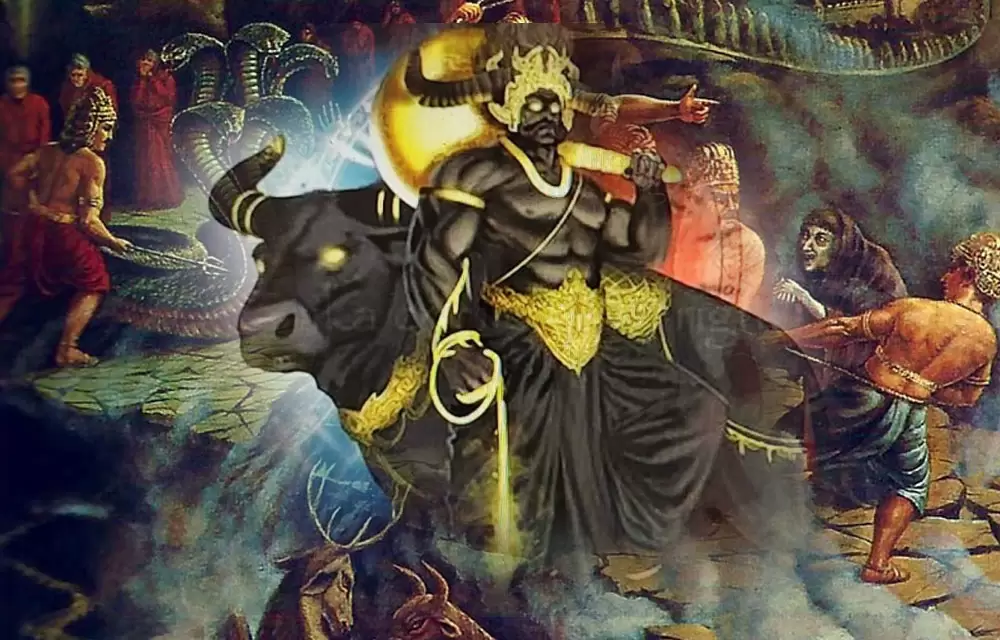
- Nourishes ancestors in their subtle forms, relieving hunger/thirst during their post-death journey (as per Garuda Purana's description of the soul's path to Yamapuri).
- Grants blessings for health, wealth, success, and family harmony.
- Prevents Pitru Dosha and ensures ancestral peace, leading to salvation.
Simple Steps for Performing Shraddha at Home
- Consult a Panchang or priest for the exact Tithi.
- Invite qualified Brahmanas (if possible) or perform personally with devotion.
- Offer Pinda Daan (rice balls), Tarpana (water with sesame), food, and dakshina.
- Recite mantras, remember ancestors by name/gotra, and feed cows/Brahmanas/poor.
- Maintain purity, avoid non-vegetarian food during the rite.
Note: While home rituals suffice, performing at sacred sites (tirthas) amplifies merits, as noted in scriptures.
By aligning Shraddha with these Tithis, devotees honor the eternal bond with Pitris, fulfilling Pitru Rina (debt to ancestors) and inviting divine grace.
For personalized Panchang dates or guidance, visit hindutone.com or consult a learned pandit.
This guide draws from traditional interpretations of Garuda Purana and related Hindu texts for spiritual upliftment.
What does the Garuda Purana actually say about Tithi and the subtle body of the ancestor?
The Garuda Purana's Pretakhanda (chapters dealing with the fate of the soul after death) describes the Pitri-loka as a realm where departed souls exist in a subtle body called the Atisukshma Sharira. This body is sustained not by gross food but by the energy of Shraddha offerings — specifically the pinda (rice balls) and tarpana (water libations) offered by descendants. The Purana explains that on certain Tithis, particularly the Amavasya and the Tithi matching the ancestor's death, the vibrational frequency of the Pitri-loka aligns with the Martya-loka (earth plane), making transmission of the offerings far more efficient.
The text uses the metaphor of a lamp and its wick: a perfectly aligned Tithi is the wick that draws the offering upward to nourish the ancestor. When the wrong Tithi is used, the 'wick' is absent and the offering disperses without reaching its intended recipient. This is why the Garuda Purana is unusually precise — unlike many Puranas — in listing not just which Tithis are auspicious but also what happens, cosmologically, when these alignments are missed.
How do the Vishnu Purana and Manu Smriti corroborate the Tithi framework?
The Garuda Purana does not stand alone in its emphasis on Tithi. The Vishnu Purana (Amsha III, Adhyaya 16) dedicates considerable space to the Shraddha calendar, naming Amavasya, the Ashtami of Krishna Paksha, and the Vyatipata yoga as especially potent windows. Manu Smriti (Chapter 3, verses 122–286) provides parallel guidance, noting that offerings made on the Tithi of the ancestor's death 'become inexhaustible' — a phrase (akshayam) suggesting the merit does not decay over time as it does with poorly timed rites.
The Mahabharata's Anushasana Parva (sections on Dana Dharma and Pitru Dharma) reinforces this with the narrative of Karna discovering after his death that he had never performed Shraddha on the correct Tithis. This story is cited across commentarial traditions — including the Nilakantha commentary on the Mahabharata — as a cautionary illustration of how Tithi negligence leaves ancestors in a state of want (trishna) rather than contentment (tripti).
Which specific Tithis carry distinct spiritual outcomes, and why?
Beyond Amavasya and Pitru Paksha, the Garuda Purana and allied texts assign differentiated outcomes to specific Tithis. Chaturdashi (14th lunar day), particularly in the Krishna Paksha, is prescribed for ancestors who died by violence, accident, or untimely causes — collectively called Akala Mrityu. The Tarpana on this Tithi is believed to ease the turbulence of their transitional state. The Tritiya (3rd day) of the bright fortnight during Vaishakha month is associated in certain regional traditions — notably observed at Gaya (Bodh Gaya district, Bihar) — with additional merit for ancestral rites conducted at the Vishnupada temple.
The Sankranti Tithis — the twelve solar transitions through the zodiac — are also recognized as elevated windows. Makar Sankranti (transition into Capricorn, typically January 14) is especially noted, as the Uttarayana period that begins here is considered cosmologically favorable for the souls of ancestors who aspire to higher realms. The Garuda Purana advises that Tarpana on each monthly Sankranti, even when the specific death-anniversary Tithi cannot be determined, carries substantial merit and should not be omitted.
What is the correct procedure for Tithi Shraddha, and what materials does the tradition prescribe?
The procedural core of Tithi Shraddha as described in the Garuda Purana involves three essential components: Tarpana (water libations poured with sesame seeds — tila — which the text calls the most potent Pitri-pleasing substance), Pinda Daan (offering of cooked rice or barley balls mixed with sesame, honey, and ghee), and the feeding of Brahmanas (Brahma Bhojana) who are treated as visible representatives of the ancestors. Each component corresponds to a different subtle body the ancestor is said to inhabit across the three generational tiers — Pitru, Pitamaha (grandfather), and Prapitamaha (great-grandfather).
The Purana is specific about the direction of offering: libations are poured facing south (Dakshinabhimukha), the direction associated with Yama and the Pitri-loka. The performer holds the water cupped in both palms and releases it through the space between the index finger and thumb — the Pitri Tirtha — rather than the finger-tips (used for Deva rites) or the tips of the fingers (used for Rishi rites). Recitation of the Pitru Sukta from the Rigveda (RV 10.15) and the relevant Tarpana mantras naming each ancestor by Gotra and name is considered essential for the offering to reach its specific recipient rather than diffusing into the general Pitri field.
What role does the sacred site (Kshetra) play when combined with the correct Tithi?
The Garuda Purana teaches that Tithi and Kshetra function as a multiplier pair: the right Tithi at an ordinary location yields standard merit, but the same Tithi performed at a Pitru Tirtha (sacred ancestral site) multiplies the benefit immeasurably. Gaya (Vishnupada Temple, Gaya district, Bihar) is consistently named as the supreme site for Pitru rites — the Gaya Mahatmya section of the Vayu Purana states that a single Pinda Daan at Gaya performed on any Amavasya is equivalent to a thousand Shraddhas performed elsewhere. Prayagraj (Triveni Sangam, Uttar Pradesh) and Kashi (Manikarnika Ghat, Varanasi) are similarly elevated for their Tithi-specific rites.
The practice at these Kshetras is not merely symbolic. Specialized priests called Gayavals at Gaya maintain genealogical records (vahis) spanning many generations, enabling pilgrims to identify the exact ancestor, their Tithi of death, and Gotra — information that makes the ritual maximally precise. Families who cannot travel to Gaya are advised by many Dharmashastra commentators to perform Tithi Shraddha at the nearest river confluence (Sangama) or at a Shiva temple with a running water source, as flowing water is considered a terrestrial counterpart to the cosmic flow that connects the Martya and Pitri lokas.
How should modern families with disrupted ancestral records approach Tithi observance?
A common practical difficulty is that many contemporary families do not know the exact lunar Tithi of an ancestor's death, especially for those who passed in hospitals where only the English calendar date was recorded. The Dharmashastra tradition addresses this directly: when the death Tithi is unknown, the Sarvapitri Amavasya — the concluding day of Pitru Paksha — serves as a universal 'catch-all' Tithi for all such unspecified ancestors. The Skanda Purana (Avantya Khanda) explicitly says that no ancestor is left unattended if Shraddha is performed with sincerity on this single day.
For those who know the English date but not the Tithi, any reliable Panchanga (Vedic almanac) — published annually by institutions such as the Sringeri Sharada Peetham in Karnataka or the Kashi Vidvat Parishad in Varanasi — can convert a given English calendar date to its corresponding lunar Tithi. It is worth noting that the same English date can fall on different Tithis in different years due to the shifting lunar calendar, so the conversion must be done year-by-year rather than assumed fixed. Performing at least the Amavasya Tarpana monthly, even when the specific Tithi is uncertain, is widely held by contemporary Dharmacharyas as a sufficient minimum observance that maintains the ancestral connection and wards off Pitru Dosha.
Frequently Asked Questions
Which Tithis are most auspicious for Shraddha?
Amavasya, the Pitru Paksha fortnight, the ancestor's death-anniversary Tithi, Ashtaka, Vriddhi occasions, Magha Trayodashi and Chaturdashi are highlighted. Sarvapitri Amavasya, the last Amavasya of Pitru Paksha, suits offerings to all ancestors together.
When is Pitru Paksha observed?
Pitru Paksha is the dark fortnight of Bhadrapada or Ashvina month, typically September to October. It runs 15 to 16 lunar days from Pratipada to Amavasya and allows daily Shraddha.
Why is Chaturdashi used for some ancestors?
Chaturdashi, the 14th lunar day, is prescribed for ancestors who died by violence, accident or untimely causes. Tarpana on this Tithi is believed to ease the turbulence of their transitional state.
How do I perform Tithi Shraddha at home?
Check the exact Tithi in a Panchang or with a priest, then offer Pinda Daan, Tarpana with sesame water, food and dakshina. Recite mantras naming ancestors by gotra, feed cows, Brahmanas or the poor, and keep to purity and non-vegetarian abstinence.
Which direction should I face while offering Tarpana?
Libations are poured facing south, the direction associated with Yama and the Pitri-loka. The water is released through the Pitri Tirtha, the space between the index finger and thumb.
What if I cannot determine the Tithi of my ancestor's death?
Tarpana on each monthly Sankranti is advised even when the death-anniversary Tithi is unknown, and it carries substantial merit. Amavasya is also highly auspicious for general Tarpana and Shraddha.
Share this with family and friends
Send it on WhatsApp, post it, or copy the link.
More from Hindutone
- What Does Sarva Mangala Mean? | Significance and Spiritual Meaning in Lalita Sahasranama
- Vat Savitri Vrat & Snana Yatra June 29 2026 – Complete Devotional Guide: Savitri’s Story, Rituals & Jagannath Significance
- Nirjala Ekadashi June 25 2026 – The King of Ekadashis: Complete Guide with Bhima’s Story, Rituals, Mantras & Benefits
- Parama Ekadashi June 11 2026 – Complete Devotional Guide: Date, Story, Rituals, Mantras & Benefits
- June 2026 Hindu Festival Calendar — Complete Dates, Vrat & Puja Guide for NRIs