

Garuda Purana Guide: Step-by-Step Sapindikarana for Ancestor Liberation

Sapindikarana Ritual Explained: Merge Preta into Pitru Loka on 12th/13th Day – Garuda Purana Step-by-Step for Family Liberation
Introduction: Why Sapindikarana Is the Turning Point After Death
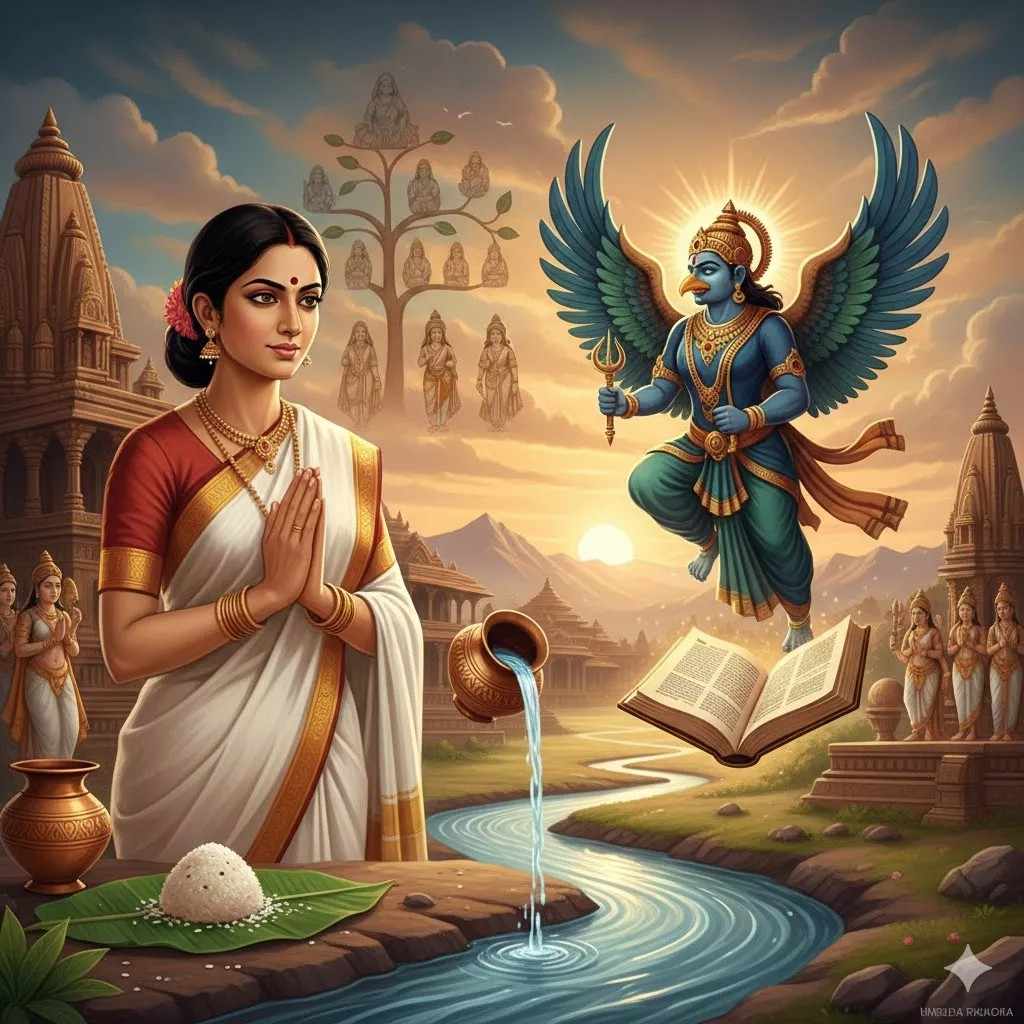
In Sanatana Dharma, death is not considered an end but a transition of the soul (Atma) through carefully prescribed samskaras. Among all post-death rites, Sapindikarana is one of the most decisive and liberating rituals. It is the ceremony through which the departed soul, wandering as a Preta, is formally merged into the lineage of Pitru Loka (ancestral realm).
According to the Garuda Purana – Pretakhanda, until Sapindikarana is performed, the soul remains in an unstable state, neither fully liberated nor peacefully settled among ancestors. The ritual ensures:
- Release of the soul from Preta yoni
- Entry into Pitru Loka
- Ancestral acceptance by three generations of forefathers
- Removal of doshas affecting the living family
This article offers a complete, step-by-step explanation of Sapindikarana, based strictly on Garuda Purana, Dharma Shastras, and traditional practice, written in a devotional yet practical tone for modern families.
What Is Sapindikarana? (Meaning & Scriptural Definition)
The word Sapindikarana is derived from two Sanskrit roots:
- Sa – together
- Pinda – rice ball offered during Shraddha
Sapindikarana literally means “making one with the pindas of the ancestors.”
Scriptural Definition (Garuda Purana – Pretakhanda)
“Yavat sapindikam na kuryat, preta eva sa ucyate”
Until Sapindikarana is performed, the soul remains a Preta.
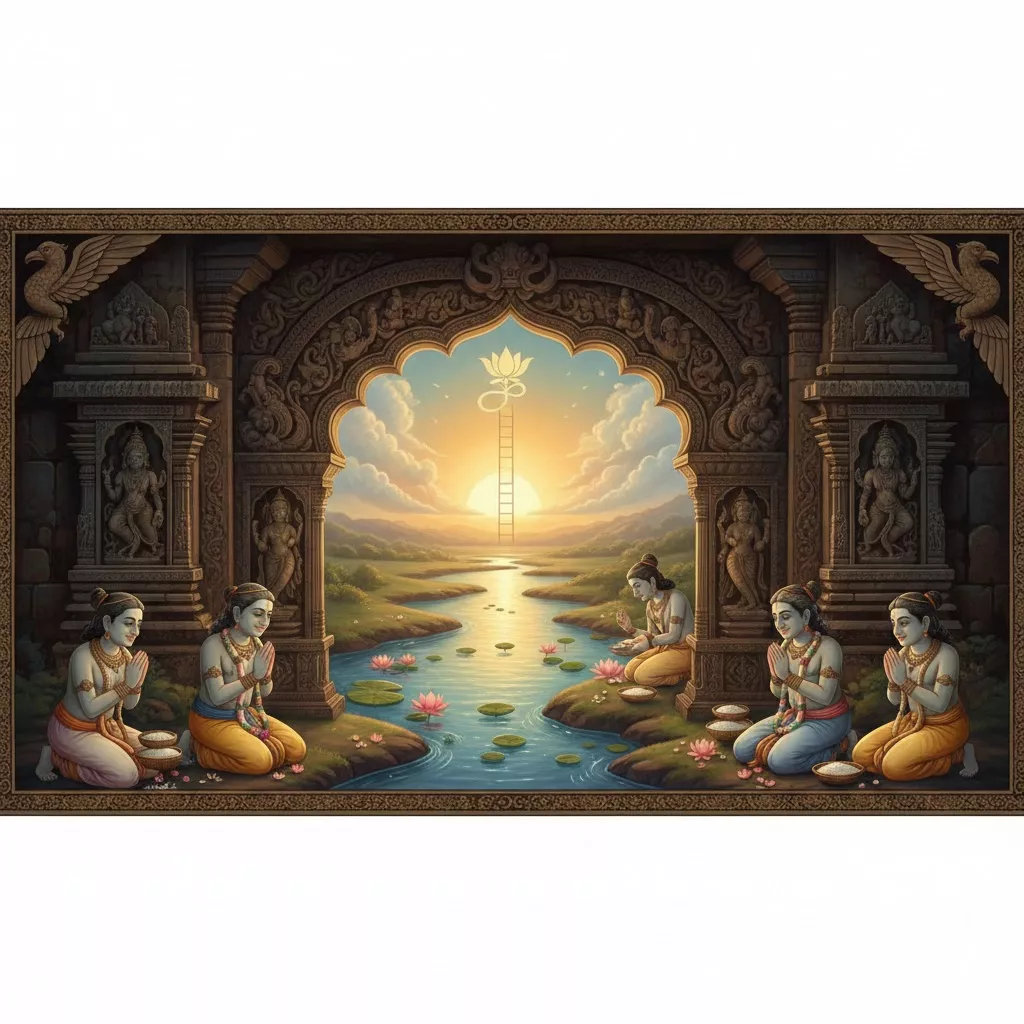
This ritual unites the individual pinda of the deceased with the pindas of the father, grandfather, and great-grandfather, symbolizing acceptance into the ancestral lineage.
Preta vs Pitru Loka: Understanding the Soul’s Journey
What Is Preta Yoni?
According to Garuda Purana:
- After death, the soul enters Preta yoni
- It experiences hunger, thirst, fear, and confusion
- The soul depends entirely on offerings made by family
Without rituals, the Preta suffers immensely and may cause Pitru dosha for descendants.
What Is Pitru Loka?
Pitru Loka is the ancestral realm governed by Yama and Pitru Devatas, where:
- Souls rest peacefully
- Ancestors bless future generations
- The lineage remains spiritually protected
Sapindikarana is the bridge between these two states.
When Is Sapindikarana Performed? (12th or 13th Day Explained)
Traditional Timing
- 12th day – Common in South Indian traditions
- 13th day – Widely followed across North India
The Garuda Purana allows Sapindikarana between the 12th and 16th day, depending on:
- Local achara (custom)
- Caste tradition
- Advice of the family priest
Why Not Earlier?
The Pretakhanda clearly states that:
- The soul requires 10 days to form a subtle body
- Daily Pinda danam nourishes this body
- Sapindikarana before this period is incomplete
Who Must Perform Sapindikarana?
Eligible Karta (Doer of the Ritual)
- Eldest son (preferred)
- Younger son (if elder unavailable)
- Grandson
- Brother of deceased
- Appointed Sapinda (with priest guidance)
Women traditionally do not perform Sapindikarana, though modern adaptations exist with priest consent.
Preparations Before Sapindikarana Day
Spiritual Preparation
- Maintain Ashaucha (ritual impurity) until ceremony
- Avoid temple visits, celebrations, auspicious acts
- Follow satvik food or fasting
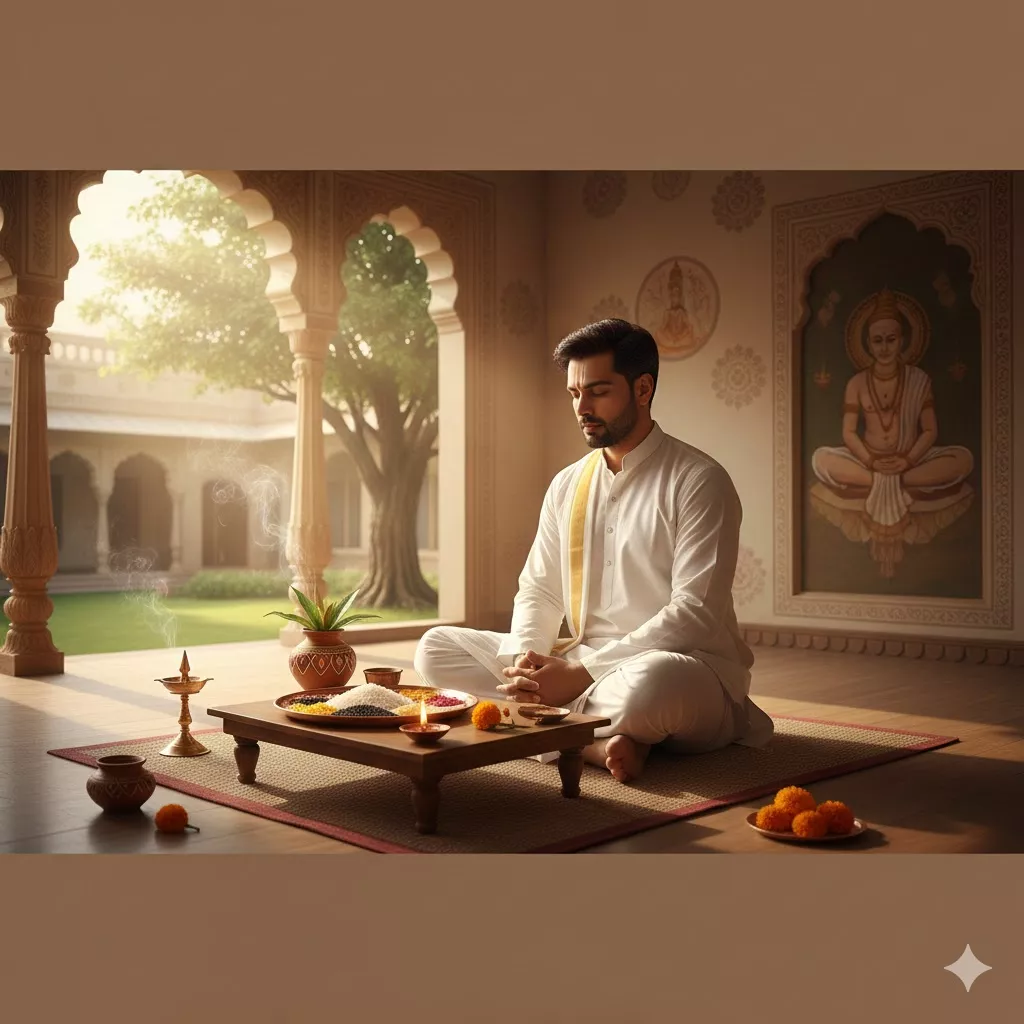
Required Materials
- Cooked rice (for pindas)
- Black sesame (til)
- Ghee and honey
- Darbha grass
- Silver or copper vessels
- Water mixed with sesame
- Kushaa ring for karta
- Brahmin dakshina
Step-by-Step Sapindikarana Ritual (Garuda Purana Method)
Step 1: Sankalpa (Sacred Resolution)
The karta takes a vow stating:
- Name and gotra of deceased
- Purpose: merging Preta into Pitru Loka
- Invocation of Vishnu, Yama, and Pitru Devatas
This sankalpa is crucial; without it, the ritual is invalid.
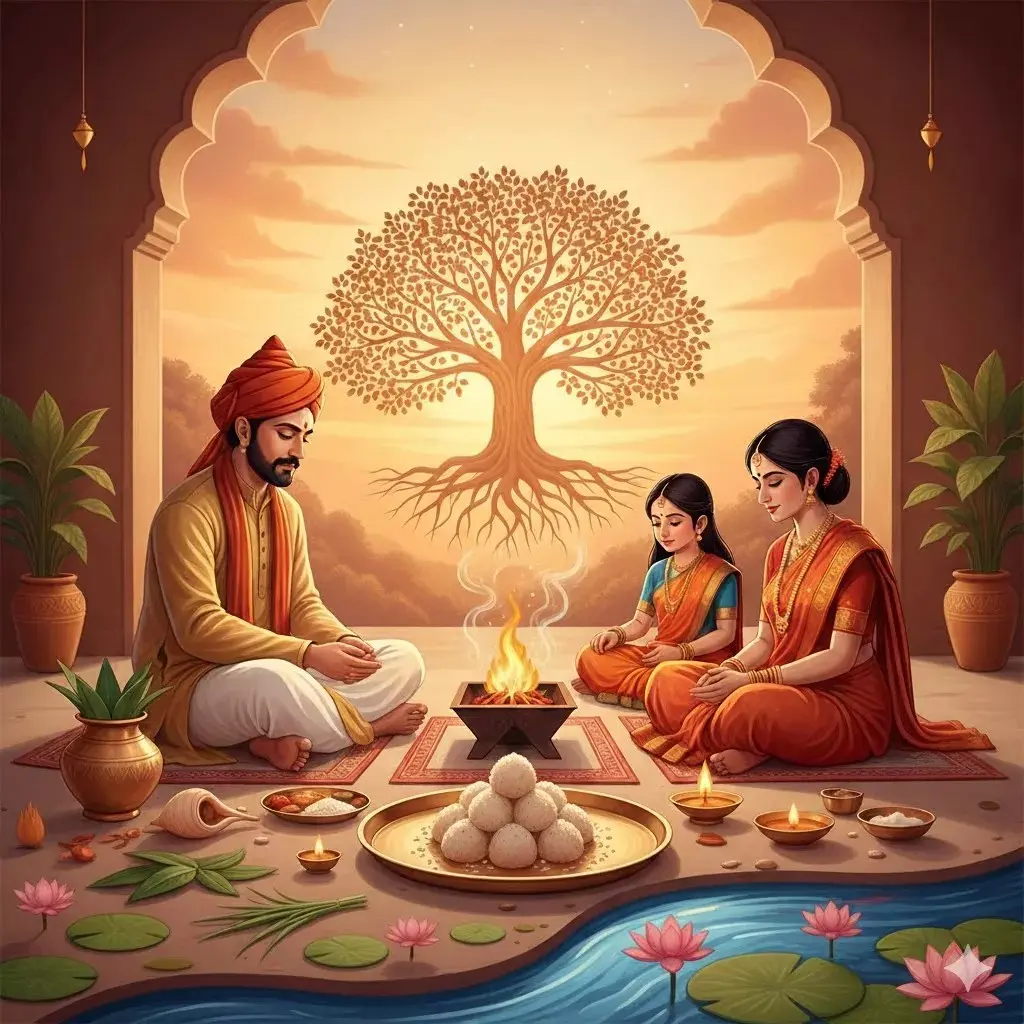
Step 2: Offering of Four Pindas
Four pindas are prepared:
- One Preta Pinda – for the departed soul
- Three Pitru Pindas – father, grandfather, great-grandfather
Each pinda represents a generational connection.
Step 3: Division and Merging of Pindas (Core Ritual)
This is the heart of Sapindikarana.
- The Preta pinda is divided into three parts
- Each part is merged with one ancestral pinda
Symbolism:
- Individual identity dissolves
- Lineage identity is restored
- Soul becomes a Pitru
Garuda Purana describes this as “Preta-bhava nasha” (destruction of Preta state).
Step 4: Tilodaka and Tarpana
Sesame water is offered while chanting Pitru mantras.
Effects:
- Quenches thirst of the soul
- Removes karmic heat
- Invokes ancestral blessings
Step 5: Brahmin Bhojan and Dakshina
- Feeding Brahmins equals feeding Pitru Devatas
- Dakshina must be given respectfully
Garuda Purana states that neglecting Brahmin bhojan nullifies the ritual’s merit.
Step 6: Vishnu Smarana and Yama Prarthana
Final prayers are offered to:
- Lord Vishnu – for protection of soul
- Yama Dharma Raja – for safe passage
What Happens to the Soul After Sapindikarana?
According to Pretakhanda:
- The soul is no longer addressed as Preta
- It gains the status of Pitru Devata
- It joins ancestors during Amavasya Shraddhas
- It can now bless descendants
This is why annual Shraddha is performed only after Sapindikarana.
Importance of Sapindikarana for the Living Family
Spiritual Benefits
- Removal of Pitru Dosha
- Peace in family lineage
- Protection from ancestral afflictions
Material & Emotional Benefits
- Reduction in unexplained obstacles
- Stability in marriage and progeny
- Mental peace after bereavement
Consequences of Not Performing Sapindikarana
Garuda Purana gives strong warnings:
- Soul remains restless
- Family faces recurring troubles
- Descendants suffer without reason
“Asapindikrita preta, kulam pidayate dhruvam”
A soul not sapindikrita surely troubles the lineage.
Common Doubts About Sapindikarana
Can Sapindikarana Be Done Later?
Yes. If missed, it can be performed:
- On next Amavasya
- During Gaya Shraddha
- With Narayana Bali (in special cases)
Is Sapindikarana Mandatory?
As per Garuda Purana: Yes, for all householders.
Sapindikarana vs 13th Day Kriya: Are They Same?
- 13th day kriya includes multiple rites
- Sapindikarana is the most crucial component
Without Sapindikarana, 13th day rites remain incomplete.
Regional Variations Across India
- South India: 12th day Sapindikarana
- North India: 13th day with Shanti homa
- Gaya Kshetra: Performed collectively during Shraddha
Essence remains identical as per Garuda Purana.
Spiritual Message from Garuda Purana Pretakhanda
The Pretakhanda repeatedly emphasizes:
- Gratitude toward ancestors
- Responsibility of sons and descendants
- Continuity of dharma beyond death
Sapindikarana is not fear-based ritualism; it is an act of compassion, duty, and lineage preservation.
Conclusion: Sapindikarana Is an Act of Liberation, Not Obligation
Sapindikarana is the moment when grief transforms into dharma, and separation becomes spiritual continuity. By performing this sacred rite:
- The departed attains peace
- Ancestors gain strength
- The family regains harmony
In the words of Garuda Purana, no dana equals Shraddha, and no Shraddha is complete without Sapindikarana.
May every soul attain Pitru Loka, and may every family uphold this sacred responsibility.
Related Reads on Hindutone.com:
- Garuda Purana Pretakhanda Explained
- 13-Day Death Rituals Step-by-Step
- Pitru Dosha: Causes and Remedies
- Annual Shraddha Vidhi Guide
This article is written in accordance with traditional Dharma Shastra interpretations for devotional education on www.hindutone.com.
Related posts:
 The Role of Astrology in Hindu Life
 Chinna Srimannarayana Ramanuja Jeeyar
 The Significance of Temple Architecture in Spiritual Practices
 What Hindus need to learn from Lord Rama and His Brothers – Lakshmana, Bharata, and Shatrughna —in the Ramayana
 Current Situation of Hindus in Pakistan, Under Taliban Rule in Afghanistan, and in Bangladesh
 How Hindus Celebrated New Year 2026: A Devotional Journey of Faith and Renewal


 ︎
︎

