The Statue of Equality: A Beacon of Ramanujacharya's Timeless Wisdom
The Statue of Equality, inaugurated in 2022, stands as a monumental tribute to Sri Ramanujacharya, the revered 11th-century philosopher and saint whose…
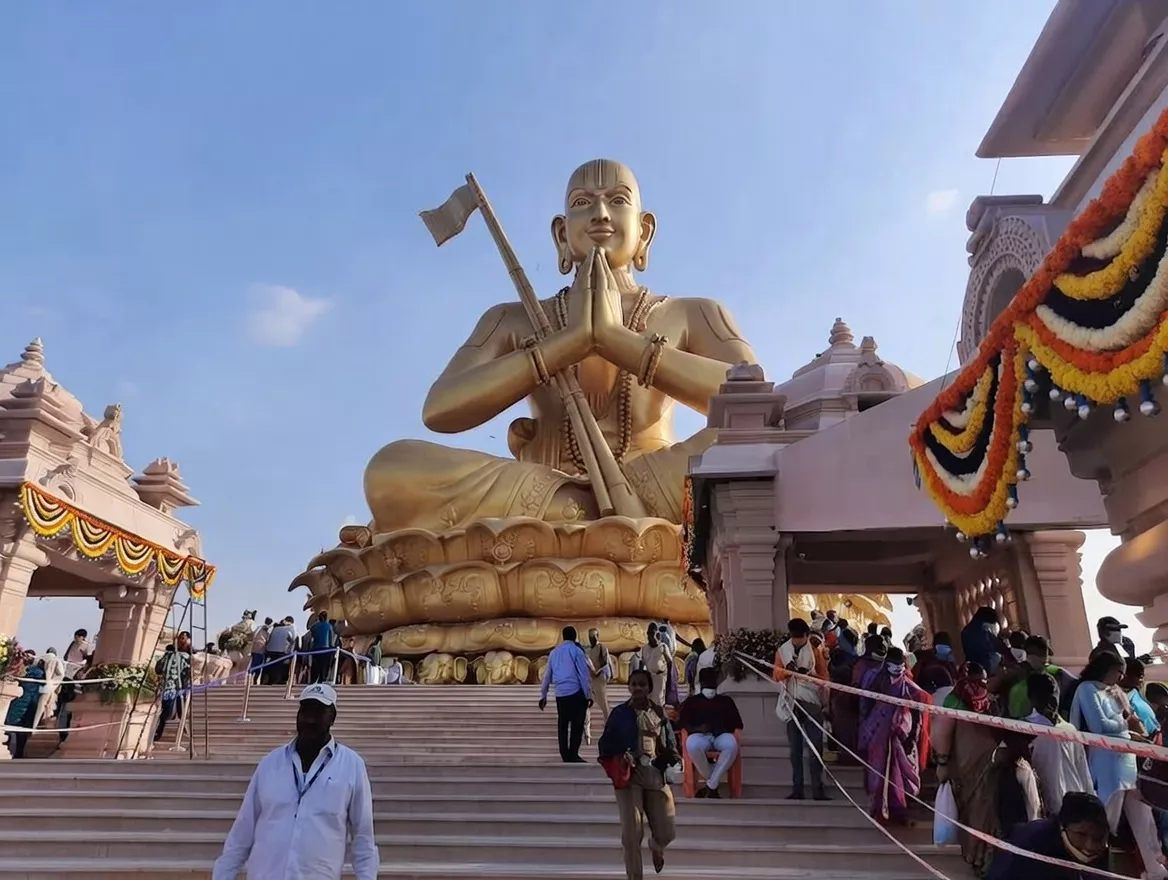
The Statue of Equality, inaugurated in 2022, stands as a monumental tribute to Sri Ramanujacharya, the revered 11th-century philosopher and saint whose teachings continue to inspire millions. Located on the outskirts of Hyderabad in Telangana, this 216-foot-tall sitting statue— the world's second tallest in a seated posture—embodies his profound message of equality, devotion, and inclusivity. Conceptualized by His Holiness Tridandi Chinna Jeeyar Swamiji under the Chinna Jeeyar Trust, the complex spans 45 acres within the Jeeyar Integrated Vedic Academy (JIVA) campus near Muchintal, close to the Hyderabad International Airport.
Unveiled by Prime Minister Narendra Modi on February 5, 2022, as part of the Ramanuja Sahasrabdi celebrations marking 1,000 years since Ramanujacharya's birth, the statue symbolizes a revival of his ideals in modern times. A smaller 120-kg gold idol (Swarna Ramanuja) inside the base was inaugurated by then-President Ram Nath Kovind shortly after. Far more than a landmark, it serves as a living spiritual center, blending ancient Vedic wisdom with contemporary architecture to promote harmony, selfless service, and the divine equality of all souls.
The Life and Legacy of Sri Ramanujacharya
Born in 1017 CE in Sriperumbudur (near modern Chennai), Ramanujacharya lived until 1137 CE, dedicating his life to Vaishnavism and social reform. From a young age, he displayed deep spiritual inclination, mastering Vedic texts under teachers like Yadavaprakasha. A pivotal moment came when he embraced the teachings of his guru, seeking to make spiritual knowledge accessible to everyone, regardless of caste, gender, or social status.
Ramanujacharya is celebrated as a pioneer of the Bhakti movement in South India. He traveled extensively, initiating disciples from all walks of life—including those from lower castes—into temple worship and the sacred Ashtakshari Mantra ("Om Namo Narayanaya"). He challenged rigid hierarchies, famously arguing that before the Divine, all souls are equal. His reforms allowed marginalized communities entry into temples, a radical act in his era that laid groundwork for inclusive devotion.
His works, including the Sri Bhashya (commentary on the Brahma Sutras), Vedartha Sangraha, and Gita Bhashya, remain foundational to Sri Vaishnavism. Texts like the Nitya Grantha guide daily worship, emphasizing purity of thought, word, and action while rejecting discrimination.
Vishishtadvaita: The Philosophy of Qualified Non-Dualism
At the heart of Ramanujacharya's teachings lies Vishishtadvaita Vedanta, or "qualified non-dualism." This philosophy reconciles apparent contradictions in Hindu scriptures, particularly the Upanishads, Bhagavad Gita, and Brahma Sutras.
Unlike Advaita Vedanta's absolute non-dualism (where the world is illusion and only Brahman exists), Vishishtadvaita posits that Brahman (God, as Vishnu/Narayana) is the supreme reality, while individual souls (jivatmas) and the material world (prakriti) are real but inseparable attributes of Brahman—like a body to a soul. God is the indweller (antaryami), sustaining all existence.
This "unity in diversity" underpins equality in Hinduism. Every soul is divine, eternally connected to God, deserving love and respect. Caste or social barriers are transient; spiritual potential is universal. Ramanujacharya taught that true liberation (moksha) comes through bhakti (devotion) and prapatti (self-surrender), open to all—not just through ritualistic knowledge reserved for elites.
In the Bhagavad Gita, Krishna's call for selfless action aligns with Ramanujacharya's emphasis on seva (service). He viewed devotion as transformative, fostering compassion and social justice. His philosophy influenced later Bhakti saints like Kabir, Mirabai, and Tulsidas, spreading egalitarian devotion across India.
Equality in Hinduism: Ramanujacharya's Revolutionary Vision
Hinduism's core texts affirm the divinity of all beings—the Upanishads declare "Tat Tvam Asi" (Thou art That), and the Bhagavad Gita stresses the soul's equality beyond bodies. Yet, historical practices often diverged due to varna interpretations.
Ramanujacharya bridged this gap. He proclaimed that discrimination contradicts Vedic truth. By initiating people from all backgrounds, he demonstrated that bhakti transcends social divisions. His life exemplified this: he shared sacred knowledge freely, reformed temple practices for inclusivity, and advocated service to humanity as worship of God.
In today's context, his message resonates amid discussions on social justice. The Statue of Equality revives this ideal, reminding us that true spirituality promotes harmony, not hierarchy. It aligns with modern Hindu temples evolving toward openness, making ancient wisdom relevant to contemporary challenges like inequality and division.
The Temple Design and Architectural Marvel
The Statue of Equality masterfully fuses tradition and innovation. Crafted from panchaloha (five metals: gold, silver, copper, brass, and zinc/titanium variants in sources), the 216-foot statue weighs around 1,800 tons. It sits in padmasana (lotus posture) on a lotus pedestal (Padma Peetam) 27 feet in diameter, supported by 36 elephants symbolizing strength and devotion.
The lotus has 54 petals, representing the 54 Upanishads, while the base (Bhadra Vedi) rises 54 feet with three stories. The statue's height breaks down symbolically: Ramanujacharya figure at 108 feet (echoing sacred numbers), plus elements totaling 216 feet.
Surrounding the monument are replicas of the 108 Divya Desams—sacred Vishnu temples glorified in Alwar hymns—built in stone with ornate detailing. These create a serene spiritual landscape, allowing visitors to experience pilgrimage without travel.
Inside the base building: a meditation hall houses the 120-kg gold idol of Ramanujacharya for daily worship. Educational galleries depict his life, a Vedic digital library supports research, and an exhibition hall educates on his philosophy. The complex includes grand entrances with statues of Hanuman and Garuda, lush gardens, a musical fountain with laser shows (evenings), and facilities like an auditorium and prasadam hall.
This design reflects Ramanujacharya's integration of philosophy, art, and devotion— a modern Hindu temple promoting Vedic knowledge through accessible beauty.
Daily Worship Practices and Spiritual Rituals
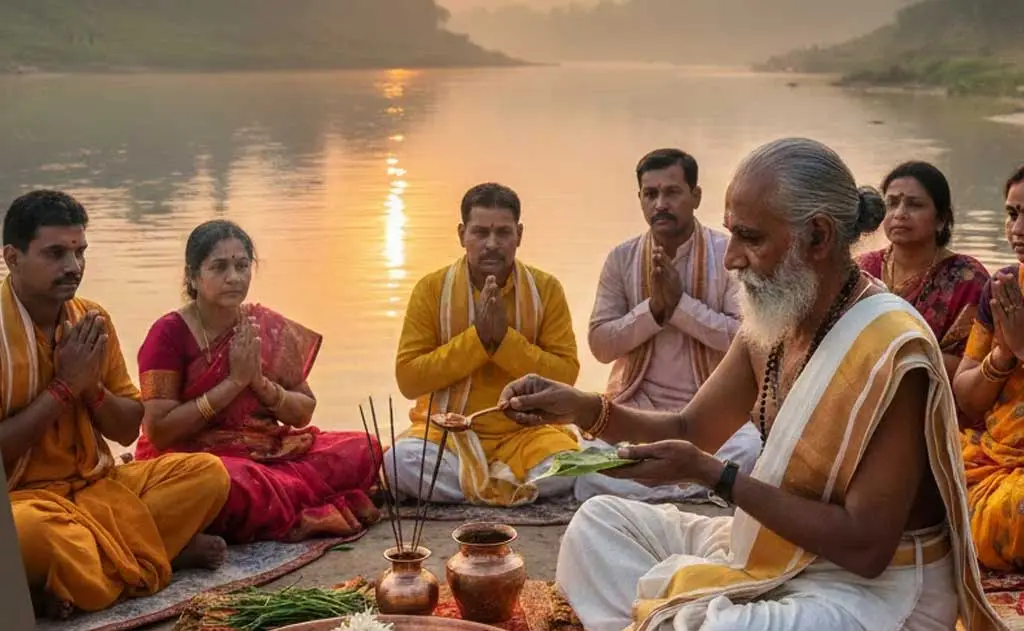
The Statue of Equality functions as a vibrant temple complex. The gold idol serves as the focal point for worship, following Sri Vaishnava traditions.
Daily rituals include:
- Suprabhatam Seva (early morning awakening) around 5:30 AM, with hymns praising the Divine.
- Abhishekam (sacred bathing) at 6:30 AM.
- Kalyana Utsavam (celestial wedding) at 7:00 AM.
- Sathumurai (concluding prayers) at 8:00 AM.
Devotees offer archanas (flower offerings), participate in aartis, and recite mantras. The Nitya Grantha guides personal practices: rising early, meditating on Vishnu, performing daily duties as offerings, and evening prayers.
The 108 Divya Desams replicas allow circumambulation and reflection. Evening fountain shows and laser displays blend artistry with spirituality. Sevas like guided tours, book distributions, and prasadam foster community.
These practices emphasize bhakti and seva, making spirituality inclusive and experiential.
Global Relevance in the Modern World
In an era of division, the Statue of Equality offers timeless lessons. Ramanujacharya's Vishishtadvaita promotes unity amid diversity—relevant to global harmony efforts. His emphasis on equality inspires social initiatives, while bhakti provides inner peace amid chaos.
As a pilgrimage site, it attracts international visitors, boosting spiritual tourism. It bridges ancient wisdom with modern needs, encouraging selfless service and compassion.
Visiting evokes profound serenity, reminding us that every soul is divine. In Ramanujacharya's words, true equality arises from recognizing God's presence in all.
The Statue of Equality is more than architecture—it's a call to live with devotion, equality, and love. In Hyderabad's embrace, it stands eternal, inviting seekers to surrender to the Divine and serve humanity.
Frequently Asked Questions
Where is the Statue of Equality located?
It stands on the outskirts of Hyderabad in Telangana, within the 45-acre Jeeyar Integrated Vedic Academy (JIVA) campus near Muchintal, close to Hyderabad International Airport.
How tall is the Statue of Equality and what is it made of?
The seated statue is 216 feet tall and weighs around 1,800 tons. It is crafted from panchaloha, a five-metal alloy, and sits in padmasana on a lotus pedestal.
Who was Ramanujacharya and what did he teach?
Ramanujacharya was an 11th-century Vaishnava philosopher and saint, born in 1017 CE in Sriperumbudur. He taught Vishishtadvaita, or qualified non-dualism, and held that devotion and self-surrender are open to all regardless of caste.
What daily rituals are performed at the Statue of Equality?
Daily worship follows Sri Vaishnava tradition: Suprabhatam Seva around 5:30 AM, Abhishekam at 6:30 AM, Kalyana Utsavam at 7:00 AM and Sathumurai at 8:00 AM, centred on the gold idol.
What else can visitors see in the complex besides the main statue?
Visitors find replicas of the 108 Divya Desams, a meditation hall with the 120-kg gold idol, educational galleries, a Vedic digital library, gardens, and an evening musical fountain with laser shows.
When was the Statue of Equality inaugurated?
Prime Minister Narendra Modi unveiled it on February 5, 2022, during the Ramanuja Sahasrabdi celebrations marking 1,000 years since Ramanujacharya's birth.
Share this with family and friends
Send it on WhatsApp, post it, or copy the link.
More from Hindutone
- June 2026 Hindu Festival Calendar — Complete Dates, Vrat & Puja Guide for NRIs
- Karthika Masam 2026: Dates (10 November to 8 December), Somavarams, Festivals and Rituals, North and South India
- Top 10 Mysterious Temples in India: Divine Miracles & Ancient Secrets
- Sri Satyanarayana Puja Australia 2026: Group Celebrations on Adhika Jyeshtha Purnima, Katha & Rituals
- Vaikasi Visakam 2026 Australia Celebrations: Lord Murugan Festivals, Abhishekam & Paal Kudam
You might also like
What Does Sarva Mangala Mean? | Significance and Spiritual Meaning in Lalita Sahasranama
Vat Savitri Vrat & Snana Yatra June 29 2026 – Complete Devotional Guide: Savitri’s Story, Rituals & Jagannath Significance
Nirjala Ekadashi June 25 2026 – The King of Ekadashis: Complete Guide with Bhima’s Story, Rituals, Mantras & Benefits