How to Do Shivaratri Puja at Home: Complete Step-by-Step Guide
Last Updated: February 2026 | Reading Time: 10 minutes Maha Shivaratri, one of Hinduism's most sacred nights, offers devotees worldwide an opportunity to honor…
Last Updated: February 2026 | Reading Time: 10 minutes
Maha Shivaratri, one of Hinduism's most sacred nights, offers devotees worldwide an opportunity to honor Lord Shiva through traditional worship. While temple visits hold special significance, performing Shivaratri puja at home creates an intimate, deeply personal spiritual experience—particularly valuable for NRIs, Hindu diaspora communities, and those unable to access temples.
This comprehensive guide provides authentic puja vidhi (worship procedure) adapted for home practice, whether you're in Mumbai or Melbourne, Delhi or Dubai. Drawing from traditional Shaivite texts while addressing modern realities, this article makes sacred observance accessible without compromising authenticity.
Understanding Shivaratri Home Worship
The Sanskrit term "puja" literally means "worship" or "honoring," but its deeper meaning encompasses establishing conscious connection with the Divine. Home puja transforms personal space into sacred space, your kitchen into a temple pantry, and ordinary time into sacred time.
According to the Shiva Purana, Lord Shiva himself declared that sincere worship performed with devotion holds more value than elaborate rituals performed mechanically. This principle liberates home practitioners from anxiety about perfection, emphasizing instead the quality of attention and love brought to practice.
For NRIs and global Hindus, home puja offers several advantages: complete flexibility in timing, ability to involve family members intimately, no crowd management, and freedom to adapt based on available materials. The divine responds to bhava (devotional feeling), not elaborate arrangements.
Essential Items for Shivaratri Puja
Creating your puja setup requires gathering specific items, though substitutions work when traditional materials aren't available.
Core Requirements (Essential)
The Deity Representation:
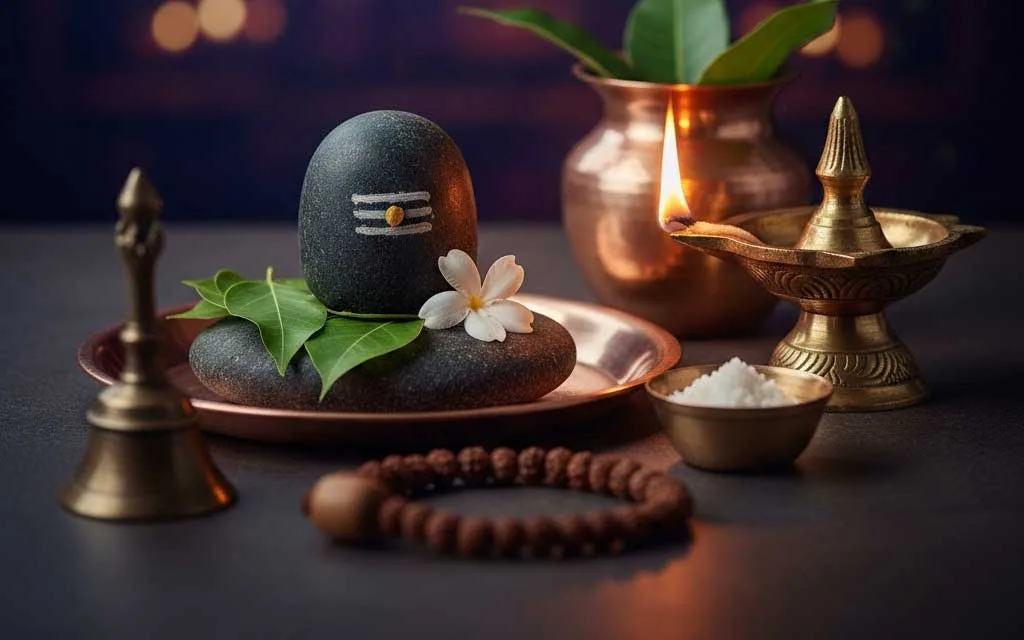
- Shivalinga (stone, clay, or metal)
- Shiva murti (statue or picture frame)
- High-quality Shiva image if physical representations unavailable
Vessels and Containers:
- Copper or steel kalash (water pot) with broad base
- Small vessel for abhishekam water
- Panchapatra (small cup for water) with spoon
- Plate or thali for offerings
- Small lamp holder or diya stand
Puja Substances:
- Pure water (preferably from a clean source)
- Raw milk (full-fat, unhomogenized if possible)
- Plain yogurt (unsweetened)
- Pure honey
- Ghee (clarified butter)
- Sugar or jaggery
- Sandalwood paste or powder
- Kumkum (vermillion powder)
- Raw rice grains
- Fresh flowers (see specific recommendations below)
- Incense sticks or dhoop
- Camphor
- Cotton wicks for lamp
- Oil (sesame or ghee) for lamp
Sacred Items:
- Rudraksha mala (prayer beads)
- Small bell (ghanti)
- Conch shell for water (shankh), if available
- Sacred thread or kalawa
- Clean cloth for altar covering
Flowers: Traditional and Substitutes
Most Auspicious for Shiva:
- Bilva (wood apple) leaves—considered supreme
- White flowers: jasmine, white rose, white lotus, white chrysanthemum
- Datura flowers (use carefully; poisonous if consumed)
- Akanda (crown flower)
- Dhatura leaves
NRI-Friendly Alternatives: Available in most international cities:
- White roses (widely available, acceptable substitute)
- White carnations
- White lilies
- Any white flower offered with devotion
Important Note: Avoid Ketaki (screw pine) and Champak flowers, traditionally considered inauspicious for Shiva worship due to mythological reasons.
Optional Enhancements
These items enrich the experience but aren't mandatory:
- Panchamrit ingredients (milk, yogurt, ghee, honey, sugar)
- Sacred ash (vibhuti)
- Tulsi leaves (for final offering)
- Sacred texts (Shiva Purana, Shiva Chalisa, Lingashtakam)
- Fruits for naivedya (offering)
- Coconut
- Betel leaves and nuts
- New cloth for draping the linga
The NRI Shopping Strategy
When Traditional Items Are Unavailable:
Most major cities globally now have Indian grocery stores carrying puja supplies. Online options include:
- Amazon India/International (ships puja items)
- Specialized Hindu supply websites
- Local Indian community resources
Creative Substitutions That Work:
- No bilva leaves? Use any pure, clean leaves from non-toxic plants, or fresh basil
- No copper kalash? Clean stainless steel or glass pitcher works
- No specific flowers? Single white flower with full devotion suffices
- No sandalwood? Pure sandalwood essential oil mixed with water
- No traditional lamp? Clean candle designated for puja works
The Principle: Purity of materials and intention matter more than perfect authenticity. Don't let unavailable items prevent worship.
Pre-Puja Preparation: Setting the Foundation
Proper preparation amplifies puja effectiveness and creates appropriate sacred space.
Personal Purification (1-2 Days Before)
Physical Cleansing:
- Daily bathing, particularly thorough on Shivaratri morning
- Clean, preferably new or freshly washed clothes for puja
- Hair washed and neatly arranged
- Nails trimmed and clean
- Remove leather items (belt, shoes) during puja
Dietary Preparation: Many devotees fast on Shivaratri. Options include:
- Complete fast (water only) for those physically capable
- Fruit and milk fast (most common and sustainable)
- Single sattvic meal (light vegetarian)
- Avoiding grains, salt, garlic, onions
Begin lighter eating 1-2 days before to ease the transition. Break fast only after completing morning puja on the following day.
Mental Preparation:
- Set clear intention (sankalpa) for your worship
- Review puja procedure to build familiarity
- Clear major obligations so you're mentally present
- Inform family members of your observance
Space Preparation (Morning of Shivaratri)
Cleaning the Puja Area:
- Sweep and mop designated space thoroughly
- Wipe altar surface with clean, damp cloth
- Ensure adequate ventilation
- Arrange lighting—neither too bright nor too dim
Setting Up the Altar:
- Base Layer: Spread clean cloth (red, white, or yellow—auspicious colors)
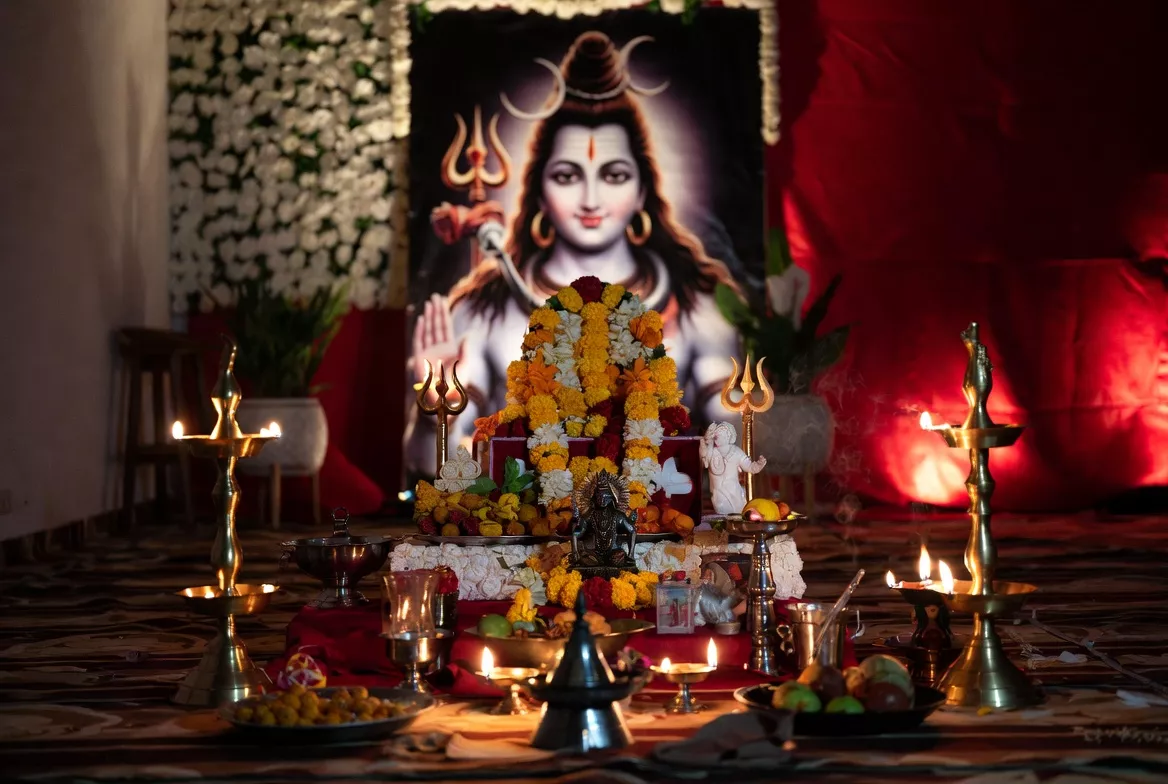
- Deity Placement: Position Shivalinga or murti at center-back
- Kalash Positioning: Place water vessel to deity's right
- Lamp Position: Keep lamp to left or front
- Offering Space: Reserve area in front for flowers, prasad
- Organized Supplies: Arrange all items within easy reach
Energy Considerations:
- Face east or north during puja (traditional auspiciousness)
- Sit at comfortable height—not too high or too low relative to deity
- Ensure you can sit steadily for 30-60 minutes
Creating Sacred Atmosphere:
- Light incense 10-15 minutes before puja to purify space
- Play soft devotional music if desired (optional)
- Minimize external disturbances—silence phones
- Place a "Do Not Disturb" sign if needed
The Complete Shivaratri Puja Vidhi (Step-by-Step)
This section provides detailed procedure following traditional Shaivite practices, adapted for home simplicity.
Phase 1: Invocation and Preparation (5-10 minutes)
Step 1: Achaman (Purification Sips)
- Take water in right palm from panchapatra
- Sip three small amounts while reciting:
- "Om Keshavaya Namah"
- "Om Narayanaya Namah"
- "Om Madhavaya Namah"
- This purifies body, speech, and mind for worship
Step 2: Pranayama (Breath Regulation)
- Perform 3-5 rounds of alternate nostril breathing
- Calms nervous system and centers attention
- Take three deep breaths while focusing on the deity
Step 3: Sankalpa (Intention Declaration)
- Hold rice grains and flower in right hand
- State your intention clearly (in your language):
- "On this sacred day of Maha Shivaratri, I perform this puja to honor Lord Shiva, seeking his blessings, grace, and spiritual upliftment."
- Place the rice and flower at deity's feet
Step 4: Ganesh Puja (Removing Obstacles) Before worshiping Shiva, honor Ganesha:
- Light incense and wave before deity
- Chant: "Om Gam Ganapataye Namah" (11 times)
- Offer flower and kumkum
- This ensures obstacle-free worship
Step 5: Kalash Sthapana (Establishing Water Vessel)
- Fill kalash with clean water
- Place mango leaves around rim (if available)
- Set coconut on top (optional)
- Tie sacred thread around neck of kalash
- This represents divine presence in element form
Phase 2: Abhishekam (Ritual Bathing) (15-20 minutes)
Abhishekam forms the heart of Shivaratri worship—ritually bathing the Shivalinga or murti with sacred substances.
The Sacred Sequence:
1. Water Abhishekam
- Pour clean water over linga while chanting:
- "Om Namah Shivaya" (continuously)
- Visualize washing away impurities
- Duration: 2-3 minutes
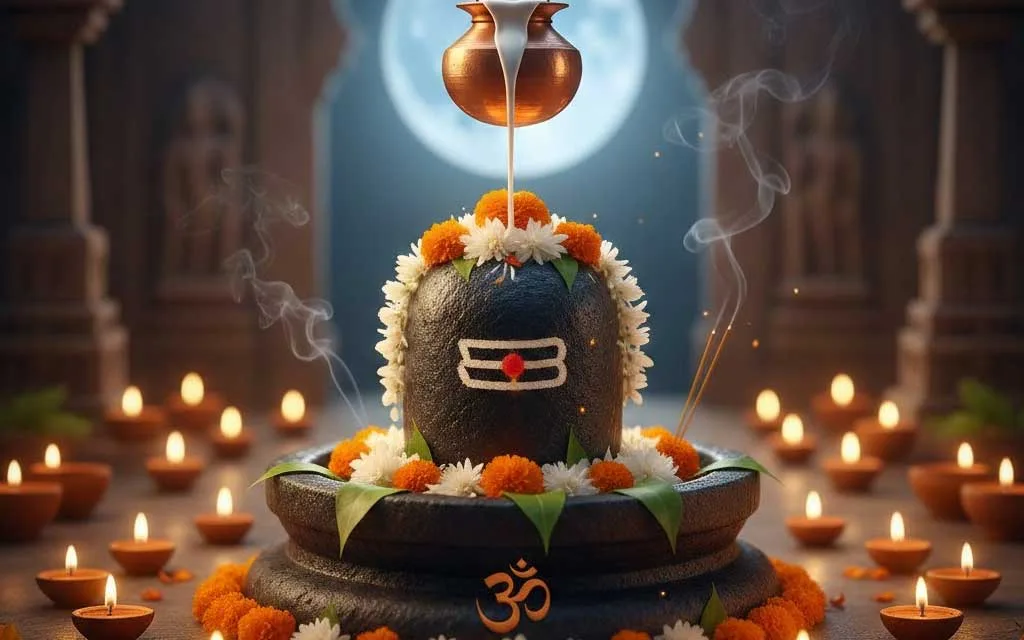
2. Milk Abhishekam
- Pour milk slowly over linga
- Chant: "Om Somaya Namah" (to moon energy)
- Milk represents purity and nourishment
- Duration: 2-3 minutes
3. Yogurt Abhishekam
- Pour yogurt or mix with milk
- Chant: "Om Amritaya Namah"
- Represents transformation
- Duration: 1-2 minutes
4. Honey Abhishekam
- Drizzle honey over linga
- Chant: "Om Madhavaya Namah"
- Represents sweetness of devotion
- Duration: 1-2 minutes
5. Ghee Abhishekam
- Pour melted ghee (if temperature permits, slightly warm)
- Chant: "Om Jyotaye Namah" (to light)
- Represents illumination and consciousness
- Duration: 1-2 minutes
6. Sugar Water Abhishekam
- Dissolve sugar in water and pour
- Chant: "Om Anandaya Namah"
- Represents divine bliss
- Duration: 1-2 minutes
7. Panchamrit Abhishekam (Combined)
- Mix all five substances (milk, yogurt, honey, ghee, sugar)
- Pour while chanting: "Om Namah Shivaya"
- This combines all qualities
- Duration: 3-4 minutes
8. Final Water Abhishekam
- Pour pure water to rinse
- Chant Mahamrityunjaya Mantra (if known):
- "Om Tryambakam Yajamahe Sugandhim Pushtivardhanam, Urvarukamiva Bandhanan Mrityor Mukshiya Maamritat"
- Duration: 2-3 minutes
Important Abhishekam Guidelines:
- Pour from slight height, creating gentle flow
- Maintain continuous chanting throughout
- Collect abhishekam water in plate below (this becomes blessed prasad)
- Keep awareness on each substance's symbolic meaning
- If materials are limited, water abhishekam with devotion suffices
Phase 3: Alankara (Decoration and Offerings) (10-15 minutes)
Step 1: Wiping and Drying
- Gently wipe linga/murti with clean, dry cloth
- Respect and care in handling
Step 2: Sandalwood Application
- Apply sandalwood paste to linga (avoid top portion if Shivalinga)
- Make three horizontal lines representing tripundra
- Chant: "Om Shankaraya Namah"
Step 3: Kumkum Application
- Apply red kumkum
- Represents shakti (divine feminine power)
- Chant: "Om Umapataiye Namah"
Step 4: Clothing (Optional)
- If you have new cloth, drape around linga base
- This represents offering protection to the Divine
Step 5: Sacred Thread
- Wind sacred thread around linga
- Traditional offering showing devotion
Step 6: Bilva Leaves Offering
- Place bilva leaves in sets of three
- Each leaf set represents:
- Trinity: Brahma, Vishnu, Mahesh
- Three eyes of Shiva
- Three gunas: sattva, rajas, tamas
- Chant with each offering: "Om Namah Shivaya"
- Offer at least 11 sets, ideally 108
Step 7: Flower Offering (Pushpanjali)
- Offer flowers individually or in handfuls
- Place at deity's feet and around base
- Chant divine names:
- "Om Shambhave Namah"
- "Om Pinakine Namah"
- "Om Shashishekharaya Namah"
- "Om Vamadevaya Namah"
- Continue until all flowers offered
Step 8: Rudraksha Offering
- If you have rudraksha beads, place one or garland around linga
- Represents Shiva's tears of compassion
Phase 4: Upachara (Sixteen Traditional Services) (15-20 minutes)
Traditional puja includes sixteen services (shodasha upachara). Simplified home version:
1. Dhyana (Meditation)
- Visualize Shiva's form for 1-2 minutes
- See him seated in meditation on Mount Kailash
2. Asana (Seat)
- Mentally offer divine throne
- "Om Asanaartham Samarpayami"
3. Padya (Washing Feet)
- Offer water for washing feet
- Pour water from panchapatra while chanting: "Om Padyam Samarpayami"
4. Arghya (Hand Washing)
- Offer water for washing hands
- "Om Arghyam Samarpayami"
5. Achamana (Water for Sipping)
- Offer drinking water
- "Om Achamaniyam Samarpayami"
6. Snana (Bathing)
- Symbolic—already completed during abhishekam
- "Om Snanam Samarpayami"
7. Vastra (Clothing)
- Offer or arrange cloth
- "Om Vastram Samarpayami"
8. Abharana (Ornaments)
- Visualize or offer decorative items
- "Om Abharanam Samarpayami"
9. Gandha (Fragrance)
- Apply sandalwood paste
- "Om Gandham Samarpayami"
10. Pushpa (Flowers)
- Offer fresh flowers
- "Om Pushpam Samarpayami"
11. Dhupa (Incense)
- Light incense, wave in circular motion
- Hold for 30 seconds before deity
- "Om Dhupam Samarpayami"
12. Dipa (Lamp)
- Light ghee lamp with cotton wick
- Wave in clockwise circular pattern: three full circles
- This is the arati
- "Om Dipam Samarpayami"
13. Naivedya (Food Offering)
- Offer prepared prasad (fruits, sweets, coconut)
- Sprinkle water around plate (parishechan)
- Chant: "Om Naivedhyam Samarpayami"
- Visualize Shiva accepting the offering
14. Tambula (Betel)
- Offer betel leaves and nuts if available
- "Om Tambulam Samarpayami"
15. Neerajana (Final Lamp Waving)
- Perform complete arati again
- Ring bell continuously during arati
- Sing or chant arati song (Shiva Arati or Om Jai Shiva Omkara)
16. Pradakshina and Namaskara (Circumambulation and Prostration)
- For home altar, circumambulate mentally or move in semicircle
- Perform full prostration (ashtanga namaskara) or bow deeply
- "Om Pradhakshinam Namaskaaram Samarpayami"
Phase 5: Mantra Japa (Prayer and Meditation) (20-30 minutes)
After completing ritual worship, engage in deeper spiritual practice:
Primary Mantra Practice: Sit comfortably before the deity and chant:
- Om Namah Shivaya (108 times minimum)
- Use rudraksha mala to count
- Chant with full attention and devotion
- Feel the vibration in your body
Additional Sacred Recitations:
- Shiva Chalisa (40 verses praising Shiva)
- Lingashtakam (8 verses on Shivalinga)
- Shiva Mahimna Stotra (if time permits)
- Mahamrityunjaya Mantra (11 or 21 times)
Silent Meditation:
- After mantra completion, sit in silence
- Maintain awareness of divine presence
- Rest in the peace generated by puja
- Duration: 10-15 minutes
Phase 6: Arati and Conclusion (5-10 minutes)
Grand Arati:
- Light camphor in small plate
- Wave before deity in circular pattern
- Sing Shiva Arati:
Om Jai Shiva Omkara, Swami Jai Shiva Omkara
Brahma Vishnu Sadashiva, Ardhangi Dhara
Om Jai Shiva Omkara...
- Ring bell throughout
- Family members can participate by singing
Taking Arati:
- After waving, bring flame toward yourself
- Cup hands over flame and touch face (bringing divine blessing)
- Don't blow out camphor—let it burn completely
Pushpanjali (Final Flower Offering):
- Offer final handful of flowers
- Express gratitude for completed worship
Prasad Distribution:
- Distribute blessed food to all participants
- Keep some for consumption after fasting
- The abhishekam water collected is highly sacred—sip small amount or sprinkle on head
Closing Prayer: Chant final peace mantras:
- "Om Shanti Shanti Shantihi"
- "Sarve Bhavantu Sukhinah" (May all beings be happy)
Sankalpa Release:
- Express gratitude: "I have completed this puja with devotion. May Lord Shiva bless all beings."
The Four Prahar Puja System
Traditional Shivaratri observance repeats puja four times throughout the night, once during each prahar (three-hour watch). This creates a complete all-night worship cycle.
Timing Structure:
- First Prahar: 6:00 PM - 9:00 PM
- Second Prahar: 9:00 PM - 12:00 AM
- Third Prahar: 12:00 AM - 3:00 AM (most auspicious)
- Fourth Prahar: 3:00 AM - 6:00 AM
Simplified Approach for Each Prahar:
- Brief cleaning of altar
- Fresh abhishekam (can use just water and milk if repeating)
- New flower offerings
- Lighting fresh incense and lamp
- Mantra chanting (minimum 108 repetitions)
- Brief arati
Practical Adaptations:
- If performing all four seems overwhelming, prioritize midnight prahar (third)
- Combine first and second prahar, then third and fourth
- Maintain wakefulness and devotional focus even if not doing full ritual each time
Between Prahars:
- Keep lamp burning continuously (add oil as needed)
- Maintain mantra awareness or sacred reading
- Light snacks permitted if not fasting completely (fruits, milk)
- Brief rest acceptable, but avoid sleep
Shivaratri Fasting Guidelines
Fasting (vrata) intensifies spiritual practice by directing bodily energy upward and developing willpower.
Fasting Options (Choose Based on Capacity)
Level 1: Complete Fast (Nirjala)
- No food or water for 24 hours
- Only for healthy, experienced individuals
- Most spiritually powerful but physically demanding
- Break fast only after morning puja next day
Level 2: Fruit and Milk Fast (Most Common)
- Permitted: Fruits (fresh), milk, water, coconut water, non-caffeinated herbal tea
- Avoid: Grains, salt, cooked food, spices, onion, garlic
- Sustainable for most people
- Maintains energy for night-long worship
Level 3: Single Meal Fast
- One simple sattvic meal around noon
- Rest of time: fruits and liquids
- Good for beginners or those with health considerations
Level 4: Modified Fast
- Light sattvic foods throughout day
- Avoid tamasic items (meat, eggs, alcohol)
- Suitable for those unable to fast fully
Who Should Not Fast
- Children under 12
- Pregnant or nursing women
- Individuals with diabetes, hypoglycemia, or other metabolic conditions
- Those taking medications requiring food
- Elderly with special dietary needs
- Anyone feeling unwell
Important: Spiritual devotion doesn't require physical hardship that compromises health. Adapt fasting to your circumstances.
Breaking the Fast (Parana)
Timing: Next morning after sunrise and morning puja
Method:
- Begin with prasad from puja (fruits, sweets)
- Drink water slowly
- Have light meal: fruits, khichdi, milk-based items
- Avoid heavy, oily, or rich foods immediately
- Return gradually to regular diet over next meal
Jagaran: The All-Night Vigil
Jagaran means "keeping awake"—maintaining consciousness through the sacred night.
Jagaran Activities
Devotional Singing:
- Bhajans and kirtans praising Shiva
- Repeated chanting of Om Namah Shivaya
- Group singing creates powerful collective energy
Sacred Reading:
- Shiva Purana stories
- Philosophical texts on Shaivism
- Shiva Sahasranama (1000 names)
Mantra Japa:
- Continuous repetition between formal pujas
- Silent or soft verbal chanting
- Using mala to maintain count
Meditation:
- Seated meditation on Shiva's form
- Visualization practices
- Breath awareness
Discourse and Discussion:
- Family discussions on spiritual topics
- Watching recorded spiritual discourses
- Reading and discussing sacred texts
Creative Expression:
- Drawing or coloring yantras
- Writing divine names
- Creating art inspired by Shiva
Staying Awake: Practical Tips
Natural Alertness Methods:
- Keep room moderately lit (not too bright or dark)
- Sit upright rather than reclining
- Maintain active engagement (chanting, not passive watching)
- Cold water on face during energy dips
- Brief walking meditation
- Group participation (collective energy sustains individuals)
What to Avoid:
- Heavy food (increases drowsiness)
- Lying down on comfortable surfaces
- Passive television watching
- Dim, warm lighting
- Complete silence (some sound maintains alertness)
NRI and Global Hindu Considerations
Time Zone Adaptations
Following Indian Timing: Some prefer observing per Indian calendar, creating worldwide simultaneous worship.
Following Local Timing: Others align with local sunset/sunrise, honoring the actual night in their location.
Both Valid: The sacred energy of Shivaratri encompasses the entire Earth. Choose what feels spiritually authentic.
Material Substitutions (Recap)
Limited Access Solutions:
- Virtual darshan from Indian temples via live stream
- Simple water abhishekam with full devotion equals elaborate ritual
- Printed images work if murtis unavailable
- Regular flowers from local florist (white preferred)
- Standard household items adapted for puja use
Community Connections
Finding Local Resources:
- Indian grocery stores (puja supplies)
- Hindu temples (community events)
- Online communities (virtual satsangs)
- Social media groups (local Hindu diaspora)
Virtual Participation:
- Many temples now live-stream Shivaratri puja
- Online group chanting sessions
- Video calls with family in India during puja
Children's Involvement
Age-Appropriate Participation:
- Young children (3-7): Simple tasks like ringing bell, offering flowers, singing
- Older children (8-12): Learning mantras, helping arrange items, reading stories
- Teenagers: Full participation, understanding significance, possibly performing puja
Making It Engaging:
- Explain stories of Shiva in accessible language
- Allow creative expression (drawing, craft)
- Don't force extended sitting—brief participation builds gradually
- Focus on joy and connection, not rigid formality
Workplace Considerations
Day After Arrangements:
- Request day off if possible (religious observance)
- If unavoidable, modified schedule allowing some rest
- Inform employer in advance
- Many companies respect religious observances
Common Questions About Home Shivaratri Puja
Can women perform Shivaratri puja during menstruation?
Traditional views vary. Conservative interpretation suggests abstaining, while progressive teachers affirm that sincere devotion transcends physical states. Many contemporary practitioners maintain that the divine-devotee relationship isn't affected by natural bodily functions. Follow your personal comfort and family tradition.
Is it mandatory to stay awake all night?
Jagaran represents the ideal, but sincere worship with available time and energy holds tremendous value. If you must sleep, do so after completing at least one thorough puja. Quality of awareness during practice matters more than sheer duration.
What if I can't obtain a Shivalinga?
Any respectful representation works: picture, yantra, or even a clean rounded stone. The divine responds to devotion, not material perfection. Many practitioners successfully perform puja before printed images.
Can we perform puja as a family?
Absolutely. Family participation creates beautiful collective devotion. One person can lead while others participate through singing, bell ringing, and responsive chanting. Children's involvement particularly brings joy to the practice.
What to do with leftover flowers and puja materials after Shivaratri?
Flowers and organic items: Return to nature—place under trees, in garden, or flowing water. Avoid throwing in trash.
Prasad: Consume respectfully or share with others. Never waste blessed food.
Water from abhishekam: Very sacred—drink, sprinkle on head, water plants.
Non-perishable items: Store properly for future pujas.
How many times should we perform abhishekam?
Traditional four-prahar system means four complete abhishekams. However, even one thorough abhishekam with devotion fulfills the spiritual purpose. Quality over quantity.
Can we use English or our native language instead of Sanskrit?
Sanskrit mantras carry specific vibrational qualities, making them preferable when possible. However, sincere prayer in any language reaches the Divine. Many practitioners combine: Sanskrit mantras with understanding expressed in their language.
What if we make mistakes during puja?
Mistakes are normal, especially for beginners. The divine appreciates sincere effort. Conclude puja with: "Please forgive any errors in my worship. Accept my devotion." Growth comes through practice.
Should we hire a priest for home puja?
Optional, not mandatory. Priests bring expertise and proper pronunciation. However, personal performance creates intimate connection. Many families do both: priest-led major puja plus personal practice.
Special Considerations and Precautions
Lamp Safety
- Never leave burning lamp unattended
- Keep away from flammable materials (curtains, papers)
- Place on stable, heat-resistant surface
- Have water nearby as precaution
- If leaving room, extinguish and relight upon return
Food Safety
- Prasad should be freshly prepared
- Refrigerate milk-based items after offering if room is warm
- Consume within reasonable timeframe
- Maintain hygiene during preparation
Physical Well-being
- Don't fast if health contraindicated
- Stay hydrated, especially in warm climates
- Take brief walking breaks if sitting causes pain
- Listen to your body's signals
Emotional Balance
- Puja should create peace, not stress
- Don't be perfectionist—worship with available resources
- If feeling overwhelmed, simplify rather than abandon
- Remember: devotion matters more than elaborate arrangements
Beyond Shivaratri: Sustaining the Connection
The spiritual momentum generated on Shivaratri can transform daily life when properly integrated.
Daily Mini-Puja
Maintain connection through:
- Brief morning prayer before Shiva image (5 minutes)
- Evening lamp lighting
- Regular mantra practice (even 10 minutes)
- Monday fasting or special worship (Shiva's day)
Monthly Observances
- Observe Pradosh (13th day of lunar fortnight) with special puja
- New and full moon days with brief ritual
- Monthly fasting if sustainable
Annual Cycle
- Maha Shivaratri (main festival)
- Monthly Shivaratri (14th day of each lunar month)
- Shravan month (July-August)—special Shiva worship period
Lifestyle Integration
True worship extends beyond ritual:
- Ethical living aligned with dharmic principles
- Compassion toward all beings
- Truthfulness in speech and action
- Service to those in need
- Environmental consciousness (Shiva as Pashupati, lord of creatures)
Conclusion: Making Shivaratri Personal and Authentic
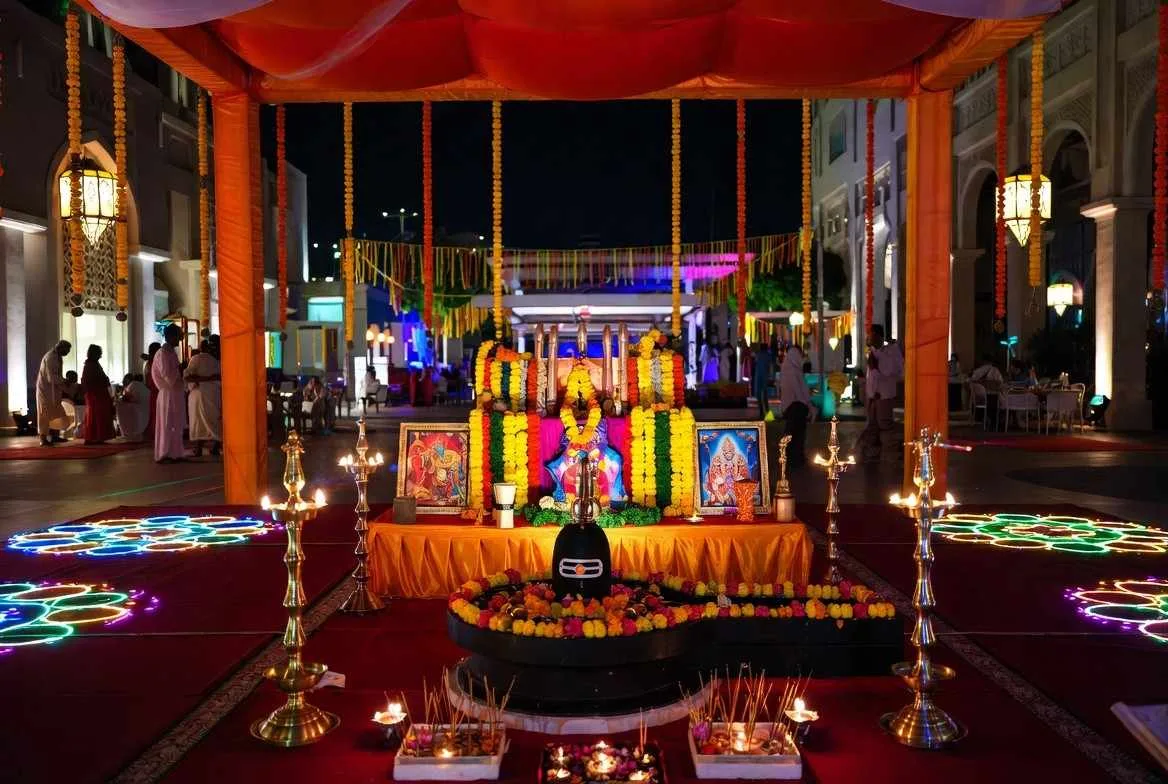
Performing Shivaratri puja at home transcends geographic boundaries, connecting you to millions of devotees worldwide engaged in simultaneous worship. Whether in Toronto or Tokyo, London or Lagos, the sacred energy of this night pervades equally.
The step-by-step framework provided here balances traditional authenticity with modern accessibility. Remember that Shiva represents consciousness itself—pure awareness beyond form. The rituals serve as vehicles for that consciousness to recognize itself within you.
Don't be discouraged by limited resources, imperfect pronunciation, or inability to perform every traditional element. The Shiva Purana repeatedly emphasizes that Lord Shiva values sincerity over sophistication, devotion over display. Your humble offering made with full heart equals the most elaborate temple ritual.
As you prepare for Shivaratri, set your intention clearly, gather what materials you can, create your sacred space, and then surrender fully to the practice. Let the ancient rhythms of worship carry you beyond ordinary consciousness into direct experience of the Divine.
Om Namah Shivaya. Har Har Mahadev.
About This Guide: This article synthesizes traditional Shaivite puja procedures from scriptural sources including Shiva Purana, Skanda Purana, and Agamic texts with practical adaptations for contemporary global practice. Information reflects both orthodox Hindu tradition and accessible approaches for diverse circumstances.
Disclaimer: This guide provides information about traditional religious practices. Adapt procedures to your health needs, available resources, and personal circumstances. Consult knowledgeable practitioners for specific questions about your tradition.
Frequently Asked Questions
What items do I need for Shivaratri puja at home?
You need a Shivalinga or Shiva murti, a kalash, water, raw milk, yogurt, honey, ghee, sugar, sandalwood, kumkum, rice, white flowers, incense, camphor, a lamp and a rudraksha mala. Bilva leaves are considered supreme.
What can NRIs substitute if bilva leaves or other items are unavailable?
White roses, carnations or lilies work in place of traditional flowers, and a steel or glass pitcher can replace a copper kalash. A clean candle can serve as the lamp. Purity of intention matters more than perfect authenticity.
What is the order of abhishekam during Shivaratri puja?
Pour water first with Om Namah Shivaya, then milk, yogurt, honey, ghee and sugar water, each with its own mantra. Finish with a combined panchamrit abhishekam.
Which flowers should be avoided in Shiva worship?
Ketaki (screw pine) and Champak flowers are traditionally avoided for Shiva worship due to mythological reasons. White flowers and bilva leaves are preferred.
How should I fast on Shivaratri?
Options include a complete water-only fast, a fruit and milk fast (the most common), or a single sattvic meal, avoiding grains, salt, garlic and onions. The fast is broken after the morning puja on the following day.
How long does the home puja take and which direction should I face?
Sit facing east or north, and be ready to sit steadily for 30 to 60 minutes. Invocation takes about 5 to 10 minutes and abhishekam about 15 to 20 minutes.
Share this with family and friends
Send it on WhatsApp, post it, or copy the link.
More from Maha Shivaratri 2026
- Maha Shivaratri Four Prahar Puja — The Complete Night-by-Night Ritual Guide
- Devotion in the Sands: The Inspiring Story of a Karnataka Couple Crafting 1008 Shiva Lingams Every Maha Shivaratri
- Isha Foundation's Mahashivratri 2026 Sets New Record as Most Viewed Celebration on YouTube
- The 33rd Mahashivratri at Isha Yoga Center
- Maha Shivaratri 2026 Celebrations in Germany: How the Hindu Community Honored Lord Shiva Yesterday – A Complete Guide to Cities, Temples, and Events