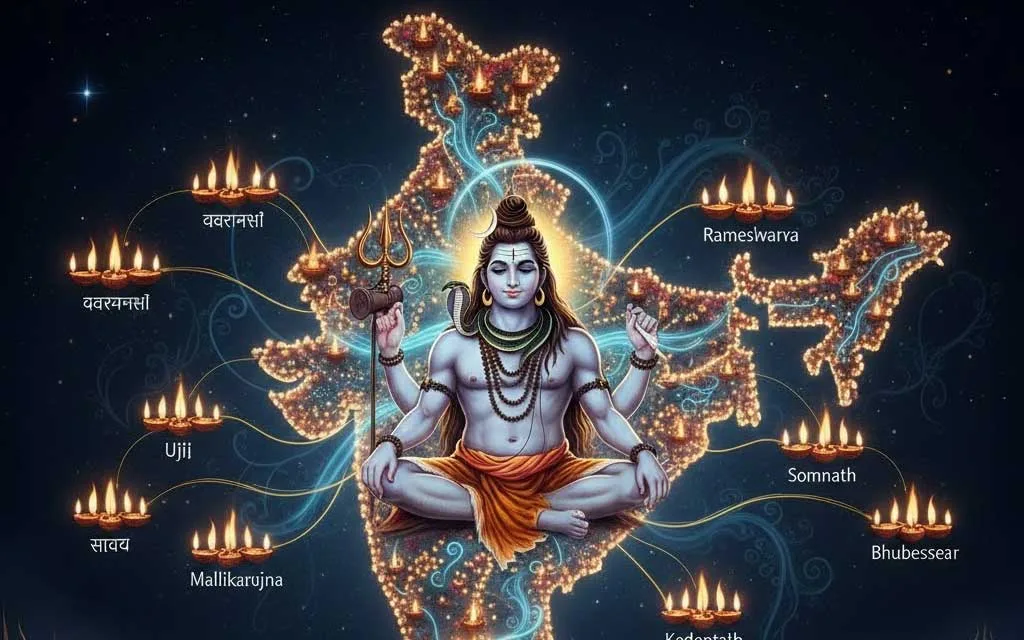
Must-Listen Lord Shiva Mantras on Maha Shivaratri Night 2026 | Powerful Shiva Mantras with YouTube Links for Jagran & Devotion
Must-listen Lord Shiva mantras for Maha Shivaratri 2026: Om Namah Shivaya, Mahamrityunjaya Mantra, Shiv Tandav Stotram & more.
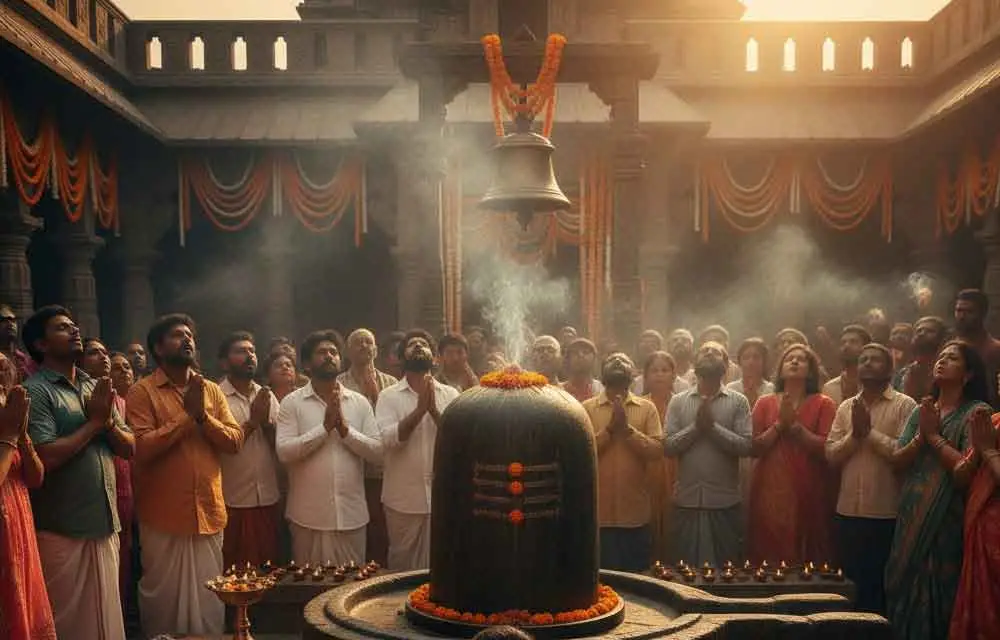
Must-listen Lord Shiva mantras for Maha Shivaratri 2026: Om Namah Shivaya, Mahamrityunjaya Mantra, Shiv Tandav Stotram & more. Embed YouTube links for powerful chanting, healing & protection during Shivratri jagran!
Maha Shivaratri is the sacred night when devotees of Lord Shiva observe fasts, perform puja, and stay awake in devotion (jagran) to seek blessings from Mahadev – the destroyer of ignorance and bestower of moksha. Chanting or listening to Lord Shiva mantras purifies the mind, removes negativity, and invokes divine energy. These must-listen Shiva mantras are perfect for Shivaratri night, whether you're meditating, performing Rudrabhishek, or keeping the family in spiritual vibes.
We've curated the top powerful mantras with direct You links (popular devotional renditions from trusted channels). Play them in loop for non-stop positive vibrations!
1. Om Namah Shivaya – The Panchakshara Mantra (Most Essential for Shivaratri)
The simplest yet most potent mantra representing the five elements and ultimate surrender to Shiva.
(108 times chanting – ideal for meditation & devotion)
2. Mahamrityunjaya Mantra – Conqueror of Death & Healing Mantra
"Om Tryambakam Yajamahe Sugandhim Pushtivardhanam Urvarukamiva Bandhanan Mrityor Mukshiya Maamritat" Chant for health, longevity, protection from dangers, and liberation.
(Soulful rendition by Shankar Mahadevan – meditative & divine)
3. Shiv Tandav Stotram – Ravana's Powerful Praise of Shiva's Cosmic Dance
Epic stotram describing Shiva's Tandava – energizing, rhythmic, and full of power. Perfect for midnight jagran!
(Shankar Mahadevan's iconic version – over 250M+ views!)
4. Rudrashtakam – Namami Shamishan Nirvan Roopam
Heart-touching stotram of surrender and devotion to Rudra-Shiva.
(Classic by Anuradha Paudwal with Sanskrit subtitles – deeply emotional)
5. Lingashtakam – Brahma Murari Sura Archita Lingam
Hymn glorifying the Shiva Linga – ideal after abhishek or during offerings.
(Devotional classic by S.P. Balasubrahmanyam – soothing & powerful)
Bonus: Non-Stop Powerful Shiva Mantras Mashup for Full Night
For extended listening during the four prahars
(Non-stop peaceful Shiva mantras – great for background during puja)
Tips to Maximize Shivaratri Benefits
- Start with Om Namah Shivaya after evening aarti.
- Chant Mahamrityunjaya 108 times for protection.
- Play Shiv Tandav at midnight for energy boost.
- Use headphones for deep meditation or play aloud for family.
- Combine with bilva leaves, milk abhishek, and Om chants.
These mantras will fill your space with Har Har Mahadev vibrations and help transcend worldly distractions. Which mantra resonates most with you this Shivaratri? Share in the comments!
Har Har Mahadev! Shambhu Shankar!
For More Devotional Journey, Follow
- Temples
/temples/ - Tirumala Updates
/tirumala/ - Sabarimala Yatra
/category/sabarimala-yatra/ - Pooja, Slokas & Mantras
/pooja-slokas-and-mantras/ - Hindu Gods
/hindu-gods/
Why Maha Shivaratri Night Is the Most Auspicious Time for Mantra Chanting
Maha Shivaratri falls on the Chaturdashi tithi of the Krishna Paksha in the month of Phalguna (or Magha, depending on regional calendar). According to the Shiva Purana, on this night Lord Shiva manifested as the infinite column of fire — the Jyotirlinga — before both Brahma and Vishnu, making the night itself a direct theophany of Mahadev. Chanting mantras during this period is therefore considered spiritually equivalent to years of regular sadhana.
Ayurvedic and yogic texts note that the planetary alignment on Shivaratri creates a natural upward pull of energy in the human spine, making deep meditation more accessible. The Linga Purana specifically recommends that a devotee who stays awake chanting 'Om Namah Shivaya' through all four praharas (the four three-hour watches of the night) accumulates the merit of a thousand ordinary nights of worship. Each prahara has its own prescribed form of abhishek — milk, curd, ghee, and honey — and its own recommended mantra emphasis.
The Inner Meaning of the Panchakshara Mantra: Na Ma Shi Va Ya
The Panchakshara mantra 'Na-Ma-Shi-Va-Ya' is sourced from the eighth Anuvaka of the Sri Rudram, found in the Krishna Yajurveda's Taittiriya Samhita (4.5.8). Each of the five syllables corresponds to one of the Pancha Bhutas: 'Na' to Prithvi (earth), 'Ma' to Jala (water), 'Shi' to Agni (fire), 'Va' to Vayu (air), and 'Ya' to Akasha (space). Chanting it is thus understood as an act of returning the entire cosmos — and oneself — back to its divine source.
The prefix 'Om' elevates the mantra to a Shadakshara (six-syllable) form, which is described in the Shiva Purana's Vidyeshvara Samhita as the highest initiation mantra given by Shiva himself to Parvati. Spiritual teachers in the Shaiva Siddhanta tradition explain that repetition of this mantra gradually dissolves the three Malas — Anava (ego), Mayiya (illusion), and Karma (action-bondage) — which are the primary obstacles to moksha. For Shivaratri jagran, chanting 108 or 1,008 rounds on a Rudraksha mala is the traditional prescription.
Mahamrityunjaya Mantra: Scripture, Structure, and the Science of Its Healing Power
The Mahamrityunjaya Mantra appears in the Rigveda (7.59.12), attributed to the sage Vasishtha, and is also found in the Shukla Yajurveda (3.60). It is addressed to Tryambaka — the Three-Eyed One — an epithet of Shiva that points to his transcendence of the three states of consciousness: waking (jagrat), dreaming (svapna), and deep sleep (sushupti). The mantra's central metaphor, comparing liberation to a ripe cucumber separating effortlessly from its vine, is one of the most precise descriptions of moksha in all of Vedic literature.
In the Shiva Purana's Kailasa Samhita, the sage Markandeya — who was fated to die at sixteen — is said to have defeated Yama himself through devout repetition of this mantra while embracing the Shivalinga at Thirukkadaiyur (Tirukadaiyur Temple, Tamil Nadu). This legend gives the mantra its other name, Markandeya Mantra. For Shivaratri night, practitioners traditionally chant it 108 times during each of the four praharas, particularly dedicating the third prahara (around 2–3 AM) to this mantra as an offering for ancestral protection and personal healing.
Shiv Tandav Stotram and Rudrashtakam: Devotional Poetry as Living Mantra
The Shiv Tandav Stotram is attributed to Ravana, the scholar-king of Lanka, who is described in the Valmiki Ramayana as a devoted Shaiva and a master of the Sama Veda. According to the Uttara Kanda, Ravana composed this hymn on Mount Kailash when Shiva blocked his path; unable to move the mountain, he used his ten arms as a veena and sang this stotram, moved to which Shiva granted him the Chandrahas sword. Every verse ends with the refrain 'Karala Bhalam Patala Phalam' followed by a direct petition — 'Shoolpani Pahi Mam' (O Spear-bearer, protect me) — making it both a philosophical description of Shiva's cosmic form and a direct prayer for shelter.
Rudrashtakam, composed by the poet-saint Tulsidas in the medieval period, appears in the Uttara Kanda of his Ramcharitmanas. Its opening line — 'Namami Shamishan Nirvan Roopam' — salutes Shiva as the embodiment of Nirvana, bridging Shaiva and broader Indic philosophical vocabulary. Chanting or listening to Rudrashtakam during the second prahara of Shivaratri, which corresponds to the midnight hour when Shiva's energy is at its peak according to tradition, is considered especially conducive to inner silence and dissolution of grief.
How to Arrange a Complete Mantra Sequence for Your Shivaratri Jagran
A structured approach to the four-prahara jagran makes the night both spiritually productive and physically sustainable. The first prahara (approximately 6 PM–9 PM) is recommended for Lingashtakam and Panchakshara chanting alongside the ceremonial milk abhishek — this sets a calm, devotional tone for the household. The second prahara (9 PM–12 AM) suits the energetic Shiv Tandav Stotram and the chanting of the Shri Rudram (Namakam and Chamakam from the Taittiriya Samhita), which are the Vedic backbone of Rudrabhishek.
The third prahara (12 AM–3 AM) is the heart of the jagran and is traditionally dedicated to the Mahamrityunjaya Mantra and deep meditation. During this period, minimizing conversation and keeping the atmosphere smoke-free and lamp-lit (preferably with a ghee diya) is advised by acharyas. The fourth and final prahara (3 AM–6 AM) leads into the Brahma Muhurta, the most auspicious 48-minute window before sunrise; here, gentle Rudrashtakam and a soft continuous loop of 'Om Namah Shivaya' complete the night and transition naturally into the morning puja and the breaking of the fast with Panchamrit prasad.
Sacred Shiva Temples to Visit or Virtually Connect With on Maha Shivaratri 2026
The twelve Jyotirlingas are the most potent points of Shiva's presence on earth, and their live darshan — whether in person or streamed online — is considered meritorious on Shivaratri. Somnath Jyotirlinga in Prabhas Patan, Gujarat, and Kashi Vishwanath Jyotirlinga in Varanasi, Uttar Pradesh, conduct all-night Rudrabhishek visible to devotees and now live-streamed on official temple channels, allowing families anywhere in the world to synchronize their home chanting with temple rituals.
Beyond the Jyotirlingas, Chidambaram Natarajar Temple in Tamil Nadu — where Shiva is worshipped as the Cosmic Dancer, Nataraja — holds a special Arudra Darshan celebration closely linked to Shivaratri themes of Tandava. The Mrityunjayeshwar Temple in Varanasi and the Arunachaleswarar Temple in Thiruvannamalai, Tamil Nadu (where Shiva manifests as the sacred Arunachala Hill, the earthly form of the Jyotirlinga) are also celebrated Shivaratri venues. Lighting a lamp at home while mentally visualizing these sacred spaces and chanting 'Om Namah Shivaya' is a recognized practice in the Shaiva Agamic tradition for devotees unable to travel.
Frequently Asked Questions
What is the Must?
Must-listen Lord Shiva mantras for Maha Shivaratri 2026: Om Namah Shivaya, Mahamrityunjaya Mantra, Shiv Tandav Stotram & more. Embed YouTube links for powerful chanting, healing & protection during Shivratri jagran!
How many times should the Must be chanted?
It is traditionally chanted 108 times using a rudraksha or tulsi mala. Even 11 or 21 sincere repetitions daily are considered beneficial — steady, focused practice matters more than the count.
What is the best time to chant the Must?
Dawn (Brahma Muhurta) after a bath is considered ideal, though it may be chanted any time with a calm, focused mind. Many devotees keep a fixed daily time to build consistency.
Who can chant the Must?
Anyone may chant it with faith and a pure mind, regardless of age, gender or background. Beginners benefit from first hearing the correct pronunciation and understanding its meaning.
What are the benefits of chanting the Must?
Devotees chant it to invoke Lord Shiva's grace — for inner peace, protection, focus and spiritual progress.
Share this with family and friends
Send it on WhatsApp, post it, or copy the link.
More from Maha Shivaratri 2026
- Maha Shivaratri Four Prahar Puja — The Complete Night-by-Night Ritual Guide
- Devotion in the Sands: The Inspiring Story of a Karnataka Couple Crafting 1008 Shiva Lingams Every Maha Shivaratri
- Isha Foundation's Mahashivratri 2026 Sets New Record as Most Viewed Celebration on YouTube
- The 33rd Mahashivratri at Isha Yoga Center
- Maha Shivaratri 2026 Celebrations in Germany: How the Hindu Community Honored Lord Shiva Yesterday – A Complete Guide to Cities, Temples, and Events
You might also like
Maha Shivaratri 2027 Celebrations in Australia: How the Hindu Diaspora Honored Lord Shiva Yesterday – A Complete Guide to Cities, Temples, and Events
Maha Shivaratri 2026 Celebrations in New Zealand: How the Hindu Community Honored Lord Shiva Yesterday – A Complete Guide to Cities, Temples, and Events
Maha Shivaratri 2026 Celebrations in the United Kingdom: How the Hindu Community Honored Lord Shiva Yesterday – A Complete Guide to Cities, Temples, and Events