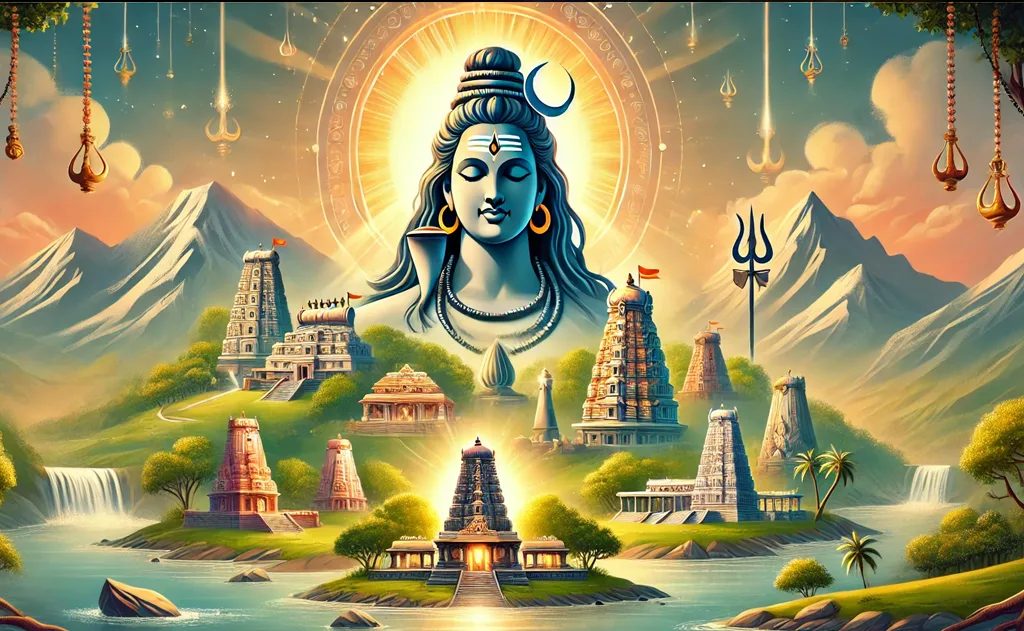
A Monumental Moment: 54-Foot Lord Shiva Statue Unveiled at Bhavani Shankar Mandir in Brampton
On September 6, 2025, the Bhavani Shankar Mandir in Brampton, Canada, became the center of a historic celebration as the community unveiled a breathtaking…
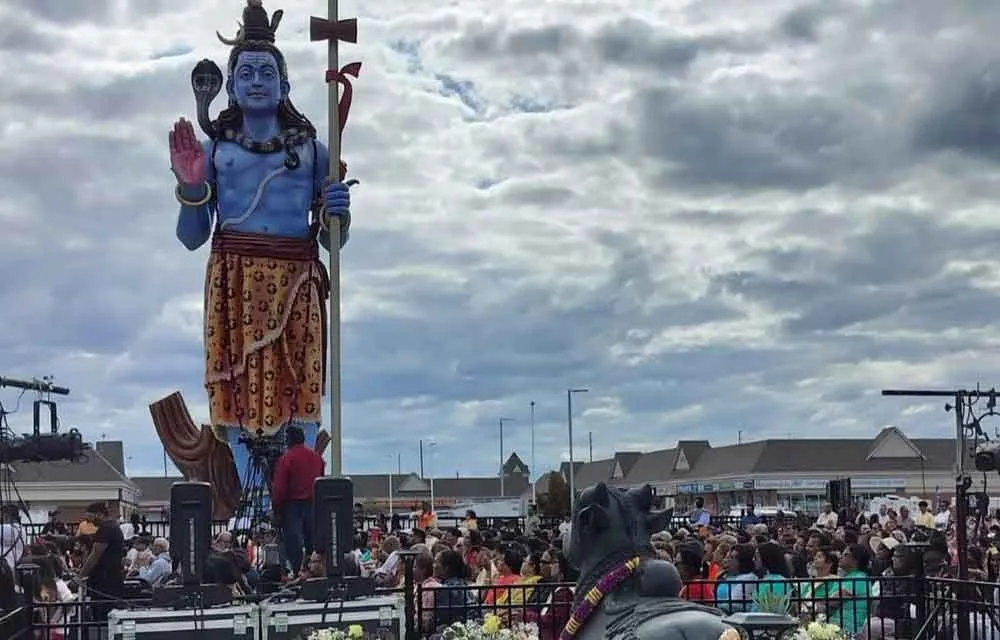
On September 6, 2025, the Bhavani Shankar Mandir in Brampton, Canada, became the center of a historic celebration as the community unveiled a breathtaking…
On September 6, 2025, the Bhavani Shankar Mandir in Brampton, Canada, became the center of a historic celebration as the community unveiled a breathtaking 54-foot-tall statue of Lord Shiva, one of Hinduism’s most revered deities. This monumental event not only marked a significant moment for the local Hindu community but also added a striking new landmark to Brampton’s skyline.
A Vibrant Celebration of Faith and Culture
The unveiling ceremony was a vibrant affair, filled with devotion, unity, and cultural pride. The day began with a colorful parade that wound through the streets of Brampton, drawing devotees, community leaders, and families in large numbers. The procession culminated at Nexus Avenue, where the majestic statue of Lord Shiva was revealed to the public. The atmosphere was electric with anticipation as attendees gathered to witness this milestone, which organizers hailed as a powerful celebration of faith and heritage.
The statue, depicting Lord Shiva in a traditional meditative pose, stands as a symbol of spiritual strength and divine grace. Its towering presence is expected to serve as both a sacred site for worship and a cultural attraction for visitors to the region.
Crafted by a Master Sculptor
The awe-inspiring statue is the work of renowned artist Naresh Kumar Kumawat, whose craftsmanship has left an indelible mark on sacred art worldwide. Kumawat, who has created significant sculptures in over 80 countries, is no stranger to Brampton’s Hindu community. He is also the visionary behind the 55-foot Hanuman statue at Sabha Mandir in Brampton and the 51-foot Lord Rama statue unveiled earlier this month in Mississauga. His artistry brings a unique blend of tradition and precision, making each creation a masterpiece that resonates with devotees and art enthusiasts alike.
A New Spiritual and Cultural Landmark
The 54-foot Lord Shiva statue is more than just a work of art—it is a beacon of spirituality and a testament to the vibrant Hindu community in Brampton. As it stands tall against the city’s skyline, it invites people of all backgrounds to explore the rich cultural and spiritual heritage of Hinduism. The Bhavani Shankar Mandir, already a cornerstone of the community, has now solidified its place as a must-visit destination for those seeking inspiration and connection.
This monumental unveiling reflects the growing presence and contributions of the Hindu diaspora in Canada. It serves as a reminder of the power of faith to unite communities and create lasting legacies. Whether you’re a devotee, a curious visitor, or simply someone who appreciates art and culture, the Lord Shiva statue at Bhavani Shankar Mandir is a sight to behold—a towering symbol of devotion that will inspire for generations to come.
Why 54 Feet? The Sacred Significance of the Statue's Height
The choice of 54 feet as the height of the Lord Shiva statue is unlikely to be accidental. In Hindu sacred numerology, the number 54 carries deep cosmological meaning: it represents half of 108, a number considered supremely auspicious across Vedic tradition. The Rigveda and numerous Puranas reference 108 as the count of divine names, beads on a japa mala, and the sacred measure of celestial distances. A structure standing at 54 feet thus invites the devotee into a contemplative relationship with divine wholeness.
The number 54 also corresponds to the count of Shakti Peethas recognized in certain Tantric and Puranic enumerations — sacred sites where the body of Goddess Sati is said to have fallen, each presided over by a form of Devi alongside a Bhairava, a fierce aspect of Shiva. By encoding this number into the statue's height, the Bhavani Shankar Mandir community may be honoring the inseparable union of Shiva and Shakti, a theology central to the Shaiva Agamas and the Devi Bhagavata Purana.
Lord Shiva in the Meditative Pose: What the Iconography Communicates
The statue depicts Lord Shiva in a traditional meditative posture, known in Sanskrit as Dhyana Mudra. This iconographic choice aligns with the Shiva Purana's description of Maheshvara seated on Mount Kailasha in eternal contemplation — the source from which the entire cosmos is sustained. The stillness of the meditating form communicates the Shaiva philosophical principle of Shiva as the unchanging, transcendent witness (Sakshi) behind all manifest existence.
Classical Agamic texts such as the Kamikagama and Suprabhedagama provide precise guidelines for sculpting divine images, specifying proportions, hand gestures, and facial expressions to ensure the murti becomes a living vessel for divine presence after consecration (Prana Pratishtha). The three-eyed face (Trinetra), crescent moon (Chandrakala) on the matted locks (Jata), and the sacred river Ganga flowing from the hair are iconographic details that sculptors following this tradition must faithfully render, each element carrying its own scriptural narrative.
The towering scale of the Brampton statue draws a parallel to ancient tradition of giant rock-cut Shiva images, such as the 18-foot monolithic Shivalinga at Bhojpur in Madhya Pradesh, constructed under the patronage of Raja Bhoja in the eleventh century. Large-format Shiva iconography has historically served to make the deity's cosmic dimension — Mahakala, the lord of infinite time — viscerally perceptible to the devotee standing at its base.
The Sculptor Naresh Kumar Kumawat and the Living Tradition of Silpashastra
Naresh Kumar Kumawat works within a lineage that traces its principles to the Manasara Silpashastra and the Mayamata, ancient Sanskrit treatises that codify the geometry, material selection, and ritual preparation required for creating sacred images. Practitioners in this tradition are not merely artists in the modern sense; they are considered shilpins, craftsmen who undergo spiritual disciplines — fasting, prayer, and study of scripture — before and during the creation of a divine form.
Kumawat's portfolio across more than 80 countries reflects a global Hindu diaspora that increasingly commissions large-scale sacred art to anchor community identity in new homelands. His earlier works in Brampton — the 55-foot Hanuman statue at Sabha Mandir — and in Mississauga — the 51-foot Lord Rama statue — together with this new Shiva statue, are quietly reshaping the visual and spiritual landscape of the Greater Toronto Area, giving the region some of the tallest sacred statues on the North American continent.
Each of these commissions requires months of coordination between the sculptor, temple priests versed in Agamic ritual, and the diaspora community funding the project. The final installation is typically followed by a Prana Pratishtha ceremony — the Vedic consecration ritual that invites the divine to inhabit the form — conducted by qualified Acharyas, without which the statue remains a cultural monument rather than a site of active worship.
Bhavani Shankar Mandir: A Center of Shaiva Devotion in the Diaspora
Bhavani Shankar Mandir takes its name from one of the many epithets of Lord Shiva. 'Bhavani' denotes the consort of Bhava — an ancient Vedic name for Shiva found in the Shri Rudram of the Krishna Yajurveda — while 'Shankar' refers to the benevolent, auspicious aspect of the deity. The temple's very name thus invokes the Ardhanarishvara principle: the unity of Shiva and Parvati as the masculine and feminine poles of the absolute.
Brampton's Hindu population, drawn largely from communities of South Asian heritage across India, the Caribbean, Fiji, and East Africa, has grown substantially over the past three decades, making the city one of the most significant centers of Hindu practice outside South Asia. Temples such as Bhavani Shankar Mandir serve not only as places of weekly puja and festival observance but also as community hubs offering cultural education, Sanskrit classes, and youth programming that transmit Sanatana Dharma to second and third-generation diaspora families.
The Parade Tradition: Processions as Living Sacred Geography
The colorful procession that preceded the statue's unveiling on Nexus Avenue is rooted in the ancient Indian tradition of Rath Yatra and Prabhat Pheri — ritual circumambulation and public procession that transform the streets of a city into sacred geography. The Skanda Purana describes such processions as a means by which divine energy is carried into the community, blessing the land and its inhabitants even before they reach the temple.
In the diaspora context, public processions carry an additional dimension: they make the Hindu presence in the host country visible, communicating cultural confidence and inviting dialogue with neighbors of other backgrounds. The Brampton parade, drawing devotees, community leaders, and families, mirrors similar events organized by Hindu communities in cities like Leicester in the United Kingdom and Houston in the United States, where festival processions have become recognized features of municipal cultural life.
The convergence of the procession at Nexus Avenue for the statue's unveiling effectively consecrated that public space as a node of sacred memory for the community — a function that mirrors the way ancient Indian cities were organized around temple complexes that defined the spiritual and social geography of the settlement.
What This Statue Means for Hindu Heritage Preservation in North America
The unveiling of a 54-foot Shiva statue in Brampton is part of a broader, accelerating movement within the Hindu diaspora to move beyond modest prayer halls toward architecturally and artistically ambitious sacred spaces. This shift reflects both growing economic confidence within South Asian communities and a deliberate theological statement: that Sanatana Dharma is not a private, domestic affair but a living civilization with a public presence.
Scholars of diaspora religion have noted that large sacred structures serve as what sociologists term 'identity anchors' — physical markers that signal permanence, belonging, and continuity across generations. For Hindu children growing up in Brampton, the sight of a 54-foot Shiva on the city's skyline communicates that their tradition is not something to be practiced quietly at home but celebrated openly as part of the fabric of Canadian multicultural life.
The statue also creates a pilgrim circuit of sorts within the Greater Toronto Area, linking the Hanuman statue at Sabha Mandir, the Rama statue in Mississauga, and now the Shiva statue at Bhavani Shankar Mandir — a triangle of divine presences that echoes, in miniature, the tradition of sacred geography (Tirthasthana) found across the Indian subcontinent, where temples to different deities within a region form an interconnected spiritual landscape for the devout traveler.
Frequently Asked Questions
Where is A Monumental Moment located?
On September 6, 2025, the Bhavani Shankar Mandir in Brampton, Canada, became the center of a historic celebration as the community unveiled a breathtaking 54-foot-tall statue of Lord Shiva , one of Hinduism’s most revered deities. This monumental event not only marked a significant moment for the local Hindu community but also added a striking new landmark t
Who is the presiding deity of A Monumental Moment?
The presiding deity is Lord Shiva.
What are the timings and how do I reach A Monumental Moment?
Temples typically open early morning and evening; confirm current darshan timings before visiting. The nearest airport, railway station and road routes are covered in the guide above.
What is the best time to visit A Monumental Moment?
Major festival days and the cooler months are popular, though weekday mornings offer a calmer darshan. Plan around the temple's key festivals for the most vibrant experience.
You might also like
Karthika Purnima 2026: Significance, Rituals, and the Triple Festival Across Hindu, Sikh, and Jain Traditions
ISKCON to Serve Pure Sattvik Mid-Day Meals to School Children in Bengal | Suvendu Adhikari Initiative
Lord Shiva: The Three Faces NRI Devotees Should Know in 2026