


Gayatri Mantra: Spiritual Power & Life Benefits

The Gayatri Mantra: Power & Benefits – A Guru’s Loving Guidance to the Mother of All Mantras
My dear seekers of light,
Imagine a time when the world felt heavy upon my shoulders. Years ago, in the midst of profound personal trials—loss, doubt, and a mind clouded by endless worries—I found myself sitting alone at dawn on a quiet balcony in the hills. The sky was just beginning to blush with the first rays of the sun. In desperation and surrender, I began to whisper the Gayatri Mantra, a verse I had learned as a child but rarely practiced with true devotion. With each repetition, something shifted. The chaos within quieted; a gentle warmth spread through my heart, as if an inner lamp had been lit. Over days and weeks, that simple chant became my anchor. It didn’t erase the challenges, but it illuminated my path, sharpening my intellect, dissolving negativity, and awakening a deeper peace I had never known. That experience taught me: the Gayatri Mantra is not mere words—it is a living force, the Mother of all mantras, capable of transforming the darkest night into radiant dawn.
Today, as your compassionate guide, I invite you to embark on this sacred journey. Let us explore the profound depths of the Gayatri Mantra together.
The Sacred Text: Full Sanskrit, Transliteration, and Word-by-Word Meaning
The Gayatri Mantra originates from the Rig Veda (Mandala 3, Sukta 62, Mantra 10), revealed to the sage Vishwamitra. It is a universal prayer addressed to Savitr, the divine solar deity representing the source of all life and light.
Full Sanskrit (Devanagari): ॐ भूर्भुवः स्वः तत्सवितुर्वरेण्यं भर्गो देवस्य धीमहि धियो यो नः प्रचोदयात् ॥
Transliteration (IAST): oṃ bhūr bhuvaḥ svaḥ tat savitur vareṇyaṃ bhargo devasya dhīmahi dhiyo yo naḥ pracodayāt
Word-by-Word Breakdown and Meaning:
- Om — The primordial sound, the essence of the universe, representing Brahman, the ultimate reality.
- Bhūr — The earthly realm, physical existence, the body, and the foundation of life.
- Bhuvaḥ — The intermediate space, the vital force (prana), the mental plane where thoughts arise.
- Svaḥ — The heavenly realm, the spiritual dimension, the soul’s abode of bliss and higher consciousness.
- Tat — That (the supreme, indescribable divine essence).
- Savitur — Of Savitr, the stimulating sun god, the divine creator and energizer of all life.
- Vareṇyaṃ — Most excellent, worthy of adoration, the supreme choice worthy of worship.
- Bhargo — The radiant splendor, the purifying divine light that dispels darkness.
- Devasya — Of the divine being, the supreme deity.
- Dhīmahi — We meditate upon, we contemplate deeply.
- Dhiyo — Our intellects, our thoughts, our understanding.
- Yo — Who (referring to the divine light).
- Naḥ — Our.
- Pracodayāt — May inspire, illuminate, guide, awaken.
Overall Translation: “We meditate on the adorable glory of the radiant sun (Savitr); may that divine light illuminate our intellects.”
This 24-syllable mantra (three lines of eight) is called the “Mother of all Mantras” because it encapsulates the essence of the Vedas. It is the core prayer for wisdom, protection, and enlightenment, empowering all other Vedic chants.
Why It Is the Mother of All Mantras: Spiritual Significance
In Vedic tradition, the Gayatri Mantra is revered as the essence of spiritual awakening. It invokes the divine light to sharpen the intellect (buddhi), awaken higher consciousness, and lead to enlightenment. Sages like Vishwamitra attained profound realization through its practice. It is integral to Sandhyavandanam—the thrice-daily ritual performed at dawn, noon, and dusk—where it forms the heart of the practice. In Sandhyavandanam, the Gayatri purifies the mind (chitta shuddhi), balances prana, and aligns the practitioner with cosmic rhythms, fostering inner purity and divine connection.
Spiritually, regular japa (repetition) dissolves karma, protects from negativity, and invokes Shiva’s grace indirectly through universal light. It awakens the third eye (ajna chakra), granting clarity, intuition, and liberation (moksha). Devotees experience protection from evil influences, enhanced intuition, and a sense of oneness with the divine.
Gayatri Mantra Benefits for Mind and Soul
The mantra’s power extends beyond the spiritual into the modern realm.
Spiritual Benefits:
- Enlightenment and higher consciousness: It illuminates the path to self-realization.
- Protection from negativity: The divine light dispels darkness, fears, and malefic energies.
- Sharpened intellect and wisdom: It enhances discernment and creative thinking.
- Inner peace and divine grace: It fosters surrender, devotion, and bliss.
Modern and Scientific Benefits: Studies on mantra meditation, including Gayatri chanting, show remarkable effects. Research indicates reduced stress and anxiety, improved focus, better cognitive performance (attention, memory, processing speed), and enhanced emotional well-being. One review of studies found consistent reductions in perceived stress, anxiety, and improvements in mood stability. Neurophysiological studies among students revealed better brain activity, reduced anger, and heightened self-awareness. Chanting synchronizes biorhythms, balances autonomic functions, and may even influence physiological parameters like blood pressure and immunity indirectly through stress reduction.
Devotees report better sleep, lower hypertension risk, and overall health improvements from regular practice.
How to Chant Gayatri Mantra Correctly: Step-by-Step Guide
To harness its full power, chant with purity and devotion.
- Best Time: Dawn (Brahma Muhurta, about 1.5 hours before sunrise), noon, and dusk—aligning with Sandhyavandanam. Dawn is most potent for awakening intellect.
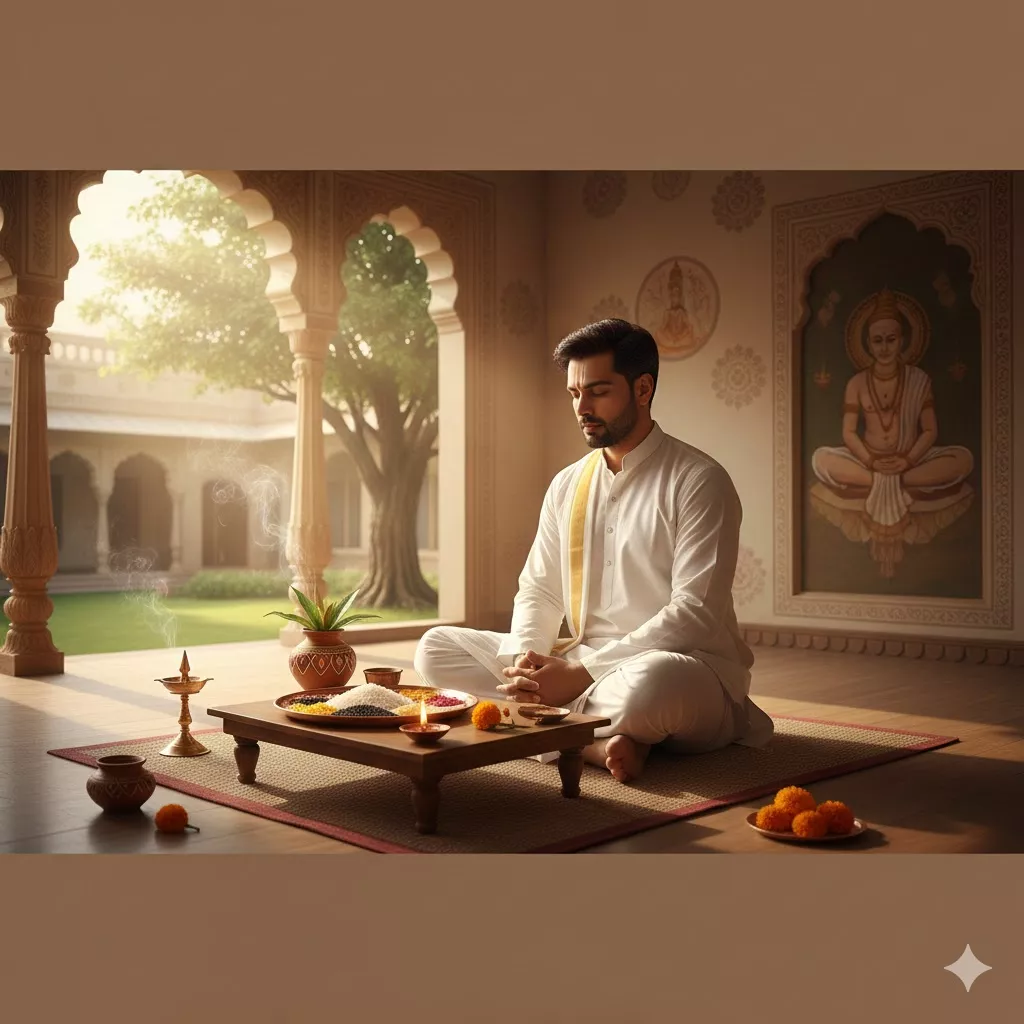
- Preparation: Bathe, wear clean clothes, sit facing east (or north) in a quiet space. Assume Padmasana or Sukhasana.
- Tools: Use a rudraksha or tulsi mala (108 beads) for counting. Hold it in the right hand, using thumb and middle finger.
- Posture and Breath: Sit straight, eyes closed or half-open, spine erect. Take deep breaths to calm the mind.
- Chanting Method:
- Begin with “Om” three times.
- Chant slowly, clearly, with correct pronunciation.
- Japa: Repeat 108 times (one mala) or multiples. Mental (manasika) japa is powerful for advanced practitioners.
- Focus on meaning: Visualize golden light entering through the crown, illuminating the mind.
- Duration: Start with 3, 9, or 27 repetitions; build to 108 daily.
Common Mistakes to Avoid:
- Rushing or mechanical repetition—chant with feeling.
- Incorrect pronunciation—learn from a guru or authentic source.
- Chanting without initiation (though many practice freely today).
- Distractions—maintain focus.
- Facing wrong direction or unclean state.
Experiences from Devotees and a 21-Day Challenge
Countless seekers share transformative stories: A student overcame exam anxiety through daily japa; a professional found clarity amid chaos; many report vivid inner light and reduced negativity.
21-Day Challenge: Commit to chanting 108 times at dawn for 21 days. Journal daily: Note mood, focus, insights. You may experience heightened awareness by day 7, deeper peace by day 14, and profound shifts by day 21.
A Meditative Reflection and Invitation
Close your eyes now. Breathe deeply. Feel the mantra rising within: Om Bhur Bhuvaḥ Svaḥ… Let the divine light fill you, guiding every thought toward truth.
My beloved child of the divine, the Gayatri Mantra awaits your embrace. It is the gentle hand of the Mother leading you home. Start today—whisper it at dawn, let it become your heartbeat. In its light, find the strength, wisdom, and grace you seek.
With boundless love and blessings, Your guide on the path
Related posts:
 Powerful Lakshmi Kubera Mantra to Attract Wealth and Prosperity
 Powerful mantras to clear all the debts and loans
 10 Powerful Mantras to Attract Your Dream Job in the USA – Unlock Career Success with Positive Affirmations
 Pratyangira Devi: The Fierce Protector – Story, Worship, Mantras, and Pujas
 Powerful Sunday Mantras: Complete Guide for Hindu Devotees
 Guru Mantra: Bow to the Divine Teacher Within


 ︎
︎

