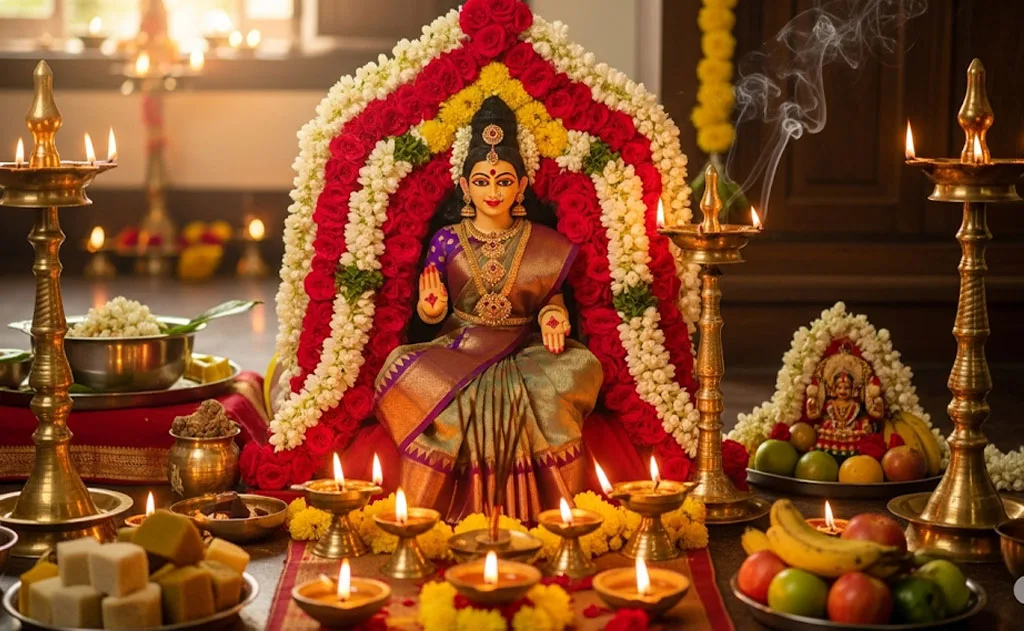
Unlock Business Success with Baglamukhi Mantra: Power, Protection, and Victory
The Baglamukhi Mantra is often chanted to invoke the blessings of Goddess Baglamukhi for victory, business success, and overcoming obstacles.

The Baglamukhi Mantra is often chanted to invoke the blessings of Goddess Baglamukhi for victory, business success, and overcoming obstacles.
The Baglamukhi Mantra is often chanted to invoke the blessings of Goddess Baglamukhi for victory, business success, and overcoming obstacles. This powerful mantra is believed to remove negativity, create a protective shield, and lead to overall success.
Baglamukhi Mantra for Business Success
Mantra:
Om Hleem Baglamukhi Sarva Dushtanam Vacham Mukham Padam Stambhaya Jivham Keelaya Budhim Vinashaya Hleem Om Swaha
Meaning:
This mantra is a plea to Goddess Baglamukhi to paralyze the speech and actions of enemies, create stability, and destroy negative intentions. It invokes divine power to overcome challenges in business and personal endeavors.
Chanting Tips for Maximum Benefits
Best Time to Chant:
- Early morning (Brahma Muhurta, before sunrise)
- Auspicious times such as during spiritual occasions
Number of Chants:
- Chant 108 times daily using a yellow-colored mala (rosary)
Focus and Offerings:
- Keep a clear intention for business success
- Offer yellow flowers and sweets to Goddess Baglamukhi
- Maintain a pure and devoted mindset while chanting
Introduction
In today’s competitive world, achieving business success requires hard work, a positive mindset, and spiritual protection. Ancient Vedic practices offer powerful tools to remove obstacles and ensure prosperity. One such revered practice is chanting the Baglamukhi Mantra, known for its ability to eliminate negativity, bring success, and create a protective shield.
The Significance of Baglamukhi Mantra
Goddess Baglamukhi is one of the ten Mahavidyas in Hinduism. She is worshipped for her ability to paralyze enemies and protect devotees from harmful influences. Whether you are a business owner or a professional seeking success, invoking Goddess Baglamukhi through her mantra can help you overcome challenges, defeat competition, and achieve prosperity.
How Baglamukhi Mantra Helps in Business Success
✅ Removes Obstacles: Clears negative forces hindering business growth.
✅ Victory Over Competitors: Neutralizes harmful intentions of rivals.
✅ Attracts Prosperity: Brings wealth and success into your business.
✅ Spiritual Protection: Shields your business from negative energy, jealousy, and malpractices.
How to Chant Baglamukhi Mantra for Maximum Results
- Choose a Quiet Place: Sit in a clean, undisturbed space.
- Focus on Your Intention: Visualize your goals and business success.
- Use a Mala: Chant 108 times using a prayer bead (mala).
- Best Time to Chant: Early morning or after sunset for maximum spiritual effect.
Benefits of Chanting Baglamukhi Mantra
- Increased Confidence: Empowers you to face business challenges boldly.
- Enhanced Decision Making: Sharpens focus and improves strategic thinking.
- Long-term Success: Attracts prosperity, stability, and continuous growth in business.
Conclusion
The Baglamukhi Mantra is not just a spiritual tool but a powerful ally for business success and victory. By integrating regular chanting into your daily routine, you can remove obstacles, defeat competition, and attract prosperity. With faith and dedication, Goddess Baglamukhi’s divine energy will guide you toward sustained success and protection.
Who Is Goddess Baglamukhi Among the Ten Mahavidyas?
Goddess Baglamukhi is the eighth of the ten Mahavidyas — the group of tantric goddesses described in the Shakta Mahapurana and elaborated in texts such as the Shaktisamgama Tantra and the Todala Tantra. Each Mahavidya embodies a distinct cosmic power: while Kali represents time and dissolution, Tara represents speech, and Chhinnamasta represents self-sacrifice, Baglamukhi specifically governs stambhana — the power to immobilize, paralyze, or freeze any hostile force.
Her iconography is precise and deliberate. She is depicted with a golden complexion, seated on a golden throne in the midst of an ocean of turmeric (haridra-sagara), dressed in yellow garments, and holding a club (gada) in her right hand with which she strikes an enemy whose tongue she pulls with her left hand. This imagery is not merely symbolic violence; it encodes the teaching that the mightiest weapon against adversity is the capacity to arrest falsehood and malicious intent at their very source — the spoken word.
Her primary seat of worship is the Baglamukhi temple at Nalkheda in Madhya Pradesh, considered one of the three primary Siddhapeethas dedicated to her, alongside the temple at Bankhandi in Himachal Pradesh and the Pitambara Peeth at Datia, also in Madhya Pradesh. Devotees from across India visit Datia's Pitambara Peeth especially for legal victories, election successes, and protection from professional rivalry.
What Is the Scriptural and Tantric Origin of This Mantra?
The Baglamukhi mantra belongs to the category of beeja-based tantric mantras, centered on the seed syllable (beeja) 'Hleem.' This beeja is considered Baglamukhi's own sonic form, encoding her power of stambhana directly into the vibratory structure of the mantra. The Mantra Mahodadhi, a classical compendium of tantric mantras, classifies 'Hleem' as the Bagala-beeja and distinguishes it from the 'Hreem' of Bhuvaneshvari or the 'Kreem' of Kali.
According to the Bagalamukhi Rahasyam and related upasana texts, the mantra was first received in a state of deep meditation during the cosmic event of Saurashtra-pralaya — a period of catastrophic storms — when the gods appealed to Adi Shakti for relief. She manifested as Baglamukhi from the Haridra-lake and instantly stilled the destructive storm, demonstrating her stambhana shakti on a cosmic scale. This origin story is referenced in the Prapanchasara Tantra.
Traditional upasana (dedicated practice) of this mantra prescribes a full purascharana of 100,000 (one lakh) recitations before the mantra reaches its siddha state for the practitioner. This is ideally performed under the guidance of a qualified guru in the Shakta lineage, following specific niyamas (disciplines) including a yellow diet, yellow clothing, and continuous focus on the yantra of the goddess.
How Should a Business Practitioner Prepare for Baglamukhi Upasana?
Preparation — called adhikara in tantric vocabulary — is as important as the chanting itself. The colour yellow holds supreme importance in Baglamukhi worship: the seat (asana) should be yellow, the flowers offered should be yellow (especially yellow marigolds and yellow mustard blooms), and the prasad offered is traditionally made from besan (gram flour) sweetened with jaggery. Turmeric plays a central role and is offered both as a physical substance and understood symbolically as the haridra-sagara in which the goddess resides.
The Baglamukhi Yantra should be drawn on bhojpatra (birch bark) or engraved on a gold or copper plate and placed on the altar facing north or east before commencing the puja. The practitioner should light a ghee lamp and an incense stick of havan samagri fragrance, and recite the mantra facing north — the direction associated with Kubera, the deity of wealth — to align the business intention with the upasana.
A common practical framework for business practitioners is to begin the practice on a Tuesday or a full moon (Purnima) in the Hindu month of Ashwin or Kartik, when Shakti worship is already heightened by the season of Navratri and Diwali. Daily commitment of 108 recitations using a yellow-beaded mala made of turmeric or sandalwood is far more productive than sporadic intensive chanting.
What Role Does the Baglamukhi Yantra Play Alongside the Mantra?
In Shakta tradition, every major deity's mantra is paired with a yantra — a geometric diagram that serves as the deity's visual body and the physical anchor for her energy. The Baglamukhi Yantra typically consists of an eight-petalled lotus contained within a triangular configuration, enclosed by a bhupura (outer rectangular boundary). The triangle represents the Shakti trikona, pointing downward to signify the feminine, receptive, and protective force.
Placing the consecrated yantra at the northeast corner of a business premises or in the puja room of a home office is a traditional Vastu-aligned practice. The yantra is believed to act as a continuous field of protection, working in concert with the mantra recited by the devotee. Some Shakta upasaks perform panchopachara (five-step) puja to the yantra daily — offering gandha (sandalwood paste), pushpa (flowers), dhupa (incense), dipa (lamp), and naivedya (food) — as a complementary act to verbal mantra recitation.
It is important to note that a yantra should be ritually established (prana-pratishtha) before use, a process that involves invocation of the deity's presence through specific mantras and nyasa (placement of mantras on the body of the yantra). Purchasing a commercially printed yantra without this consecration reduces it to a geometric image; authentic practice requires either personal initiation or the service of a trained tantric priest.
What Broader Spiritual Lessons Does Baglamukhi Offer the Modern Professional?
Beyond the specific rituals, the theology of Baglamukhi carries a profound message for anyone engaged in competitive professional life. Her power of stambhana is not presented in Hindu scripture as mere aggression toward rivals; it is framed as the arrest of adharma — unethical speech, manipulation, false propaganda, and deceptive competition. The Goddess does not destroy the enemy; she freezes the tongue. This is a teaching about non-violent supremacy: the devotee is asked to neutralize harm without becoming an agent of harm.
The Rigveda (10.125), the Devi Sukta spoken by the goddess Vak, declares 'Aham Eva Svayam Idam Vadami' — 'I myself declare this.' This identification of divine feminine power with sovereign speech directly echoes Baglamukhi's domain. A practitioner who internalizes this teaching understands that the mantra is not a tool for cursing competitors but a discipline for purifying one's own speech, sharpening one's own arguments, and standing grounded in truth even when surrounded by hostility.
The Devi Bhagavata Purana advises that any Shakti upasana undertaken with purely selfish or harmful intent will rebound on the practitioner — a principle called mantra-pratikara. True benefit from the Baglamukhi Mantra comes to those who combine disciplined recitation with ethical conduct in their business dealings, transparency in speech, and genuine devotion — using the goddess's power as a shield for righteousness, not a sword of ego.
Frequently Asked Questions
What is the Unlock Business Success with Baglamukhi Mantra?
The Baglamukhi Mantra is often chanted to invoke the blessings of Goddess Baglamukhi for victory, business success, and overcoming obstacles . This powerful mantra is believed to remove negativity, create a protective shield, and lead to overall success .
How many times should the Unlock Business Success with Baglamukhi Mantra be chanted?
It is traditionally chanted 108 times using a rudraksha or tulsi mala. Even 11 or 21 sincere repetitions daily are considered beneficial — steady, focused practice matters more than the count.
What is the best time to chant the Unlock Business Success with Baglamukhi Mantra?
Dawn (Brahma Muhurta) after a bath is considered ideal, though it may be chanted any time with a calm, focused mind. Many devotees keep a fixed daily time to build consistency.
Who can chant the Unlock Business Success with Baglamukhi Mantra?
Anyone may chant it with faith and a pure mind, regardless of age, gender or background. Beginners benefit from first hearing the correct pronunciation and understanding its meaning.
What are the benefits of chanting the Unlock Business Success with Baglamukhi Mantra?
It is believed to calm the mind, dissolve negativity, and draw divine grace, protection and clarity to the devotee.
You might also like
!! श्री मात्रे नमः !! — Unlocking the Divine Feminine

Sanskrit Mantras: Unlocking the Power of Sound and Vibration

Mahishasura Mardini Stotra: Lyrics, English Meaning & Profound Spiritual Benefits