
Which Hindu God to Worship on Saturday? Mantras & Bhajans for Shani Dev
Introduction Saturday holds a significant place in Hindu tradition, often associated with karma, justice, and discipline.
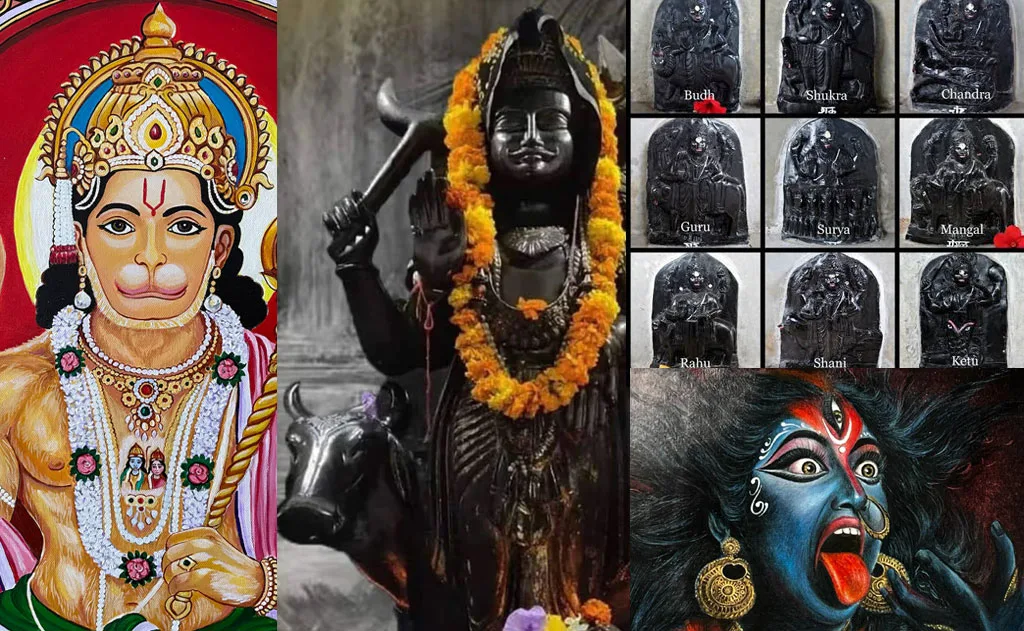
Introduction Saturday holds a significant place in Hindu tradition, often associated with karma, justice, and discipline.
Introduction
Saturday holds a significant place in Hindu tradition, often associated with karma, justice, and discipline. It is especially important for pacifying planetary influences, particularly those of Shani (Saturn). Understanding which deity to pray to and how to do it correctly can help devotees reduce suffering and attract positive energy.
Importance of Saturday in Hinduism
The Power of Shani (Saturn)
In Vedic astrology, Shani or Saturn is a powerful planet that governs discipline, delays, karma, and hardships. Worship on Saturday aims to appease Shani's influence and bring relief from life’s obstacles.
Symbolic Significance of Saturday
Saturday is ruled by Shani Dev, the deity known to bring both trials and transformation. Devotees believe that sincere prayers can turn his tough love into blessings.
Which God to Worship on Saturday?
Shani Dev: The Main Deity
Shani Dev is the primary god to worship on Saturdays. Representing Saturn, he is revered as the lord of justice. Worshipping Shani Dev is believed to reduce the ill effects of Saturn in one’s horoscope.
Hanuman: The Protector from Shani
Interestingly, Lord Hanuman is also worshipped on Saturdays. According to Hindu mythology, Hanuman once saved Shani Dev from the clutches of Ravana. Since then, Shani promised not to trouble Hanuman devotees.
Lord Narasimha and Kali Mata
Some traditions also recommend worshipping fierce deities like Lord Narasimha and Goddess Kali on Saturdays to destroy negative energies and fear.
Best Saturday Mantras
Shani Dev Mantra
“Om Sham Shanicharaya Namah”
Chanting this mantra 108 times can mitigate the malefic effects of Saturn.
Hanuman Mantra
“Om Hanumate Namah”
This mantra invokes Hanuman’s blessings and protection.
Navagraha Shani Mantra
“Nilanjana Samabhasam Ravi Putram Yamagrajam
Chaya Martanda Sambhutam Tam Namami Shanaishcharam”
Powerful Bhajans for Saturday
- Shani Dev Bhajans: Devotional songs like "Shani Maharaj Ki Aarti" or "Shani Chalisa"
- Hanuman Bhajans: "Hanuman Chalisa", "Bajrang Baan", or "Sankat Mochan Hanuman Ashtak"
- Goddess Kali Bhajans: "Kali Maa Ki Aarti" or "Jai Kali Maa"
Rituals and Puja Vidhi
- Wake up early and take a bath with black sesame seeds.
- Wear black or dark blue clothes.
- Offer mustard oil, black sesame seeds, and black cloth to Shani Dev.
- Light a diya under a Peepal tree or near a Shani temple.
- Feed black dogs or crows for good karma.
Benefits of Worshipping on Saturday
- Relief from financial and legal issues
- Peace in relationships
- Freedom from health ailments
- Success in career and business
- Spiritual cleansing and protection from evil
Conclusion
Worshipping the right deity on Saturday, especially Shani Dev and Hanuman, can significantly impact your spiritual and practical life. Incorporating mantras, bhajans, and Saturday-specific rituals can reduce negativity and help bring stability, success, and peace.
FAQs
- Can I worship both Shani Dev and Hanuman on Saturday?
Yes, it is auspicious to worship both to gain protection and reduce Saturn’s malefic effects. - What should I avoid on Saturdays?
Avoid consuming non-veg food, alcohol, and gossiping. Also, refrain from buying black items unless for puja. - Is fasting on Saturday recommended?
Yes, many devotees observe a fast and break it after sunset with a simple meal. - Can women worship Shani Dev?
Yes, women can pray to Shani Dev with pure intentions and devotion. - Is there any specific time to chant Saturday mantras?
Chanting during sunrise or before 8 AM is considered highly auspicious.
What does Vedic scripture say about Shani Dev's nature and parentage?
Shani Dev is described in the Brahma Vaivarta Purana and the Skanda Purana as the son of Surya (the Sun god) and Chhaya, the shadow-goddess who served as a substitute for Saranyu. His very birth from 'shadow' is considered symbolic of his role: he governs the hidden, the karmic debt accumulated across lifetimes, and the lessons that come through suffering rather than joy. The name 'Shanaishchara' literally means 'one who moves slowly,' referring to Saturn's approximate 30-year orbital cycle and his measured, unhurried delivery of justice.
The Devi Bhagavata Purana elaborates that Shani's powerful gaze — said to have even unsettled the infant Ganesha at his first darshan — is not malicious but utterly impartial. He is called 'Nyaya Devata,' the deity of justice, who distributes the exact fruits of every being's karma without favour or prejudice. This understanding transforms Saturday worship from mere appeasement into a conscious reckoning with one's own actions and moral responsibilities.
How did Hanuman protect Shani Dev, and why does this make Saturday his sacred day too?
The episode of Hanuman rescuing Shani Dev from Ravana's captivity appears in the Adbhuta Ramayana and in regional Puranic traditions. Ravana, who had subdued all nine Navagrahas to serve as pillars of his palace's throne, had imprisoned Shani Dev in a humiliating position. When Hanuman arrived in Lanka during his search for Sita, he freed the planet-deity. Shani Dev, grateful and moved by Hanuman's devotion, granted the boon that any sincere Hanuman devotee would be protected from the worst afflictions of Sani Sade Sati — the seven-and-a-half-year transit of Saturn over one's natal moon.
This theological link explains why the Hanuman Chalisa, composed by Goswami Tulsidas in the Awadhi language, contains the line 'Nasat roga harai sab peera, japat nirantar Hanumat beera' — describing how continuous recitation removes all ailments. Tulsidas himself was believed to have been under Shani's dasha when he composed this text. Famous Hanuman temples such as the Sankat Mochan Hanuman Mandir in Varanasi and the Sri Hanuman Mandir at Connaught Place in New Delhi witness extraordinarily large gatherings specifically on Saturdays for this reason.
Which specific rituals and offerings are prescribed for Shani Puja on Saturday?
Traditional Shani Puja begins before sunrise or at dusk on Saturday — both twilight hours being considered especially potent for Saturn's worship. Devotees are advised to bathe, wear dark blue or black clothing (Shani's colours), and face west while performing the puja, as west is the cardinal direction associated with Saturn in Vedic cosmology. The preferred offerings (upacharas) include sesame seeds (til), black sesame oil, urad dal (black lentils), iron articles, and dark blue or violet flowers such as shami leaves — the shami tree (Prosopis cineraria) being Shani's sacred tree, also significant in the Mahabharata when the Pandavas concealed their weapons in it during their incognito year.
Lighting a sesame-oil lamp and circling it seven times before the Shani idol or image is a standard practice. Donating black sesame, iron, black cloth, or mustard oil to the poor and to Brahmins on Saturdays is considered highly meritorious. Many temples, such as the Shri Shani Shingnapur temple in Ahmednagar district of Maharashtra — where Shani Dev is worshipped as a self-manifested (swayambhu) black stone without a rooftop shrine — see thousands of devotees performing oil-abhisheka every Saturday. Reciting the Shani Stotra from the Brahma Purana before the lamp is extinguished completes the ritual.
What is Sani Sade Sati, and how does Saturday worship help navigate it?
Sani Sade Sati refers to the seven-and-a-half-year period during which Saturn transits through the zodiac sign immediately before, the sign of, and the sign immediately after a person's natal moon sign (janma rashi). Vedic astrology considers this one of the most challenging periods of life, marked by delays, health issues, financial reversals, and emotional trials. The period is divided into three 'dhaiya' (two-and-a-half year) phases, each affecting a different area of life.
Regular Saturday worship during Sade Sati is considered a primary remedy (upaya) for softening Saturn's intensity. Jyotisha texts such as the Brihat Parashara Hora Shastra recommend specific mantras, fasting, and charitable acts tailored to each phase. Many astrologers also suggest visiting the Thirunallaru Darbaranyeswarar temple in Karaikal, Tamil Nadu, which is dedicated to Lord Shiva in his aspect associated with Shani's liberation, as a pilgrimage specifically undertaken to ease Sade Sati's effects. The act of consistent, sincere Saturday worship is understood not as bypassing karma but as building the inner resilience and surrender needed to bear and transform it.
Are there additional deities and their connections to Saturday that go beyond Shani Dev?
Beyond Shani Dev, Hanuman, Narasimha, and Kali, the Saturday observance in many South Indian traditions also honours Lord Venkateswara of Tirumala — the presiding deity of the Tirumala Venkateswara Temple in Tirupati, Andhra Pradesh. Devotees believe that Saturn's influence is significantly weakened in the presence of Venkateswara, who is identified with Vishnu in his most compassionate form. Saturday queues at Tirumala are among the longest of the week for precisely this reason.
In the Shaiva tradition, Lord Shiva is also propitiated on Saturdays through the chanting of the 'Maha Mrityunjaya Mantra' (Rigveda 7.59.12) to avert untimely death and chronic illness that a severe Saturn can bring. The Shiva Purana states that Shani himself is a devotee of Shiva, and therefore approaching Shiva on Saturdays creates a kind of two-level protection: the supreme deity interceding with his own devotee-planet on the worshipper's behalf. This layered understanding of Saturday devotion reflects the richly interconnected theology of the Hindu pantheon rather than a single, isolated planetary cult.
What fasting rules and dietary guidelines does tradition recommend on Saturdays?
Saturday fasting (Shanivar Vrat) is observed by many devotees as an integral part of Shani's appeasement. The Vrat Katha associated with Shanivar Vrat, found in devotional literature across North India, recommends consuming only one meal after sunset, prepared without salt or using rock salt (sendha namak) as a substitution. The meal should ideally include sesame-based preparations, black urad dal, and dishes free of non-vegetarian ingredients. Alcohol and tamasic foods are strictly avoided throughout the day.
The prescribed fast duration is often 11 consecutive Saturdays or 51 Saturdays for those seeking relief from severe planetary afflictions, after which the vrat is formally concluded with a puja and distribution of prasad — typically made of sesame and jaggery — to family members and those in need. Some traditions allow fruit and milk during the fast period. The discipline of fasting itself aligns with Shani's core domain: austerity, self-restraint, and the willingness to voluntarily undergo discomfort as a form of tapas that generates spiritual merit capable of balancing karmic debt.
Frequently Asked Questions
What is the Which Hindu God to Worship on Saturday? Mantras &?
Introduction Saturday holds a significant place in Hindu tradition, often associated with karma, justice, and discipline. It is especially important for pacifying planetary influences, particularly those of Shani (Saturn).
How many times should the Which Hindu God to Worship on Saturday? Mantras & be chanted?
It is traditionally chanted 108 times using a rudraksha or tulsi mala. Even 11 or 21 sincere repetitions daily are considered beneficial — steady, focused practice matters more than the count.
What is the best time to chant the Which Hindu God to Worship on Saturday? Mantras &?
Dawn (Brahma Muhurta) after a bath is considered ideal, though it may be chanted any time with a calm, focused mind. Many devotees keep a fixed daily time to build consistency.
Who can chant the Which Hindu God to Worship on Saturday? Mantras &?
Anyone may chant it with faith and a pure mind, regardless of age, gender or background. Beginners benefit from first hearing the correct pronunciation and understanding its meaning.
What are the benefits of chanting the Which Hindu God to Worship on Saturday? Mantras &?
It is believed to calm the mind, dissolve negativity, and draw divine grace, protection and clarity to the devotee.
You might also like
Powerful Mantras for Students & Parents Before Joining School
Powerful Hindu Mantras for Purushottam Maas 2026: Vishnu Bhakti, Chanting Guide & Global Devotion
Shani Deva Temples Worldwide & Must-Performed Rituals — Complete Devotee's Guide