Friday Fasting (Shukravar Vrat)
Rules, Rituals & Divine Benefits of Pleasing Goddess Lakshmi In Hinduism, Friday (Shukravar) is considered sacred and spiritually powerful.
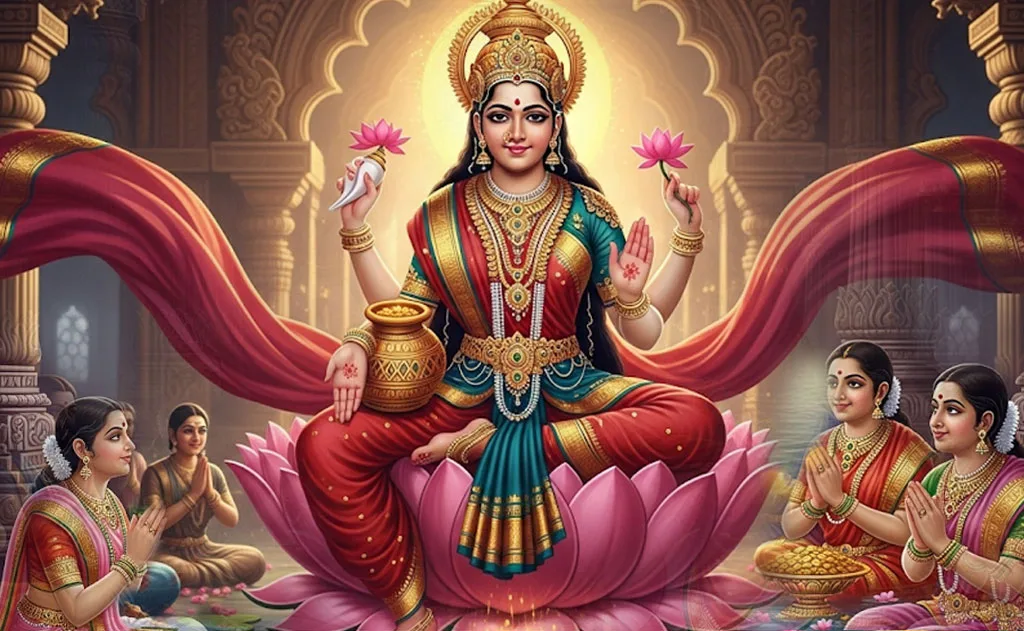
Rules, Rituals & Divine Benefits of Pleasing Goddess Lakshmi In Hinduism, Friday (Shukravar) is considered sacred and spiritually powerful.
Rules, Rituals & Divine Benefits of Pleasing Goddess Lakshmi
In Hinduism, Friday (Shukravar) is considered sacred and spiritually powerful. This day is dedicated to the worship of Goddess Lakshmi, the bestower of wealth, abundance, and marital bliss. Devotees, especially women, observe Shukravar Vrat (Friday Fasting) to invite prosperity, peace, and happiness into their lives.
Following the right rituals and rules of Shukravar Vrat not only pleases Goddess Lakshmi but also aligns one’s life with positivity and divine grace.
How to Observe Shukravar Vrat?
1. Start the Day with Purity
- Wake up early during Brahma Muhurat (4:00 AM – 6:00 AM).
- Take a bath and wear white or green clothes – symbols of purity and prosperity.
2. Set Up the Puja Altar
- Clean the house, especially the puja area.
- Place a photo or idol of Goddess Lakshmi.
- Decorate the altar with white flowers like jasmine or lotus.
3. Offer Prasad
- Prepare and offer kheer (sweet rice pudding), bananas, and coconut.
- Light a ghee lamp and incense sticks to invoke the divine presence.
4. Chant the Lakshmi Mantra
- Recite: “Om Shreem Mahalakshmiyei Namah”
- Chant the mantra 108 times using a tulsi or crystal mala.
- Read the Lakshmi Ashtottara Shatanamavali (108 names of Goddess Lakshmi).
5. Follow Dietary Rules
- Avoid non-vegetarian food, alcohol, and in some traditions, salty items.
- Eat only sattvic (pure vegetarian) food once the fast is broken.
6. Charity and Good Deeds
Donate white items such as:
- Rice
- Milk
- Sugar
- White clothes
- Additionally, offer food or gifts to young girls (Kanya Puja), a gesture that is especially auspicious.
Benefits of Observing Shukravar Vrat
1. Wealth and Prosperity
Regular observance attracts the blessings of Goddess Lakshmi, ensuring financial stability and removal of debts.
2. Marital Harmony
Couples who observe the vrat together experience emotional bonding, mutual respect, and resolution of conflicts.
3. Health and Mental Peace
Fasting purifies the body and calms the mind, bringing mental clarity, positive energy, and emotional balance.
4. Happiness in Family Life
Enhances domestic harmony, promotes unity, and ensures a blissful home environment.
Shukravar Vrat Puja Essentials Checklist
What is the Vedic and Puranic basis for Friday being sacred to Goddess Lakshmi?
Friday takes its Sanskrit name Shukravar from Shukra, the planet Venus, which is governed by Shukracharya — the guru of the asuras and a master of Ayurveda and occult sciences. In Jyotisha (Vedic astrology), Shukra graha is the presiding planet of beauty, luxury, love, and material abundance, qualities that directly mirror the domain of Goddess Lakshmi. Because Shukra's energy and Lakshmi's grace are considered complementary forces, Friday became the most auspicious day for her worship.
The Shri Suktam, a hymn from the Rigveda Khila (supplementary verses), is one of the oldest textual sources invoking Lakshmi as the embodiment of Sri — divine radiance and fortune. Its sixteen verses address her as 'Hiranyavarna' (golden-hued) and 'Padmastitha' (seated on the lotus), establishing the ritual tradition of offering lotus flowers and golden-coloured items on her day. The Vishnu Purana further affirms that Lakshmi, born from the churning of the cosmic ocean (Samudra Manthan), is inseparable from Lord Vishnu and continuously blesses devoted households.
Which specific Lakshmi forms receive special veneration on Shukravar?
Goddess Lakshmi is celebrated in her Ashta Lakshmi (eight principal) forms, several of which align particularly well with Friday worship. Dhana Lakshmi, the giver of wealth and financial security, and Saubhagya Lakshmi, the bestower of marital good fortune, are the two forms most widely invoked during Shukravar Vrat. Devotees in South India also specifically pray to Vara Lakshmi — a form honoured during the Varalakshmi Vratam festival — on Fridays leading up to that observance.
In the temple city of Tirumala-Tirupati (Andhra Pradesh), the shrine of Padmavathi Ammavaru at Tiruchanur, just a few kilometres from the main Venkateswara temple, draws enormous Friday crowds since the goddess is regarded as an earthly form of Lakshmi. Similarly, the Mahalakshmi temple at Kolhapur (Maharashtra) — one of the six Shakti peethas described in the Devi Bhagavata Purana — is considered especially potent for Friday worship, with devotees fasting through the day and breaking the fast only after evening aarti.
How does the Shukravar Vrat Katha (sacred story) anchor the observance?
Oral and textual tradition holds that every vrat must be completed by listening to or reading its associated Vrat Katha, the narrative that explains the vow's origin and power. The Shukravar Vrat Katha, found in various regional Vrat Katha compilations, typically narrates the story of a devoted woman whose unwavering Friday fasting and charity restore her family's lost wealth and her husband's health after a period of great misfortune. Hearing this narrative is considered as meritorious as performing the ritual itself, because it reinforces sankalpa — the sacred intent behind the vow.
The practice of reciting the Katha aloud in a family or community setting also serves a pedagogical purpose: it transmits the ethical values embedded in the vrat — gratitude, generosity, non-attachment to material excess, and devotion — to younger members of the household. Traditionally, the reading is done just before the aarti that concludes the puja, ensuring the spiritual mood of the recitation flows naturally into the final act of worship.
What is the significance of Shukla Paksha Fridays and the duration of the vrat?
While Shukravar Vrat can be observed every Friday throughout the year, devotees seeking specific blessings often begin the vrat on the first Friday of Shukla Paksha (the waxing phase of the lunar month), when the moon's growing light is believed to amplify auspicious intentions. Beginning a vrat during this phase aligns with the principle of 'Vriddhi' — increase and growth — making it especially suitable for prayers related to wealth accumulation or a desired pregnancy.
The traditional duration of Shukravar Vrat is sixteen consecutive Fridays (Solah Shukravar), a number sacred to both Lakshmi and Shiva-Parvati worship. Sixteen is referred to as 'Shodasha' in Sanskrit and appears repeatedly in ritual contexts — sixteen offerings in the Shodashopachara Puja, sixteen names in certain stotras. Upon completing the sixteenth Friday, devotees observe an Udyapan ceremony: a concluding puja with full ritual offerings, feeding of Brahmins or young girls, and distribution of prasad, formally releasing the devotee from the vow.
How does Shukravar Vrat connect to the broader tradition of Stri Dharma and household worship?
Across many Hindu traditions, Shukravar Vrat has historically been a women's observance — a practice within Stri Dharma (the ethical and spiritual responsibilities of women) centred on the well-being of the family. The Skanda Purana describes Lakshmi as 'Griha Lakshmi,' the Lakshmi who resides within the harmonious household, and Friday fasting is understood as an act of inviting and retaining her presence. This is why cleaning the home thoroughly before puja is considered non-negotiable: the Griha Lakshmi is said to depart from a house that is unclean or marked by discord.
Modern practitioners, both men and women, increasingly observe the vrat together, reflecting a broader shift in how household piety is shared. This is theologically supported by the Vishnu Purana's repeated emphasis that Lakshmi and Vishnu are inseparable — Lakshmi blesses only where devotion, righteous conduct (dharma), and mutual respect coexist. The vrat thus becomes not merely a personal austerity but a household commitment to maintaining an environment worthy of her grace.
Which mantras and stotras beyond the basic chant deepen the Friday worship?
Beyond the widely chanted 'Om Shreem Mahalakshmiyei Namah,' devoted practitioners incorporate several classical hymns into their Shukravar puja. The Shri Suktam (16 verses from the Rigveda Khila) is considered the most authoritative Vedic invocation of Lakshmi and is recited alongside offerings of milk, ghee, and lotus flowers. The Kanakadhara Stotram, composed by Adi Shankaracharya, is another Friday favourite — tradition holds that its recitation once caused a shower of golden gooseberries (amla) for a destitute woman, demonstrating Lakshmi's swift response to sincere devotion.
The Mahalakshmi Ashtakam from the Padma Purana, an eight-verse hymn addressing the goddess as the destroyer of sin and the remover of poverty, is particularly recommended for those facing financial hardship. Reciting it after the 108-name Ashtottara completes a layered worship structure: first the names (parichaya — acquaintance), then the narrative hymn (stuti — praise), and finally a personal mantra (japa — repetition) — a sequence that mirrors the classical three-part Vedic puja framework of Avahana, Stuti, and Prarthana.
Frequently Asked Questions
Who is worshipped on Shukravar Vrat and who observes it?
Goddess Lakshmi is worshipped on Friday, the day named after Shukra (Venus). It has historically been a women's observance, though men and women increasingly observe it together as a household commitment.
For how many Fridays is Shukravar Vrat observed?
The traditional duration is sixteen consecutive Fridays (Solah Shukravar). After the sixteenth Friday an Udyapan ceremony is held, with a concluding puja, feeding of Brahmins or young girls, and distribution of prasad.
When is the best time to begin the vrat?
It can be observed every Friday, but devotees seeking specific blessings often begin on the first Friday of Shukla Paksha, the waxing phase of the lunar month, which is linked with growth and increase.
Which mantra is chanted on Friday for Lakshmi?
Om Shreem Mahalakshmiyei Namah is chanted 108 times on a tulsi or crystal mala. Devotees also read the Lakshmi Ashtottara Shatanamavali, the 108 names of Goddess Lakshmi, and may add the Shri Suktam or Kanakadhara Stotram.
What are the dietary and clothing rules for Shukravar Vrat?
Wake in Brahma Muhurat and wear white or green clothes. Avoid non-vegetarian food and alcohol, and in some traditions salty items, and eat only sattvic vegetarian food once the fast is broken.
What offerings and donations are made on Friday?
Kheer, bananas and coconut are offered with a ghee lamp and incense. Donations include rice, milk, sugar and white clothes, and food or gifts for young girls (Kanya Puja) are considered especially auspicious.
You might also like
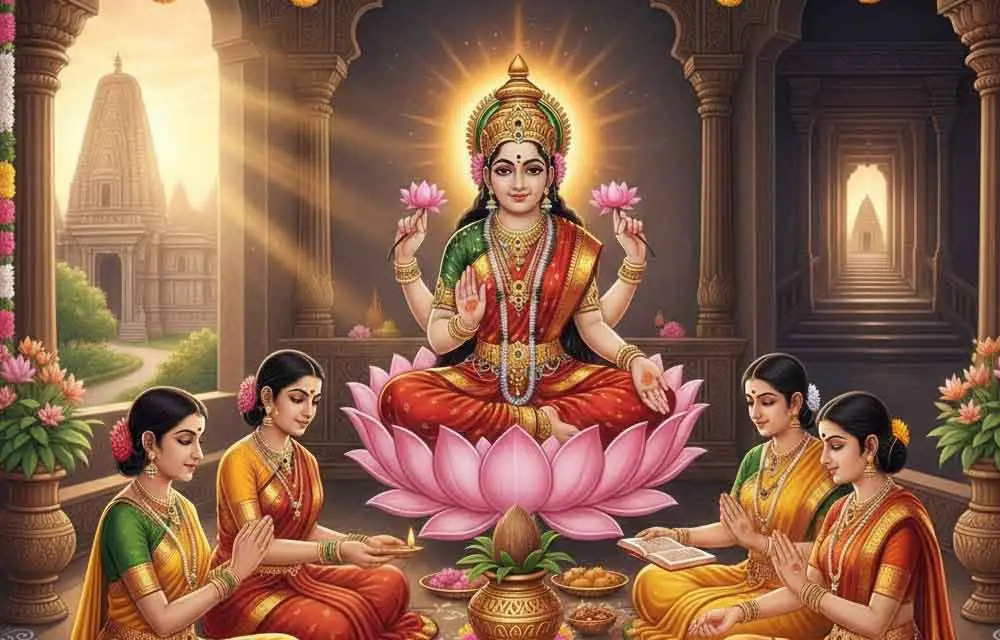
Friday Lakshmi Puja: Shukravar Vrat, Lakshmi Mantra and Rituals

Chilkur Balaji 'Visa Balaji' Temple: The 11 and 108 Pradakshina Custom Explained for NRIs

Ekagrata (One-Pointedness): Yoga Concentration and Samyama Glossary