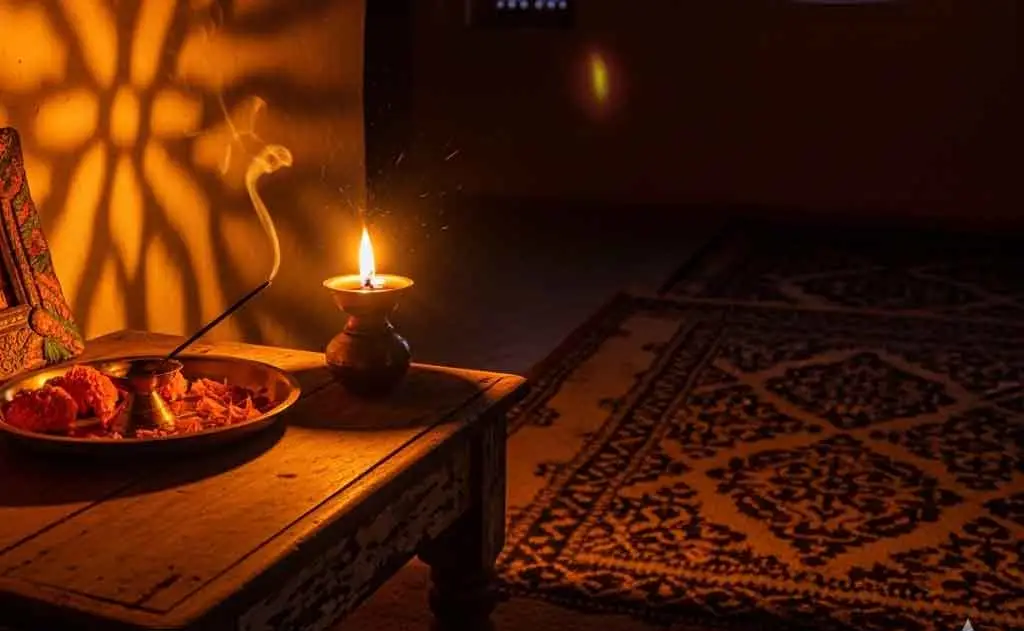
Maa Lakshmi: The Eternal Flame of Consciousness, Grace, and Dharma
Introduction: Beyond the Goddess of WealthMaa Lakshmi is often recognized as the Goddess of wealth and prosperity, but her true nature transcends material…

Introduction: Beyond the Goddess of Wealth
Maa Lakshmi is often recognized as the Goddess of wealth and prosperity, but her true nature transcends material abundance. She is the blooming lotus of consciousness, the primordial will of creation, and the heartbeat of cosmic harmony. She is Shakti in her purest form, the graceful pulse of the universe.
“Aham ichchha-svarūpiṇī śaktir adyā sanātanī”
— Lakshmi Tantra, Chapter 1
(“I am Ichchha Shakti, the eternal primal force of will.”)
Lakshmi – The Living Force Behind Creation
Unlike the common notion that she is merely Vishnu’s consort, the Lakshmi Tantra reveals that she is the driving force behind Vishnu’s divine actions. She is not passive — she is the Will of the Universe, the Ichchha Shakti.
Just as Vishnu sustains, Lakshmi inspires and initiates. She is the creative energy behind every righteous action and sacred purpose.
Lakshmi and Dharma: The Skanda Purana Perspective
“Yatra dharmo mahān asti, tatra Lakṣmīḥ pratiṣṭhitā”
— Skanda Purana, Vaishnava Khanda
(“Where Dharma thrives, there Lakshmi naturally resides.”)
Maa Lakshmi does not bless greed or deception. She resides only in places where truth, compassion, and dharma are upheld. She is not attracted by gold, but by purity and righteousness.
Symbolism of the Lotus: Beauty Amidst Mud
From the Sri Suktam of the Rigveda:
“Padmaśriṃ padmavarnāṃ padmākṣīṃ padmapriyām”
(O Lotus-eyed, lotus-colored, lotus-beloved Devi)
The lotus represents beauty, detachment, and spiritual blossoming amidst worldly challenges. Maa Lakshmi, seated on a lotus, is the epitome of divine elegance rising above chaos.
Ashta Lakshmi – Eight Divine Forms of Abundance
In the Ashtalakshmi Stotram, she is invoked in eight divine expressions, each representing a dimension of holistic prosperity:
- Ādi Lakṣhmī – Primordial abundance
- Dhānya Lakṣhmī – Nourishment and grains
- Dhairya Lakṣhmī – Courage and strength
- Gaja Lakṣhmī – Royalty and power
- Santāna Lakṣhmī – Offspring and family prosperity
- Vijaya Lakṣhmī – Victory and success
- Vidyā Lakṣhmī – Wisdom and education
- Dhana Lakṣhmī – Wealth and material prosperity
She is not limited to money — she blesses food, knowledge, valor, and fulfillment of life’s goals.
Honoring the Feminine – Where the Devas Rejoice
“Yatra nāryastu pūjyante, ramante tatra devatāḥ”
— Manusmriti 3.56
(“Where women are honoured, there the Devas rejoice.”)
Maa Lakshmi resides in every righteous woman, in every act of grace, kindness, and wisdom. Honoring women is, in essence, honoring Lakshmi herself.
Durga Saptashati & Maha Lakshmi Ashtakam: The Power of Mantras
“Sarvamaṅgala māṅgalye śive sarvārtha sādhike
Śaraṇye tryambake gauri nārāyaṇi namostute”
(Durga Saptashati, Chapter 11)
Though often addressed to Durga, this mantra is chanted for Lakshmi during Diwali and tantric pujas, invoking her as Narayani, the one who fulfills all auspicious desires.
Lakshmi Tantra’s Warning: Greed Repels the Goddess
“Māṃ lobhād yācyate kaścit, taṃ tyajeyaṃ na saṃśayaḥ”
— Lakshmi Tantra, Chapter 4
(“Those who invoke me through greed, I abandon them, without doubt.”)
Greed blocks her blessings. She stays where sattva (purity), bhakti (devotion), and shuddhi (inner clarity) prevail.
Invoke Her Within: The Inner Flame of Dharma
Maa Lakshmi is not an external guest to be invited once a year. She is the inner flame of awareness, the smile of dharma, the radiance of selfless karma.
Don’t worship her out of fear or desire.
Worship her with clarity, devotion, and truth.
Conclusion: Jai Maa Lakshmi!
Let us see Maa Lakshmi not just as the Giver of Wealth, but as the Source of Consciousness, the Embodiment of Grace, and the Heartbeat of Dharma.
Invoke her with love. Live in dharma. And she shall never leave you.
Frequently Asked Questions
Is Maa Lakshmi only the goddess of wealth?
No. Beyond wealth, she is described as the blooming lotus of consciousness, the primordial will of creation and Shakti in her purest form. The Ashtalakshmi forms also cover food, courage, knowledge, victory and family.
What is Ichchha Shakti in connection with Lakshmi?
Ichchha Shakti is the primal force of will. The Lakshmi Tantra presents Lakshmi as the driving force behind Vishnu's divine actions: as Vishnu sustains, she inspires and initiates.
What are the eight forms of Ashta Lakshmi?
The Ashtalakshmi Stotram invokes Adi, Dhanya, Dhairya, Gaja, Santana, Vijaya, Vidya and Dhana Lakshmi. They stand for primordial abundance, grain, courage, royalty, offspring, victory, wisdom and wealth.
Where does Lakshmi reside, as the Skanda Purana verse puts it?
The verse quoted from the Skanda Purana says that where dharma thrives, Lakshmi naturally resides. She stays where truth, compassion and purity are upheld, and is not drawn by gold or by greed or deception.
Why is the lotus linked to Maa Lakshmi?
The lotus, as praised in the Sri Suktam, represents beauty, detachment and spiritual blossoming amid worldly challenges. Lakshmi seated on a lotus is seen as divine elegance rising above chaos.
Which mantra is chanted for Lakshmi during Diwali?
The Durga Saptashati verse beginning 'Sarvamangala mangalye shive sarvartha sadhike' is chanted for Lakshmi during Diwali and tantric pujas. It invokes her as Narayani, the fulfiller of all auspicious desires.
Share this with family and friends
Send it on WhatsApp, post it, or copy the link.
More from Spirituality
- Aham Brahmasmi Meaning: Why It Is Not Ego
- Tat Tvam Asi Meaning: Chandogya Upanishad 6.8.7 Explained
- What Is Atma? The Self in the Upanishads, Explained
- Atma Paramatma Tattvam: Are They One? The Lion Story, Tat Tvam Asi and Advaita Vedanta
- Not Wealth, Just Good Character: A Reflection on Daanam (Charity) | Selfless Giving in the Hindu Tradition
You might also like
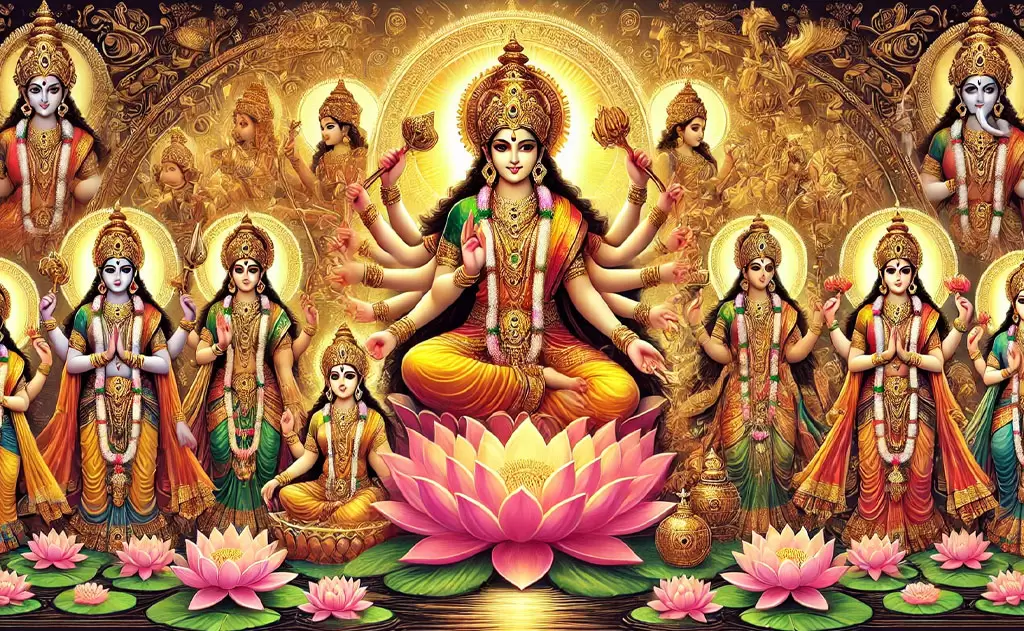
The Many Faces of Goddess Lakshmi: Symbols of Wealth, Prosperity, and Abundance
Love vs Attachment: What the Ramayana, the Bhagavata and Vedanta Teach About Selfless Love

Gargi and Maitreyi: Women Seers of the Upanishads