Tiruppavai 30 Pasurams – Complete Devotional Guide with Telugu Meanings
Introduction to Tiruppavai Tiruppavai is a sacred collection of 30 Tamil hymns composed by Andal, the only female Alvar among the 12 Vaishnavite saints.
Introduction to Tiruppavai
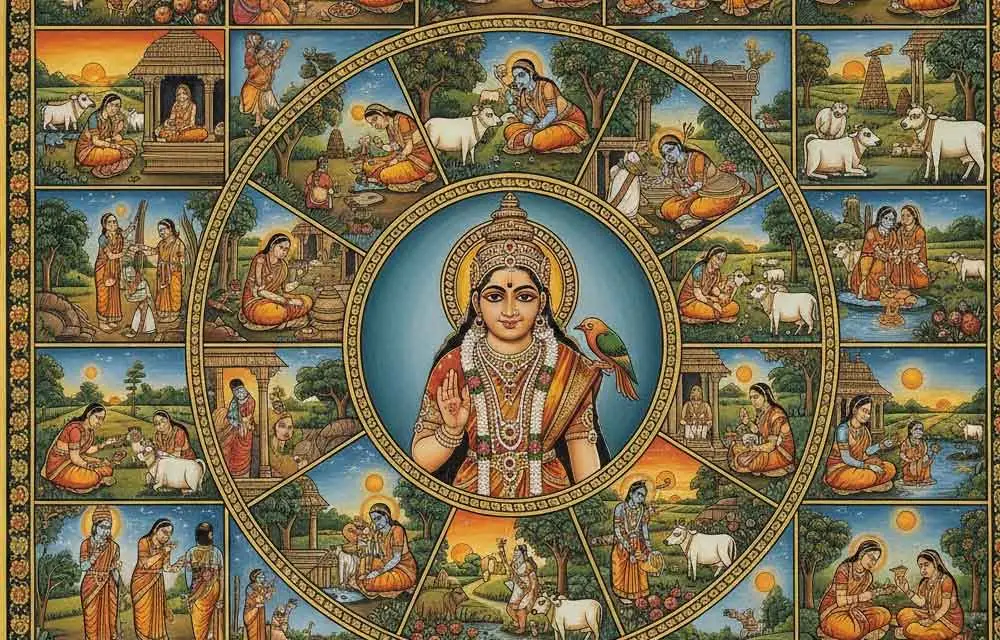
Tiruppavai is a sacred collection of 30 Tamil hymns composed by Andal, the only female Alvar among the 12 Vaishnavite saints. These divine verses were sung during the holy month of Margazhi (December-January) as part of the Pavai Vratam, a ritual observed by young girls seeking the blessings of Lord Krishna.
The Divine Story of Andal and Tiruppavai
Birth of Andal - The Divine Maiden
In the 8th century CE, in the holy town of Srivilliputtur, lived a devoted Brahmin named Vishnuchitta (later known as Periyalvar). He was a temple priest who tended to the beautiful garden where he grew flowers exclusively for Lord Vishnu's worship.
One blessed morning, while working in his garden, Vishnuchitta discovered a beautiful baby girl lying on a lotus flower beneath a Tulsi plant. Recognizing this as divine grace, he adopted the child and named her Kodhai. She was no ordinary child – she was an incarnation of Bhudevi (Mother Earth), born to remind humanity of pure, selfless devotion.
Kodhai Becomes Andal
Growing up in an atmosphere of complete devotion, young Kodhai developed an intense love for Lord Krishna (Vishnu). Every day, she would secretly wear the garland prepared for the temple deity, imagining herself as Krishna's beloved. She would then replace it before her father offered it to the Lord.
One day, Vishnuchitta discovered a strand of hair in the garland and traced this "transgression" back to his daughter. Horrified that he had been offering "used" garlands to the Lord, he prepared to discard them. That night, Lord Ranganatha appeared in his dream and said, "I desire only those garlands that have been worn by your daughter. She is my beloved consort, and her love is the purest devotion."
From that moment, Kodhai came to be known as "Andal" (the one who ruled over the Lord). The young girl who dared to wear God's garland had captured the Supreme Lord's heart through her innocent, unconditional love.
The Pavai Vratam - Origin of Tiruppavai
During one Margazhi month, Andal, along with her gopika companions, observed the sacred Pavai Vratam – a month-long ritual where young girls would wake up before dawn, bathe in cold water, and pray to Goddess Katyayani for a good husband.
But Andal's prayers were different. While other girls prayed for good husbands, Andal yearned only for Lord Krishna. She wanted nothing less than the Supreme Lord Himself as her eternal consort.
During this vratam, Andal composed 30 beautiful pasurams (verses), one for each day of the month. These verses are not mere prayers but a complete expression of devotional love, theological wisdom, and spiritual philosophy woven into poetic beauty.
In these verses, Andal takes on the role of a young gopika who:
- Wakes up her sleeping friends before dawn
- Describes the glory of the holy month of Margazhi
- Praises Lord Krishna's divine qualities
- Seeks His divine grace and union
- Expresses the philosophy of Sharanagati (complete surrender)
Divine Union - Andal's Marriage to Lord Ranganatha
As Andal matured, Vishnuchitta began worrying about her marriage. But Andal remained firm – she would marry only Lord Ranganatha of Srirangam. Lord Ranganatha Himself appeared in Vishnuchitta's dream and commanded him to bring Andal to Srirangam, adorned as a bride.
The entire town of Srivilliputtur accompanied Andal on this divine journey. At Srirangam, the procession made its way to the sanctum. Andal walked toward the deity with eyes full of love and devotion. As she approached the Lord, a brilliant light enveloped her, and she merged into the deity, becoming one with her beloved Lord forever.
This divine union represents the ultimate goal of bhakti – complete merger with the Divine through pure, selfless love.
Spiritual Significance of Tiruppavai
Tiruppavai is not just poetry; it is:
- A spiritual manual teaching the path of Bhakti Yoga
- A philosophical treatise on Sharanagati (surrender to God)
- A guide to community worship emphasizing collective devotion
- A blueprint for spiritual discipline during the sacred month
- An expression of Madhura Bhakti (sweet devotional love)
The verses contain deep Vedantic truths presented in simple, melodious Tamil that touches the hearts of common people and scholars alike.
Frequently Asked Questions
Who composed the Tiruppavai?
Tiruppavai was composed by Andal, the only female Alvar among the 12 Vaishnavite saints. It is a collection of 30 Tamil hymns, or pasurams.
When are the Tiruppavai pasurams sung?
They are sung during the month of Margazhi (December-January) as part of the Pavai Vratam. Andal composed 30 pasurams, one for each day of the month.
What is the Pavai Vratam?
The Pavai Vratam is a month-long ritual in which young girls wake before dawn, bathe in cold water and pray to Goddess Katyayani for a good husband. Andal observed it with her gopika companions, yearning only for Lord Krishna.
Who was Andal and how did she get her name?
As commonly told, Andal was found as a baby by Vishnuchitta (Periyalvar) in Srivilliputtur and named Kodhai. She became Andal, meaning the one who ruled over the Lord, after Lord Ranganatha accepted the garlands she had worn.
What themes do the Tiruppavai verses cover?
Andal speaks as a gopika who wakes her sleeping friends before dawn, describes Margazhi, praises Krishna's qualities and seeks His grace. The verses express Sharanagati (complete surrender) and Madhura Bhakti.
Why are Telugu meanings given for the Tiruppavai pasurams?
Telugu meanings let devotees follow the hymns' devotional love and Vedantic truths. The verses themselves are in simple, melodious Tamil that touches both common people and scholars.
Share this with family and friends
Send it on WhatsApp, post it, or copy the link.
More from Spirituality
- Chilkur Balaji 'Visa Balaji' Temple: The 11 and 108 Pradakshina Custom Explained for NRIs
- Ekagrata (One-Pointedness): Yoga Concentration and Samyama Glossary
- Sri Medha Dakshinamurthy Swami Dhyanam | Meditation Sloka for Intelligence, Eloquence & Self-Realization
- What Is True Poverty? | Dharma Is the Greatest Wealth | Sanatana Dharma
- Correct Yourself First! | The Power of Constructive Criticism for Personal Growth
You might also like
Why Andal's Tiruppavai Is Called the "Tamil Vedas": Deep Symbolism Explained
Importance of Tiruppavai in Tirumala During Dhanurmasam
Tiruppavai & Gita Jayanti: The Divine Connection of Margashirsha