Sravana Masam for Newlyweds: Rituals for a Happy Married Life
Sravana Masam—also known as Shravan month in the Hindu lunar calendar—is widely regarded as one of the most spiritually powerful and auspicious times in Hindu…
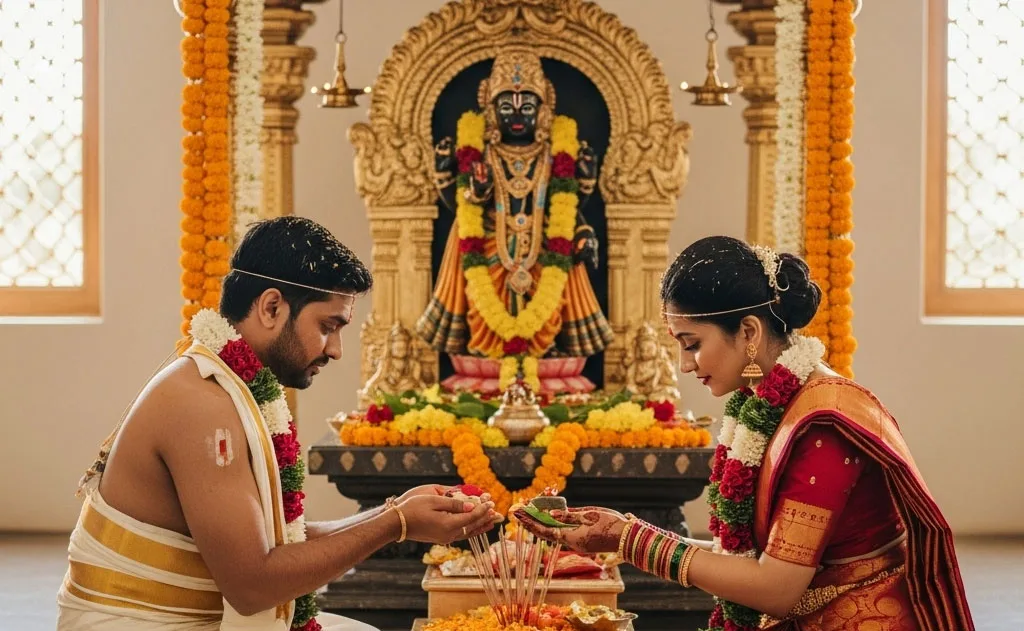
Sravana Masam—also known as Shravan month in the Hindu lunar calendar—is widely regarded as one of the most spiritually powerful and auspicious times in Hindu…
Sravana Masam—also known as Shravan month in the Hindu lunar calendar—is widely regarded as one of the most spiritually powerful and auspicious times in Hindu tradition. Observed between July and August, this sacred month is dedicated to devotion, fasting, and rituals honoring Lord Shiva, Goddess Gauri, and other deities.
For newlyweds, Sravana holds deeper spiritual and cultural significance. In Hinduism, marriage is a sacred bond blessed by divine forces. Participating in Shravan rituals for couples is believed to strengthen love, protect the marriage, and invite blessings for a prosperous, joyful life together.
This guide explores the significance of Sravana Masam for newly married couples, with a focus on Mangala Gauri Vratam, Vayanam, Tambulam, and other meaningful traditions during the first year of marriage.
The Spiritual Significance of Sravana Masam
Sravana Masam is closely associated with legends of Lord Shiva, Goddess Parvati, Krishna Janmashtami, and Nag Panchami. The name “Shravan” is derived from the prominent Shravan Nakshatra (star) during this period.
Why It’s Special for Newlyweds
For couples recently united in marriage, the first Sravana Masam symbolizes renewal, harmony, and devotion. Traditional beliefs emphasize that this month is ideal for:
- Initiating the couple into shared spiritual practices
- Strengthening emotional and cultural bonds
- Establishing auspicious household values
The sacred energy of Sravana supports devotion and rituals that foster domestic peace and marital happiness.
Mangala Gauri Vratam: The Sacred Tuesday Fast
One of the most significant observances for newly married women during Shravan is the Mangala Gauri Vratam, performed on Tuesdays.
Purpose and Belief
This vrat is observed by married women, especially brides in their first year of marriage, to:
- Pray for the long life of their husbands
- Strengthen marital love and harmony
- Seek blessings for wealth, fertility, and family happiness
It is believed that Goddess Gauri blesses those who perform this vrat with unwavering devotion and a joyful married life.
How It’s Performed
Preparation:
- Women rise early, bathe, and dress in traditional sarees.
- An altar (mandapam) is decorated with banana leaves and flowers.
- A clay or silver idol of Goddess Gauri is adorned and placed on the altar.
Ritual Steps:
- Haldi-kumkum is applied to the idol.
- Sixteen lamps are lit, symbolizing the sixteen virtues of a woman.
- Special offerings like jaggery pongal, bobbatlu, and fruits are prepared.
- Women chant the Mangala Gauri Vrat Katha and sing traditional songs.
Conclusion:
- At the end of the puja, vayanam (gifts) like bangles, blouse pieces, and fruits are distributed to other married women.
Vayanam and Tambulam: Traditions of Sisterhood and Blessings
What is Vayanam?
Vayanam is a cherished tradition where married women exchange gifts such as:
- Bangles
- Blouse pieces
- Turmeric and Kumkum
- Dry fruits
- Fresh fruits and flowers
This exchange symbolizes prosperity, fertility, and mutual blessings, often conducted during social gatherings or temple visits.
What is Tambulam?
Tambulam refers to the ceremonial offering of betel leaves, betel nuts, fruits, and coins. It is considered a gesture of auspiciousness and is traditionally exchanged among women as a sign of goodwill and blessing.
Cultural Significance
- Builds emotional and spiritual bonds among women
- Promotes values of sharing, humility, and community
- Celebrates womanhood, fertility, and prosperity
First Shravan After Marriage: A Milestone for Brides
The first Sravana Masam after marriage is a significant cultural event for Hindu brides, marking a period of spiritual bonding and familial connection.
Traditions and Rituals
Bride’s Visit to Maternal Home:
- In many communities, the bride returns to her maternal home during Shravan for bonding, performing rituals, and learning traditions from elders.
First Mangala Gauri Puja:
- Often guided by the mother or elder women, the bride performs her first Mangala Gauri Vratam, symbolizing her initiation into household spiritual life.
Gifts of Sarees and Jewelry:
- Brides receive new sarees, bangles, and jewelry, representing prosperity and new beginnings.
Community Participation:
- Brides join local women’s groups for cultural activities like kolatam dances, bhajans, and spiritual gatherings.
Other Shravan Month Practices for Newlyweds
Joint Fasting on Mondays (Somvar Vrat)
Newly married couples often observe Somvar Vrat together by:
- Eating once a day or following a sattvic diet
- Visiting Shiva temples and offering bel leaves
- Praying for marital harmony and spiritual strength
Performing Satyanarayana Puja
Families conduct this ritual to seek blessings from Lord Vishnu for household peace, prosperity, and happiness.
Observing Nag Panchami
On Nag Panchami, milk and flowers are offered to serpent deities to seek protection from evil and ensure fertility—a significant aspect of family life.
Real-Life Experience: A Newlywed's Reflection
“It was my first Shravan after marriage. My mother guided me through the Mangala Gauri Vratam. I felt a deep sense of peace and spiritual strength. Exchanging vayanam with neighbors was heartwarming and gave me a sense of community. These rituals are not mere traditions—they are living blessings.”
— Shanvika Rao, Bengaluru
Mythological Significance of Mangala Gauri Vratam
According to the Skanda Purana, Goddess Parvati undertook penance and devotion to win Lord Shiva’s heart. Mangala Gauri Vratam symbolizes the virtues of devotion, patience, and spiritual strength that every married woman aspires to embody.
Frequently Asked Questions
What is Mangala Gauri Vratam and who observes it?
It is a Tuesday fast during Shravan observed by married women, especially brides in their first year of marriage. Devotees pray to Goddess Gauri for the husband's long life, marital harmony and family happiness.
How is Mangala Gauri Vratam performed?
Women rise early, bathe and decorate an altar with banana leaves and flowers, then place an adorned idol of Goddess Gauri. They apply haldi-kumkum, light sixteen lamps, offer jaggery pongal, bobbatlu and fruits, and chant the Vrat Katha.
What are vayanam and tambulam?
Vayanam is the exchange of gifts such as bangles, blouse pieces, turmeric, kumkum and fruits among married women. Tambulam is the ceremonial offering of betel leaves, betel nuts, fruits and coins as a sign of goodwill.
Can newlywed couples fast together during Sravana Masam?
Yes, many couples observe Somvar Vrat on Mondays together by eating once a day or following a sattvic diet. They also visit Shiva temples to offer bel leaves and pray for marital harmony.
When is Sravana Masam observed?
It falls between July and August in the Hindu lunar calendar, so exact dates follow the local panchang each year. The month is named after the Shravan Nakshatra.
What do brides traditionally do during the first Shravan after marriage?
In many communities the bride visits her maternal home, performs her first Mangala Gauri puja guided by her mother or elder women, and receives gifts of sarees and jewellery. She also joins local women's groups for bhajans and kolatam.
You might also like
Sravana Masam Fasting Benefits: Spiritual & Ayurvedic Health Advantages

Why Sravana Masam is the Best Time for Property & Gold Investments

DIY Sravana Masam Home Decor: Traditional Torans & Puja Setup Ideas