The Story of Krishna and the Govardhan Hill: Faith Over Power
In the heart of Hindu mythology, there is no greater example of the triumph of faith over power than the story of Lord Krishna lifting the Govardhan Hill.
In the heart of Hindu mythology, there is no greater example of the triumph of faith over power than the story of Lord Krishna lifting the Govardhan Hill.
In the heart of Hindu mythology, there is no greater example of the triumph of faith over power than the story of Lord Krishna lifting the Govardhan Hill. This ancient tale not only symbolizes divine intervention but also teaches us important lessons about humility, devotion, and the power of belief.
The story takes us back to the small village of Vrindavan, where Lord Krishna performed many of his divine pastimes. Among these, the lifting of the Govardhan Hill remains one of the most iconic, where Krishna, a young boy at the time, protected his devotees from the wrath of the rain god Indra.
The Arrogance of Indra and the Humility of Krishna
The story begins with the people of Vrindavan preparing to perform an annual puja (worship) for Lord Indra, the god of rain and thunder. Traditionally, the villagers offered prayers to Indra, believing that it was he who ensured the rains and thus their survival through farming and agriculture.
However, young Krishna, wise beyond his years, questioned this practice. He pointed out to the villagers that it was not Indra who provided them with sustenance, but the Govardhan Hill and the natural ecosystem that surrounded them. Krishna urged the villagers to redirect their prayers toward the hill and Mother Nature, as they were the real providers of their prosperity.
This act of defiance angered Indra, whose ego and arrogance led him to unleash a terrifying storm upon the village. Dark clouds gathered, and torrential rain began to pour, threatening to destroy the homes, crops, and lives of the people of Vrindavan.
Krishna Lifts the Govardhan Hill
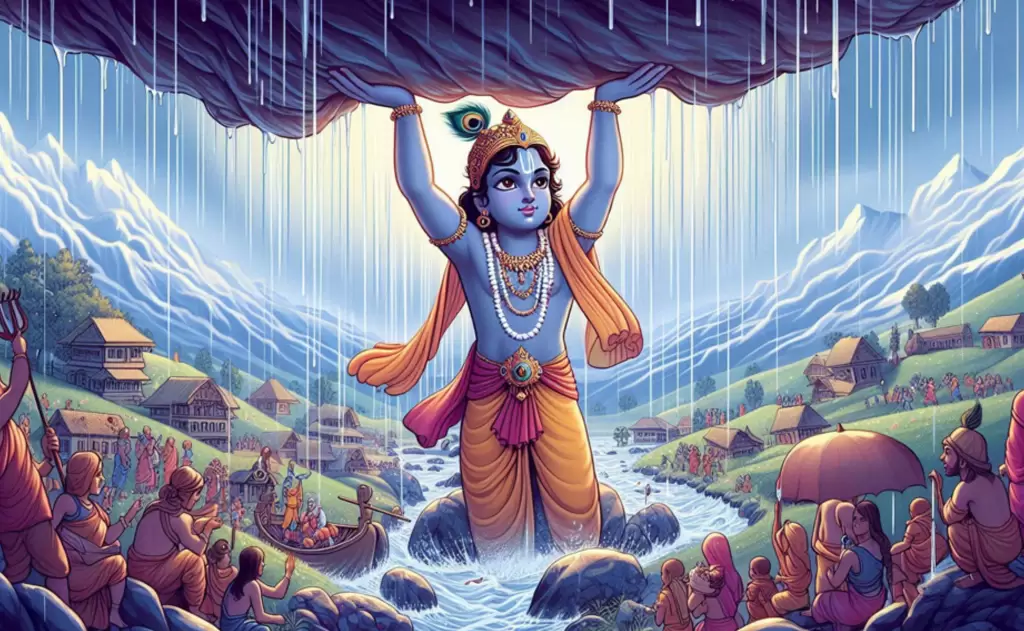
Seeing the plight of the villagers, Lord Krishna, though just a child, decided to intervene. In a miraculous display of divine power, Krishna effortlessly lifted the Govardhan Hill with the little finger of his left hand, providing shelter to the entire village and its cattle beneath the massive hill.
For seven days and nights, Krishna held the hill up like an umbrella, while the villagers stood under its protection, marveling at the divine grace and humility of their young savior. The rains continued to fall, but they could not harm the people or their land as long as they were under Krishna's protection.
H2: Faith Over Power: The Defeat of Indra’s Arrogance
Indra, watching this miraculous act, soon realized his mistake. He understood that his pride had blinded him to the true power of faith and Krishna’s divine nature. Humbled by Krishna’s unwavering devotion to his people and the ease with which he had protected them, Indra stopped the storm and descended to offer his apologies to Lord Krishna.
Indra’s arrogance was replaced with humility, as he acknowledged that it was not his power but the faith of the villagers and the grace of Lord Krishna that triumphed in the end.
The Lesson of Govardhan: Humility and Devotion
The story of Krishna and the Govardhan Hill is much more than a mythological tale—it’s a spiritual lesson that resonates with all of us today. Krishna’s act of lifting the hill teaches us that faith and devotion are far stronger than worldly power or arrogance.
- Faith in the Divine: The people of Vrindavan put their complete trust in Krishna, and their faith was rewarded. It reminds us that true strength lies in trusting the divine, even in the face of adversity.
- Humility Over Ego: Indra’s arrogance led him to believe that he controlled the fate of the villagers, but his ego was shattered by Krishna’s humble act. This story urges us to practice humility, recognizing that we are mere instruments in the grand scheme of things.
- Harmony with Nature: Krishna’s guidance to worship Govardhan Hill and the ecosystem signifies the importance of living in harmony with nature, a teaching that holds even more relevance in today's world, where environmental preservation is critical.
Govardhan Puja: A Celebration of Faith
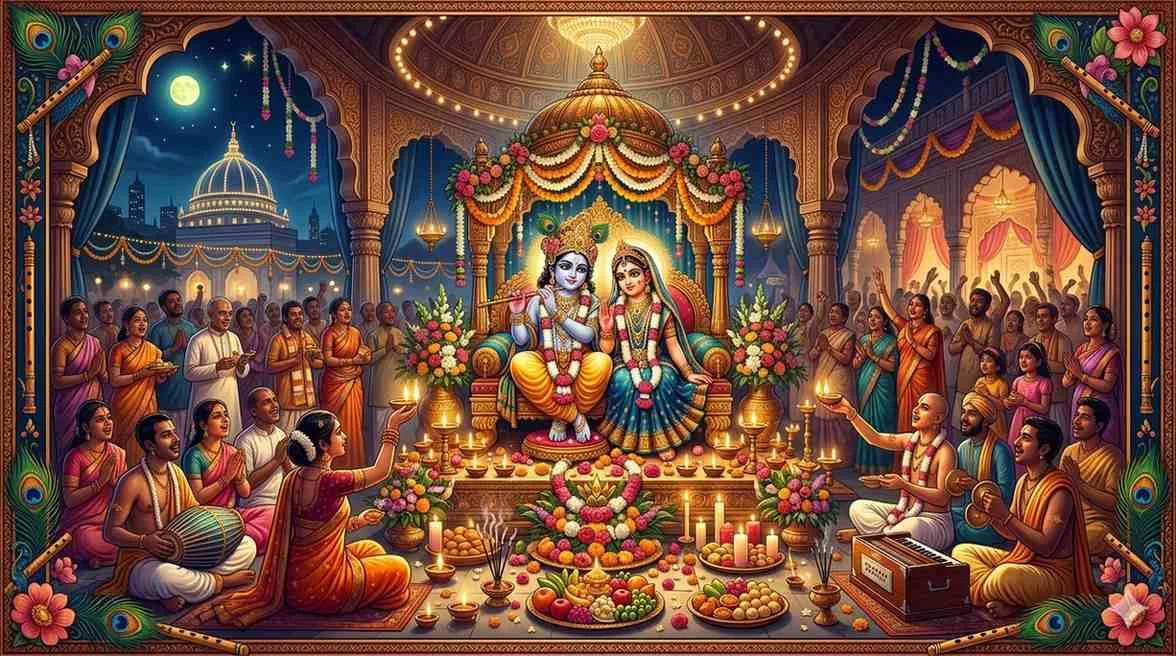
To this day, the story of Govardhan Hill is celebrated by Hindus during the festival of Govardhan Puja, which takes place the day after Diwali. On this occasion, devotees offer prayers to Govardhan Hill and prepare various offerings of food in gratitude to Krishna for protecting them and reminding them of the importance of nature.
During this festival, people also make miniature Govardhan hills using cow dung, symbolizing their devotion and connection to Krishna’s divine act of sheltering his devotees.
Conclusion: The Timeless Message of Krishna and Govardhan Hill
The story of Lord Krishna lifting the Govardhan Hill serves as a timeless reminder of the power of faith over arrogance and ego. In a world where materialism often overshadows spirituality, this ancient tale calls on us to remain humble, to trust in divine providence, and to live in harmony with nature.
As we celebrate Govardhan Puja each year, we honor Krishna’s message of humility, devotion, and ecological balance. Let us always remember that it is not worldly power that prevails but the unwavering faith and grace of the divine. For more inspiring stories and in-depth explorations of Hindu mythology, visit hindutone.com, your source for everything about Sanatana Dharma, spirituality, and devotional practices. Join us on a journey through India’s rich cultural and spiritual heritage.
Share the Diwali 2026 blessing
As Diwali's lamps still glow, Govardhan Puja reminds us that faith shelters us more surely than any power. Just as young Krishna lifted the hill to protect Vrindavan, as commonly told, the diya we light is a small sign of the inner light that keeps us humble and grateful. With Maa Lakshmi's grace in our homes and the victory of light over darkness in our hearts, share one of these blessings with your family this Diwali 2026 and Govardhan Puja.
Deepa shloka: the lamp prayer
शुभं करोति कल्याणम् आरोग्यं धनसम्पदा। शत्रुबुद्धिविनाशाय दीपज्योतिर्नमोऽस्तु ते॥
Shubham karoti kalyanam arogyam dhana-sampada, shatru-buddhi-vinashaya deepa-jyotir namostu te.
Meaning: I bow to the light of the lamp, which brings what is auspicious and good, health and prosperity, and destroys ill-will. Many families recite it as they light the evening diya.
Lakshmi mantra for Diwali
ॐ श्रीं महालक्ष्म्यै नमः॥
Om Shreem Mahalakshmyai Namah.
Meaning: Salutations to Mahalakshmi. Shreem is the seed syllable traditionally associated with Lakshmi.
Diwali 2026 messages to share
🪔 May Krishna, who held Govardhan over Vrindavan, shelter our family in every storm. Happy Govardhan Puja and a joyful Diwali to all of you! 🙏 Share on WhatsApp
🙏 Dear elders, your faith has always been our Govardhan, our shelter in hard times. May this festival bless you with health and peace. 🪔 Share on WhatsApp
✨ May your faith stay stronger than any storm and your heart humble like the people of Vrindavan. Happy Govardhan Puja, my friend! 🌸 Share on WhatsApp
🪔 Warm wishes for Diwali and Govardhan Puja. May humility guide our work, gratitude fill our days and harmony strengthen our team. ✨ Share on WhatsApp
🌸 May Maa Lakshmi's grace rest in your home like the gentle light of a diya, bringing health, harmony and contentment this Diwali 2026. 🙏 Share on WhatsApp
🪔 May Lord Rama's homecoming to Ayodhya remind us that light always returns. Wishing you a Diwali of faith, humility and joy. Jai Shri Ram! ✨ Share on WhatsApp
A short Diwali prayer
Maa Lakshmi, Lord Ganesha, I come before you with folded hands. Like the people of Vrindavan, let me trust the divine rather than my own pride. Light my heart with humility, my home with harmony and my family with good health. Teach me gratitude for nature's gifts, and give me the strength to offer right effort each day.
Use the share buttons on this page to send these blessings to your family and friends.
Frequently Asked Questions
Why did Krishna lift the Govardhan Hill?
As commonly told, Indra sent a terrifying storm on Vrindavan after Krishna persuaded the villagers to worship Govardhan Hill instead of him. Krishna lifted the hill to shelter the villagers and their cattle.
How long did Krishna hold up Govardhan Hill?
Krishna held the hill aloft for seven days and nights like an umbrella. He is said to have lifted it with the little finger of his left hand while the villagers sheltered beneath.
Why did Krishna tell the villagers to stop worshipping Indra?
Krishna pointed out that sustenance came from Govardhan Hill and the surrounding natural ecosystem, not from Indra. He urged the villagers to redirect their prayers to the hill and Mother Nature.
When is Govardhan Puja celebrated?
Govardhan Puja takes place the day after Diwali. Devotees pray to Govardhan Hill and prepare food offerings in gratitude to Krishna.
How do people celebrate Govardhan Puja at home?
Devotees make miniature Govardhan hills from cow dung and offer various foods, symbolising their devotion to Krishna and gratitude for nature. Prayers are directed to Govardhan Hill.
What does the Govardhan story teach about humility?
Indra's pride was replaced by humility when he saw Krishna protect the villagers, and he stopped the storm and apologised. The story teaches that faith and devotion outlast ego and worldly power.
You might also like
Raja Ravi Varma’s ‘Yashoda and Krishna’ Sells for Record ₹167.2 Crore – A Defining Moment for Indian Art
Krishna Janmashtami 2026 USA: Midnight Puja Time, New York Timings & ISKCON Celebrations
Krishna Janmashtami 2026 UK: Midnight Puja Time, London Timings & ISKCON Celebrations