
Eco-Friendly Festivals
Eco-Friendly Festivals is HinduTone's collection of ideas and guidance for celebrating Hindu festivals in ways that respect nature. Hindu tradition has long honoured rivers, trees, animals and the earth itself as sacred, and many devotees feel that caring for the environment is a natural part of worship rather than something separate from it.
As celebrations grow larger, questions about idol immersion, plastic decorations, noise, smoke and waste have become important to families and communities. Choosing clay Ganesha idols, natural colours for Holi, cotton-wick diyas, flower-based rangoli and reusable puja items are simple ways devotees try to keep the spirit of a festival while reducing harm to water bodies and the air. Many feel such choices express gratitude to Bhudevi, the Earth Mother.
On this page you will find practical guides, do-it-yourself ideas, explanations of traditional customs that were already eco-conscious, and coverage of green initiatives by temples and communities described in general terms. Related pages cover Ganesh Chaturthi, Diwali and the local rules on Diwali fireworks in different countries.
Latest Articles
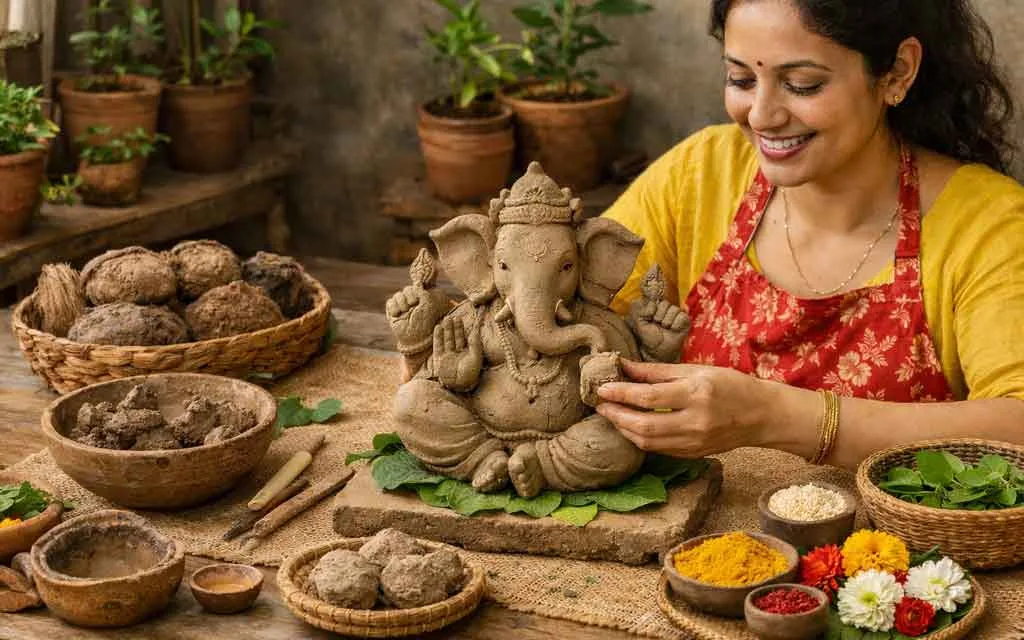
How to Make Eco-Friendly Ganesha Idol at Home: Complete Step-by-Step Guide (2026)
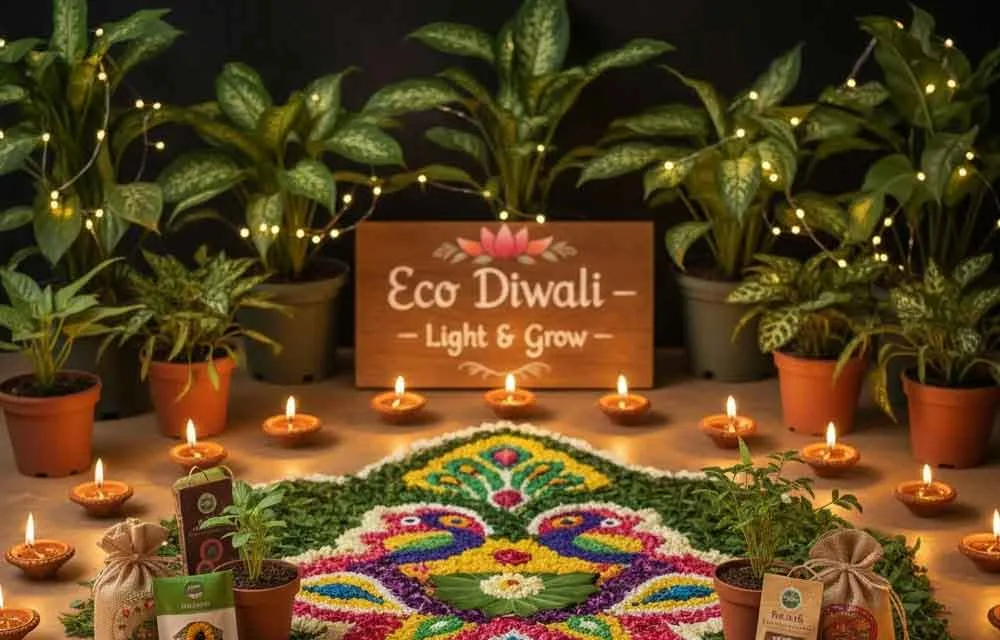
Green Diwali 2026: How to Celebrate Without Harm to Nature
FAQs
What does an eco-friendly festival mean?
An eco-friendly festival is one celebrated with care for nature, keeping its rituals and joy while reducing pollution and waste. Examples include using clay idols instead of plaster ones, natural colours for Holi, earthen diyas, flower rangoli, cloth bags and reusable puja items, and immersing idols at home or in designated tanks.
How can I celebrate an eco-friendly Ganesh Chaturthi?
Choose an unpainted or naturally coloured clay Ganesha, decorate with flowers, leaves and cloth rather than plastic or thermocol, and consider immersing the idol in a bucket or tank at home. The dissolved clay can then be used in a garden. Many families find this keeps the devotion intact while protecting lakes.
Are eco-friendly practices part of Hindu tradition?
Many devotees believe so. Hindu scriptures and customs honour rivers, mountains, trees and the earth as sacred, and many traditional practices used local, natural materials such as clay, leaves, flowers and cow-dung lamps. Eco-friendly celebrations are often seen as a return to these roots rather than a new idea.
How can I make Diwali greener?
Light earthen diyas with oil, use flower or rice-flour rangoli, choose LED lights over excess decorations, reduce packaging when exchanging gifts and keep fireworks minimal or follow local rules. Sharing sweets with neighbours and those in need also keeps the festive spirit alive without adding to waste or smoke.