

Temple Priest / Pandit (Multiple Positions) — ANMC, Melbourne Australia | Religious Worker Visa 2026
Full-time priest openings at ANMC Temple, Melbourne — daily nitya pooja, abhishekam, havans and devotee samskaras across Lakshmi-Narayana, Shiva, Durga and Hanuman shrines. Religious worker (subclass 407) visa sponsorship, accommodation and family medical cover.
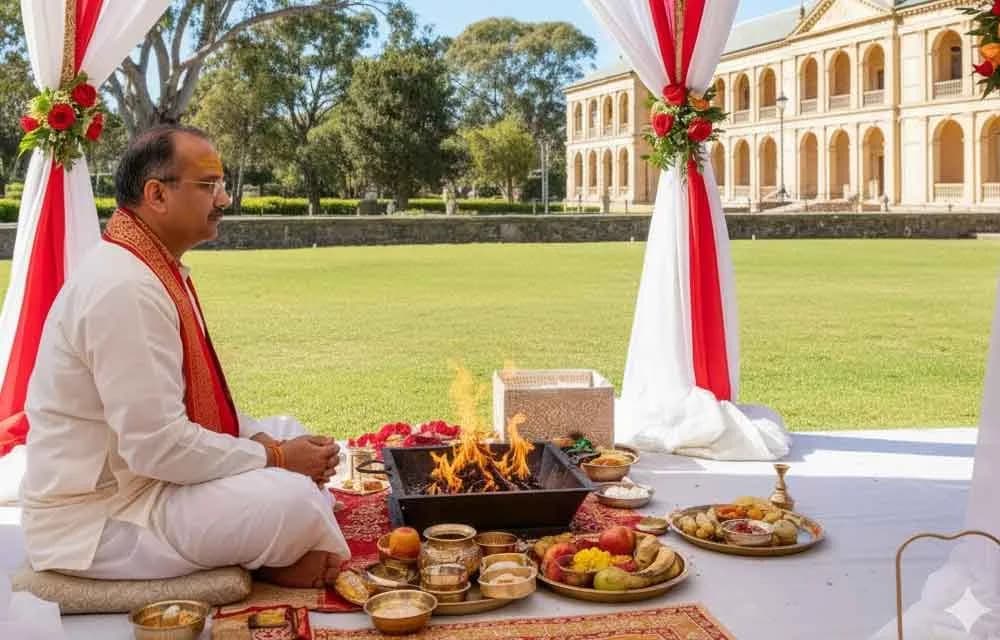
Full-time priest openings at ANMC Temple, Melbourne — daily nitya pooja, abhishekam, havans and devotee samskaras across Lakshmi-Narayana, Shiva, Durga and Hanuman shrines. Religious worker (subclass 407) visa sponsorship, accommodation and family medical cover.
The ANMC (Australian Nepalese, Mauritian and Indian Community) temple in suburban Melbourne is currently hiring across multiple full-time priest positions for its 2026 cycle. The temple is one of the most actively used community Hindu spaces in Victoria, drawing daily and weekly devotees from the Indian, Nepalese, Mauritian-Indian, Sri Lankan-Tamil and Fijian-Hindu diasporas. The hiring is for both senior and junior priest roles across the temple’s multi-deity sanctum, which houses Lakshmi-Narayana, Shiva-Parvati, Durga, Hanuman, Ganesh, the Navagraha and a separate small Krishna-Radha shrine added in 2024.
Australia’s Hindu population has grown faster than almost any other religion in the country over the last two census cycles — from roughly 440,000 in 2016 to over 685,000 in 2021, and projected to cross 900,000 by 2026. Melbourne and Sydney together account for over 60 per cent of that population, and Melbourne in particular has emerged as the centre of the Nepalese Hindu community in Australia. ANMC sits at this intersection: a community temple where Tuesday Hanuman Chalisa evenings, Saturday Shani pooja, Sunday Ganesh archana and the major festival cycles run on a calendar that touches all of these diaspora groups.
Roles, Responsibilities & Daily Schedule
The hired priests perform the temple’s nitya (daily) pooja schedule — morning suprabhatham at 6:30 AM, abhishekam and alankaram for each shrine, mid-morning Ganapathy homam on Wednesdays, the noon mahanaivedhyam, the 6:00 PM evening aarti and the closing procedures. Special weekly ceremonies include the Maha Ganapathy homam on Wednesdays, Sri Lalitha Sahasranama Parayanam on Fridays, Shiva Rudrabhishekam on Mondays, Saturn (Shani) abhishekam on Saturdays, and a community Hanuman Chalisa session on Tuesday evenings that draws over 200 devotees.
Festival ownership is significant. The priest team is responsible for Janmashtami, Ganesh Chaturthi (the largest festival of the temple’s year, with a community pandal in nearby Doncaster), Navratri’s nine-day Durga Sapthasathi parayanam and Devi Mahatmyam recitations, Diwali (Lakshmi pooja and the day-after Govardhan), Karthikai Deepam, Vaikuntha Ekadashi, Maha Shivaratri, Holi, Rama Navami and Hanuman Jayanti. Devotee-requested ceremonies include Namakarana, Annaprashana, Upanayana, Vivaha, Gruha Pravesh, Ayushya Homam, Sathiabdhapoorthi (60th birthday), Bhima Ratha Shanti (70th), the various ancestral Tarpanam observances on Amavasya and Pitru Paksha, and funerary Apara Karma services where lawful.
Eligibility & Tradition Requirements
ANMC accepts applications from priests trained in either the Smaartha-Vaikhanasa, Pancharatra-Vaishnava, or Saiva-Agama traditions, given the multi-deity nature of the sanctum. Required qualifications are five or more years of post-training temple experience, recognised Veda and Agama certification (TTD Dharmagiri Veda Vidyapeeth, Sri Venkateswara Vedic University Tirupati, recognised Saiva schools in Tamil Nadu, BAPS-trained pandits, or equivalent gurukulams in Varanasi or Kerala), Sanskrit fluency, working English, and conversational Hindi or Telugu. Multi-language ability — Tamil, Nepali, Marathi or Bhojpuri — is not required but is rated favourably given the community mix.
Brahmin lineage with documented training is expected. Priests must be willing to perform multi-tradition rituals — for example, leading the Janmashtami Vaishnava observance one week and the Maha Shivaratri Saiva all-night vigil the next — and must be willing to travel for off-temple devotee samskaras across Greater Melbourne, including Geelong and Ballarat where smaller Hindu communities request priest services.
Salary, Visa & Family Support
ANMC offers a competitive Australian salary structured around the country’s Religious Worker stream of subclass 407 visa (Training and Research) or the subclass 482 visa (Temporary Skill Shortage) where applicable, with the standard package including base salary in AUD (typically AUD 60,000 to AUD 75,000 plus statutory superannuation, depending on experience and seniority of the role), shared or single-family accommodation in temple-adjacent housing (Mill Park, Bundoora or Doncaster depending on availability), Medicare-equivalent private health insurance for the priest plus spouse and dependent children, and one annual return flight to India or Nepal for the family.
The visa pathway is sponsored directly by ANMC, which is a Department of Home Affairs-approved religious worker sponsor. The 407 route is initially a two-year contract, extendable on performance and need; from there, eligible priests with strong English (IELTS 6.0 or equivalent) and continuing community service can transition to permanent residency via the Skilled Independent (subclass 189) or Employer Nomination Scheme (subclass 186) over a five-to-seven year horizon.
How to Apply — Application Process
Applications are submitted through the ANMC official website at anmcinc.org.au — look for the Careers section under About Us. The application requires a CV with full priest service history, copies of Veda-Agama certifications, two reference letters from senior priests under whom you have served, copies of passport and family documents, and short audio or video samples of you performing core rituals (Maha Ganapathy homam, abhishekam chanting, and one festival aarti of your choice). Email enquiries can also be addressed to the temple’s management committee through the Contact form on the same site, with the subject line “Priest Application — 2026 Cycle”.
The selection process runs in three stages: an initial CV and certificate review by the temple’s priest committee, a video interview that includes a live chanting demonstration, and (for shortlisted candidates) an in-person trial period of two to four weeks at the temple before the final offer is extended. Successful candidates receive the visa nomination letter, after which the formal subclass 407 application is lodged with the Department of Home Affairs — typical turnaround from offer to visa grant is 12 to 16 weeks.
Why Melbourne & Career Growth
Melbourne is repeatedly ranked among the world’s most liveable cities, and Victorian Hindu community life — across the temples of Carrum Downs, Mill Park, Doncaster and Knox — is rich and growing. Priests who serve at ANMC for the initial two-year contract typically transition to a senior priest or head priest role in their second contract; from there, the natural progression is towards leading Brahmotsavams at one of the larger Victorian temples (Shri Shiva Vishnu Carrum Downs, Hindu Society of Victoria), or returning to India in a senior role at a recognised institution with the prestige of decade-long Australian temple service on the CV. Many priests use the long-term migration pathway to settle their children in the Australian school system and build a permanent life in Victoria.
Frequently Asked Questions
Where is Temple Priest / Pandit (Multiple Positions) located?
The ANMC (Australian Nepalese, Mauritian and Indian Community) temple in suburban Melbourne is currently hiring across multiple full-time priest positions for its 2026 cycle. The temple is one of the most actively used community Hindu spaces in Victoria, drawing daily and weekly devotees from the Indian, Nepalese, Mauritian-Indian, Sri Lankan-Tamil and Fijia
Who is the presiding deity of Temple Priest / Pandit (Multiple Positions)?
The temple's presiding deity and its significance are described in the guide above.
What are the timings and how do I reach Temple Priest / Pandit (Multiple Positions)?
Temples typically open early morning and evening; confirm current darshan timings before visiting. The nearest airport, railway station and road routes are covered in the guide above.
What is the best time to visit Temple Priest / Pandit (Multiple Positions)?
Major festival days and the cooler months are popular, though weekday mornings offer a calmer darshan. Plan around the temple's key festivals for the most vibrant experience.
You might also like

Janmashtami 2026 in India: Date, Rituals & Top Temples to Visit
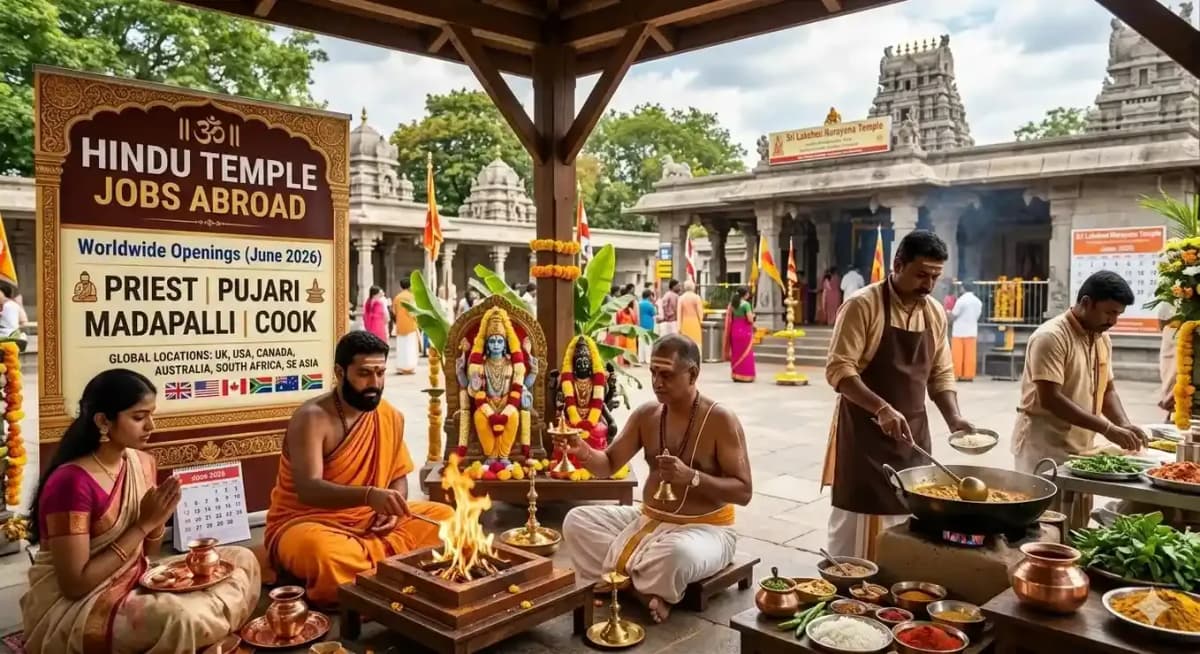
Hindu Temple Jobs Abroad (June 2026): Worldwide Priest, Pujari, Madapalli & Cook Openings
The Resolve of a Monk – A Divine Incident Showcasing Kanchi Paramacharya’s Compassion
