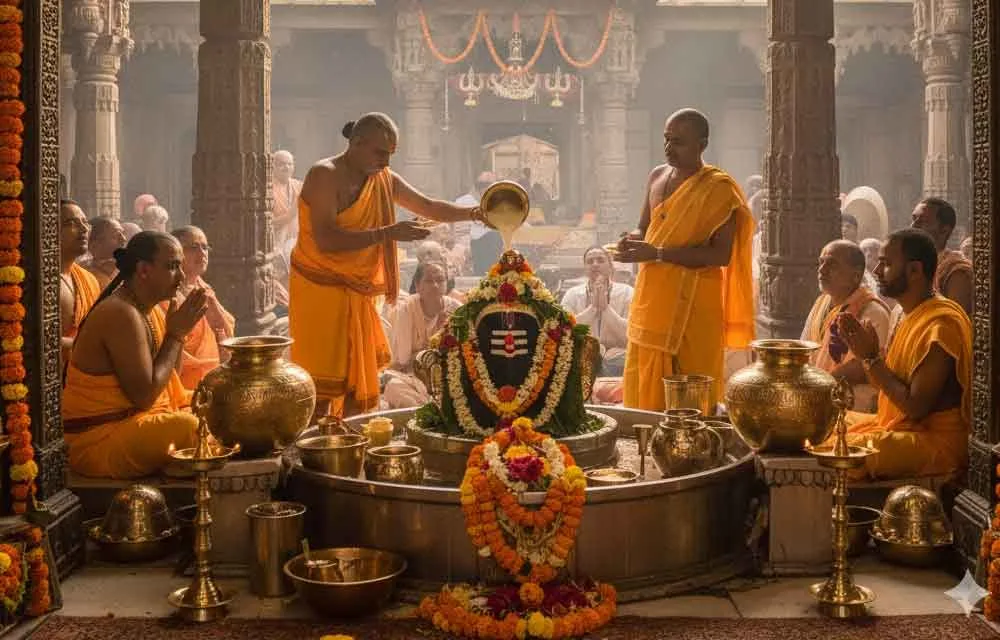
The Complete Devotional Story of Kaal Bhairav Temple, Kashi
Transforming Negativity into Positivity Through Divine Darshan The Sacred Sanskrit Verse वाराणस्यां भैरव: देव संसार भयं नासं नम!
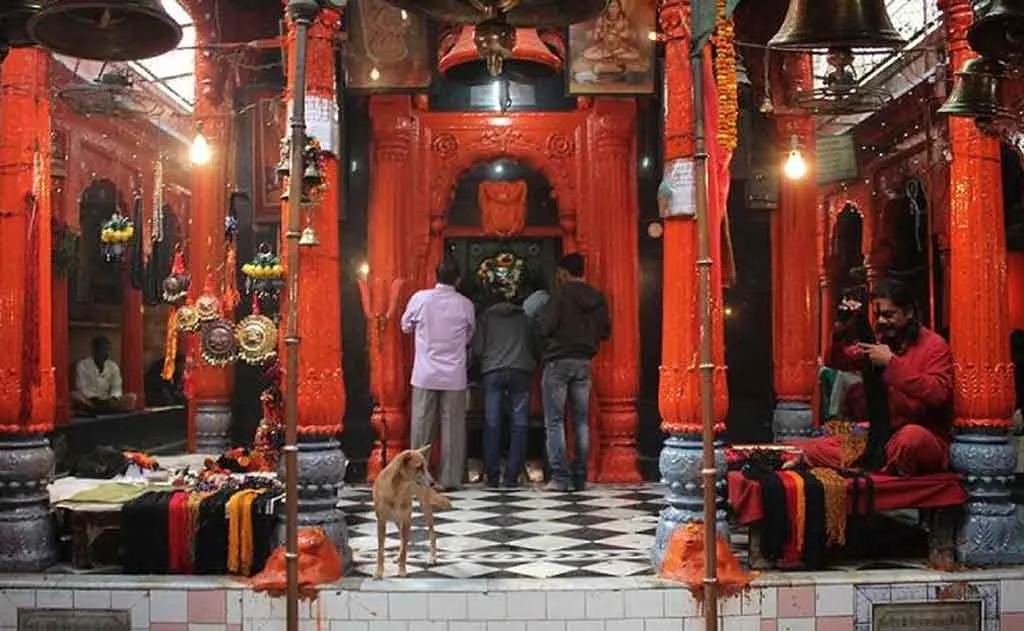
Transforming Negativity into Positivity Through Divine Darshan
The Sacred Sanskrit Verse
वाराणस्यां भैरव: देव संसार भयं नासं नम! जनम जन्मस्य: कृतां पापम् दर्शनेन विनश्यति!
"In Varanasi, Bhairav destroys the fear of worldly existence. The sins accumulated over countless births are destroyed merely by his darshan (divine sight)."
This sacred verse, known to every resident of Kashi, encapsulates the transformative power of Kaal Bhairav's divine presence.
The Origin Story of Kaal Bhairav
The Divine Dispute
The legendary story of Kaal Bhairav begins with a cosmic conversation between the Trinity - Brahma (the creator), Vishnu (the sustainer), and Shiva (the destroyer). A great debate arose among them about who was supreme among the three.
The Pillar of Light (Jyotirlinga)
To resolve this dispute, a magnificent pillar of infinite light (Prakash Stambh) erupted from the earth, reaching endlessly into the heavens and depths. The divine voice challenged both Brahma and Vishnu to find the end of this luminous column.
The Search and the Pride
Both deities began their arduous search. Vishnu, in his humility, eventually surrendered to the ultimate reality, accepting his limitations. However, Brahma, driven by ego, refused to accept defeat. Instead of acknowledging the infinite nature of the divine light, he began to boast of his own authority and power.
The Birth of Kaal Bhairav
Brahma's arrogance and disrespectful words toward the supreme reality ignited Shiva's divine anger. In his fury, Lord Shiva plucked a lock of hair from his matted locks and threw it upon the mighty Mandrachal mountain. From this hair emerged the fierce and terrifying form of Kaal Bhairav - the embodiment of divine justice and cosmic order.
The word "Bhairav" itself is a combination of three syllables:
- Bha = Creation (Brahma)
- Ra = Sustenance (Vishnu)
- Va = Destruction (Shiva)
Thus, Bhairav represents the unified power of the entire Trinity.
The Divine Punishment
Lord Shiva commanded Kaal Bhairav to punish Brahma for his insolence. With his little fingernail, Kaal Bhairav severed Brahma's fifth head - the head from which the disrespectful words had been uttered. This act established that no being, regardless of their cosmic status, is above divine law and humility.
The Curse of Brahma Hatya
However, this righteous act came with consequences. The severed head of Brahma became stuck to Kaal Bhairav's fingernail, and he was afflicted with the curse of Brahma Hatya (the sin of killing a Brahmin). Despite his divine nature, Kaal Bhairav was bound by cosmic law and had to bear this burden.
The Quest for Liberation
Troubled by the curse, Kaal Bhairav wandered throughout the universe, seeking liberation from this sin. He visited countless sacred places and holy tirthas, but none could free him from the attached skull or the accompanying curse.
The Divine Solution - Entry into Kashi
Upon Lord Vishnu's wise counsel, Kaal Bhairav entered the eternal city of Kashi (Varanasi), the city of light and liberation. It was here, on the sacred banks of the Matsyodari Tirtha (present-day Macchodari) where the holy Ganga flows, that the miraculous transformation occurred.
The Liberation at Kapal Mochan Tirtha
As Kaal Bhairav stepped into the sacred waters at the confluence of Matsyodari Tirtha and the Ganga, the skull of Brahma finally fell from his fingernail to the earth. At this moment, both Brahma and Kaal Bhairav were liberated from the curse, and the sin of Brahma Hatya descended into the netherworld (Pataal).
This sacred spot became known as Kapal Mochan Tirtha - the place where the skull was released and liberation was achieved.
The Divine Appointment
Following this liberation, Lord Shiva made a profound declaration. He appointed Kaal Bhairav as the eternal Kotwal (Chief Police Officer) of Kashi, with the sacred responsibility of:
- Removing the sins of devotees who seek his darshan
- Acting as the divine judge who determines the punishment for wrongdoers
- Protecting the sacred space where liberation occurs
- Granting permission for souls to receive Shiva's ultimate Taraka Mantra for moksha
The Temple's Sacred History
The Original Location
The original Kaal Bhairav temple was established at the exact spot where this divine liberation occurred - near the Matsyodari Kund. However, due to frequent destruction and encroachment over the centuries, the temple was relocated.
The Present Temple
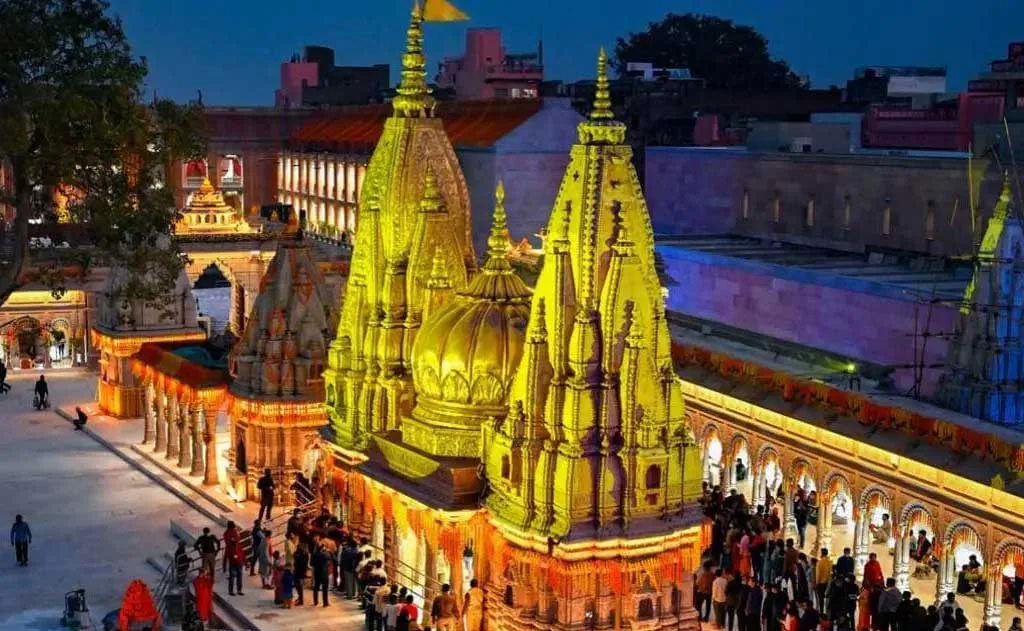
The current magnificent temple was constructed in the mid-17th century by Maratha Army Commander Sardar Vinchurkar, built in the distinctive Nagra style of temple architecture. Despite the change in location, the spiritual power and significance remain undiminished.
How Kaal Bhairav Transforms Negativity into Positivity
The Cosmic Role
Kaal Bhairav is believed to be the Kotwal (Chief police officer) of Creation; everyone who wants to exist in Creation (even if Gods) needs to take his permission to exist. This unique position grants him the power to neutralize negative forces and transform them into positive energy.
The Mechanism of Transformation
1. Fear Destruction
The sanctum houses a fierce idol of Kaal Bhairav, draped in a garland of skulls, embodying his role as the destroyer of fear and negativity. His very presence dissolves the fears that bind souls to negative patterns.
2. Negative Energy Neutralization
Reciting the Kaal Bhairav Ashtakam is believed to dispel fear and negative influences by invoking the protective energy of Lord Kaal Bhairav. The divine vibrations created through devotion actively counteract negative forces.
3. Spiritual Purification
Regular Kaal Bhairav Ashtakam Path practice purifies the practitioner of negativity and protects them from any strange energies. Consistent devotion creates a protective shield around the devotee.
4. Mental Transformation
The mantra helps in killing all the negative thoughts and energy affecting a person's mind adversely. Through mantra chanting and devotion, negative thought patterns are dissolved.
The Sacred Rituals of Transformation
The Peacock Feather Ritual
At the temple, priests carry brooms made of peacock feathers and perform special rituals to sweep away bad omens and negative influences from pilgrims. This physical act symbolizes the spiritual cleansing that occurs through Kaal Bhairav's grace.
The Holy Thread (Ganda) Ceremony
Pilgrims tie black threads, considered blessed, around their wrists as a protective talisman. These sacred threads serve as continuous reminders of divine protection and help maintain positive energy.
The Philosophy of Positive Transformation
Divine Alchemy
Just as Kaal Bhairav himself was transformed from a bearer of curse to a divine protector through his entry into Kashi, devotees experience similar alchemical transformation. The fierce energy that could destroy becomes the protective force that nurtures and uplifts.
The Principle of Divine Justice
Kaal Bhairav represents divine justice that operates beyond human understanding. What appears as fierce destruction of negativity is actually compassionate protection of the devotee's highest good. He destroys only that which prevents spiritual growth and liberation.
The Cosmic Police Function
As the Kotwal of Kashi, Kaal Bhairav maintains cosmic order by:
- Identifying negative influences before they can cause harm
- Neutralizing destructive forces through divine intervention
- Redirecting negative energy into positive spiritual growth
- Protecting devotees from unseen negative influences
The Complete Darshan Experience
Preparation for Darshan
Before approaching Kaal Bhairav, devotees traditionally:
- Visit Kashi Vishwanath Temple first - This pilgrimage sequence is considered essential
- Purify mind and body through bathing in the Ganga
- Set clear positive intentions for the transformation they seek
The Darshan Process
During darshan, the divine energy of Kaal Bhairav:
- Scans the devotee's consciousness for negative patterns
- Absorbs and neutralizes negativity through divine grace
- Infuses positive energy to fill the space left by removed negativity
- Establishes protective barriers against future negative influences
The Offerings for Transformation
Traditional offerings that enhance the transformative process include:
- Mustard oil (Til oil) - Represents the burning away of negativity
- Black sesame seeds - Symbolize the absorption of dark influences
- Red flowers - Signify the blooming of positive qualities
- Prayers and mantras - Create vibrations that align with divine frequency
The Sacred Mantras for Transformation
The Primary Kaal Bhairav Mantra
"Om Hraam Hreem Hroom Hrime Hroum Ksham Kshetrapaalaaya Kaala Bhairavaya Namah"
This powerful mantra specifically works to:
- Remove obstacles to success and prosperity
- Neutralize negative spiritual influences
- Transform fear into courage
- Convert anxiety into peace
The Protective Invocation
Regular chanting creates a protective spiritual atmosphere where negativity cannot take root, and positive transformation becomes the natural state of being.
The Modern Relevance
Continuous Divine Presence
Even today, government officials and residents of Varanasi, regardless of their religion or background, pay homage to Kaal Bhairav before beginning important work, recognizing his role as the divine administrator who ensures smooth functioning of life in the sacred city.
The Universal Principle
The story of Kaal Bhairav teaches us that:
- Every negative experience contains the seed of positive transformation
- Divine justice operates through compassionate destruction of harmful patterns
- Surrender to higher consciousness transmutes all negativity
- Sacred spaces amplify the power of positive transformation
Conclusion: The Eternal Promise
The devotional story of Kaal Bhairav in Kashi offers an eternal promise to all seekers: no matter how deep the negativity, how strong the fears, or how persistent the obstacles, the divine grace of Kaal Bhairav can transform any situation into an opportunity for spiritual growth and positive change.
Devotees revere him for his ability to destroy negativity and bring about positive change in their lives. This transformation is not merely symbolic but represents a real spiritual process that has been experienced by countless devotees over thousands of years.
The temple stands as a beacon of hope, reminding all who enter that in the presence of divine grace, every ending becomes a new beginning, every destruction becomes creation, and every moment of darkness becomes an opportunity for light to shine brighter.
The darshan of Kaal Bhairav in Kashi remains one of the most powerful spiritual experiences available to humanity, offering direct access to the transformative power that can turn any life situation from negative to positive through divine grace and devotion.
Frequently Asked Questions
Where is The Complete Devotional Story of Kaal Bhairav located?
Transforming Negativity into Positivity Through Divine Darshan The Sacred Sanskrit Verse वाराणस्यां भैरव: देव संसार भयं नासं नम! जनम जन्मस्य: कृतां पापम् दर्शनेन विनश्यति!
Who is the presiding deity of The Complete Devotional Story of Kaal Bhairav?
The temple's presiding deity and its significance are described in the guide above.
What are the timings and how do I reach The Complete Devotional Story of Kaal Bhairav?
Temples typically open early morning and evening; confirm current darshan timings before visiting. The nearest airport, railway station and road routes are covered in the guide above.
What is the best time to visit The Complete Devotional Story of Kaal Bhairav?
Major festival days and the cooler months are popular, though weekday mornings offer a calmer darshan. Plan around the temple's key festivals for the most vibrant experience.
Share this with family and friends
Send it on WhatsApp, post it, or copy the link.
More from Temples
- Famous Temples in Uttarakhand: A Source-Checked Guide to Kedarnath, Badrinath, Tungnath, Haridwar, Almora and More
- Famous Temples in Odisha: A Source-Checked Guide to Puri, Bhubaneswar, Biraja, Tara Tarini and Western Odisha
- Famous Temples in West Bengal: A Source-Checked Guide to Kalighat, Dakshineswar, Tarapith, Bansberia, Bishnupur and More
- Famous Temples in Uttar Pradesh: A Source-Checked Guide to Kashi, Ayodhya, Mathura-Vrindavan, Gorakhpur and Kanpur
- Famous Temples in Gujarat: A Source-Checked Guide to Somnath, Dwarka, Dakor, Ambaji, Modhera and More
You might also like
Kashi Vishwanath Temple Varanasi: 2025’s Most Sacred Year in Review
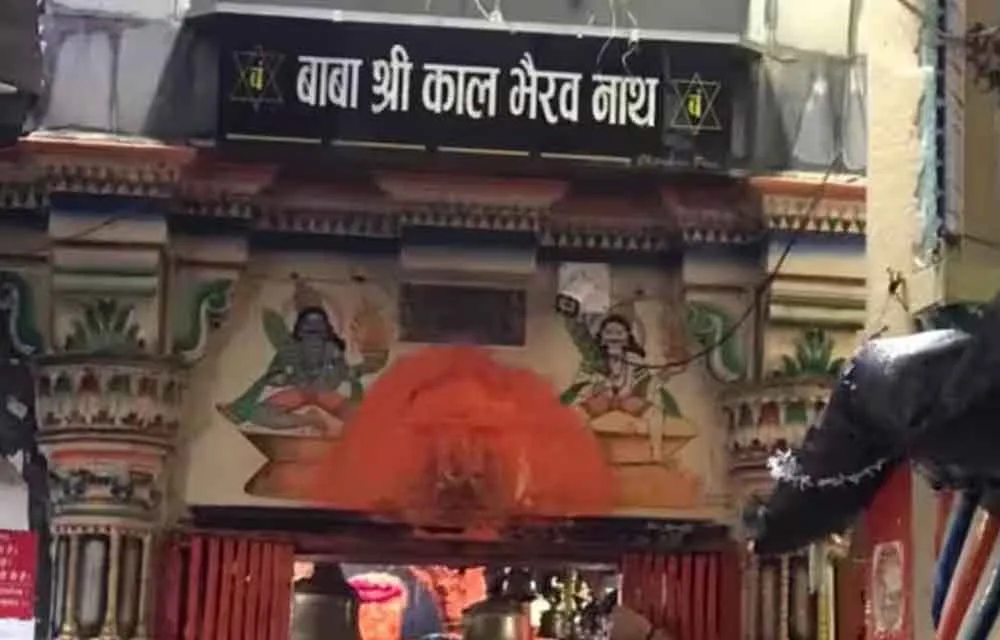
The Kalabhairava Temple: Guardian of Kashi and the Lord of Time
Kashi Vishwanath Temple: The Most Powerful Jyotirlinga for Moksha and Spiritual Liberation in Varanasi