Hindu Calendar & Vedic Horoscope for November 6, 2025
Thursday, November 6, 2025 🌟 Hindu Calendar Overview 📅 Panchang Elements for November 6, 2025 ✨ Day Significance This marks the auspicious transition from…
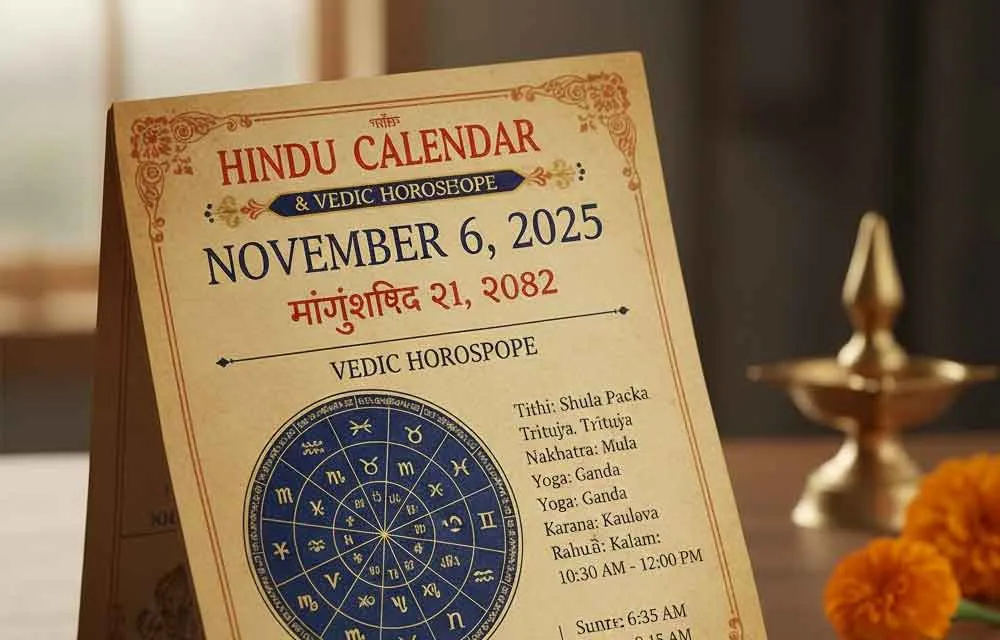
Thursday, November 6, 2025 🌟 Hindu Calendar Overview 📅 Panchang Elements for November 6, 2025 ✨ Day Significance This marks the auspicious transition from…
Thursday, November 6, 2025
🌟 Hindu Calendar Overview
📅 Panchang Elements for November 6, 2025
✨ Day Significance
This marks the auspicious transition from the sacred Kartika month to Margashirsha (Agrahayana), one of the most spiritually potent months in Vedic tradition. Margashirsha is glorified in the Bhagavad Gita (Chapter 10, Verse 35) where Lord Krishna declares, "Among months, I am Margashirsha."
It is ideal for:
- Pujas and rituals
- Fasting and charity
- Beginning new spiritual disciplines
Thursday (Guruvaar), ruled by Jupiter (Brihaspati), enhances wisdom, devotion, and prosperity-related activities.
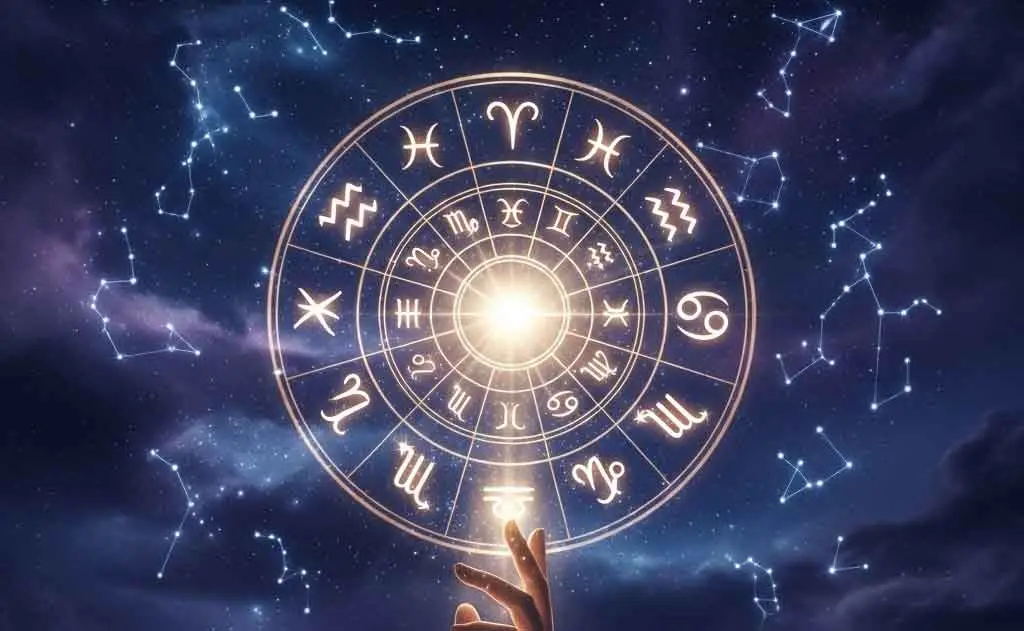
🔮 Complete Vedic Astrology Horoscope for All 12 Rashis (Moon Signs)
Based on Sidereal Zodiac. Key Transits: Moon in Ashwini Nakshatra (Aries), Jupiter in Gemini, Saturn in Pisces, Rahu in Pisces, Ketu in Virgo. General predictions; consult natal chart for personalized insights.
🌿 General Vedic Guidance for November 6, 2025
Auspicious Activities
- Begin Margashirsha with Gita recitation, Vishnu puja, or Ekadashi-like fasting (if applicable).
- Thursday fast for Jupiter strengthens wisdom and prosperity.
Inauspicious Activities
- Avoid haircuts, borrowing, or starting conflicts during Rahu Kaal.
Mantra for the Day
"Om Namo Bhagavate Vasudevaya" (chant 108 times) for spiritual elevation.
Overall Energy
Pratipada tithi with Ashwini supports new beginnings in health and travel. Patience and devotion yield maximum benefits.
Note: These are transit-based general predictions. For precise insights (including dashas, gochara, and yogas), consult a qualified Vedic astrologer with your full birth details (date, time, place).
May this day bring you divine blessings and cosmic harmony! 🌙✨
Why is Margashirsha Considered the Month of Krishna Himself?
In the Bhagavad Gita's Vibhuti Yoga (10.35), Lord Krishna singles out Margashirsha — also called Agrahayana — as His own divine manifestation among the twelve months: 'māsānāṃ mārgaśīrṣo'ham.' This is not a passing metaphor. The Vishnu Purana and Skanda Purana both elaborate that Margashirsha carries the highest sattvic quality of all months, making any spiritual undertaking initiated during it inherently more fruitful. Ancient Vedic farmers also regarded it as the month when the harvest was safely gathered, allowing householders to turn their full attention toward Dharma and Adhyatma.
Devotees across India observe Margashirsha Guruvaar (Thursday) Vrats specifically during this month, visiting Vishnu temples and reciting the Vishnu Sahasranama. In Maharashtra, the practice of Margashirsha Lakshmi Puja — where women worship Goddess Lakshmi every Thursday of this month — is a living tradition rooted in the Skanda Purana's Sahyadri Khanda. Beginning such a vrat on the very first Thursday of Margashirsha, as falls on November 6, 2025, is considered especially meritorious.
What is the Spiritual Significance of Ashwini Nakshatra on This Day?
Ashwini is the first of the 27 Nakshatras and is ruled by the Ashwini Kumaras — the twin divine physicians of the Rigveda who are celebrated for instantaneous healing and swift action. When the Moon transits Ashwini, Vedic texts such as the Muhurta Chintamani describe it as particularly suited for journeys, medical treatments, purchasing vehicles, and initiating new ventures requiring speed and energy. The deity governing this Nakshatra is Ashwini Devata, and its symbol is a horse's head, representing vitality and pioneering spirit.
Pratipada tithi (the first lunar day) combined with Ashwini Nakshatra creates what classical Panchang texts call a Siddha Yoga in certain configurations — a combination that supports the commencement of auspicious activities. Chanting the mantra 'Om Ashwibhyāṃ Namaḥ' or reciting the Ashwini Kumaras stotras from the Rigveda on this day is believed to invite health and swift resolution of long-standing ailments. Pilgrims visiting Vaidyanatha Jyotirlinga at Deoghar, Jharkhand — dedicated to the Lord as the divine physician — consider Ashwini-Moon days highly auspicious for darshan.
How Do Jupiter, Saturn, and the Nodal Axis Shape the Collective Energy of This Day?
Jupiter (Brihaspati) transiting Gemini (Mithuna Rashi) from its sidereal position aspects Sagittarius, Libra, and Aquarius through its special 5th, 7th, and 9th house aspects respectively. Jupiter in Gemini emphasises intellectual discrimination, scriptural learning, and communication of dharmic knowledge — making November 6 especially potent for studying texts like the Brahma Sutras, Upanishads, or the Gita itself. Jupiter is also the natural Karaka (significator) for Guru-Shishya relationships, and beginning a study under a qualified teacher on a Guruvaar with Jupiter in an air sign is a highly regarded muhurta choice.
Saturn (Shani) and Rahu together occupy Pisces (Meena Rashi), creating a conjunction that classical Jyotisha texts such as the Brihat Parashara Hora Shastra caution can amplify confusion, hidden anxieties, and karmic unresolved matters for certain Rashis. However, for those engaged in sincere tapas and service, Saturn in Pisces functions as a spiritualising force, encouraging detachment from material outcomes. Ketu in Virgo (Kanya Rashi) simultaneously drives a deep introspection around health routines and analytical thinking. The overall planetary canvas on this day rewards humility, service, and systematic spiritual practice over impulsive action.
What is Rahu Kaal and Why Must It Be Observed on Thursdays?
Rahu Kaal is a period of approximately 90 minutes each day that is governed by Rahu, the north lunar node regarded in Vedic tradition as a shadowy, inauspicious graha. The Muhurta Chintamani and Dharmasindhu both advise against initiating new ventures, signing contracts, or performing auspicious samskaras during this window. On Thursdays, Rahu Kaal falls in the afternoon — typically between 1:30 PM and 3:00 PM local time (adjust for your specific longitude and sunrise). Knowing the precise local Rahu Kaal requires calculation based on the day's sunrise and the eight-part division of daylight hours.
The rationale behind Rahu Kaal avoidance is rooted in the mythological narrative of the Samudra Manthan (churning of the cosmic ocean), during which Rahu deceived the gods to partake of Amrita and was subsequently severed by Sudarshana Chakra. Rahu therefore represents disruption, illusion, and worldly entanglement in Jyotisha. Even on an otherwise auspicious day like Guruvaar in Margashirsha, Rahu Kaal acts as a brief but potent counterforce. Performing the 'Om Rāhave Namaḥ' mantra or lighting a sesame-oil lamp for Shani-Rahu during this window is a traditional practice to neutralise its adverse influence rather than simply avoiding activity altogether.
Which Temple Traditions and Festivals Are Linked to This Time of Year?
The Kartika-Margashirsha transition is closely associated with the conclusion of Kartika Deepotsava — the month-long lamp-lighting festival observed at major Vishnu and Shiva temples. At the Tirupati Venkateswara Temple in Tirumalai, Andhra Pradesh, the Kartika Deepam celebrations involve daily 'Suprabhata Seva' with special lamp offerings throughout the month. Similarly, at Kashi Vishwanath in Varanasi, Kartika Purnima (which precedes this date) marks Dev Deepawali, when the entire ghats of the Ganga are lit with hundreds of thousands of earthen lamps — a spectacle rooted in the belief that the Devas themselves descend to bathe in the Ganga on that night.
As Margashirsha begins, Vaishnava temples across Vrindavan and Mathura initiate the Gita Mahotsava preparations, culminating on Mokshada Ekadashi — the day the Bhagavad Gita is said to have been revealed by Krishna to Arjuna on the Kurukshetra battlefield. The International Society for Krishna Consciousness (ISKCON) and the Gita Press, Gorakhpur, both observe this Ekadashi with mass public recitation of all 18 chapters. Starting a daily Gita reading practice on the first day of Margashirsha, as offered on November 6, 2025, is therefore perfectly aligned with this pan-India scriptural tradition.
What Daily Practices Does Vedic Tradition Recommend for a Guruvaar in Margashirsha?
Classical Dharmashastra texts recommend that Thursdays be observed with a fast (upavasa) or at minimum an abstention from tamasic foods such as meat, alcohol, and excess oil. Devotees who fast on Guruvaar traditionally break their fast after sunset by consuming yellow-coloured foods — chana dal, banana, or turmeric rice — colours and foods associated with Jupiter's solar energy and the element of Akasha (ether). Offering yellow flowers such as marigold or champa to a Vishnu or Dattatreya idol and lighting a ghee lamp are standard Thursday rituals detailed in the Vrataraja and regional Vrata Katha compilations.
The 'Om Namo Bhagavate Vasudevaya' twelve-syllable Dvadasakshara mantra recommended in the existing article is indeed the foremost mantra for Vishnu worship during Margashirsha, as affirmed by the Padma Purana's Uttara Khanda. Chanting it 108 times on a tulsi-bead mala (Tulasi Japa Mala) specifically amplifies its potency, as Tulasi is regarded as the physical embodiment of Lakshmi-Devi and the most beloved plant of Lord Vishnu. Placing a Tulasi plant in the northeast corner of the home altar and offering water to it at sunrise on this day is a small but deeply symbolic act of Margashirsha devotion.
Frequently Asked Questions
What does this Hindu Calendar & Vedic Horoscope for November 6, cover?
Thursday, November 6, 2025 🌟 Hindu Calendar Overview 📅 Panchang Elements for November 6, 2025 ✨ Day Significance This marks the auspicious transition from the sacred Kartika month to Margashirsha (Agrahayana) , one of the most spiritually potent months in Vedic tradition. Margashirsha is glorified in the Bhagavad Gita (Chapter 10, Verse 35) where Lord Kris
Should I read my Sun sign or Moon sign?
Vedic astrology uses your Janma Rashi — your natal Moon sign — not the Western Sun sign. Read the predictions for your Moon sign for the most accurate guidance.
Are these predictions guaranteed?
Vedic predictions indicate general tendencies and supportive remedies, not certainties. They are best used as guidance alongside sincere effort and devotion.
What remedies are suggested?
Common supportive practices include relevant mantra chanting, fasting on the appropriate day, charity (dana), and temple worship; specifics depend on your birth chart.
You might also like
Daily Vedic Horoscope — Wednesday, March 4, 2026
June 2026 Monthly Horoscope — Vedic Moon Sign Predictions for All 12 Rashis
Weekly Horoscope May 25–31, 2026: Vedic Rashi Predictions & Remedies | HinduTone