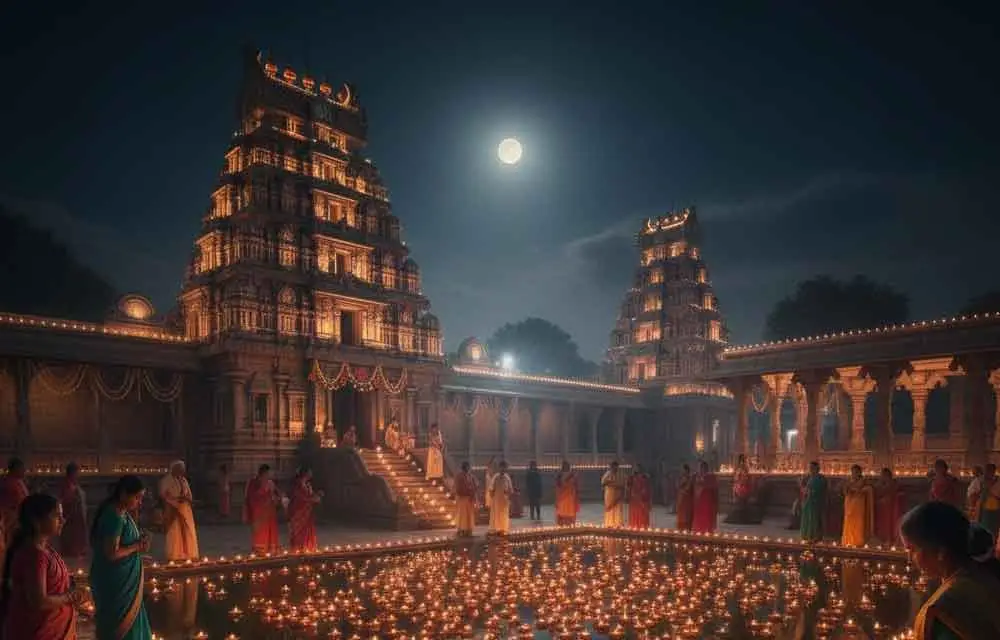
Essential Rituals for the Last Week of Karthika Masam 2025: Complete Guide for Australian Hindus
Karthika Masam 2025 (Nov 1 – Nov 30) is nearing its sacred finale, and the last week is considered the most spiritually powerful.
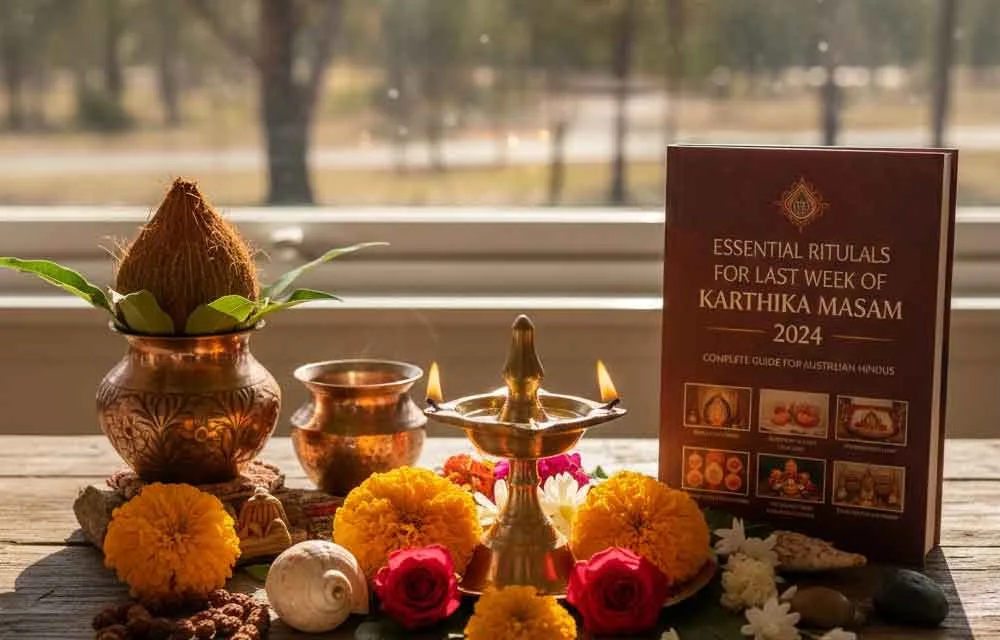
Karthika Masam 2025 (Nov 1 – Nov 30) is nearing its sacred finale, and the last week is considered the most spiritually powerful.
Karthika Masam 2025 (Nov 1 – Nov 30) is nearing its sacred finale, and the last week is considered the most spiritually powerful. For Hindus in Australia—where temples, timings, and resources can differ—this guide brings everything together so you can observe the final week with devotion and convenience.
Why the Last Week Matters
The final seven days of Karthika Masam are believed to multiply the merit (punya) of every prayer. Traditionally devoted to Lord Shiva, Lord Vishnu, Tulasi Devi, and Lord Subrahmanya, these days are ideal for lighting diyas, fasting, charity, and purifying your home.
Daily Rituals for the Last Week
1. Daily Deepam Lighting (Mandatory Ritual)
- Light one or more oil lamps every evening after sunset.
- Use sesame oil or cow ghee for best results.
- Place lamps at:
- Temple altar (home mandir)
- Tulasi plant
- Main entrance
Mantras:
🕯 “Om Namah Shivaya” (Shiva)
🕯 “Om Namo Narayanaya” (Vishnu)
2. Karthika Snanam (Holy Bath)
If weather in Australia is cold, you can perform:
- Warm-water bath + a few drops of Ganga jal or Tulasi-infused water
- Chant: “Govinda… Govinda…”
Best done before sunrise.
3. Bilva Patra & Abhishekam for Lord Shiva
Perform at home or visit a nearby temple (Sydney/Melbourne/Brisbane/Perth).
Items you can use:
- Water
- Milk
- Honey
- Bilva leaves
- Vibhuti
A simple Shiva abhishekam mantra:
“Om Tryambakam Yajamahe…”
4. Special Tulasi Puja (Most Important in Final Week)
- Offer turmeric, kumkum, flowers, diyas.
- Circumambulate the plant 11 or 21 times.
- Chant: “Om Tulasyai Namaha”.
5. Fasting & Austerities
Choose any of these:
- Monday fast (Somavaram) for Shiva
- Ekadashi fast (if it falls in the final week)
- Skip onion & garlic
- Eat one sattvic meal daily
6. Reading Sacred Texts
Preferred:
- Karthika Puranam
- Shiva Purana – Rudra Samhita
- Vishnu Sahasranamam
- Lalitha Sahasranamam
- Skanda Purana chapters
Even 15 minutes daily counts.
7. Charity & Annadanam
In Australia, you can donate to:
- Hindu temples
- FoodBank Australia
- Local community volunteer groups
Charity performed during this period gives 100x merits according to scriptures.
Last 3 Days: Must-Do Rituals
🔥 Karthika Deepotsavam
- Light 21, 51, or 101 lamps at home or at a temple.
- Arrange them in a circle or Shiva Lingam shape.
🌺 Uma–Maheshwara Puja
Couples perform this for:
- Marital harmony
- Family well-being
- Blessings of Parvati & Shiva
🌕 Karthika Pournami 2025 (November 30, Sunday)
The grand finale.
Perform:
- Rudrabhishekam
- Girivalam (if possible)
- Full-moon Deepam
- Visit a temple in the evening
Australian temples host special events—check local schedules.
Australian-Friendly Checklist (Easy Reference)
✔ Morning
- Karthika snanam
- Shiva abhishekam
- Chanting & reading
✔ Evening
- Light oil lamps
- Tulasi puja
- Visit temple (if possible)
✔ Weekly
- Monday vratam
- Saturday Subrahmanya puja
- Donate food or money
✔ Festival End (Pournami)
- 108-diya deepotsavam
- Full family participation
- Charity
Final Blessing
Observing the last week of Karthika Masam in Australia may feel distant from India, but the power of devotion travels across oceans. With lamps, mantras, and pure intention, you invite peace, prosperity, and divine protection into your home.
May Shiva, Vishnu, Tulasi Devi, and Lord Subrahmanya bless you and your family abundantly.
Why Karthika Pournami Is the Crown Jewel of the Final Week
Karthika Pournami — the full moon day that concludes Karthika Masam — is considered the single most auspicious tithi of the entire month. The Skanda Purana (Karthika Mahatmya section) declares that on this day Lord Shiva manifested as the infinite column of fire known as the Jyotirlinga at Tiruvannamalai, Tamil Nadu, an event commemorated annually as Karthigai Deepam. Bathing before sunrise, lighting a tall deepam, and offering Bilva leaves to Shiva on this one day alone is said to confer the merit equivalent to a full month of observance.
In 2025, Karthika Pournami falls on November 27 (Australian Eastern Time; verify with your local temple as tithi timings shift by timezone). Australian Hindus can mark the occasion by lighting a tall lamp — traditionally a clay pot deepam filled with ghee — visible from outside the home, symbolising the cosmic Jyotirlinga. Many temples in Sydney (Swami Vivekananda Temple, Parramatta), Melbourne (Shiva Vishnu Temple, Carrum Downs), and Brisbane (BAPS Swaminarayan Mandir) hold special Pournami abhishekams that are well worth attending in person.
The Scriptural Basis Behind Karthika Masam Observances
The Karthika Mahatmya, preserved within the Skanda Purana's Brahma Khanda, is the primary scriptural authority for this month's rites. It lists deepa-dana (lamp offering), tulasi-seva (service to the Tulasi plant), and Vishnu smarana (constant remembrance of Vishnu) as the three foundational practices. The text specifically states that even a single lamp offered near a Tulasi plant on a Karthika evening destroys the sins of many lifetimes — a claim echoed in the Padma Purana's Uttara Khanda.
The Shiva Purana's Vidyeshvara Samhita adds a complementary dimension: Karthika is the month when Shiva is believed to be most accessible to sincere devotees, and the Maha Mrityunjaya Mantra ('Om Tryambakam Yajamahe Sugandhim Pushtivardhanam') chanted 108 times daily during this period is said to ward off disease, fear, and untimely death. Holding both Shaiva and Vaishnava streams together, Karthika Masam is one of the rare months that equally honours Lord Shiva, Lord Vishnu, and Tulasi Devi — making it universally relevant across all sampradayas.
Adapting Karthika Snanam and Temple Visits to Australian Conditions
Australia's late-November climate varies dramatically: while Brisbane and Perth enjoy mild spring mornings, Melbourne and Canberra can see temperatures below 10°C before sunrise. The tradition of pre-dawn Karthika Snanam need not be abandoned — Dharmic texts generally permit adjustments that preserve the spirit of the act. A warm bath taken before 6:00 a.m., with a small amount of Ganga jal, Tulasi-infused water, or even a pinch of sacred vibhuti added to the water, fulfils the ritual's purifying intention. Chanting 'Govinda Govinda' or the Vishnu Sahasranama's opening verse while bathing maintains the meditative quality of the practice.
For temple visits, it is advisable to contact your nearest Hindu temple at least a few days before Karthika Pournami, as many Australian temples conduct extended morning abhishekams and evening deepotsavam programmes specifically for this week. The Shiva Vishnu Temple in Helensburgh (NSW) and the Sri Venkateswara Temple in Toorak (VIC) are known to observe Karthika deepotsavam with rows of lamps around the sanctum. Carpooling with community members not only makes pre-dawn attendance practical but also recreates the communal spirit of the riverside Karthika snanam gatherings traditional in Andhra Pradesh and Telangana.
Significance of Tulasi Vivah in the Final Days of Karthika Masam
Tulasi Vivah — the ceremonial marriage of Tulasi Devi (the sacred Ocimum tenuiflorum plant) to Lord Vishnu — traditionally occurs on Shukla Dwadashi of Karthika, two days after Ekadashi, and marks the re-opening of auspicious activities after the Chaturmas period. The Padma Purana states that a household that performs Tulasi Vivah during Karthika earns the same merit as hosting a Vedic Kanyadan wedding, and that Lakshmi Devi is believed to reside permanently in any home where Tulasi is worshipped daily.
The ritual involves decorating the Tulasi plant with a red sari or cloth, applying kumkum and turmeric, placing a small image or shaligram of Lord Vishnu beside the plant, and performing a simple vivah (wedding) ceremony with panchamrit and flower offerings. Australian families without access to fresh sugarcane stalks (a traditional prop) may substitute with banana stems or simply flowers. Chanting 'Om Tulasyai Namaha' 108 times and the Tulasi Stotram from the Skanda Purana is fully appropriate for a home setting. Children can be meaningfully included by explaining that the ceremony celebrates the divine feminine principle and nature's sacredness.
Deepa Dana and Its Specific Merits According to the Karthika Mahatmya
The Karthika Mahatmya enumerates several specific forms of deepa-dana, each with a distinct spiritual benefit. Offering a lamp at a Shiva temple on any Monday of Karthika is said to grant liberation from the cycle of rebirth. Lighting a lamp near a Peepal (Ashvattha) tree — considered an abode of Vishnu — on a Saturday during Karthika is said to resolve ancestral karma (pitru dosha). Offering lamps along a riverbank or body of flowing water is associated with the merit of Kashi Vishwanath darshan.
In Australia, riverbank lamp floating (akasha deepam) can be adapted safely and legally. Many Hindu community groups in Sydney hold supervised floating-lamp events on the Parramatta River or in temple garden ponds during Karthika. If floating lamps in open waterways is restricted in your local council area, placing a row of diyas around the perimeter of your home garden or on the balcony railing — oriented eastward — captures the essence of the practice. Use clay diyas with sesame oil where possible; sesame (tila) is specifically recommended in the Skanda Purana for Karthika lamps because it is considered dear to both Shiva and the pitrus.
Suggested Daily Schedule for the Last Seven Days for Working Australian Families
For families balancing work, school, and weekend commitments across Australian time zones, a structured minimal schedule keeps the observance consistent without being overwhelming. A practical template: wake by 5:45 a.m. for a brief Karthika snanam with mantra, spend 10 minutes at the home altar with Vishnu or Shiva stotras, and ensure the evening deepam is lit within 30 minutes of sunset (approximately 7:30–8:00 p.m. AEDT in late November). On weekends, extend this to include Tulasi puja, Bilva archana, and text reading from the Karthika Puranam or Shiva Purana.
The final three days (culminating in Karthika Pournami) deserve heightened attention. Consider observing a partial or full Ekadashi fast on November 26 if it falls that week, followed by a Pournami vigil on the evening of November 27 with continuous deepam and Vishnu or Shiva nama japa. Even one hour of dedicated nightlong japa — the practice known as Jagarana — on Karthika Pournami night is praised in the Padma Purana as equivalent to a full year of regular worship. Families can rotate short japa shifts, making it a shared spiritual experience rather than a solitary austerity.
Frequently Asked Questions
When is Essential Rituals for the Last Week of Karthika?
Essential Rituals for the Last Week of Karthika is observed on its traditional tithi in the Hindu lunar calendar; refer to the year's panchang for the exact date in your region.
What is the significance of Essential Rituals for the Last Week of Karthika?
Karthika Masam 2025 (Nov 1 – Nov 30) is nearing its sacred finale, and the last week is considered the most spiritually powerful. For Hindus in Australia—where temples, timings, and resources can differ—this guide brings everything together so you can observe the final week with devotion and convenience.
How is Essential Rituals for the Last Week of Karthika celebrated?
Devotees observe it with puja, fasting or special offerings, visiting temples, chanting mantras, and gathering with family. Customs vary by region and tradition.
What should devotees do on Essential Rituals for the Last Week of Karthika?
Take a sacred bath, perform the day's puja and charity (dana), observe any prescribed fast, and chant mantras with sincere devotion.
You might also like
Shani Deva Temples Worldwide & Must-Performed Rituals — Complete Devotee's Guide

Gita Jayanti 2026 Prasad Recipes — Tulsi-Honoring Sweets, Krishna's Favourites & December 10 Bhog Plate
Maha Shivratri 2026 Vrat Recipes — Sabudana Khichdi, Singhada Halwa, Phalahara Foods Complete Fasting Guide