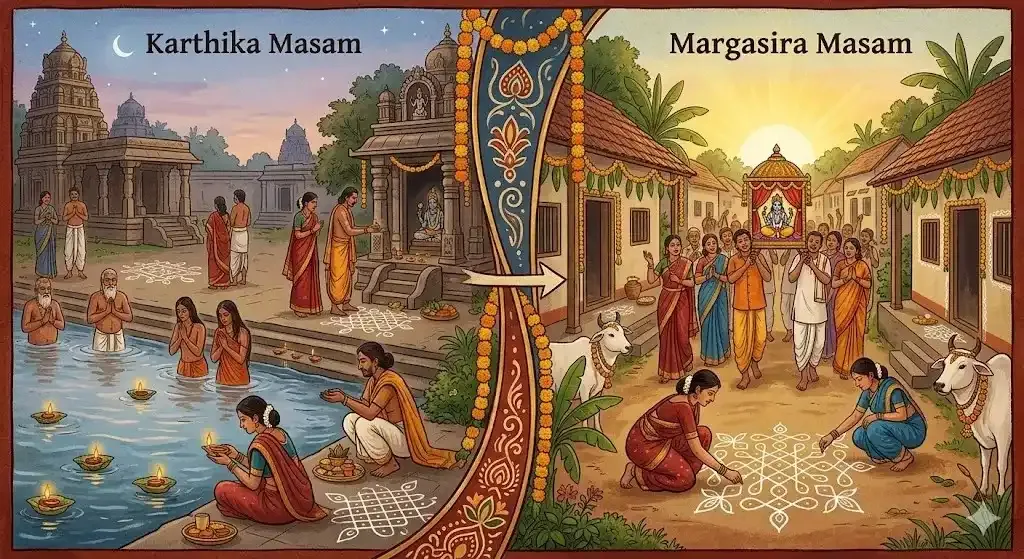
Chhath Puja 2026 Arghya Time City-Wise: Sunset and Sunrise for Patna, Bihar, Jharkhand, UP, Delhi, Kolkata and Kathmandu
Chhath Puja 2026 runs from Nahay Khay on Friday 13 November to Usha Arghya on Monday 16 November (Drik Panchang). Here are Sandhya Arghya sunset (Sun 15 Nov) and Usha Arghya sunrise (Mon 16 Nov) times for 17 Indian cities and Kathmandu, with the rituals of each day, ghat safety and eco-friendly tips.
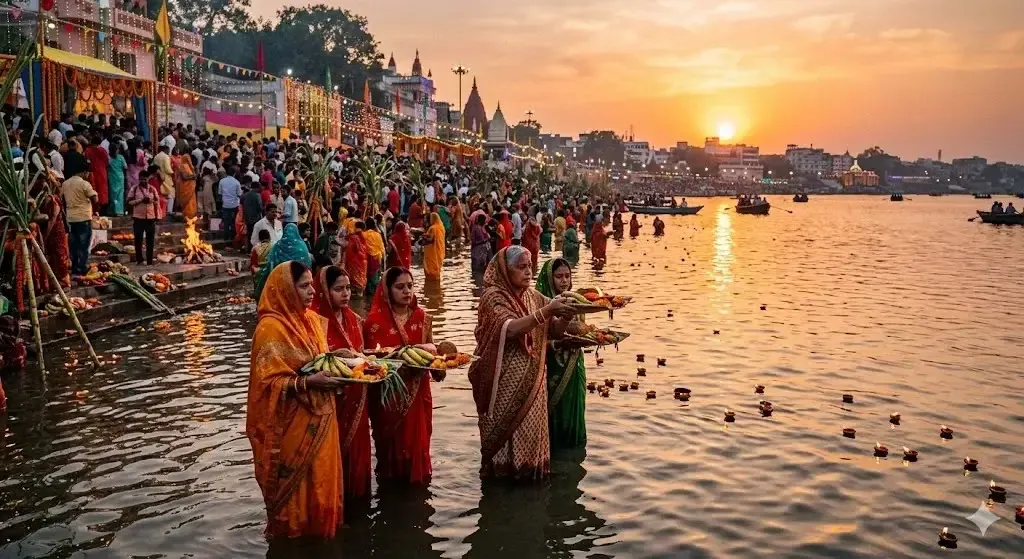
Chhath Puja 2026 runs from Nahay Khay on Friday 13 November to Usha Arghya on Monday 16 November (Drik Panchang). Here are Sandhya Arghya sunset (Sun 15 Nov) and Usha Arghya sunrise (Mon 16 Nov) times for 17 Indian cities and Kathmandu, with the rituals of each day, ghat safety and eco-friendly tips.
Quick answer: the Chhath Puja 2026 arghya time in Patna is 5:02 PM on Sunday 15 November for the Sandhya Arghya (sunset) and 6:06 AM on Monday 16 November for the Usha Arghya (sunrise). The four days, per Drik Panchang, are Nahay Khay on Friday 13 November, Kharna on Saturday 14 November, Sandhya Arghya on Sunday 15 November and Usha Arghya on Monday 16 November 2026.
Chhath falls a week after Diwali (Sunday 8 November 2026) and is the great festival of Bihar, Jharkhand, eastern Uttar Pradesh and the Mithila and Bhojpuri regions of Nepal, now kept wherever families from these regions live, from Delhi and Mumbai to Bengaluru and Hyderabad. Because the two arghyas are offered to the setting and rising sun, the exact moment depends on where you stand. The table below gives the local sunset and sunrise for 18 cities.
How these times were made: the dates are from Drik Panchang. The city sunset and sunrise times are calculated by the HinduTone calculator using the Drik Panchang method for sunrise and sunset. Confirm on Drik Panchang for your exact location, and follow your ghat committee, temple or family elders on the day. All times are Indian Standard Time, except Kathmandu, which is Nepal time.
Chhath Puja 2026 dates: the four days at a glance
| Day | Date (Drik Panchang) | What happens |
|---|---|---|
| Day 1: Nahay Khay | Fri 13 Nov 2026 | Holy bath, cleaning the home, one pure sattvic meal |
| Day 2: Kharna (Lohanda) | Sat 14 Nov 2026 | Day-long fast, evening kheer and roti prasad, then the nirjala fast begins |
| Day 3: Sandhya Arghya | Sun 15 Nov 2026 | Kartika Shukla Shashti; arghya to the setting sun at the ghat |
| Day 4: Usha Arghya | Mon 16 Nov 2026 | Arghya to the rising sun, then parana (breaking the fast) |
In Drik Panchang's New Delhi panchang, Panchami runs until 11:23 PM on Saturday 14 November, and Shashti from then until 2:00 AM on Monday 16 November. So Shashti is the tithi at sunset on Sunday 15 November everywhere in India and Nepal, which is why the evening arghya falls on that day. Sunday also makes it easier for working families to reach the ghat, while the Monday dawn arghya means an early start before the working week.
Chhath Puja 2026 arghya time in Patna, Bihar and India: city-wise table
Sandhya Arghya is offered at sunset on Sunday 15 November and Usha Arghya at sunrise on Monday 16 November. Times are local and calculated for the city centre; along a river bank, behind buildings or trees, you may see the sun disappear or appear a few minutes off these figures.
| City | State / country | Sandhya Arghya: sunset, Sun 15 Nov | Usha Arghya: sunrise, Mon 16 Nov |
|---|---|---|---|
| Patna | Bihar | 5:02 PM | 6:06 AM |
| Gaya | Bihar | 5:04 PM | 6:05 AM |
| Muzaffarpur | Bihar | 5:00 PM | 6:06 AM |
| Bhagalpur | Bihar | 4:55 PM | 5:58 AM |
| Darbhanga | Bihar | 4:58 PM | 6:04 AM |
| Ranchi | Jharkhand | 5:05 PM | 6:01 AM |
| Jamshedpur | Jharkhand | 5:02 PM | 5:57 AM |
| Varanasi | Uttar Pradesh | 5:11 PM | 6:14 AM |
| Gorakhpur | Uttar Pradesh | 5:07 PM | 6:15 AM |
| Prayagraj | Uttar Pradesh | 5:15 PM | 6:19 AM |
| Lucknow | Uttar Pradesh | 5:16 PM | 6:25 AM |
| New Delhi | Delhi | 5:28 PM | 6:44 AM |
| Noida | Uttar Pradesh (NCR) | 5:28 PM | 6:42 AM |
| Kolkata | West Bengal | 4:54 PM | 5:48 AM |
| Mumbai | Maharashtra | 6:01 PM | 6:45 AM |
| Bengaluru | Karnataka | 5:51 PM | 6:17 AM |
| Hyderabad | Telangana | 5:41 PM | 6:20 AM |
| Kathmandu (Nepal time) | Nepal | 5:13 PM | 6:24 AM |
A few patterns stand out. Eastern cities get the earliest times: Kolkata's sunset (4:54 PM) and sunrise (5:48 AM) are the earliest in the list, with Bhagalpur close behind. Within Bihar the spread is small, from 4:55 PM in Bhagalpur to 5:04 PM in Gaya. Delhi and Noida, home to very large Purvanchali communities, have sunset at 5:28 PM and sunrise at about 6:42 to 6:44 AM, more than half an hour later than Patna's dawn. Mumbai has the latest sunset in the table, at 6:01 PM.
If your town is not listed, use the nearest city as a rough guide and check Drik Panchang for the exact time. Most vratis reach the water 30 to 60 minutes before sunset, and for the morning arghya families usually leave home in the dark, so plan travel around the crowds rather than the exact minute.
The four days of Chhath, ritual by ritual
Nahay Khay (Friday 13 November)
"Bathe and eat." The vrati (the person keeping the vrat, very often the woman of the house, though many men keep it too) bathes, ideally in a river or pond, and the house and kitchen are cleaned. One sattvic meal is cooked and eaten, traditionally lauki (bottle gourd) with chana dal and rice, made without onion or garlic and usually with rock salt. Family members eat after the vrati.
Kharna (Saturday 14 November)
The vrati fasts through the day without water. In the evening, after worship, the Kharna prasad is prepared: rasiao kheer (rice cooked in milk with jaggery) and roti or puri, often on a fresh earthen chulha with mango wood. The vrati eats the prasad first, in quiet, and then it is shared with family and neighbours. After this meal the nirjala fast begins, without food or water, until the Usha Arghya on Monday morning.
Sandhya Arghya (Sunday 15 November)
The day is spent making the prasad, above all thekua (a fried wheat-flour and jaggery cookie), along with seasonal fruits such as banana, sugarcane, coconut, citrus, water chestnut and sweet potato. Everything is arranged in a soop (winnowing basket of bamboo) or daura (deep bamboo basket), with a lamp. Late in the afternoon the family walks to the ghat, the daura often carried on the head, singing Chhath geet. Standing in the water, the vrati offers arghya to the setting sun, while family members pour milk or water over the soop. Many families then hold kosi at home or at the ghat that night, lighting lamps under a canopy of sugarcane stalks.
Usha Arghya (Monday 16 November)
Well before dawn the family returns to the ghat. The vrati again stands in the water with the soop and offers arghya to the rising sun at sunrise. After prayers to Chhathi Maiya, the vrati breaks the fast (parana), usually with a little prasad and water, and prasad is shared with everyone present. Our Chhath Puja 2026 prasad recipes guide covers thekua, rasiao kheer and the fruit list in detail, and the main Chhath Puja 2026 guide has the full vidhi.
Chhathi Maiya and Surya: why the sun is worshipped
Chhath is one of the few Hindu festivals in which the visible sun itself is worshipped, both setting and rising. Thanks are given for life, health and harvest, and blessings are asked for the family, especially for children.
As commonly told, Chhathi Maiya is identified with Shashthi Devi, the protector of children, and is called the sister of Surya. Popular stories link the vrat to the epics: Karna, the son of Surya, is said to have stood waist-deep in water each day offering arghya to his father; Draupadi and the Pandavas are said to have kept the vrat in hard times; and in another telling Sita offered worship to the sun after returning to Ayodhya. These are traditions handed down in song and family memory, and families in different regions tell them differently.
Many people also link Chhath with the Vedic reverence for Surya. For daily sun worship through the year, see our 12 Surya Namaskar mantras.
Ghat safety: crowds, deep water and children
The big river ghats of Patna, Varanasi and other cities, and the ponds and canals used in Delhi, Kolkata and Mumbai, draw very large crowds on both arghya days. A few simple precautions help:
- Follow the barricades. Stay inside the areas marked by the local administration or ghat committee, and do not step beyond the safe depth markers. River levels and currents can change; the water may be deeper and colder than it looks.
- Watch children closely. Keep small children out of the water and hold their hands on steps and slopes. Write a phone number on a card in each child's pocket in case you are separated.
- Plan a meeting point. Agree on a fixed spot near the ghat, as mobile networks are often jammed at the arghya hour.
- Look after the vrati. By Sunday evening the vrati has been without water since Saturday night. Have someone stand close in the water, and bring a warm shawl for the cold November dawn on Monday.
- Travel early. Roads near ghats are often closed to vehicles. Leave early, walk the last stretch and follow police directions.
These are general tips; follow the instructions of your local administration, police and ghat committee, which may change ghats, timings and access every year.
Eco-friendly Chhath
- Use the traditional bamboo soop and daura, clay diyas and banana leaves, all of which are reusable or biodegradable, instead of plastic plates, foil and thermocol.
- Do not throw plastic bags, polythene-wrapped offerings or synthetic decorations into the river or pond. Carry a bag for your waste and take it home.
- Where the administration has made artificial ponds or tanks, use them; they reduce pressure on rivers and are often safer for children and older vratis.
- Keep soap and detergent out of the river during the ritual bath.
- Share leftover prasad and fruit with neighbours, helpers and those in need rather than letting it go to waste.
Chhath at home in metro cities and abroad
Not every family lives near a river. In Delhi, Mumbai, Bengaluru and Hyderabad many families use community ponds and tanks prepared for Chhath, or keep the arghya on a rooftop or in a courtyard with a tub of water, facing the sun. The ritual is the same: the fast, the soop of prasad, the arghya at sunset and sunrise. Families abroad use their own local sunset and sunrise, not India's. Our country guides cover this: Chhath Puja in the USA, Chhath Puja in the UK and Chhath Puja in Canada, Australia and the UAE.
Chhath sits in a crowded month: Diwali on 8 November, Bhaiya Dooj on 11 November, Devutthana Ekadashi on 20 November and Kartika Purnima on 24 November. See the full November 2026 Hindu festival calendar and the state-wise November 2026 festivals.
Fasting and health: the nirjala fast is demanding. Pregnant women, older vratis, people with diabetes, heart or kidney conditions, or anyone on regular medication should speak to a doctor first. In many families, a vrati who cannot keep the full fast takes part in the arghya while another family member keeps the vrat; follow your family's practice.
More country guides
Frequently asked questions
What is the sunset time for Chhath Puja 2026 in Patna?
The Sandhya Arghya on Sunday 15 November 2026 is offered at sunset, which our calculator gives as 5:02 PM in Patna. Vratis usually reach the ghat well before this and stand in the water as the sun goes down.
What is the Usha Arghya time on 16 November 2026 in Patna?
Sunrise in Patna on Monday 16 November 2026 is 6:06 AM. The morning arghya is offered to the rising sun, and the vrati breaks the fast (parana) after it.
What are the dates of Chhath Puja 2026?
According to Drik Panchang: Nahay Khay on Friday 13 November, Kharna on Saturday 14 November, Sandhya Arghya on Sunday 15 November and Usha Arghya on Monday 16 November 2026. Sunday 15 November is Kartika Shukla Shashti, the main day of Chhath.
Is the arghya time the same in Delhi and Patna?
No. Sunset and sunrise move with longitude. On 15 November sunset is 5:02 PM in Patna but 5:28 PM in New Delhi, and on 16 November sunrise is 6:06 AM in Patna but 6:44 AM in New Delhi. Always use your own city's time from the table.
How long is the Chhath nirjala fast?
The waterless fast starts after the Kharna prasad on the evening of Saturday 14 November and ends after the Usha Arghya on Monday 16 November, which is why it is often described as a 36-hour fast. Anyone with a health condition, pregnant women and older vratis should talk to a doctor before keeping it.
What time is Chhath Puja 2026 in Kathmandu?
In Kathmandu (Nepal time) the Sandhya Arghya sunset on Sunday 15 November is 5:13 PM, and the Usha Arghya sunrise on Monday 16 November is 6:24 AM.
Editor's note
Editor's note (6 October 2026): This guide has been restored at its original address after the earlier version was lost. The four Chhath dates and the New Delhi tithi times are from Drik Panchang. The city sunset and sunrise times are calculated by our calculator (sunrise and sunset by the Drik Panchang method; where we give moonrise elsewhere on the site, it is the standard astronomical moonrise, checked against the US Naval Observatory). Confirm on Drik Panchang for your location, and follow your temple, ghat committee or family elders. We do not list ghat events, organisers or schedules.
Related guides
You might also like
Chhath Puja 2026 in Europe: Sandhya and Usha Arghya Times for 18 Cities
Diwali 2026 in Brazil: Date, Lakshmi Puja Time City-Wise for São Paulo, Rio, Brasília and More
Karwa Chauth 2026 in Europe: Date (Thursday 29 October) and Moonrise Time in 18 Cities