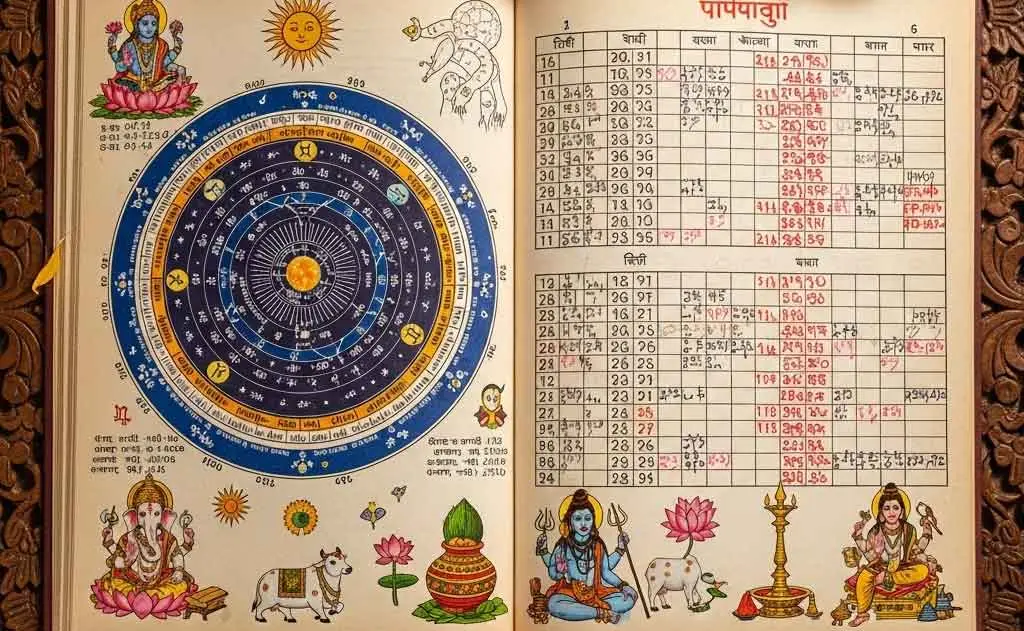
Complete Diwali 2026 Mantras Guide for NRIs in USA, Canada, UK & Worldwide
Lakshmi, Ganesha, Kubera, Saraswati and protection mantras with transliteration and meaning, plus a day-by-day Diwali 2026 chanting plan for NRI families. Diwali is Sunday 8 November 2026.

Lakshmi, Ganesha, Kubera, Saraswati and protection mantras with transliteration and meaning, plus a day-by-day Diwali 2026 chanting plan for NRI families. Diwali is Sunday 8 November 2026.
Quick answer: Diwali and Lakshmi Puja 2026 fall on Sunday 8 November 2026 everywhere. Dhanteras is Friday 6 November. In the USA, Canada and UK, Naraka Chaturdashi (Choti Diwali) is Saturday 7 November, Govardhan Puja Monday 9 November and Bhai Dooj Tuesday 10 November. In India, Naraka Chaturdashi is observed on the morning of 8 November, with Govardhan Puja on 10 November and Bhai Dooj on 11 November. 2026 has an extra lunar month, so Diwali comes about three weeks later than last year. Lakshmi Puja is done in the Pradosh Kaal after your local sunset.
Diwali 2026 Dates for NRIs
| Festival | USA / Canada / UK | India |
|---|---|---|
| Dhanteras | Fri 6 Nov | Fri 6 Nov |
| Naraka Chaturdashi | Sat 7 Nov | Sun 8 Nov (morning) |
| Diwali / Lakshmi Puja | Sun 8 Nov | Sun 8 Nov |
| Govardhan Puja | Mon 9 Nov | Tue 10 Nov |
| Bhai Dooj | Tue 10 Nov | Wed 11 Nov |
Local sunset on Diwali (Sunday 8 November 2026)
Lakshmi Puja is done in the Pradosh Kaal, which begins at local sunset. Here are sunset times for major NRI cities. Confirm the exact Lakshmi Puja muhurat for your city on Drik Panchang; never convert an Indian muhurat to your time zone.
| City | Sunset, 8 Nov 2026 (local time) |
|---|---|
| New York | 4:44 PM |
| Chicago | 4:36 PM |
| Houston | 5:29 PM |
| Los Angeles | 4:54 PM |
| Toronto | 4:59 PM |
| Calgary | 4:58 PM |
| Vancouver | 4:40 PM |
| London | 4:22 PM |
| Leicester | 4:22 PM |
| Birmingham | 4:25 PM |
Because Diwali falls on a Sunday in 2026, most working families can do the full evening puja at the proper time without taking leave.
How to Chant Mantras in a Modern NRI Home
A small apartment in Manhattan, a townhouse in Brampton or a terraced house in Leicester is as good a place for mantra as any temple. What matters is a clean space, a calm mind and regularity. Mantras help families stay connected to their roots, create a devotional atmosphere and pass traditions to children growing up abroad.
- Bathe and wear clean clothes; sit on a mat facing east or north if possible.
- Light a diya or a safe LED lamp and keep an image of Ganesha and Lakshmi in front of you.
- Use a 108-bead mala to keep count; 108, 21 or 11 repetitions are all traditional.
- Always begin with Ganesha and end with a peace mantra and aarti.
- Chant with understanding: read the meaning before you begin.
A word of honesty: mantras are prayer and discipline, not a guarantee of any particular result, whether a visa, a promotion or an investment return. Chant for gratitude, clarity and blessings, and keep doing the practical work.
Lakshmi Mantras
1. Mahalakshmi Mantra
Sanskrit: ॐ श्रीं ह्रीं श्रीं कमले कमलालये प्रसीद प्रसीद श्रीं ह्रीं श्रीं ॐ महालक्ष्म्यै नमः
Transliteration: Om Shreem Hreem Shreem Kamale Kamalalaye Praseed Praseed Shreem Hreem Shreem Om Mahalakshmyai Namah
Meaning: O Lakshmi, who dwells in the lotus, be gracious to us; salutations to the great Lakshmi.
How to use: Chant 108 times during Lakshmi Puja on Diwali evening, with a lamp lit before the goddess.
2. Lakshmi Gayatri
Sanskrit: ॐ महालक्ष्म्यै च विद्महे विष्णुपत्न्यै च धीमहि तन्नो लक्ष्मीः प्रचोदयात्
Transliteration: Om Mahalakshmyai Cha Vidmahe Vishnupatnyai Cha Dhimahi Tanno Lakshmih Prachodayat
Meaning: We meditate on Mahalakshmi, consort of Vishnu; may she inspire and guide us.
How to use: Ideal for family chanting; recite 11 or 108 times on Diwali and on Fridays through the year.
3. Short Lakshmi Mantra
Sanskrit: ॐ श्रीं महालक्ष्म्यै नमः
Transliteration: Om Shreem Mahalakshmyai Namah
Meaning: Salutations to Mahalakshmi, with her seed syllable Shreem.
How to use: Easy for children and busy professionals; chant 108 times on Diwali and 21 times on ordinary days.
For those who want more, the Lakshmi Ashtottara Shatanamavali (108 names) and Adi Shankaracharya's Kanakadhara Stotram are traditional Diwali recitations. Both take 15 to 30 minutes and are widely available in printed booklets with transliteration.
Ganesha Mantras
4. Ganesha Mool Mantra
Sanskrit: ॐ गं गणपतये नमः
Transliteration: Om Gam Ganapataye Namah
Meaning: Salutations to Ganapati, remover of obstacles.
How to use: Chant 108 times before Lakshmi Puja begins; Ganesha is always worshipped first.
5. Vakratunda Mantra
Sanskrit: वक्रतुण्ड महाकाय सूर्यकोटि समप्रभ। निर्विघ्नं कुरु मे देव सर्वकार्येषु सर्वदा॥
Transliteration: Vakratunda Mahakaya Suryakoti Samaprabha, Nirvighnam Kuru Me Deva Sarvakaryeshu Sarvada
Meaning: O Lord with the curved trunk and mighty form, radiant as a million suns, remove obstacles from all my undertakings, always.
How to use: Recite 11 times at the start of Diwali morning and before any new task. A good first mantra to teach children.
6. Ganesha Gayatri
Sanskrit: ॐ एकदन्ताय विद्महे वक्रतुण्डाय धीमहि तन्नो दन्ती प्रचोदयात्
Transliteration: Om Ekadantaya Vidmahe Vakratundaya Dhimahi Tanno Danti Prachodayat
Meaning: We meditate on the single-tusked one with the curved trunk; may he guide our intellect.
How to use: Chant on Diwali morning; popular with students before exams.
Kubera Mantra (Wealth and Its Right Use)
7. Kubera Mantra
Sanskrit: ॐ यक्षाय कुबेराय वैश्रवणाय धनधान्याधिपतये धनधान्यसमृद्धिं मे देहि दापय स्वाहा
Transliteration: Om Yakshaya Kuberaya Vaishravanaya Dhanadhanyadhipataye Dhanadhanyasamriddhim Me Dehi Dapaya Svaha
Meaning: O Kubera, son of Vishravas, lord of wealth and grain, grant prosperity and abundance.
How to use: Chant on Dhanteras and during Diwali puja, traditionally with account books, wallet or a cash box placed before the deities.
Saraswati Mantras (Knowledge)
8. Saraswati Beej Mantra
Sanskrit: ॐ ऐं सरस्वत्यै नमः
Transliteration: Om Aim Saraswatyai Namah
Meaning: Salutations to Saraswati, goddess of learning, with her seed syllable Aim.
How to use: Many families place books and laptops near the altar on Diwali and chant this 21 or 108 times.
The longer Saraswati Vandana, "Ya Kundendu Tushara Hara Dhavala...", is a beautiful prayer for children to learn and recite together.
Health and Protection Mantras
9. Dhanvantari Mantra (Dhanteras)
Sanskrit: ॐ नमो भगवते वासुदेवाय धन्वन्तरये अमृतकलशहस्ताय सर्वामयविनाशनाय त्रैलोक्यनाथाय श्रीमहाविष्णवे नमः
Transliteration: Om Namo Bhagavate Vasudevaya Dhanvantaraye Amritakalasha Hastaya Sarvamaya Vinashanaya Trailokyanathaya Shri Mahavishnave Namah
Meaning: Salutations to Lord Dhanvantari, form of Vishnu, holding the pot of nectar and destroying all disease.
How to use: Chant on Dhanteras evening, Friday 6 November 2026, praying for the health of the family.
10. Maha Mrityunjaya Mantra
Sanskrit: ॐ त्र्यम्बकं यजामहे सुगन्धिं पुष्टिवर्धनम्। उर्वारुकमिव बन्धनान्मृत्योर्मुक्षीय माऽमृतात्॥
Transliteration: Om Tryambakam Yajamahe Sugandhim Pushtivardhanam, Urvarukamiva Bandhanan Mrityor Mukshiya Mamritat
Meaning: We worship the three-eyed Lord who nourishes all; may he free us from death as a ripe cucumber is freed from its vine, and not from immortality.
How to use: Chant 108 times on Diwali morning, or for parents and relatives far away.
11. Hanuman Mantra
Sanskrit: ॐ हं हनुमते नमः
Transliteration: Om Ham Hanumate Namah
Meaning: Salutations to Hanuman, giver of strength and courage.
How to use: Chant on Naraka Chaturdashi and before long journeys home for the festival.
12. Durga Mantra
Sanskrit: सर्वमङ्गलमाङ्गल्ये शिवे सर्वार्थसाधिके। शरण्ये त्र्यम्बके गौरि नारायणि नमोऽस्तु ते॥
Transliteration: Sarva Mangala Mangalye Shive Sarvartha Sadhike, Sharanye Tryambake Gauri Narayani Namostute
Meaning: Salutations to Narayani, the auspicious one who fulfils every good aim and gives refuge.
How to use: Recite during the evening puja and aarti for the family's protection and well-being.
Five-Day Diwali 2026 Mantra Plan (USA, Canada, UK dates)
- Fri 6 Nov, Dhanteras: Dhanvantari mantra 108 times; Lakshmi Gayatri and Kubera mantra in the evening; light a south-facing Yama deepam after sunset with the verse "Mrityuna pashadandabhyam kalena shyamaya saha, trayodashyam deepadanat suryajah priyatam mama".
- Sat 7 Nov, Naraka Chaturdashi: early bath, Hanuman and Ganesha mantras; light lamps in the evening and prepare the altar. (In India this is observed on the morning of 8 November.)
- Sun 8 Nov, Diwali: morning Vakratunda and Maha Mrityunjaya; evening Ganesha Puja, then Lakshmi Puja after local sunset with the Mahalakshmi mantra, Lakshmi Gayatri, Kubera mantra and Saraswati mantra, ending with aarti and "Om Sarve Bhavantu Sukhinah".
- Mon 9 Nov, Govardhan Puja: "Om Namo Bhagavate Vasudevaya" 108 times; offer annakut or a simple bhog to Krishna.
- Tue 10 Nov, Bhai Dooj: Maha Mrityunjaya for brothers and sisters; a video-call tilak works for siblings in other countries.
Simple Lakshmi Puja sequence
- Clean the altar, place Ganesha and Lakshmi, a kalash with water, rice, kumkum, flowers, sweets and fruit.
- Ganesha Puja: Om Gam Ganapataye Namah 108 times, offer flowers and incense.
- Lakshmi Puja after local sunset: offer flowers, sweets and lamps; keep account books or a wallet near the altar.
- Chant the Lakshmi and Kubera mantras, then Saraswati.
- Perform aarti; recorded aarti is fine if you do not know the words.
- Distribute prasad and light diyas at the entrance, kitchen and every room.
Teaching Mantras to Children Born Abroad
- Ages 3 to 7: Om Gam Ganapataye Namah and Om Namah Shivaya, five times each.
- Ages 8 to 12: the Vakratunda mantra, Om Shreem Mahalakshmyai Namah and Om Aim Saraswatyai Namah, 11 times each.
- Teenagers: the Gayatri mantra and the Lakshmi Gayatri, with the meaning explained.
Make it a family activity: tell the stories behind each deity, let children light (supervised) lamps, use colourful malas and connect mantras to their own exams and challenges.
Common Mistakes to Avoid
- Rushing through the count or chanting while eating or scrolling a phone.
- Mixing mantras at random; follow the order Ganesha, Lakshmi, Kubera, Saraswati, peace.
- Using Indian muhurat times converted to your time zone; use your local Pradosh Kaal instead.
- Leaving lamps unattended. Keep flames away from curtains and smoke alarms, or use LED diyas.
Where to find puja items
Indian grocery stores, local Hindu temples and online marketplaces in the USA, Canada and UK stock idols, diyas, incense, kumkum, malas and puja kits. Order early, because November deliveries can be slow in the run-up to the festival.
Frequently asked questions
When is Diwali 2026 for NRIs?
Diwali and Lakshmi Puja fall on Sunday 8 November 2026 in every country. Dhanteras is Friday 6 November. In the USA, Canada and UK, Govardhan Puja is Monday 9 November and Bhai Dooj Tuesday 10 November; in India they are 10 and 11 November.
What time should I do Lakshmi Puja abroad?
Lakshmi Puja is done in the Pradosh Kaal after your local sunset. Do not use Indian muhurat times converted to your time zone. Confirm the exact muhurat for your own city on Drik Panchang.
Which mantra is most important on Diwali night?
Begin with Om Gam Ganapataye Namah for Ganesha, then chant a Lakshmi mantra such as Om Shreem Mahalakshmyai Namah or the Mahalakshmi mantra 108 times during the puja.
Can I chant mantras if my pronunciation is not perfect?
Yes. Sincerity matters most. Learn slowly from a priest, a family elder or a reliable recording, and improve over time rather than skipping the practice.
Can I use LED diyas instead of oil lamps?
Yes. Many apartments and rented homes do not allow open flames. LED diyas or tea lights in fire-safe holders are a practical substitute; light at least one real lamp at the altar if it is safe to do so.
Editor's note (4 October 2026)
This guide has been updated for Diwali 2026. Dates follow Drik Panchang for each country and sunset times are for the listed cities on 8 November 2026. We have removed last year's muhurat tables: Lakshmi Puja is done in the Pradosh Kaal after local sunset, so confirm the exact muhurat for your city on Drik Panchang. Check your local temple or association for 2026 Diwali programmes.
Related guides
You might also like
Gita Jayanti 2026 Prasad Recipes — Tulsi-Honoring Sweets, Krishna's Favourites & December 20 Bhog Plate
Shani Deva Temples Worldwide & Must-Performed Rituals — Complete Devotee's Guide
Maha Shivratri 2026 Vrat Recipes — Sabudana Khichdi, Singhada Halwa, Phalahara Foods Complete Fasting Guide