
Guru Nanak Jayanti 2026: Gurpurab Date (24 November), Life, Teachings and How It Is Celebrated
Guru Nanak Jayanti, also called Gurpurab or Prakash Purab, falls on Tuesday 24 November 2026, the full moon of Kartik. This guide explains Guru Nanak's life as told in Sikh tradition, his core teachings, how Sikhs celebrate with akhand path, prabhat pheris, nagar kirtan, kirtan and langar, and how Hindu and interfaith families can join respectfully at a gurdwara.
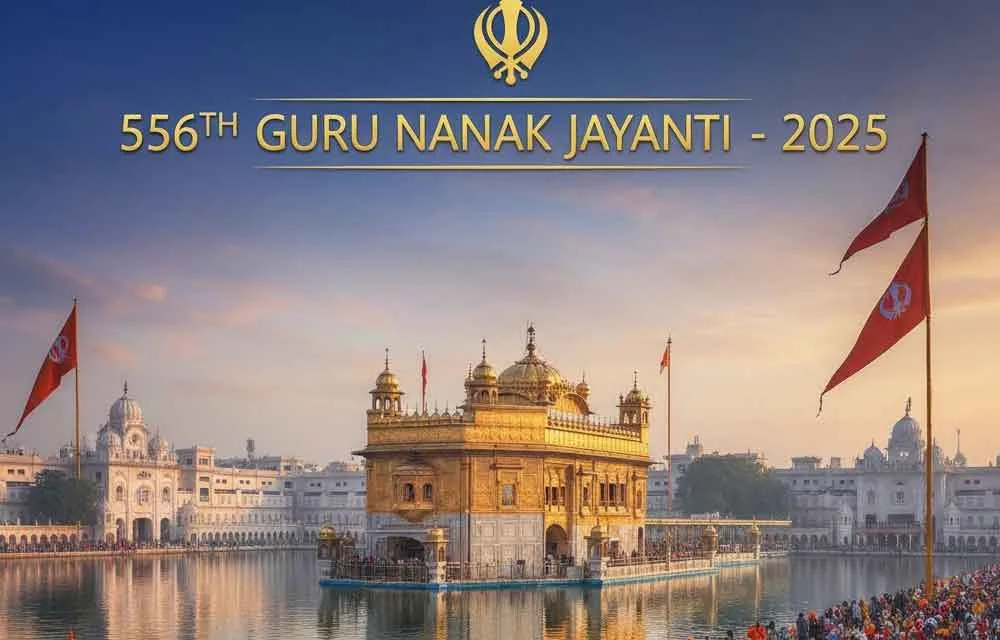
Guru Nanak Jayanti, also called Gurpurab or Prakash Purab, falls on Tuesday 24 November 2026, the full moon of Kartik. This guide explains Guru Nanak's life as told in Sikh tradition, his core teachings, how Sikhs celebrate with akhand path, prabhat pheris, nagar kirtan, kirtan and langar, and how Hindu and interfaith families can join respectfully at a gurdwara.
Quick answer: Guru Nanak Jayanti 2026, also called Gurpurab or Prakash Purab, falls on Tuesday 24 November 2026, the full moon of Kartik (Kartik Purnima). It celebrates the birth of Guru Nanak Dev Ji (1469 to 1539), the first of the ten Sikh Gurus and the founder of the Sikh faith. Sikhs mark the day with an unbroken reading of the Guru Granth Sahib (akhand path) that ends on the Gurpurab morning, early-morning processions (prabhat pheris), a nagar kirtan, kirtan in the gurdwara and langar for all.
Guru Nanak Jayanti 2026 date
The birth anniversary of Guru Nanak is traditionally celebrated on Kartik Purnima, the full moon that closes the North Indian month of Kartik. In 2026, Drik Panchang lists Guru Nanak Jayanti and Kartika Purnima together on Tuesday 24 November for India. HinduTone's panchang calculation (Drik method) gives Kartik Purnima on the same Tuesday in the USA, Canada, the UK, Australia, Singapore and Malaysia. These dates are calculated, so please confirm with your local gurdwara, which may follow the calendar announced by Sikh authorities in Amritsar.
| Observance | 2026 date | Note |
|---|---|---|
| Guru Nanak Jayanti (Gurpurab) | Tue 24 Nov 2026 | Kartik Purnima; India per Drik Panchang |
| Akhand path begins | Usually two days earlier | About 48 hours of continuous reading; timing set by each gurdwara |
| Nagar kirtan | Often a day or a few days before | Many gurdwaras hold it on the nearest weekend |
| Prabhat pheris | In the days or weeks leading up | Early-morning hymn processions; local practice varies |
| Kartik Purnima (same day) | Tue 24 Nov 2026 | Also Karthigai Deepam and Dev Deepawali in India |
Because Gurpurab follows the lunar calendar, it moves every year, usually landing in November. In India it is a gazetted holiday. Abroad, Tuesday 24 November is a working day, so many gurdwaras in the diaspora hold their biggest gathering on the weekend before or after. Our Guru Nanak Jayanti 2026 guide for the USA, UK, Canada and Australia covers that in detail.
A note on the Nanakshahi calendar debate
Sikh tradition has long celebrated Guru Nanak's Prakash Purab on Kartik Purnima. Over the past few decades, Sikh scholars and institutions have discussed the Nanakshahi calendar, a calendar designed to fix Sikh observances to solar dates. Part of that discussion concerns Guru Nanak's birth date itself, since some early accounts place it in the spring month of Vaisakh. Different Sikh bodies have taken different positions, and the debate is ongoing. For the vast majority of gurdwaras worldwide, the Gurpurab is still celebrated on the Kartik full moon, which is why the 2026 date is 24 November. If your gurdwara follows a different calendar, follow its announcement.
The life of Guru Nanak, as told in Sikh tradition
Much of what is known about Guru Nanak's early life comes from the Janamsakhis, traditional accounts of his life written down by later generations of Sikhs. They are treasured for their spiritual message; historians read them as devotional biography rather than precise record. The outline below follows how the story is commonly told.
- Birth (1469): Nanak was born at Rai Bhoi di Talwandi, near Lahore, to Mehta Kalu and Mata Tripta. The village is now called Nankana Sahib and lies in Pakistan. His elder sister, Bebe Nanaki, is remembered as the first to recognise his spiritual nature.
- Childhood: the Janamsakhis describe a thoughtful child who questioned empty ritual, including stories of him using money meant for trade to feed hungry holy men, remembered as the "true bargain" (sacha sauda).
- Sultanpur Lodhi: while working in Sultanpur Lodhi, Nanak is said to have gone into the river Bein and remained absent for three days. He returned with the message that there is no Hindu and no Muslim, meaning that God sees beyond such labels, and began his mission.
- The travels (udasis): with his companion Bhai Mardana, a Muslim musician who played the rabab, Guru Nanak travelled widely across the Indian subcontinent and beyond, singing hymns and speaking with people of many faiths.
- Kartarpur: in his later years he settled at Kartarpur on the river Ravi, now in Pakistan, where he built a community based on prayer, honest farming work and a shared kitchen. He passed away there in 1539, after naming Bhai Lehna, who became Guru Angad, as his successor.
Two sites are especially dear to Sikhs today: Nankana Sahib, his birthplace, and Kartarpur Sahib, where he spent his final years. Sikh pilgrims from India and abroad travel to both, and the Kartarpur Corridor, opened in 2019, lets pilgrims from India visit Gurdwara Darbar Sahib Kartarpur. Travel rules for these sites change, so check official guidance before planning a trip.
Core teachings of Guru Nanak
Sikhs understand Guru Nanak's teachings through his hymns, which are preserved in the Guru Granth Sahib, the Sikh scripture and eternal Guru. The scripture opens with the Mool Mantar, composed by Guru Nanak, and his morning prayer, Japji Sahib, is recited daily by Sikhs around the world. The central ideas are:
- Ik Onkar: there is one Creator, present in all of creation, beyond form and beyond any single community.
- Naam japna (naam simran): remembering and meditating on the divine Name throughout daily life.
- Kirat karni: earning a living honestly through one's own work.
- Vand chakna: sharing with others, especially those in need.
- Seva: selfless service, seen in the gurdwara kitchen, cleaning, and helping the community.
- Equality: Guru Nanak rejected caste distinctions and taught the equal dignity of women and men. The langar, where everyone sits together and eats the same food, is the living expression of this.
These teachings are the foundation of the Sikh way of life that the following nine Gurus developed and that the Guru Granth Sahib preserves. For a respectful comparison of the two traditions, see our guide to Hinduism and Sikhism: understanding two Indian religions.
How Gurpurab is celebrated
Akhand path
An akhand path is a continuous, unbroken reading of the entire Guru Granth Sahib by a team of readers, taking about 48 hours. For the Gurpurab, gurdwaras usually begin it two days before, so that the reading concludes (the bhog) on the morning of the festival, followed by Ardas (the Sikh prayer) and the distribution of karah prashad.
Prabhat pheris
In the days or weeks before the Gurpurab, groups of devotees walk through neighbourhoods in the early morning singing shabads (hymns). In Punjab and in many towns with a Sikh community, these prabhat pheris are a much-loved part of the season.
Nagar kirtan
A nagar kirtan is a procession in which the Guru Granth Sahib is carried on a decorated float, led by five Sikhs representing the Panj Pyare. Sangat (the congregation) follow singing hymns, gatka (Sikh martial art) groups often perform, and volunteers offer food and drinks along the route. Nagar kirtans are usually held a day or a few days before the Gurpurab.
Kirtan, katha and langar on the day
On Gurpurab itself, gurdwaras hold programmes of kirtan (singing of hymns from the Guru Granth Sahib) and katha (explanation of the Guru's teachings and life). Langar is served throughout the day to everyone who comes, and volunteers do seva in the kitchen. In the evening, gurdwaras and Sikh homes are lit with lamps and lights, and some places have fireworks. At Harmandir Sahib (the Golden Temple) in Amritsar, the illuminations draw large crowds.
How Hindu and interfaith families can join respectfully
Many Hindu families, particularly Punjabi and Sindhi Hindus, revere Guru Nanak deeply and visit the gurdwara on Gurpurab, and gurdwaras welcome visitors of all faiths. Joining in is a beautiful gesture of respect, as long as you remember you are a guest at a Sikh celebration. A few simple points of etiquette:
- Cover your head: both men and women cover their heads inside the gurdwara. A scarf or bandana works; many gurdwaras keep head coverings at the entrance.
- Shoes off, hands washed: leave shoes in the shoe area and wash your hands (and often feet) before entering.
- No tobacco, alcohol or intoxicants: do not bring them onto the premises or arrive under their influence.
- In the prayer hall: sit on the floor, avoid pointing your feet towards the Guru Granth Sahib, and keep phones silent. Bowing is welcome but not required of guests.
- Karah prashad: accept it with both hands cupped together. If you can only manage a little, ask for a small amount.
- Langar: sit with everyone in rows (pangat), take only what you will eat, and consider helping with seva such as serving or washing up.
Avoid treating the gurdwara as a Hindu temple: do not bring Hindu puja items or offerings of your own, and follow what the sevadars (volunteers) suggest. For the Sikh significance of the Diwali season, see our article on Bandi Chhor Divas and Guru Hargobind Ji.
The same full moon in Hindu traditions
Tuesday 24 November 2026 is also Kartik Purnima for Hindus, a separate set of observances on the same lunar day. In Tamil Nadu it is Karthigai Deepam, in Andhra Pradesh and Telangana Karthika Pournami, and in Varanasi Dev Deepawali. These are distinct festivals of a distinct religion; sharing a date does not make them the same celebration. For Hindu Kartik Purnima customs, see our Kartik Purnima significance and rituals guide.
Frequently asked questions
When is Guru Nanak Jayanti in 2026?
Guru Nanak Jayanti (Gurpurab) falls on Tuesday 24 November 2026, the full moon (Purnima) of the month of Kartik. This is the date in the Drik Panchang listing for India, and HinduTone's calculation gives Kartik Purnima on the same day in the USA, Canada, the UK, Australia, Singapore and Malaysia. Many gurdwaras hold their largest programmes on the nearest weekend, so confirm with your local gurdwara.
Which Gurpurab is it in 2026?
Counting from the traditional birth year of 1469, the 2026 celebration is commonly described as the 557th birth anniversary (Prakash Purab) of Guru Nanak Dev Ji. Some gurdwaras and calendars count the anniversary slightly differently, so you may see the number given in other ways.
Why does the date of Guru Nanak Jayanti change every year?
Guru Nanak's birth anniversary is traditionally celebrated on Kartik Purnima, a lunar date, so it falls on a different day of the Gregorian calendar each year, usually in November. There has also been a long discussion within the Sikh community, connected to the Nanakshahi calendar, about whether the Gurpurab should be fixed to a solar date; some scholars point to early accounts placing his birth in Vaisakh (spring). The Kartik Purnima date remains the one most widely celebrated.
Is Guru Nanak Jayanti a Hindu festival?
No. Guru Nanak Jayanti is one of the most important Sikh festivals, celebrating the founder of the Sikh faith. Sikhism is a distinct religion with its own scripture, the Guru Granth Sahib, and should not be described as a sect of Hinduism. Many Hindus, especially Punjabi and Sindhi families, also hold Guru Nanak in deep reverence and join the celebrations at gurdwaras.
Can non-Sikhs visit a gurdwara on Gurpurab?
Yes. Gurdwaras welcome everyone, whatever their faith. Cover your head, remove your shoes, wash your hands, do not bring tobacco or alcohol, sit on the floor in the prayer hall, and accept karah prashad with cupped hands. Langar is served to all visitors, seated together as equals.
Where was Guru Nanak born?
Guru Nanak was born in 1469 at Rai Bhoi di Talwandi, a village near Lahore that is today known as Nankana Sahib, in Pakistan. Gurdwara Janam Asthan marks the site, and Sikh pilgrims travel there for the Gurpurab.
Editor's note (9 October 2026)
This guide was written in October 2026. The date, Tuesday 24 November 2026, comes from Drik Panchang for India (Guru Nanak Jayanti and Kartika Purnima) and from HinduTone's panchang calculation (Drik method) for other countries; these are calculated dates, so please confirm with your gurdwara. Guru Nanak's life is told here as it appears in Sikh tradition, with the Janamsakhis described as traditional accounts. Sikh teachings are described as Sikhs understand them. We have not listed programme times, events or organisers; check your local gurdwara for its schedule.
Related guides
You might also like
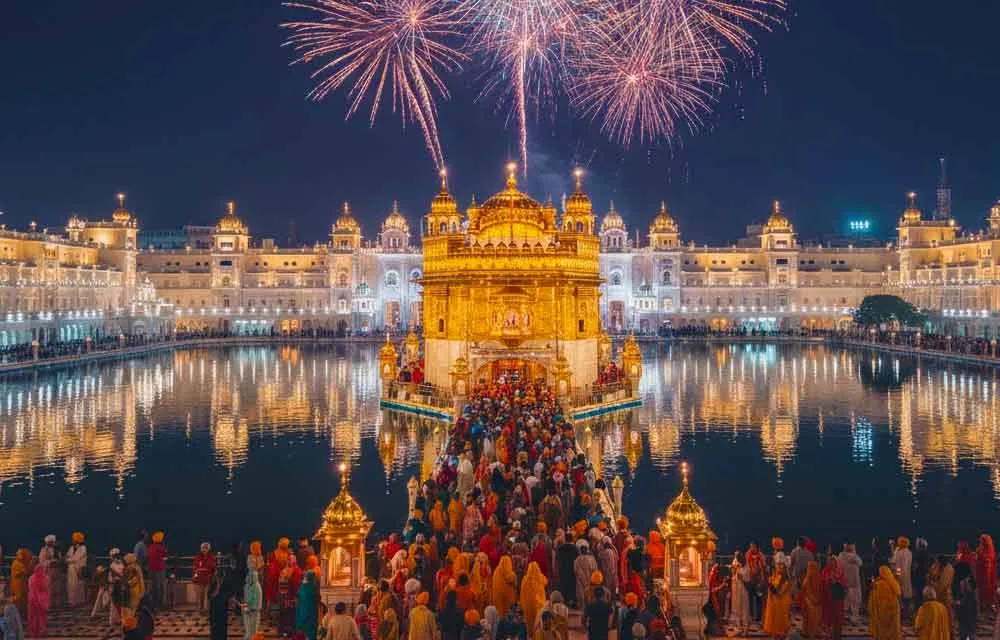
Guru Nanak Jayanti 2026 in the USA, UK, Canada and Australia: Gurpurab Date, Nagar Kirtan and Visiting a Gurdwara
Skanda Sashti 2026 in the USA, Canada, UK and Australia: Soora Samharam Date by Country and How to Observe
Skanda Sashti 2026 in Singapore and Malaysia: Soora Samharam on 15 November, Six-Day Vratam and Murugan Temples
