
Why Do Hindus Touch Elders' Feet? Charan Sparsh, Pranam, Abhivadana and Explaining It to Children Abroad
Touching the feet of parents, grandparents and teachers is one of the most recognisable Hindu customs. Here is what charan sparsh means, what the Grihya and Dharma texts say about greeting elders, how sashtanga and panchanga namaskara differ, when and to whom it is done, the blessing given in return, and how to explain it to children growing up abroad.

Touching the feet of parents, grandparents and teachers is one of the most recognisable Hindu customs. Here is what charan sparsh means, what the Grihya and Dharma texts say about greeting elders, how sashtanga and panchanga namaskara differ, when and to whom it is done, the blessing given in return, and how to explain it to children growing up abroad.
Quick answer: Hindus touch elders' feet (charan sparsh or pranam) to show respect, humility and gratitude, and to receive the elder's blessing in return. The custom goes back to the practice of greeting teachers and elders described in the Grihya and Dharma texts, and is done for parents, grandparents, teachers and gurus, especially on festivals and before new beginnings.
What charan sparsh means
Charan means feet and sparsh means touch. In practice, a younger person bends down, touches the elder's feet with the fingertips (often then touching their own forehead or chest), and the elder responds by placing a hand on the person's head and offering a blessing. In different languages it is called pranam, padabhivandanam, namaskara or simply "taking blessings".
The traditional meanings are simple:
- Respect: acknowledging the elder's age, experience and the care they have given.
- Humility: lowering oneself physically is a way of setting aside the ego.
- Blessing: the gesture is completed by the elder's blessing, which families value as a real gift for the journey ahead.
- Continuity: it links each generation to the ones before, a living expression of gratitude to one's parents and teachers.
Abhivadana: greeting elders in the scriptures
The formal greeting of elders is described in the Grihya Sutras and Dharma Sutras (such as those of Apastamba and Gautama) and in the Manusmriti, mainly in the context of a student and his teacher. This greeting is called abhivadana. In general terms:
- The student bows and introduces himself by his name, often with his gotra and lineage, saying in effect: "I, so-and-so, salute you."
- The Manusmriti describes touching the teacher's feet with the hands crossed, the right hand to the right foot and the left hand to the left foot.
- The elder replies with a blessing (pratyabhivadana), commonly a wish for a long and good life.
Many traditional families, particularly in South Indian Smarta and Vaishnava communities, still recite an abhivadana formula when greeting elders or the guru on special occasions. The Manusmriti also says that one who habitually greets and serves elders grows in life, learning, reputation and strength. This is a traditional statement of the value of respect, not a promise of any physical or health benefit.
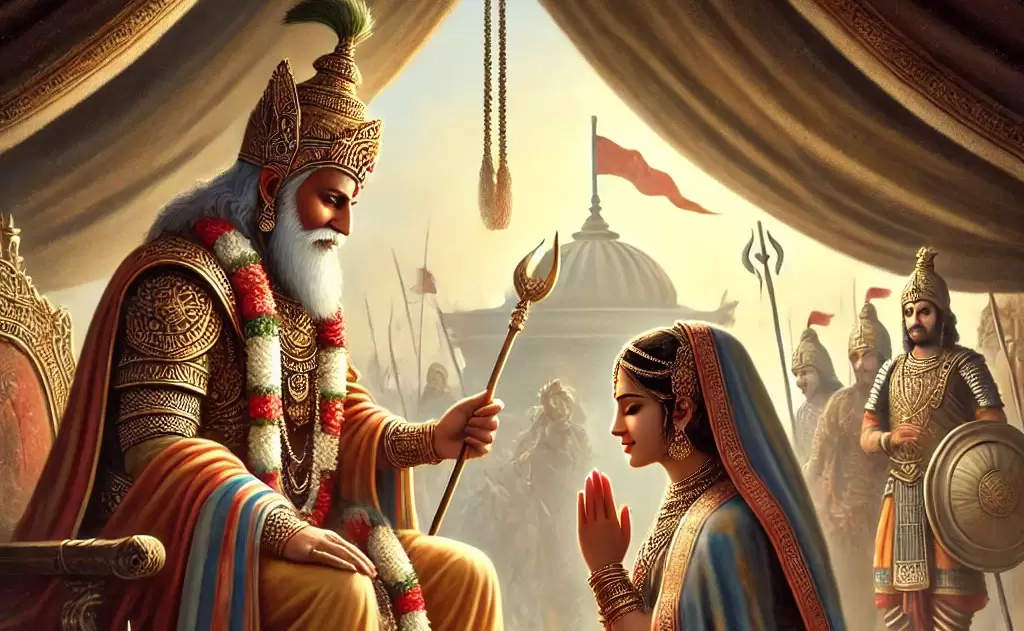
The epics give memorable examples. In the Ramayana, Rama bows to his parents and teachers before leaving for exile. In the Mahabharata, before the Kurukshetra war begins, Yudhishthira lays down his weapons, walks across to the opposing army and bows to Bhishma, Drona and other elders to seek their blessings.
Sashtanga and panchanga namaskara
Touching the feet is one of several forms of bowing. The fullest forms are prostrations, used before deities, gurus and, in some families, parents on special occasions:
| Form | What it involves | Typical use |
|---|---|---|
| Namaste / namaskar | Joined palms and a slight bow | Everyday greeting for everyone |
| Charan sparsh / pranam | Bending to touch the elder's feet | Parents, grandparents, teachers, elders |
| Panchanga namaskara | Kneeling bow with five limbs touching the ground: knees, hands and forehead | Commonly done by women before deities and gurus |
| Sashtanga namaskara | Full prostration with eight limbs touching the ground: feet, knees, hands, chest and forehead (in common lists) | Traditionally done by men before deities, gurus and in temples |
Lists of the eight limbs vary slightly; some also include mind, speech and sight. The division between men and women is a widespread custom rather than a rule followed everywhere. For the everyday greeting, see our sibling explainer on why Hindus say namaste.
When and to whom
- Parents and grandparents: often daily in traditional homes, and especially on birthdays and festivals.
- Teachers and gurus: on Guru Purnima, at Vidyarambham, before exams and at graduations.
- Festivals: on Diwali, Dussehra, Ugadi, Pongal, Bhai Dooj and the New Year, when families visit elders. In Nepal and among Nepali families, elders give tika and blessings over the days of Dashain.
- Life events: weddings, when the couple seeks blessings from elders, and at many samskaras; see the guide to the 16 Hindu samskaras.
- Before journeys and new ventures: leaving for university, a new job or a move abroad.
There are also common customs about when not to do it: elders do not usually want younger people to touch their feet, and many families say that in front of the deity in a temple, the bow belongs to God alone. Regional and family practices vary widely.
The blessing given in return
Charan sparsh is a two-way exchange. The elder usually places a hand on the head or shoulders and offers a blessing. Common ones include Ayushman bhava (may you live long), Khush raho (be happy), Vijayi bhava (may you succeed) and, for married women in some families, Saubhagyavati bhava or Deergha sumangali bhava. Many elders also give a small gift or money on festivals.
Popular "energy" explanations
You may read that touching feet completes an energy circuit between two bodies, or that positive energy flows from the elder's feet to the younger person's hands. These are popular explanations, not scientific findings and not what the scriptures say. The traditional reasons, respect, humility and blessing, are complete in themselves and are easier to explain honestly to children.
Explaining charan sparsh to children abroad
Children growing up in the USA, Canada, the UK, Australia or Europe may find touching feet strange at first, especially in front of school friends. A few ideas from NRI families:
- Explain the meaning first: "We touch Ammamma's or Dadi's feet to say thank you for everything she has done, and she gives us her blessing."
- Compare it with gestures children know, such as bowing in Japan or standing when a teacher enters.
- Start with special occasions, like Diwali, birthdays or a grandparent's visit, rather than making it a daily rule.
- Let children choose a gentler form, such as touching the knees or a namaste with a bow, if they are shy.
- Model it yourself: children learn most by seeing their parents take blessings from grandparents.
On video calls with grandparents in India, many families have their children do a namaste and receive the blessing on screen, then do the full pranam when they meet in person.
Frequently asked questions
Why do we touch the feet of elders?
To show respect, humility and gratitude for their care and experience, and to receive their blessing. Bowing at someone's feet acknowledges that they are ahead of us in life and learning. In return, the elder places a hand on your head and blesses you.
What do elders say when you touch their feet?
Common blessings include "Ayushman bhava" (may you live long), "Khush raho" (be happy), "Jeete raho" (live well) and, for women in some families, "Saubhagyavati bhava". Every language has its own forms, such as "Deergha sumangali bhava" in parts of the South.
Whose feet should you not touch?
Customs vary. Generally elders do not want younger people's feet touched, and many families say you should not touch anyone's feet while standing in front of the deity in a temple, where the bow belongs to God. Some families avoid touching feet of people who are asleep. Follow your family's practice.
Is touching feet only for parents?
No. It is commonly done for parents, grandparents, other elders in the family, teachers, gurus, respected monks and, in many families, in-laws. It is especially common on festivals, birthdays, weddings and before exams or journeys.
Is there a scientific reason for touching feet?
Popular explanations say energy flows from the elder's feet to the hands of the one who bows. These are popular beliefs, not scientific findings. The traditional reasons are respect, humility and receiving blessings.
Do I have to touch feet if I am not comfortable?
It is a gesture of respect, not a test. A namaste with a slight bow, or touching the elder's knees, is acceptable in many families. With children, it is better to explain the meaning and let them grow into it than to force it.
Editor's note (9 October 2026)
This explainer was written in October 2026. The descriptions of abhivadana from the Grihya Sutras, Dharma Sutras and Manusmriti, and the examples from the Ramayana and Mahabharata, are paraphrased at the level of ideas, not quoted. "Energy" explanations are labelled as popular and no health claims are made. Customs about who bows to whom, and how, vary by region, community and family.
Related guides
- Why do Hindus say namaste?
- Types of tilak: Vaishnava, Shaiva and Shakta marks
- Annaprashan: the first rice-feeding ceremony
- Shodasha samskaras: 16 rites of passage for NRIs
- Why Hindus break a coconut
- Bhai Dooj 2026: date, story and tika vidhi
Image credit: Tamil1510, CC BY-SA 3.0, via Wikimedia Commons (https://commons.wikimedia.org/wiki/File:Getting_Blessing_From_Parents.JPG).
You might also like
Why Do Hindus Say Namaste? Meaning, Anjali Mudra, Namaste vs Namaskar vs Pranam, and Greetings Across India
Why Do Hindus Fast? Upavasa Meaning, Types of Vrat and the Main Fasting Days

Why Do Hindus Break a Coconut? Meaning of the Sriphala Offering at Temples, New Beginnings and Festivals
