History of Garba: How Gujarat's Navratri Dance Travelled the World
Garba began, as traditionally told, as devotion to the Mother Goddess in the villages of Gujarat: women singing and circling a lamp-lit clay pot through the nights of Navratri. This guide traces the history of Garba from Gujarat's great Devi shrines and village squares to city grounds, the Gujarati diaspora in East Africa, Britain and North America, and its recognition by UNESCO in December 2023.
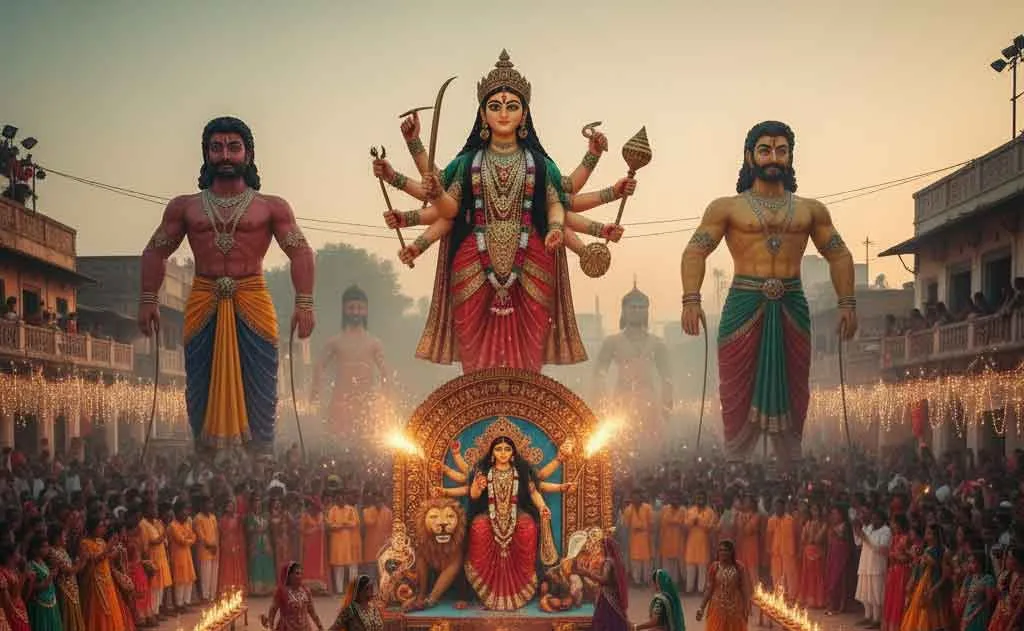
Garba began, as traditionally told, as devotion to the Mother Goddess in the villages of Gujarat: women singing and circling a lamp-lit clay pot through the nights of Navratri. This guide traces the history of Garba from Gujarat's great Devi shrines and village squares to city grounds, the Gujarati diaspora in East Africa, Britain and North America, and its recognition by UNESCO in December 2023.
Quick answer: Garba began in Gujarat as a devotional circle dance to the Mother Goddess. As traditionally told, village women sang and danced around the Garbo, a clay pot with a lamp inside, on the nine nights of Navratri. Over time Garba moved from village squares to city grounds, merged on the dance floor with Krishna-associated Raas, and travelled with the Gujarati diaspora to East Africa, Britain, North America and beyond. In December 2023, the 'Garba of Gujarat' was inscribed on UNESCO's Representative List of the Intangible Cultural Heritage of Humanity.
Every October, in places as different as an Ahmedabad society courtyard, a Leicester community centre and a school gym in New Jersey, people step into a circle and begin to clap. The steps are recognisably the same; so is the devotion to the Mother at the centre. This guide traces how that happened. For this year's festival, see our Navratri 2026 NRI guide. In 2026, Navratri runs from Sunday 11 to Monday 19 October in India, with Dussehra on Tuesday 20 October.
A note on sources
Garba is a folk and devotional tradition handed down mostly by singing and dancing rather than writing. Its exact age is not documented, and scholars discuss its origins in different ways. In this guide, origins are given as traditionally told, and we stick to what is well established. Where families and regions differ, both views are fair.
Roots in Gujarat's Shakti worship
Gujarat has a deep tradition of worship of the Divine Mother, Shakti, known affectionately as Mataji. Several of her shrines are among the most revered places of pilgrimage in the state, and their festivals and songs are woven into Garba:
| Shrine | Region of Gujarat | Goddess honoured |
|---|---|---|
| Ambaji | North Gujarat, Banaskantha district, near the Aravalli hills | Amba (Ambe Maa), the form of the Mother most closely tied to Garba |
| Pavagadh | Central Gujarat, on Pavagadh hill near Champaner | Kalika Mata |
| Bahucharaji | North Gujarat, Mehsana district | Bahuchara Mata |
As traditionally told, pilgrims and villagers honoured these forms of the Mother with night-long singing and dancing during Navratri, and many classic Garba songs are addressed to Amba, Kalika and Bahuchara by name. For timings and visiting arrangements at any temple, check the temple's official website for current timings.
To understand why the dance is framed as worship, read our companion guide on Garba's meaning and spiritual significance, which explains the link to Garbha, the womb, and the symbolism of the lamp inside the pot.
Village Garba around the Garbo
The oldest picture of Garba, as remembered in Gujarati families, is simple. On the first night of Navratri a Garbo, an earthen pot pierced with holes and holding a lamp, is lit and placed in the village square or courtyard, often beside an image of Mataji. As darkness falls, women gather around it, one singer leads a song in praise of the Mother, and the others answer as they move in a circle, clapping in rhythm.
These village Garbas were participatory, not performances. Songs were sung live, without amplification, and passed down from mothers and grandmothers. Many traditional Garbas have no known author. The circle could grow as large as the courtyard allowed, and the evening would end with aarti to the Devi.
Gujarati usage also includes Garbi, a word used in different ways: for the lamp pot, for a type of devotional song, and in some regions, notably Saurashtra, for a men's form of the circle dance. Customs vary from district to district.
Poets and the Garbo song
Alongside anonymous folk songs, Gujarati poets composed devotional Garbas and Garbis that entered the repertoire. Dayaram, the Gujarati bhakti poet, is widely remembered for his Garbis, many of them centred on Krishna and the gopis. Vallabh Bhatt is remembered in Gujarati tradition for Garbas composed in devotion to Bahuchara Mata. Their songs, and those of many unnamed singers, show how Garba sat at the meeting point of Devi devotion and Krishna bhakti in Gujarati culture.
Raas and the Krishna connection
Garba's close companion is Raas. In tradition, Raas is associated with Krishna's Raas Leela with the gopis in Vrindavan, and Gujarat's own links to Krishna, through Dwarka, are deep. Dandiya Raas, danced in pairs with decorated sticks, is the best-known form today. One popular reading also links the sticks to the Goddess's weapons in her battle with Mahishasura; that is an interpretation, not the only one.
On Navratri nights the two traditions now share the floor, and the combined term Raas-Garba is used widely. For a detailed comparison of steps, symbolism and etiquette, see Garba vs Dandiya Raas: the difference explained.
From village squares to city grounds
As Gujarat's towns and cities grew, Garba moved with people. Neighbourhood and housing-society Garbas took the place of the village square, with a Garbo and a small shrine at the centre of each courtyard. Over the twentieth century, amplified music, live bands and professional singers became common, and larger organised Garba grounds appeared in cities, alongside the smaller society and family circles that still carry the tradition.
The music changed too. Traditional Garbas continued, but newer compositions and popular film songs set to Garba rhythms joined them, and dance steps multiplied. Dress grew more elaborate, with mirror-work chaniya cholis and kediyu outfits becoming part of the Navratri look. For today's Gujarat scene, see our Navratri 2026 Gujarat Garba guide.
Garba travels with the Gujarati diaspora
Gujaratis have long been traders and travellers, and Garba went wherever families settled. A few broad waves stand out:
- East Africa. Gujarati families settled in Kenya, Uganda, Tanzania and neighbouring countries from the colonial period, and Navratri Garba became part of community life there.
- Britain. From the 1960s and 1970s, many East African Asians, a large share of them Gujarati, moved to Britain, including families who left Uganda in 1972. Towns and cities such as Leicester and parts of London became well known for Navratri. See our Navratri 2026 UK city-by-city guide.
- North America. Gujarati communities grew in the USA and Canada, and Garba nights spread to temple halls, community centres and rented school gyms. See our USA and Canada city-by-city guides.
- And beyond. Garba is also danced in the Gulf, Australia, Singapore and elsewhere. See our Navratri 2026 Dubai and UAE guide and Navratri 2026 Australia guide.
Abroad, Garba often adapted to the working week: many communities hold their main nights on weekends. In 2026, that means many Garba nights abroad will fall on the weekends of 10-11 and 16-18 October; your local temple or association will publish its own schedule. Diaspora Garba also became a meeting point for second-generation Gujaratis, other Indian communities and non-Indian friends, many of whom now join the circle every year.
UNESCO recognition in December 2023
In December 2023, the 'Garba of Gujarat' was inscribed on UNESCO's Representative List of the Intangible Cultural Heritage of Humanity. Intangible cultural heritage refers to living practices handed down within communities: songs, rituals, dances and the knowledge that goes with them. The inscription recognises Garba as exactly that, a tradition that is still practised, adapted and passed on, rather than a museum piece.
For families abroad, the recognition gave many a new way to explain Garba to neighbours, schools and workplaces: it is a devotional dance from Gujarat, and also part of the world's shared heritage.
A timeline in brief
| Period | What happened (in general terms) |
|---|---|
| Traditional roots (undated) | As traditionally told, village women in Gujarat sing and circle the lit Garbo in honour of the Mother during Navratri |
| Devotional poetry | Gujarati poets add Garbas and Garbis to Devi and Krishna to the folk repertoire |
| Urban growth (20th century) | Garba moves to neighbourhood societies and city grounds; amplified music and larger events appear |
| Diaspora | Gujarati families take Garba to East Africa, then Britain, North America, the Gulf and beyond |
| December 2023 | 'Garba of Gujarat' inscribed on UNESCO's Representative List of the Intangible Cultural Heritage of Humanity |
| 11-19 October 2026 | Sharad Navratri 2026 in India (Drik Panchang), with Dussehra on Tuesday 20 October |
Keeping the history alive at your Garba
- Begin with aarti to Mataji, as village Garbas always did.
- Ask the singers to include a few traditional Garbas to Amba alongside newer songs.
- Keep an image of the Devi or a lit Garbo at the centre of the circle, even in a hired hall.
- Teach children the story and the meaning; our parents' guide to Navratri and Dussehra helps.
- Wear the colour of the day if you like; see the Navratri 2026 colours list.
Also read: Garba 2026 worldwide: all countries.
Frequently asked questions
Where did Garba originate?
Garba originated in Gujarat, in western India. As traditionally told, it grew out of devotion to the Mother Goddess, with women singing and dancing in a circle around a Garbo, a clay pot with a lamp inside, on the nights of Navratri. Its exact age is not documented, and scholars generally describe it as a long-standing folk and devotional tradition rather than dating it precisely.
Is Garba recognised by UNESCO?
Yes. The 'Garba of Gujarat' was inscribed on UNESCO's Representative List of the Intangible Cultural Heritage of Humanity in December 2023. The listing recognises Garba as a living tradition practised by communities, not just a staged performance.
What is the difference between Garba and Raas?
Garba is traditionally a circle dance with clapping, performed around the Garbo or the Devi's image in honour of Shakti. Raas, including Dandiya Raas with sticks, is associated in tradition with Krishna's Raas Leela with the gopis of Vrindavan. Today both are danced on Navratri nights, and the combined term Raas-Garba is common.
How did Garba spread outside India?
Garba travelled with Gujarati families who settled abroad. Many Gujaratis lived in East Africa, especially Kenya, Uganda and Tanzania, and many later moved to Britain. Gujarati communities also grew in the USA, Canada and elsewhere. Wherever they settled, they held Garba in temples, community halls and school gyms, and friends from other backgrounds joined in.
Which goddess is worshipped in Garba?
Garba honours the Divine Mother, Shakti, worshipped in Gujarat especially as Amba (Ambe Maa), and also in forms such as Kalika and Bahuchara. Many Garba songs are addressed simply to Mataji, the Mother.
Who wrote traditional Garba songs?
Many traditional Garbas are folk songs whose composers are not known, passed down orally by women in villages and families. Gujarati poets also composed devotional Garbas and Garbis; Dayaram, for example, is widely remembered for his Krishna-centred Garbis, and Vallabh Bhatt for Garbas to Bahuchara Mata.
Editor's note (7 October 2026)
We rewrote this guide in October 2026. Navratri and Dussehra dates are from Drik Panchang for India. Garba's early history is not precisely documented; origins are given as traditionally told and we have kept to well-established facts. We do not list specific events, organisers, venues, prices or attendance figures. Check your local temple or community association for Garba nights near you.
Related guides
You might also like
Garba Meaning and Spiritual Significance: Why We Dance Garba in Navratri
Garba vs Dandiya Raas: The Difference Explained for Navratri 2026
Garba for Beginners: Easy Steps, Circle Etiquette and Garba with Kids (Navratri 2026)