How Sikhs Celebrate Kartik Purnima: Complete Ritual Guide
Introduction Kartik Purnima, the full moon day in the Hindu month of Kartik (October-November), holds special significance across various Indian religious…
Introduction Kartik Purnima, the full moon day in the Hindu month of Kartik (October-November), holds special significance across various Indian religious…
Introduction
Kartik Purnima, the full moon day in the Hindu month of Kartik (October-November), holds special significance across various Indian religious traditions. While this festival is primarily celebrated in Hindu, Jain, and Buddhist communities, Sikhs generally do not observe Kartik Purnima as a major religious festival in their tradition.
Sikh Perspective on Kartik Purnima
Why Sikhs Don't Traditionally Celebrate Kartik Purnima
Sikhism, founded by Guru Nanak Dev Ji in the 15th century, emphasizes:
- Worship of one formless God (Waheguru)
- Rejection of ritualistic practices tied to lunar calendars
- Focus on inner spirituality over external rituals
- Equality and devotion through honest living and service
The Sikh faith moved away from many Hindu ritualistic observances, including fasting on specific lunar days and pilgrimages tied to auspicious dates in the Hindu calendar.
Important Sikh Festivals Instead
Sikhs celebrate their own significant festivals, including:
Gurpurabs (Guru's Birth Anniversaries)
- Guru Nanak Jayanti (usually falls near Kartik Purnima time)
- Guru Gobind Singh Jayanti
Other Major Sikh Festivals
- Vaisakhi (Baisakhi) - celebrating Khalsa formation
- Hola Mohalla
- Bandhi Chhor Divas (coinciding with Diwali)
- Martyrdom days of Sikh Gurus
Guru Nanak Jayanti Connection
Interestingly, Guru Nanak Jayanti, the birth anniversary of Sikhism's founder, often falls close to or on Kartik Purnima, as it's celebrated on the full moon day of Kartik month according to the traditional calendar. This is the festival Sikhs celebrate with great devotion during this period.
How Sikhs Celebrate Guru Nanak Jayanti:
1. Prabhat Pheris (Early Morning Processions)
- Begin two days before the main celebration
- Devotees sing hymns while walking through neighborhoods
- Start before dawn to spread Guru's message
2. Akhand Path (Continuous Reading)
- 48-hour non-stop recitation of Guru Granth Sahib
- Completed in Gurdwaras
- Ends on the morning of Gurpurab
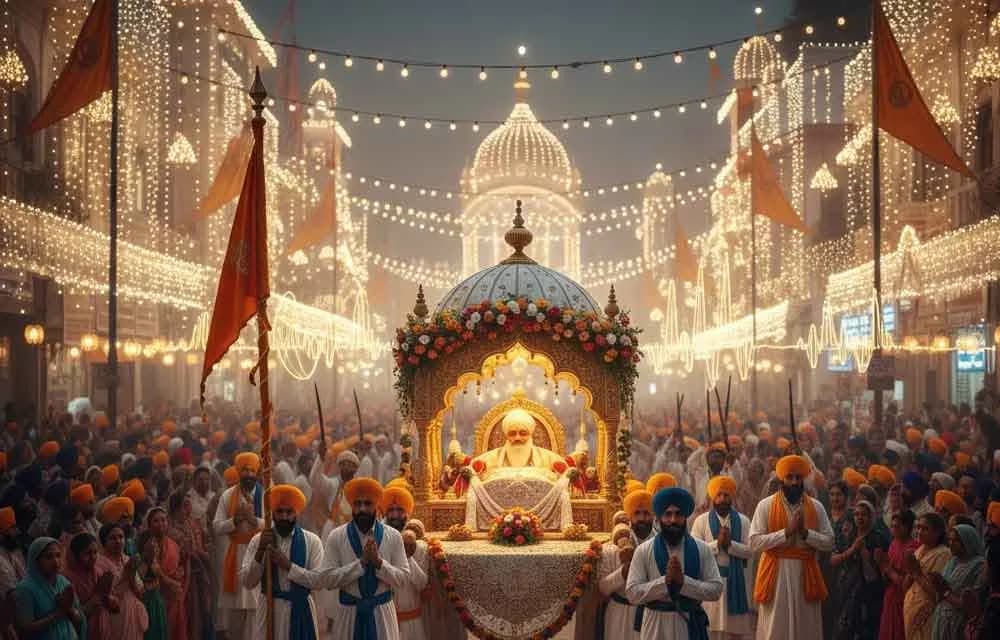
3. Nagar Kirtan (Community Procession)
- Day before the Gurpurab
- Panj Pyare (Five Beloved Ones) lead procession
- Guru Granth Sahib carried on decorated float
- Martial arts demonstrations (Gatka)
- Community singing and music
4. Gurpurab Day Celebrations
- Begins at Gurdwara with Asa-di-Var (morning hymns)
- Kirtan (devotional singing)
- Reading from Guru Granth Sahib
- Katha (explanatory discourse)
- Ardas (community prayer)
- Karah Prasad distribution
5. Langar (Community Kitchen)
- Free vegetarian meals served to all
- Embodies principles of equality and service
- Everyone sits together regardless of background
Key Differences: Kartik Purnima vs. Sikh Observances
AspectKartik Purnima (Hindu)Sikh PracticeHoly bathsRiver bathing at dawnNo ritual bathingFastingDay-long fastingNo prescribed fastsDeity worshipVarious deities honoredOnly Waheguru worshippedRitualsDiyas, specific ceremoniesKirtan, Langar, SevaFocusLunar calendar significanceGuru's teachings
Conclusion
While Kartik Purnima is not part of Sikh religious observances, Sikhs may celebrate Guru Nanak Jayanti around this time, which is one of their most important festivals. The Sikh faith emphasizes devotion through community service, meditation on God's name, and living according to the Guru's teachings rather than observing lunar calendar-based rituals.
For authentic Sikh celebrations during this period, visit your local Gurdwara to participate in Guru Nanak Jayanti festivities and experience the warmth of Sikh hospitality through Langar and community worship.
Note: This article clarifies the distinction between Hindu lunar festivals and Sikh religious practices. For more information about Indian festivals and religious traditions, explore other articles on HinduTone.com.
Why Guru Nanak Jayanti Falls on Kartik Purnima: The Calendar Connection Explained
Guru Nanak Dev Ji was born on 15 April 1469 CE in Rai Bhoi Ki Talwandi, present-day Nankana Sahib in Pakistan. However, the Sikh community adopted the full moon day of the Kartik month — Kartik Purnima — as the liturgical date of his birth anniversary, based on the traditional Bikrami (Vikram Samvat) lunisolar calendar rather than the solar date. This is why Guru Nanak Jayanti, called Gurpurab, almost always coincides with Kartik Purnima, typically falling between late October and mid-November in the Gregorian calendar.
The decision to observe the Gurpurab on the Purnima tithi reflects early Sikh community practice rather than a rejection or adoption of Hindu lunar observance. The full moon (Purnima) holds natural significance as a reference point in any lunisolar calendar. In 2025, Kartik Purnima falls on 5 November, making that date both Guru Nanak Jayanti and the Hindu observance of Kartik Purnima — a meaningful convergence for interfaith awareness.
The Gurbani Perspective on Pilgrimage and Ritual Bathing
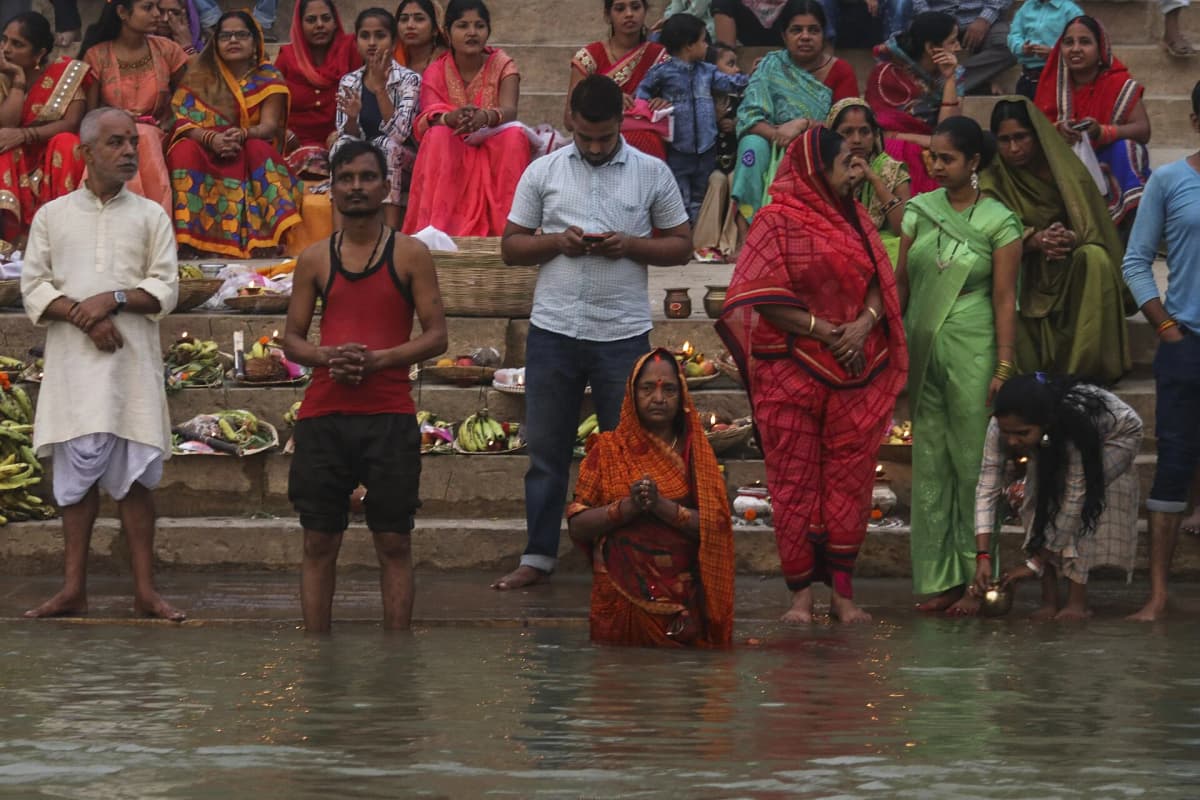
One of the most prominent practices associated with Kartik Purnima in Hindu tradition is the holy bath (snan) at sacred rivers such as the Ganga at Varanasi (Kashi), the Pushkar lake in Rajasthan, or the Triveni Sangam at Prayagraj. The Guru Granth Sahib, Sikhism's eternal scripture installed as the living Guru in 1708 CE by Guru Gobind Singh Ji, explicitly addresses this practice. In the composition known as Japji Sahib, Guru Nanak states: 'Tirath naavaa jay tis bhhaavaa, vin bhaanay kya naa-ay karay' — meaning that ritual bathing at a pilgrimage site has value only if it pleases the Lord, but without divine grace, what does bathing accomplish?
This verse and numerous similar shabads (hymns) throughout the Guru Granth Sahib do not condemn sincere devotion but redirect the practitioner toward inner purification (antar teerath) over external ritual. Sri Raag and Asa di Var — major ragas within the Guru Granth Sahib — contain multiple references to this philosophy. Sikhs are therefore guided toward the 'pilgrimage' of the Sangat (holy congregation) and Naam Simran (repetition of God's name) as the equivalent spiritual cleansing that others may seek through river baths on Purnima days.
Bandhi Chhor Divas: The Sikh Festival That Runs Closest to Kartik Season
Before Guru Nanak Jayanti arrives on Kartik Purnima, Sikhs observe Bandhi Chhor Divas, which coincides with the Hindu festival of Diwali (Amavasya of Kartik month, two weeks before Purnima). This festival commemorates the release of Guru Hargobind Sahib Ji, the sixth Sikh Guru, from Gwalior Fort in 1619 CE. Mughal Emperor Jahangir had imprisoned him, and upon his release Guru Hargobind insisted that 52 Hindu princes imprisoned with him also be freed — hence 'Bandhi Chhor' meaning 'Liberator of prisoners.'
The lighting of lamps during Bandhi Chhor Divas at Gurdwaras — most notably at Harmandir Sahib (the Golden Temple) in Amritsar — visually parallels Diwali celebrations but carries a distinct historical and spiritual meaning rooted in Sikh history. The two-week stretch from Bandhi Chhor Divas (Kartik Amavasya) to Guru Nanak Jayanti (Kartik Purnima) thus becomes a spiritually charged fortnight for Sikh communities worldwide, bookended by these two major observances.
Langar: The Sikh Practice That Transforms Kartik Purnima Celebrations
Central to every Gurpurab celebration, including the one coinciding with Kartik Purnima, is the institution of Langar — the free community kitchen that Guru Nanak Dev Ji institutionalized as a cornerstone of Sikh practice. On Guru Nanak Jayanti, Gurdwaras around the world serve langar continuously, sometimes for 24 to 48 hours without interruption. The meal is prepared by volunteers (sevadars) regardless of caste, creed, or economic background of either cook or recipient, embodying the Sikh principle of seva (selfless service).
The scale of langar at major Gurdwaras during Kartik Purnima Gurpurab is remarkable. At Gurdwara Panja Sahib in Hasan Abdal (Pakistan), Gurdwara Sis Ganj Sahib in Delhi, and Takht Sri Patna Sahib in Bihar (birthplace of Guru Gobind Singh Ji), hundreds of thousands of pilgrims receive langar. This communal feeding directly fulfils the Sikh value of 'Vand Chhako' (share what you have) — a spiritual ideal that contrasts with but does not condemn the Hindu practice of individual ritual fasting (vrat) often observed on Kartik Purnima.
Nagar Kirtan on Kartik Purnima: What Happens During the Procession
The Nagar Kirtan procession on Guru Nanak Jayanti is the most publicly visible expression of Sikh devotion during the Kartik Purnima period. The procession is led by the Panj Pyaras (five beloved ones), who walk ahead of the Palki Sahib — a palanquin carrying the Guru Granth Sahib. Ragis (trained musicians) sing kirtan (devotional music) while walking, and the air is filled with the chanting of 'Waheguru' and shabad recitation.
In cities with significant Sikh populations — Amritsar, Ludhiana, Delhi, Patna, and internationally in cities like Toronto, London, and Vancouver — the Nagar Kirtan covers several kilometres through main streets. Devotees offer flowers, karah prasad (a sacred wheat-flour pudding made with equal parts flour, ghee, and sugar), and perform kar seva (volunteer cleaning) along the route. The procession typically concludes at the main Gurdwara where Ardas (the formal Sikh prayer of supplication) is offered and the Hukamnama (daily edict from Guru Granth Sahib) is read aloud to the entire congregation.
How Hindus and Sikhs Share Sacred Space During Kartik Purnima in North India
In states like Punjab, Haryana, and Himachal Pradesh, Kartik Purnima creates a unique moment of parallel celebration. While Sikh communities are gathered at Gurdwaras for the Gurpurab, Hindu communities are visiting riverside ghats for the Kartik Purnima snan, lighting lamps, and performing Satyanarayan Vrat Katha. In towns near rivers — such as along the Beas in Punjab or the Yamuna in Haryana — both communities can be seen engaged in their respective observances on the same full moon night.
This coexistence reflects a broader cultural reality in North India where shared calendar dates carry different theological meanings for different communities. Sikh scripture itself, particularly in the section called Bhagat Bani within the Guru Granth Sahib, includes the compositions of Hindu bhakti saints such as Kabir Das, Ravidas, and Namdev — figures who also questioned empty ritualism. For an informed observer, Kartik Purnima thus becomes not a point of religious division but a date that illuminates how distinct traditions have engaged with the same seasonal moment through their own authentic spiritual vocabularies.
Frequently Asked Questions
When is How Sikhs Celebrate Kartik Purnima?
How Sikhs Celebrate Kartik Purnima is observed on its traditional tithi in the Hindu lunar calendar; refer to the year's panchang for the exact date in your region.
What is the significance of How Sikhs Celebrate Kartik Purnima?
Introduction Kartik Purnima, the full moon day in the Hindu month of Kartik (October-November), holds special significance across various Indian religious traditions. While this festival is primarily celebrated in Hindu, Jain, and Buddhist communities, Sikhs generally do not observe Kartik Purnima as a major religious festival in their tradition.
How is How Sikhs Celebrate Kartik Purnima celebrated?
Devotees observe it with puja, fasting or special offerings, visiting temples, chanting mantras, and gathering with family. Customs vary by region and tradition.
What should devotees do on How Sikhs Celebrate Kartik Purnima?
Take a sacred bath, perform the day's puja and charity (dana), observe any prescribed fast, and chant mantras with sincere devotion.
You might also like
Karthika Masam 2026: Dates, Rituals, Vrat, Festivals & North vs South India Guide
Shani Deva Temples Worldwide & Must-Performed Rituals — Complete Devotee's Guide
June 2026 Hindu Festival Calendar — Complete Dates, Vrat & Puja Guide for NRIs