Karthika Masam 2026: Dates, Festivals, Deepam & Worldwide Guide
Karthika Masam 2026 (10 Nov–8 Dec): the most meritorious month — Karthika Somavaram, Deepa Daanam, Nagula Chavithi, Tulasi Vivah, Karthika Pournami, Deepavali gateway, mantras & worldwide guide.
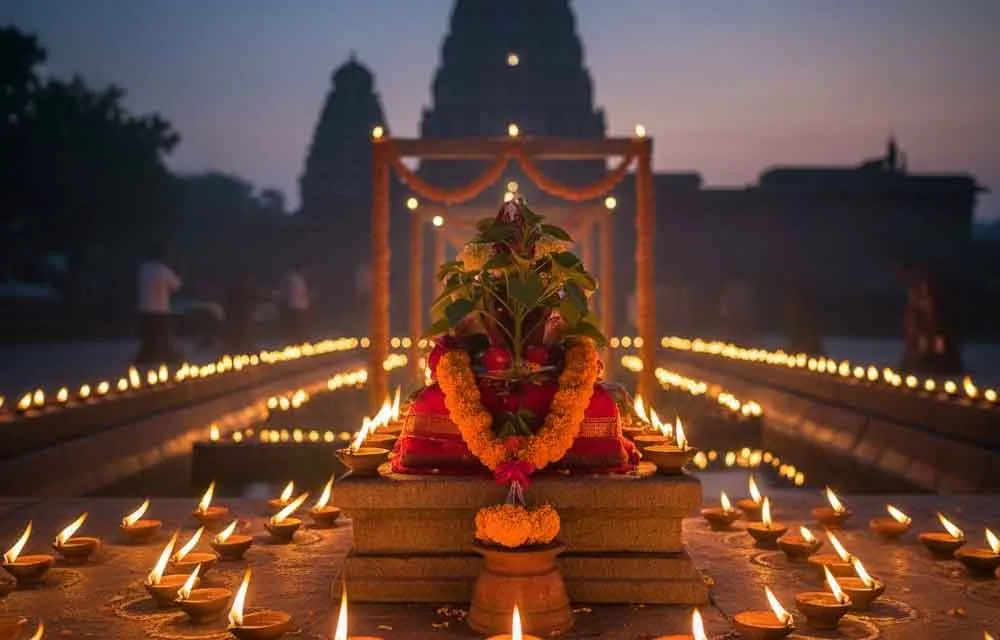
Karthika Masam 2026 (10 Nov–8 Dec): the most meritorious month — Karthika Somavaram, Deepa Daanam, Nagula Chavithi, Tulasi Vivah, Karthika Pournami, Deepavali gateway, mantras & worldwide guide.
Karthika Masam is described in the Skanda, Padma and Shiva Puranas as the most meritorious month of the year — when even a single lamp lit in devotion removes lifetimes of sin. In 2026 the Telugu (Amanta) Karthika Masam runs 10 November to 8 December. It is the great month of Deepam and Hari-Hara — Shiva on Mondays, Vishnu through Tulasi and Ekadashi — opening just after Deepavali (~8 November).
Karthika Masam 2026 by country
Local dates differ by country: in the USA, Canada and the UK the month begins on Monday 9 November (five Somavarams), while India, the UAE and Australia begin on Tuesday 10 November (four).
- Karthika Masam 2026 USA — dates, Somavarams and Pournami city by city
- Karthika Masam 2026 UK — dates, Somavarams and Pournami city by city
- Karthika Masam 2026 Canada — dates, Somavarams and Pournami city by city
- Karthika Masam 2026 Australia — dates, Somavarams and Pournami city by city
- Karthika Masam 2026 Dubai & UAE — dates, Somavarams and Pournami city by city
Karthika Masam 2026 Dates — Amanta vs Purnimanta
- Telugu / Kannada / Marathi / Gujarati (Amanta): 10 November – 8 December 2026. Shukla Paksha 10–24 Nov; Krishna Paksha 25 Nov – 8 Dec. Margasira begins 9 December.
- North India (Purnimanta) Kartik: approximately 26 October – 24 November 2026.
- Gateway: Deepavali ~8 November 2026 (Ashwayuja Amavasya — the doorway into the month).
- Samvatsara: Sri Parabhava nama samvatsaram, Shaka 1948.
Why Karthika Is the Most Meritorious Month
Karthika takes its name from the Krittika nakshatra that graces its Purnima. It is one of the four holy months and uniquely honours both great deities — hence "Hari-Hara." The Puranas declare that Deepa Daanam (offering lamps), Karthika Snanam (the pre-dawn holy bath) and Tulasi worship in this month carry immense merit; it is supremely auspicious for sadhana, charity and devotion.
Karthika Somavaram, Deepa Daanam & Snanam
- Karthika Somavaram (Mondays — Shiva, Rudrabhishekam, Bilva, fasting): 16, 23, 30 November & 7 December 2026
- Karthika Snanam: a pre-dawn holy bath, kept daily through the month
- Deepa Daanam: lighting lamps daily — on Tulasi, in temples and by rivers — the signature act of Karthika
Karthika Masam 2026 Festival Calendar (IST)
- ~10 Nov – Bali Padyami / Govardhan; Gujarati New Year (month opens)
- ~11 Nov – Bhai Dooj / Bhagini Hasta Bhojanam (Yama Dwitiya)
- ~13 Nov – Nagula Chavithi (Telugu Naga worship)
- ~15 Nov – Subrahmanya / Skanda Shashti
- ~17 Nov – Gopashtami
- ~20 Nov – Karthika Ekadashi (Prabodhini / Utthana) — Vishnu wakes; Chaturmasam ends; Tulasi Vivah begins
- ~21 Nov – Ksheerabdi Dwadasi / Tulasi Vivah (Chilkula Dwadasi)
- ~23 Nov – Vaikuntha Chaturdashi / Bhishma Panchaka ends
- ~24 Nov – Karthika Pournami — Deepotsavam, Jwala Toranam, Dev Deepawali (also Guru Nanak Jayanti)
- ~1 Dec – Kalabhairava Jayanti
- ~3 Dec – Tamil Karthigai Deepam (Thiruvannamalai Mahadeepam)
- ~5 Dec – Utpanna Ekadashi
- 8 Dec – Karthika Amavasya — Deepa Daanam, pitru tarpanam (closes Karthika)
Tithi-based dates marked "~" can shift ±1 day against your local panchang; the Monday vrats fall on the same days everywhere.
Karthika Masam Mantras
Shiva (Mondays): ॐ नमः शिवाय · oṃ namaḥ śivāya · ఓం నమః శివాయ.
Vishnu (Ekadashi/Tulasi): ॐ नमो नारायणाय · oṃ namo nārāyaṇāya · ఓం నమో నారాయణాయ.
Lakshmi (Deepavali): ॐ श्रीं महालक्ष्म्यै नमः · oṃ śrīṃ mahālakṣmyai namaḥ · ఓం శ్రీం మహాలక్ష్మ్యై నమః.
How the Diaspora Observes Karthika Masam
- USA: Shiva & Venkateswara temples and ISKCON for Somavaram, Tulasi Vivah & Deepotsavam; Telugu orgs (TANA, ATA, NATS) for Nagula Chavithi & Vana Bhojanalu.
- UK: London, Birmingham, Leicester temples for Deepavali, Karthika Somavaram & Karthika Pournami deepotsavam.
- Canada: Toronto, Brampton, Vancouver temples & Telugu groups; smokeless/LED diyas for daily Deepa Daanam indoors.
- Australia: Sydney & Melbourne temples for Tulasi Vivah & Karthika Pournami (Southern-Hemisphere late spring).
- UAE: Dubai & Abu Dhabi temples for Somavaram & Deepotsavam; home Tulasi puja and lamps.
- Germany: ISKCON & mandirs in Berlin, Frankfurt, Cologne for Deepavali, Tulasi Vivah & Karthika Pournami.
Dates Abroad — Why They May Differ
A tithi is reckoned from local sunrise, so lunar observances (Ekadashi, Dwadasi, Pournami, Amavasya) can fall a day earlier or later outside India. The Monday vrats are the same worldwide. Confirm exact local days with your nearest temple or a regional panchang.
More Karthika Masam 2026 guides
- Karthika Masam 2026 rules: food, do's and don'ts
- Pancharama Kshetras: the five Shiva temples of Andhra Pradesh
- Karthika Masam 2026: Shiva temples in Telangana
- Karthika Masam 2026: Shiva temples in Andhra Pradesh
- Karthika Masam temples in Karnataka & Laksha Deepotsava
- Skanda Sashti 2026 (Sun 15 Nov)
- Vaikuntha Chaturdashi 2026 (Mon 23 Nov)
Karthika Masam 2026 around the world: dates, Somavarams & Shiva temples
- Karthika Masam 2026 in Europe (21 cities)
- Karthika Masam 2026 in Singapore
- Karthika Somavaram 2026 — Australia
- Karthika Somavaram 2026 — UAE
- Karthika Somavaram 2026 — Singapore
- Karthika Somavaram 2026 — Europe
- Shiva temples for Karthika Masam 2026 — UK
- Shiva temples for Karthika Masam 2026 — Canada
- Shiva temples for Karthika Masam 2026 — Australia
- Shiva temples for Karthika Masam 2026 — UAE
- Shiva temples for Karthika Masam 2026 — Singapore
- Shiva temples for Karthika Masam 2026 — Europe
Nagula Chavithi, Ksheerabdi Dwadashi & Karthika Pournami 2026 by country
- Nagula Chavithi 2026 — USA
- Ksheerabdi Dwadashi / Tulasi Vivah 2026 — USA
- Nagula Chavithi 2026 — UK
- Ksheerabdi Dwadashi / Tulasi Vivah 2026 — UK
- Nagula Chavithi 2026 — Canada
- Ksheerabdi Dwadashi / Tulasi Vivah 2026 — Canada
- Nagula Chavithi 2026 — Australia
- Ksheerabdi Dwadashi / Tulasi Vivah 2026 — Australia
- Nagula Chavithi 2026 — UAE
- Ksheerabdi Dwadashi / Tulasi Vivah 2026 — UAE
- Nagula Chavithi 2026 — Singapore
- Ksheerabdi Dwadashi / Tulasi Vivah 2026 — Singapore
- Nagula Chavithi 2026 — Europe
- Ksheerabdi Dwadashi / Tulasi Vivah 2026 — Europe
- Karthika Pournami 2026 — UK
- Karthika Pournami 2026 — UAE
- Karthika Pournami 2026 — Singapore
- Karthika Pournami 2026 — Europe
Also read: Karthika Somavaram 2026 dates in India, Karthika deepam timings city-wise, Karthika 2026 temple news and why the month is called Karthika.
Frequently Asked Questions
When does Karthika Masam 2026 start and end?
In the Telugu/Amanta calendar, Karthika Masam 2026 runs 10 November to 8 December. In the North-Indian Purnimanta system, Kartik is roughly 26 October to 24 November 2026.
Why is Karthika the most meritorious month?
The Skanda, Padma and Shiva Puranas extol Karthika as supremely sacred — even a single lamp lit in Karthika removes lifetimes of sin. Both Shiva (Mondays, Deepam) and Vishnu (Tulasi, Ekadashi) are worshipped.
What are the big Karthika 2026 festivals?
Karthika Somavaram (Mondays), Nagula Chavithi (~13 Nov), Karthika Ekadashi/Tulasi Vivah (~20–21 Nov) and Karthika Pournami / Deepotsavam (~24 Nov); Deepavali (~8 Nov) is the gateway.
Is Karthika auspicious?
Yes — Karthika is supremely auspicious for worship, lamp offerings (Deepa Daanam), holy baths (Karthika Snanam), charity and Vana Bhojanalu, and it is when Chaturmasam ends at Prabodhini Ekadashi.
What is the Karthika 2026 date in the USA / UK?
Fixed-date items match worldwide; lunar (tithi-based) observances may shift ±1 day abroad because the tithi follows local sunrise — confirm with your local panchang.
Key Takeaways
- Telugu Karthika Masam 2026: 10 November – 8 December (Amanta).
- The most meritorious month — Deepa Daanam, Karthika Snanam, Hari-Hara worship.
- Highlights: Karthika Somavaram, Nagula Chavithi, Tulasi Vivah, Karthika Pournami.
- Deepavali (~8 Nov) is the gateway; Chaturmasam ends at Prabodhini Ekadashi.
Coming next on HinduTone: guides to Karthika Somavaram, Karthika Pournami, Nagula Chavithi, Tulasi Vivah and Deepavali. See also Shravana Masam 2026 and Ashada Masam 2026.
All Karthika Masam 2026 guides
Dates, calendar & timings (7)
- Karthika Amavasya 2026: Significance, Deepa Daanam & Pitru Remembrance
- Karthika Masam 2026 Calendar Day by Day: Tithi, Somavarams and Festivals from 10 November to 8 December
- The Sacred Legend of Karthika Amavasya
- Karthika Masam, a sacred month in the Hindu calendar
- Kartika Amavasya: Significance, Importance & Must-Perform Rituals for Spiritual Blessings
- Karthika Amavasya: Complete Guide to Rituals, Significance, and Puja Vidhi
- Karthika Masam First Day: Complete Guide to Sacred Rituals and Traditions
Somavaram, vratham & fasting (17)
- Karthika Somavaram 2026: Dates, Rudrabhishekam, Deepam & Mantra
- Karthika Somavaram 2026 Dates in India: The Four Mondays (16, 23, 30 November and 7 December), Tithi, Nakshatra and Sunrise-Sunset by City
- Karthika Masam 2026: Dates, Rituals, Vrat, Festivals & North vs South India Guide
- Karthika Ekadashi 2026: Prabodhini, Vishnu Wakes, Vrat & Mantra
- Karthika Masa Shivaratri 2026: Monday 7 December, the Last Karthika Somavaram, Puja Vidhi and Fasting
- Panchangam 9 November 2026 (Monday): Kartika Amavasya, Tithi, Nakshatra, Pitru Remembrance and the Eve of Karthika Masam
- Satyanarayana Vratham in Karthika Masam 2026: Best Dates in India, Home Vidhi, Materials and Prasadam
- Karthika Somavaram Vratham Katha
- Astrological Benefits of Observing Karthika Vratham
- Karthika Somavaram Upavasam Rules 2026: Full Fast, Ekabhuktam, Naktam and Phalahara Explained, with Fast-Breaking Times
- How to Perform Karthika Masam Vratham at Home: A Complete Step-by-Step Guide for Users in USA, UK, Australia, and Canada
- Karthika Somavaram: Power of Monday Fasting for Lord Shiva
- Karthik Masam Monday Rituals, Poojas & Mantras: Complete Guide for Australian Hindus
- Karthika Masam Monday Rituals: Complete State-wise Guide for India
- Health Benefits of Fasting and Early Morning Bathing in Karthika Masam
- + 2 more
Deepam & Karthika Pournami (41)
- Karthigai Deepam 2026: Date, Maha Deepam, Lingodbhava & Mantra
- Karthika Pournami 2026: Deepotsavam, Jwala Toranam & Story
- Karthika Pournami 2026 Wishes and Messages: 45 Original Greetings for Family, WhatsApp, Instagram and Deepam Night
- Karthika Masam 2026 Deepam Timings City-Wise: Sunset Lamp and Sunrise Snanam Times for 13 Indian Cities
- Karthika Pournami 2026 Purnima Time in India: Tithi Start and End, City-Wise Sunset and the Evening Lamp Window
- Karthika Pournami 2026 Celebrations and Events in Tirumala-Tirupati
- Karthika Snanam & Deepa Daanam 2026: Holy Bath & Lamp Offering
- Karthigai Month 2026: Tamil Festival Dates, Karthigai Deepam, Somavarams and Ayyappa Mala
- Thrikarthika 2026 in Kerala: Date, Karthika Vilakku Lamps, Devi Worship and Diaspora Guide
- Karthika Purnima 2026: Significance, Rituals, and the Triple Festival Across Hindu, Sikh, and Jain Traditions
- Panchangam 24 November 2026 (Tuesday): Karthika Pournami, Karthigai Deepam, Dev Diwali, Bhishma Panchak Ends and Guru Nanak Jayanti
- How to perform Karthika pournami Pooja
- Akasha Deepam in Karthika Masam: Meaning, How to Hoist the Sky Lamp, 2026 Dates and Safety
- Hindu Mantras to Chant Before Karthika Deepam
- Full Moon (Pournami) Significance in Karthika Masam
- + 26 more
Puja, mantras & stories (18)
- Tulasi Pooja in Karthika Masam 2026: Daily Vidhi, Sloka, Ksheerabdi Dwadasi (21 November) and Plant Care
- Damodar Month 2026: Kartik Dates, the Damodara Lila, Damodarashtakam and Lamp Offering at Home
- Karthika Masam Mantras: Shiva, Vishnu & Damodara Chants
- Karthika Puranam: The Complete Sacred Narrative
- Karthika Mahatmya – Sacred Stories from Skanda Purana
- The Story of Lord Shiva and Vishnu During Karthika Masam
- Women and Karthika Masam: Rituals, Devotion, and Empowerment
- The Story of Lord Shiva and Devi Parvati in Karthika Masam
- Karthika Masam and the Science of Positivity: How Rituals Uplift Mental Health
- Symbolism of Water, Fire, and Light in Karthika Masam Rituals
- Karthika Masam and the Power of Bhajans: Singing for the Soul
- Daily Rituals to Follow in Karthika Masam for Spiritual Growth
- Kartika Damodara Month – Why Lord Krishna is Worshipped as Damodara
- Rituals and Traditions of Karthika Masam: A Month of Divine Energy
- Stories of Lord Shiva and Goddess Parvati Told During Karthika Masam
- + 3 more
Temples & pilgrimages (37)
- Karthika Masam 2026: Shiva Temples in Telangana to Visit, from Vemulawada to Ramappa
- Karthika Masam 2026: Shiva Temples in Andhra Pradesh, from Srisailam to the Pancharamas
- Karthika Masam 2026 in Hyderabad: Deepam Timings, Temples to Visit and Koti Deepotsavam Update
- Karthika Masam 2026 Temple News: Sabarimala Opens 16 November, Pushkar Fair Dates Out, Srisailam and Koti Deepotsavam Still Awaited
- Pushkar Kartik Purnima Snan 2026: Date, Holy Dip in Pushkar Lake, Brahma Temple and Ghat Etiquette
- Shiva Temples in the UK for Karthika Masam 2026: Where to Worship on Somavarams and Karthika Pournami
- Kartiki Ekadashi 2026 at Pandharpur: Date, Kartiki Wari, Vitthal Mahapuja and How It Differs from Ashadhi
- Shiva Temples in the UAE for Karthika Masam 2026: Dubai and Abu Dhabi Guide
- Sonepur Mela 2026: Kartik Purnima Start, Harihar Kshetra Legend and Visiting Guide
- Shiva Temples in Canada for Karthika Masam 2026: Where to Worship on the Five Somavarams
- Shiva Temples in Europe for Karthika Masam 2026: Where to Worship, Dates and Etiquette
- Shiva Temples in Australia for Karthika Masam 2026: Sydney and Melbourne Temples for Somavarams and Pournami
- Shiva Temples in Singapore for Karthika Masam 2026: Where to Worship and Key Dates
- Karthika Masam First Day 2026: Must-Visit Hindu Temples in Australia
- Annavaram Satyanarayana Swamy Temple in Karthika Masam 2026: Vratham Days, Legend and Travel Guide
- + 22 more
Karthika Masam abroad (75)
- Karthika Masam 2026 in Europe, City by City: Dates, Somavarams and Karthika Pournami Times for 21 Cities
- Karthika Somavaram 2026 in the UAE: Four Monday Dates, Vratam Vidhi and Sunset Times for Dubai, Abu Dhabi and More
- Karthika Somavaram 2026 in Europe: Monday Dates, Vratam Vidhi and Sunset Times for 21 Cities
- Karthika Pournami 2026 in the UK: Date, Purnima Time by City, Sunset and Deepam Guide
- Karthika Pournami 2026 in the UAE (Dubai and Abu Dhabi): Date, Purnima Time, Sunset and Deepam Guide
- Karthika Somavaram 2026 in Australia: Four Monday Dates, Vratam Vidhi and Sunset Times by City
- Karthika Somavaram 2026 in Singapore: Four Monday Dates, Vratam Vidhi, Fasting and Sunset Time
- Karthika Pournami 2026 in Europe: Date, Purnima Time and Sunset for 21 Cities, and Deepam Guide
- Karthika Masam 2026: Ultimate Guide for NRIs in USA, Canada, UK, Australia and Germany
- Karthika Pournami 2026 in Singapore: Date, Purnima Time, Sunset and Deepam Guide
- Karthika Masam 2026 in Singapore: Dates, Somavarams, Karthigai Deepam and Karthika Pournami Times
- Kartika Masam 2026 Monday Rituals for Hindus in Canada
- Kartika Masam 2026 Monday Rituals for Hindus in the USA
- Kartika Masam 2026 Monday Rituals in the UK: Karthika Somavaram Poojas, Temple Guide & Shiva Mantras
- Karthika Masam 2026 Celebrations and Events in Australia
- + 60 more
Food, rules & vana bhojanalu (7)
- Karthika Masam Rules 2026: Food to Avoid, Dos and Don'ts, Snanam, Deepam and Fasting
- Karthika Vana Bhojanalu 2026: Forest Feast Under the Amla Tree
- Kartika Month in Odisha 2026: Habisha Brata, Kartika Snana, Akasha Deepa, Panchuka and Boita Bandana
- Celebrating Kartika Vana Bhojanalu: A Sacred Journey of Devotion Among Hindus in the USA
- Kartika Vana Bhojanam – Ancient Practice and Modern Celebration
- Karthika Masam and Vanabhojanalu – The Joy of Devotion in Nature
- Karthika Masam Food Rules: What to Eat and Avoid - Complete Devotional Guide
More Karthika guides (19)
- Karthika to Margasira 2026: What Comes After Karthika Masam
- Kartika Ashtahnika 2026: Dates, Nandishwar Dweep Worship and How Jains Observe the Eight-Day Parva
- Karthika Masam Importance & Significance: Why It’s the Holiest Month
- How Sikhs Are Going to Celebrate Karthika Masam:
- The Hidden Energy of the Moon in Karthika Masam
- Shiva Anthems That Echo Across Oceans: Your Karthika Masam Soundtrack for NRI Souls
- Science Meets Spirituality: Understanding the Cosmic Energy of Karthika Masam
- Why Karthika Masam Is Called Karthika: The Krittika Nakshatra, the Pleiades and the Full Moon
- Karthika Masam Wishes, Quotes, and WhatsApp Status: Embrace the Divine Aura of the Sacred Month
- The Spiritual Significance of Charity During Karthika Masam
- Karthika Masam for Beginners: How to Start Your Spiritual Journey
- Maintaining Spiritual Connection with India During Karthika Masam
- The Power of Silence: Why Karthika Masam Encourages Inner Stillness
- Karthika Masam and Astrology: How the Month Influences Your Moon Sign
- Explaining Karthika Masam to Non-Indian Friends: A Cultural Conversation
- + 4 more
You might also like
Karthika Masam 2026 Deepam Timings City-Wise: Sunset Lamp and Sunrise Snanam Times for 13 Indian Cities
Akasha Deepam in Karthika Masam: Meaning, How to Hoist the Sky Lamp, 2026 Dates and Safety
Karthika Masam 2026 in Hyderabad: Deepam Timings, Temples to Visit and Koti Deepotsavam Update