

Maha Shivaratri 2026: Spiritual Significance, Legends, Rituals & Inner Awakening
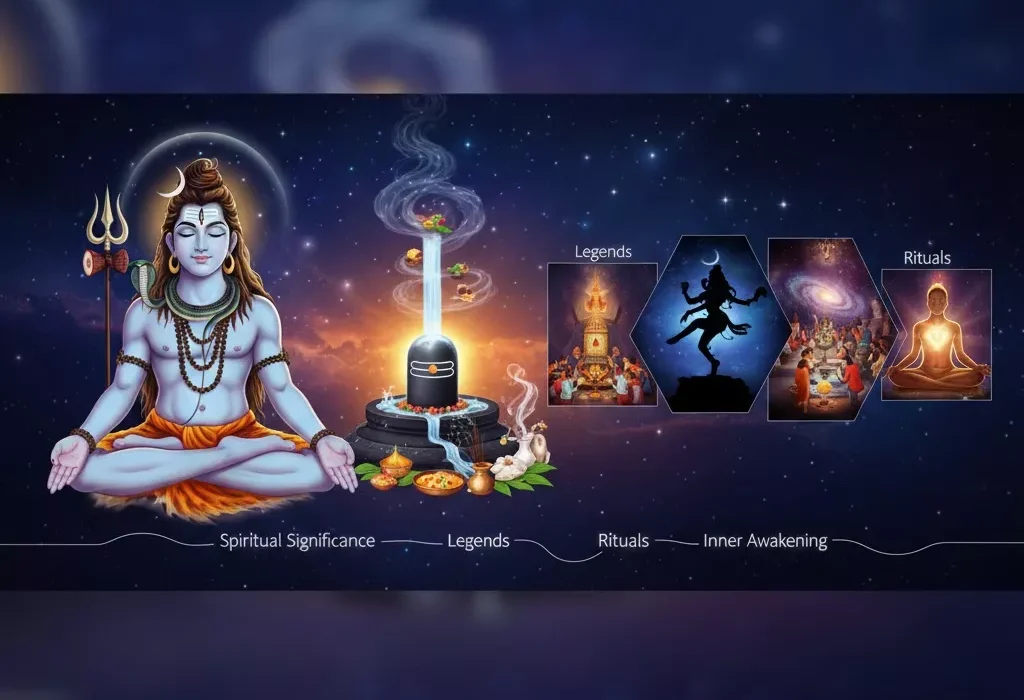
Om Namah Shivaya.
As the gentle twilight descends and the world quiets, a profound stillness envelops the heart of every sincere devotee. This is the sacred night when the veil between the mortal and the divine thins, when the cosmic dancer, Lord Shiva—Mahadeva, the eternal yogi—reveals Himself in His most compassionate and transformative form. Maha Shivaratri 2026 arrives on Sunday, February 15, inviting us once again to surrender at the lotus feet of the Auspicious One. It is not merely a festival; it is a divine appointment with our innermost Self, a night when the grace of Hara flows abundantly, dissolving ignorance, burning karma, and awakening the soul to its eternal nature.
In the embrace of Sanatana Dharma, Maha Shivaratri stands as one of the most potent spiritual observances. It calls upon us to rise above the transient pleasures of the world and seek the unchanging reality of Shiva, the supreme consciousness. Let us journey together through the profound depths of this sacred night, drawing from the eternal wisdom of the Vedas, Upanishads, Shiva Purana, Linga Purana, and Skanda Purana, to understand its significance, relive its timeless legends, and practice its transformative rituals.
Meaning of Maha Shivaratri in Sanatana Dharma
Maha Shivaratri, the “Great Night of Shiva,” occurs on the Chaturdashi tithi (fourteenth day) of the Krishna Paksha in the month of Phalguna. According to the scriptures, this night holds unparalleled spiritual potency because it marks the convergence of cosmic energies that facilitate inner purification and self-realization.
The term “Shivaratri” signifies the night (ratri) that belongs to Shiva—the night when the mind, detached from worldly distractions, can merge into the bliss of pure consciousness. The Shiva Purana describes this as the time when the Lord Himself becomes more accessible to devotees, showering His grace upon those who observe the vrat with sincerity. It is a celebration of Shiva as the destroyer of delusion (maya), the bestower of liberation (moksha), and the eternal source of auspiciousness (shiva).
For the devotee, Maha Shivaratri is an opportunity to experience Shiva not as a distant deity but as the very essence of one’s being—the Adi Guru, the inner light that guides us beyond birth and death.
Why Maha Shivaratri is the Darkest and Most Sacred Night
Paradoxically, the darkest night of the lunar month becomes the brightest in spiritual terms. On Shivaratri, the moon is nearly invisible, symbolizing the dissolution of ego and the absence of mental modifications (chitta vritti). In this profound darkness, the inner lamp of awareness shines most clearly.
The Linga Purana explains that this night is sacred because it commemorates the divine manifestation of the Shiva Lingam as an infinite pillar of light, symbolizing the formless Brahman. The darkness outside mirrors the darkness of ignorance within, and by staying awake (jagaran), the devotee dispels that ignorance with the light of devotion.
This night reminds us that true illumination arises not from external brightness but from inner surrender. When the world sleeps, the true seeker remains vigilant, offering his entire being to Mahadeva.
Scriptural Legends Behind Maha Shivaratri
The eternal Puranas narrate several profound legends that unveil the spiritual essence of Maha Shivaratri.
Samudra Manthan & Neelkantha
During the churning of the cosmic ocean (Samudra Manthan), a deadly poison (halahala) emerged, threatening to destroy all creation. The devas and asuras, helpless, sought refuge in Lord Shiva. With infinite compassion, Shiva consumed the poison, holding it in His throat, turning it blue—earning the name Neelkantha. The Shiva Purana describes how this act of self-sacrifice occurred on Shivaratri, teaching us that true devotion involves embracing even the poisons of life—anger, greed, ego—and transforming them through surrender to the Divine.
Shiva Lingodbhava
One of the most revered legends is the appearance of the Shiva Lingam. When Brahma and Vishnu argued over supremacy, a boundless pillar of fire (jyotirlinga) manifested between them. Neither could find its beginning or end. When they bowed in humility, Shiva revealed Himself from the lingam, declaring that worship of the Lingam is worship of the formless Absolute. The Linga Purana states that this divine event occurred on Shivaratri, establishing the night as the ideal time for Linga puja.
For deeper insight into the symbolism of the Shiva Lingam, read our detailed article: Maha Shivaratri and the Shiva Lingam: The Symbol of Creation and Destruction.
Shiva–Parvati Divine Union
The Shiva Purana also narrates the celestial marriage of Shiva and Parvati on this sacred night. After intense penance, Parvati won Shiva’s heart, symbolizing the union of Shakti (energy) with Shiva (consciousness). This divine wedding reminds devotees that spiritual awakening arises from the harmonious integration of devotion and knowledge.
These legends are not mere stories; they are eternal truths guiding us toward liberation.
Spiritual Symbolism of Shiva Lingam
The Shiva Lingam is the supreme symbol of Lord Shiva—representing the formless (nirguna) and form (saguna) aspects of the Divine. The base (yoni) signifies Shakti, the creative power, while the upright lingam denotes Shiva, pure consciousness. Together, they embody the cosmic union from which creation emerges.
The Skanda Purana teaches that worshipping the Lingam with bilva leaves, milk, and water purifies the mind and awakens kundalini shakti. On Maha Shivaratri, the Lingam becomes a direct conduit for Shiva’s grace.
Importance of Staying Awake (Jagaran) on Shivaratri
Jagaran—the sacred vigil—is the heart of Maha Shivaratri. The Shiva Purana promises that those who remain awake throughout the night, singing Shiva’s glories and meditating on His name, are freed from the cycle of birth and death.
In practical terms, jagaran involves staying alert, avoiding sleep, and engaging in japa, kirtan, and reflection. Many devotees experience profound inner peace and subtle spiritual energies during these hours, as if Mahadeva Himself is present.
Maha Shivaratri Vrat Rules & Benefits
The Maha Shivaratri vrat is a powerful austerity. Devotees observe a full fast (nirjala) or partial fast (phalahar), consuming only fruits, milk, and roots. Strict rules include:
- Abstaining from grains, salt (in some traditions), onion, garlic, and tamasic foods.
- Maintaining celibacy and purity of thought.
- Offering prayers at temples or home.
The benefits are immense: removal of sins, fulfillment of desires, and progress toward moksha. The Skanda Purana assures that sincere observance grants Shiva’s blessings for health, prosperity, and spiritual growth.
Abhishekam Significance (Milk, Water, Bilva Leaves, Vibhuti)
Abhishekam—the ritual bathing of the Shiva Lingam—is central to Shivaratri worship. Each offering carries deep meaning:
- Water: Purifies the soul.
- Milk: Represents sattva and nourishes spiritual life.
- Bilva leaves: Sacred to Shiva; each trifoliate leaf symbolizes the three gunas transcended.
- Vibhuti (sacred ash): Reminds us of the impermanence of the body and the eternity of the Self.
Performing abhishekam with devotion invokes Shiva’s protective and transformative energy.
Maha Shivaratri Puja Step-by-Step (Traditional South Indian Method)
In South Indian tradition, the puja is elaborate and deeply devotional.
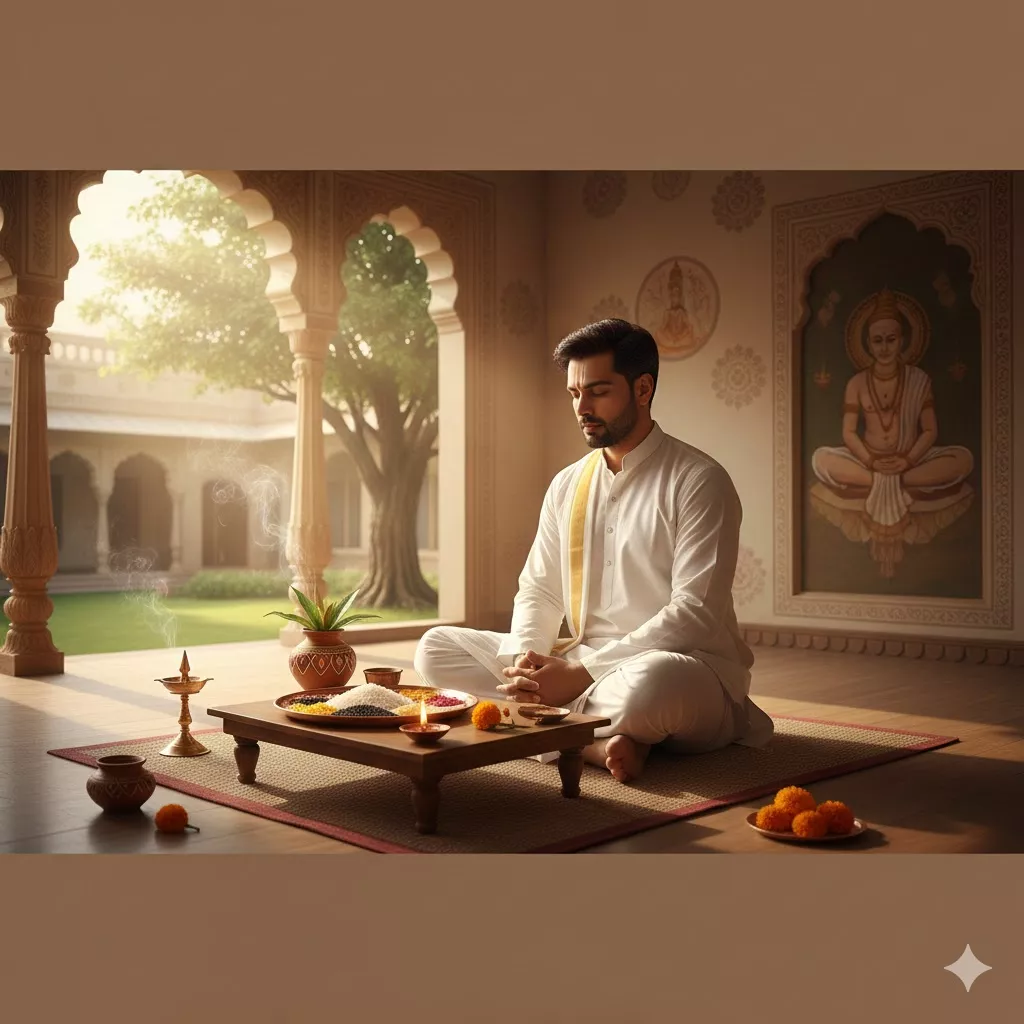
- Preparation: Take a bath, wear clean clothes, and set up the altar with a Shiva Lingam, images of Shiva-Parvati-Ganesha-Nandi.
- Sankalpam: Declare the intention to perform puja for Shiva’s grace.
- Ganapati Puja: Invoke Ganesha to remove obstacles.
- Abhishekam: Bathe the Lingam with water, milk, curd, ghee, honey, sugar (panchamrita), coconut water, and sandalwood paste. Offer bilva leaves with each pour.
- Alankaram: Decorate with flowers, vibhuti, and rudraksha.
- Naivedyam: Offer fruits, sweets, and betel nut.
- Aarti and Mantra Japa: Perform aarti with camphor, chant Rudram and Chamakam if possible.
- Parayana: Recite Shiva stotras.
- Jagaran: Stay awake with kirtan and meditation.
- Parana: Break fast the next day after sunrise.
This method, rooted in Agamic traditions, brings immense merit.
For more guidance on celebrations, see Maha Shivaratri 2026: Complete Guide to Dates, Rituals, Mantras & Spiritual Significance.
Power of Chanting “Om Namah Shivaya”
The panchakshara mantra “Om Namah Shivaya” is the essence of Shiva worship. Revealed in the Yajur Veda (Taittiriya Samhita), it represents the five elements (earth, water, fire, air, ether) surrendering to Shiva.
Chanting during Shivaratri purifies the nadis, awakens the third eye, and leads to samadhi. Each syllable dissolves a layer of ego, merging the jiva with Shiva.
Benefits of Maha Shivaratri for Karma & Moksha
Observing Maha Shivaratri eradicates accumulated karma. The Shiva Purana declares that even a single night of sincere devotion can nullify lifetimes of sin and pave the way for moksha. It aligns the devotee with Shiva’s cosmic rhythm, granting fearlessness, wisdom, and eternal bliss.
Shiva as Adiyogi and Cosmic Consciousness
Shiva is Adiyogi—the first yogi—who transmitted yoga to the Saptarishis. On Shivaratri, we honor Him as the source of all consciousness, the silent witness beyond time and space. Meditating on Shiva as cosmic consciousness awakens our own inner guru.
For more on Shiva’s manifestations, explore The 19 Avatars of Lord Shiva Across Different Yugas.
Modern Relevance of Maha Shivaratri
In today’s chaotic world, Maha Shivaratri offers a sanctuary of stillness. Amid distractions, this night reminds us to turn inward, practice mindfulness, and reconnect with our divine essence. It teaches detachment, compassion, and resilience—qualities essential for modern living.
Conclusion with Devotional Surrender to Mahadeva
O Mahadeva, the destroyer of sorrow, the bestower of grace—on this sacred Maha Shivaratri 2026, we bow to You in utter surrender. May Your trident sever our bonds, Your damaru awaken our souls, and Your crescent moon illuminate our path to liberation.
Devotional Prayer to Lord Shiva ॐ नमः शिवाय He Shambho, Mahadeva, Hara Hara Mahadeva! In Your infinite compassion, accept our humble offering. Dissolve our ignorance, burn our sins, and awaken us to Your eternal light. May we ever dwell in Your divine presence, chanting Your holy name. Om Namah Shivaya, Om Namah Shivaya, Om Namah Shivaya.
Dear devotees, let us observe Maha Shivaratri 2026 with unwavering devotion. Fast, stay awake, chant, and meditate—invite Lord Shiva into your heart. May His blessings shower upon you and your loved ones. Share this sacred night with family, visit a Shiva temple, and experience the bliss of true surrender.
Jai Bholenath! Hara Hara Mahadeva!
Related posts:
 October 2025: A Packed Month of Hindu Festivals in India – Complete Devotional Guide
 Nagula Chavithi and Karthika Deepam: A Divine Connection in the Kartik Month
 Utpanna Ekadashi 2025: Complete Vrat Vidhi, Katha, Mantras & Muhurat Timings
 Hindu Festival Calendar 2026 for American Hindus
 Vaikuntha Ekadashi in Malaysia: Complete Vishnu Temple Guide for 2025–2026
 Vaikuntha Ekadashi 2025 in Brisbane: Complete Vishnu Temple Guide, Puja Timings & Family Celebrations


 ︎
︎

