
Dussehra 2026 in Bhutan, City by City: Dassain Date, Vijay Muhurat and Hindu Temples
Vijayadashami falls on Tuesday 20 October 2026 across Bhutan. Local Vijay Muhurat, Aparahna and Dashami times for Thimphu, Phuentsholing, Gelephu and Samtse, the mandirs of Kuenselphodrang, Gelephu and Samtse, and how Bhutan's Hindus celebrate Dassain.
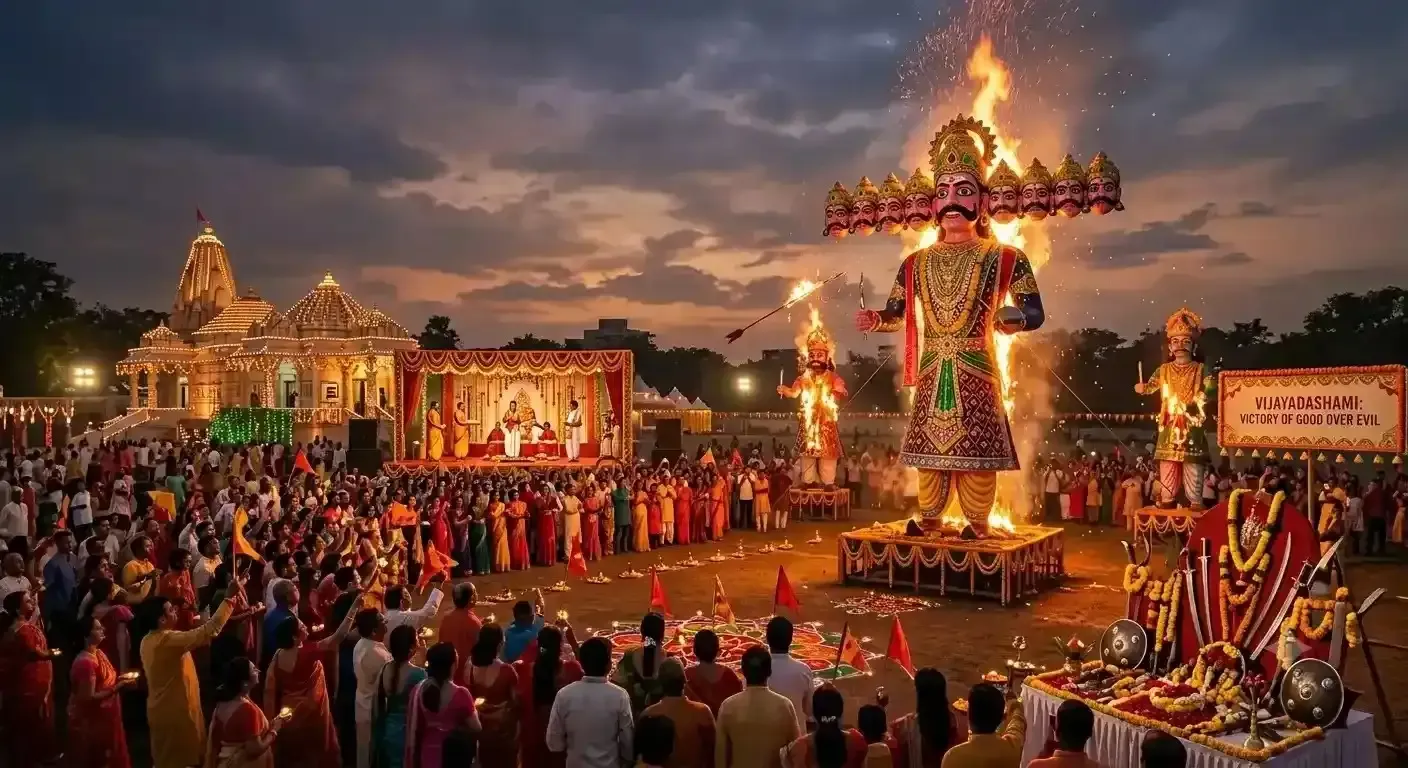
Vijayadashami falls on Tuesday 20 October 2026 across Bhutan. Local Vijay Muhurat, Aparahna and Dashami times for Thimphu, Phuentsholing, Gelephu and Samtse, the mandirs of Kuenselphodrang, Gelephu and Samtse, and how Bhutan's Hindus celebrate Dassain.
Quick answer: Dussehra (Vijayadashami) 2026 in Bhutan is on Tuesday 20 October 2026 in every town. The Vijay Muhurat, calculated by the Drik Panchang method, is 1:40 PM – 2:25 PM in Thimphu, 1:41 PM – 2:27 PM in Phuentsholing, 1:37 PM – 2:22 PM in Gelephu and 1:42 PM – 2:28 PM in Samtse (Bhutan Time, UTC+6). Navratri runs from Sunday 11 to Monday 19 October 2026.
Editor's note (5 October 2026): The local times on this page were calculated for each town from the Drik Panchang tithi (Dashami from 12:50 PM IST on 20 October to 2:11 PM IST on 21 October 2026), expressed in Bhutan Time, which is UTC+6 all year with no daylight saving. The Vijay Muhurat is the 11th of the 15 daytime muhurtas, calculated by the Drik Panchang method. We do not list 2026 event schedules or tika times, because mandirs and the Hindu Dharma Samudaya of Bhutan announce their own programmes; please check with them directly.
Hinduism is Bhutan's second religion after Vajrayana Buddhism. Most Bhutanese Hindus are Lhotshampa, Nepali-speaking Bhutanese whose families have lived for generations in the southern foothill districts such as Samtse, Chukha, Sarpang, Tsirang, Dagana and Samdrup Jongkhar. For them the autumn festival is Dassain (Dashain): nine nights of Durga worship, followed by the day of Vijaya Dashami when elders place red tika and green jamara shoots on the foreheads of younger relatives. Thimphu also has a sizeable Hindu population, alongside Indian professionals, teachers, engineers and traders who bring their own Navratri, Durga Puja and Dussehra customs. Dassain has been a national public holiday since 2015, and the King has in recent years granted Dassain tika to representatives of the Hindu community, one of the clearest signs of how the festival belongs to the whole nation.
Dussehra 2026 in Bhutan: dates and Vijay Muhurat by town
All of Bhutan uses a single time zone, Bhutan Time (UTC+0600), half an hour ahead of India. The Dashami tithi therefore begins and ends at the same moment everywhere, and only the sun-based windows differ slightly from town to town. Gelephu, furthest east of the four, has the earliest Vijay Muhurat; Samtse, in the west, has the latest, by about five minutes.
| Region (Dzongkhag) | Town | Dussehra date | Vijay Muhurat (Drik Panchang method) | Dashami begins → ends |
|---|---|---|---|---|
| Thimphu | Thimphu | Tue 20 Oct | 1:40 PM – 2:25 PM | Tue 20 Oct, 1:20 PM → Wed 21 Oct, 2:41 PM |
| Chukha | Phuentsholing | Tue 20 Oct | 1:41 PM – 2:27 PM | Tue 20 Oct, 1:20 PM → Wed 21 Oct, 2:41 PM |
| Sarpang | Gelephu | Tue 20 Oct | 1:37 PM – 2:22 PM | Tue 20 Oct, 1:20 PM → Wed 21 Oct, 2:41 PM |
| Samtse | Samtse | Tue 20 Oct | 1:42 PM – 2:28 PM | Tue 20 Oct, 1:20 PM → Wed 21 Oct, 2:41 PM |
The Aparahna (afternoon period) is the traditional window for Aparajita and Shami puja, and sunset marks the time for the evening aarti:
| Town | Aparahna, 20 Oct | Sunset, 20 Oct |
|---|---|---|
| Thimphu | 12:54 PM – 3:11 PM | 5:28 PM |
| Phuentsholing | 12:55 PM – 3:12 PM | 5:29 PM |
| Gelephu | 12:51 PM – 3:08 PM | 5:25 PM |
| Samtse | 12:56 PM – 3:13 PM | 5:31 PM |
Key Navratri and Dussehra dates 2026
| Observance | Date (2026) |
|---|---|
| Navratri / Ghatasthapana begins | Sunday 11 October |
| Durga Ashtami and Maha Navami | Monday 19 October |
| Dussehra / Vijayadashami in Bhutan (Drik Panchang method) | Tuesday 20 October |
| Dashami tithi, Bhutan Time | Tue 20 Oct, 1:20 PM → Wed 21 Oct, 2:41 PM |
| Bijoya Dashami / Sindoor Khela (India, Bengal tradition) | Wednesday 21 October |
Ashtami and Navami share Monday 19 October in India's calendar this year, so families who do Kanya pujan or Navami puja on either day will hold it then. In every Bhutanese town the Dashami tithi begins at 1:20 PM and covers most of the Aparahna on 20 October, by well over an hour and a half, so by the Drik Panchang rule the date is clear. Nepali-tradition calendars, however, often fix Vijaya Dashami tika by the tithi at sunrise, and Bhutan's Dassain holiday is listed for Wednesday 21 October, so the family tika day in many Lhotshampa homes may be the 21st. Follow your mandir, your family priest or the Hindu Dharma Samudaya of Bhutan.
Hindu temples in Bhutan for Navratri & Dussehra
These mandirs and organisations have been confirmed through reliable sources. We list name and area only; check their own announcements or social pages for opening hours and festival plans. Temples and community groups usually announce Navratri garba, Durga Puja, Ramlila and Ravan Dahan programmes a few weeks ahead — check their websites/social pages.
Thimphu
Thimphu's Vijay Muhurat is 1:40 PM – 2:25 PM, with the Aparahna from 12:54 PM – 3:11 PM and sunset at 5:28 PM. The capital's Hindu community includes Lhotshampa civil servants, business families and students as well as Indian expatriates, and for many years it had no large mandir of its own. That changed with the temple at Kuenselphodrang, on the road up to the Buddha Dordenma statue.
- Devi Panchayan Mandir — Kuenselphodrang, Thimphu. Built on government land as a gift from His Majesty The King to the people of Bhutan, it has hosted Durga Puja and the Dassain tika ceremony, and is the focal point of Navratri in the capital.
- Hindu Dharma Samudaya of Bhutan (HDSB) — Thimphu. The national Hindu religious organisation, founded in 2009 and registered with the Commission for Religious Organisations. It organises Dassain prayers and pujas, including nine-day recitations for the wellbeing of the King and the country.
During Navratri in Thimphu, expect daily Durga puja, Chandi Path and bhajans at the mandir, with families visiting after work. On Vijaya Dashami and the following days, homes across the capital fill with relatives arriving for tika and blessings from elders.
Chukha: Phuentsholing
Phuentsholing's Vijay Muhurat is 1:41 PM – 2:27 PM (Aparahna 12:55 PM – 3:12 PM, sunset 5:29 PM). Bhutan's main commercial gateway sits right on the border with Jaigaon in West Bengal, and its population mixes Lhotshampa families, Bhutanese from across the country and Indian traders and workers. Reliable sources confirm that Hindu temples serve the community in Phuentsholing and the wider Chukha district, but we could not confirm a specific temple name through an official site or reliable listing, so we do not name one here. The town's best-known religious landmark, Zangtho Pelri Lhakhang near the Bhutan Gate, is a Buddhist temple.
In Phuentsholing, Navratri is shaped by both sides of the border. Families observe Dassain at home with Ghatasthapana and jamara, while the Bengali and wider Indian traditions of nearby Jaigaon and the Dooars mean many residents also know Durga Puja pandals and Bijoya greetings. Ask at your neighbourhood mandir or community group for local puja arrangements.
Sarpang: Gelephu
Gelephu's Vijay Muhurat is 1:37 PM – 2:22 PM (Aparahna 12:51 PM – 3:08 PM, sunset 5:25 PM). Gelephu is the largest town in southern-central Bhutan and the site of the planned Gelephu Mindfulness City, and Sarpang has one of the country's largest Lhotshampa Hindu populations.
- Shivalaya Yagyaswar Mahadev Mandir — Gelephu, Sarpang. Built in 2018 as a gift from His Majesty The King and modelled on the Shivalaya in Samtse, it is the main place of worship and gathering for Hindus in Sarpang. Recent royal works are adorning it with gold, to make it a golden mandir.
At Dassain the Gelephu mandir is a natural focus for Durga puja and for families from the surrounding villages who come into town, while in homes across Sarpang the jamara sown on Ghatasthapana is tended for nine days before being worn with tika.
Samtse
Samtse's Vijay Muhurat is 1:42 PM – 2:28 PM (Aparahna 12:56 PM – 3:13 PM, sunset 5:31 PM). Samtse, in the far south-west, is one of Bhutan's most strongly Hindu districts and home to two of its most important Shiva shrines.
- Shivalaya Mandir — Samtse town. Reconstructed at the command of His Majesty The King as a gift to the people of Samtse to celebrate the Royal Wedding of 2011, and completed in 2015, it is a centre for festival rituals, especially during Dassain.
- Mahakal Dham — Bukay, Samtse. A Shiva shrine in the hills, considered among the oldest Hindu sacred sites in Bhutan and visited by both Hindu and Buddhist devotees.
In Samtse, Navratri brings Durga puja and bhajans at the Shivalaya, and on Vijaya Dashami the town quietens as families gather at home. Many households also receive relatives from across the southern districts for tika in the days that follow.
How Bhutan celebrates Navratri and Dussehra
For most Bhutanese Hindus, Navratri and Dussehra are one festival: Dassain. On Ghatasthapana (Sunday 11 October), families set up a kalash and sow barley or maize seeds in sand and soil in a dark corner of the puja room; these grow into the pale golden shoots called jamara. Through the nine nights, families and mandirs worship the nine forms of Durga, recite the Durga Saptashati (Chandi Path) and sing bhajans. On Phulpati, the seventh day, a bundle of sacred leaves and flowers is brought into the home, and Ashtami and Navami are days of Durga puja and, in many homes, Kanya pujan. Some families still offer animal sacrifice on these days, while many others now offer fruits and vegetables instead.
Vijaya Dashami is the heart of the festival. Elders mix rice, yoghurt and red vermilion into tika and place it on the foreheads of younger relatives, tucking jamara behind the ear and giving blessings for long life, learning and prosperity. Relatives travel long distances to receive tika from senior family members, and the visiting can continue for days, with sel roti, meat dishes and sweets shared in every house. Kite flying, new clothes and bamboo swings (ping) are fondly remembered parts of Dassain. Indian families in Bhutan add their own regional customs: Bengali families may gather for a Durga Puja and Bijoya greetings, Gujarati families may hold a small garba night, and South Indian families set up Golu or do Ayudha Puja and Saraswati Puja. Large public Ramlila and Ravan Dahan on the North Indian model are not a common Bhutanese tradition.
Dussehra puja at home
If you cannot reach a mandir on Tuesday afternoon, a short puja at home is entirely traditional. Ideally do it during your town's Vijay Muhurat, or at least within the Aparahna, after the Dashami begins at 1:20 PM:
- Aparajita puja: draw an eight-petalled lotus with kumkum or rice flour, place a lamp, and worship Devi Aparajita, the goddess of victory, with flowers, akshat and a simple prayer for success over obstacles.
- Shami puja: worship the Shami tree or its leaves, or a substitute such as apta (bauhinia) leaves, and share them with family as "gold", a symbol of prosperity.
- Ayudha Puja / Shastra puja: clean and decorate tools, books, laptops, vehicles and farm implements, apply tika and offer flowers, thanking them for their service.
- Vidyarambham: Vijayadashami is a traditional day for small children to begin learning, writing "Om" or the first letters of the alphabet in rice.
- Tika and jamara: if your family follows the Nepali tradition, prepare the rice-yoghurt-vermilion tika and the jamara for the elders to bless the family on the tika day your mandir announces.
A simple order: bathe, light a lamp, pray to Ganesha, do the Aparajita and Shami puja, then Ayudha puja, offer naivedya (sweets, fruit), do aarti and share prasad. For full step-by-step vidhi and the stories behind the festival, see our Dussehra / Vijayadashami 2026 pillar guide, and for Nepali-tradition Dassain rituals day by day, our Dashain 2026 guide.
Practical tips for Dussehra in Bhutan
- Working day: Tuesday 20 October is a normal working and school day unless the official holiday list says otherwise. The Vijay Muhurat falls in early afternoon, so a lunch-time or short afternoon break is often enough for the puja.
- Travel: many families travel between Thimphu and the southern towns for Dassain. Mountain roads are slow and buses fill up, so book early and allow extra time. Crossing via Jaigaon or other border points requires the correct permits and documents.
- Fire and fireworks: rules on fires, effigies and fireworks are set by the local authorities and the dzongkhag administration. Do not light fires or set off fireworks without permission.
- Visiting mandirs: dress modestly, remove shoes, and follow the directions of mandir volunteers, especially on busy tika days. Parking near temples is limited, so car-share where you can.
- Weather: evenings in Thimphu are cold by late October, while the southern towns stay mild; sunset is between 5:25 PM and 5:31 PM depending on the town.
- Muhurat: use your own town's times from the table above; never convert India's times into Bhutan Time.
Frequently asked questions
When is Dussehra 2026 in Bhutan?
Tuesday 20 October 2026 in every Bhutanese town. The Dashami tithi begins at 1:20 PM Bhutan Time on 20 October and ends at 2:41 PM on Wednesday 21 October, so it covers the afternoon of the 20th. Dassain tika traditions that follow the Nepali calendar, and Bhutan's Dassain public holiday, may fall on Wednesday 21 October, so follow your mandir or the Hindu Dharma Samudaya of Bhutan.
What is the Vijay Muhurat in Thimphu?
1:40 PM – 2:25 PM on Tuesday 20 October 2026, calculated by the Drik Panchang method for Thimphu. Phuentsholing is 1:41 PM – 2:27 PM, Gelephu 1:37 PM – 2:22 PM and Samtse 1:42 PM – 2:28 PM, all in Bhutan Time (UTC+6).
Can I use India's Dussehra times in Bhutan?
No. Bhutan Time is half an hour ahead of India, and the Vijay Muhurat depends on local sunrise and sunset, so it has to be calculated for your own town. Use the Bhutanese times on this page or your mandir's calendar, not India's times shifted by the time difference.
Is Dassain a public holiday in Bhutan?
Yes. Dassain has been a national public holiday in Bhutan since 2015. Third-party holiday calendars list it on Wednesday 21 October 2026; check the official government holiday list for the confirmed date. Tuesday 20 October is otherwise a normal working and school day.
When is Bijoya Dashami for Bengali families in Bhutan?
In India, Bengal-tradition Bijoya Dashami and Sindoor Khela fall on Wednesday 21 October 2026 (Drik Panchang, Kolkata). Any Durga Puja held by Bengali families in Bhutan follows its own committee's schedule, so check their announcements.
Is there Ravan Dahan in Bhutan?
Large effigy burning on the Indian model is not a common Bhutanese tradition; Dassain here centres on Durga puja, tika and jamara. Temples and community groups usually announce Navratri garba, Durga Puja, Ramlila and Ravan Dahan programmes a few weeks ahead, so check their websites and social pages. Any fire or fireworks need permission from the local authorities.
Related guides
- Dussehra / Vijayadashami 2026: complete guide
- Dashain 2026 in Nepal: Vijaya Dashami, tika and jamara
- Dussehra 2026 in Sikkim: Dashain, tika and Durga Puja
- Durga Puja and Bijoya Dashami 2026 in West Bengal
- Dussehra 2026 in Assam
- Dussehra 2026 in Bangladesh, city by city
- Dussehra 2026 in Sri Lanka, city by city
- Navratri 2026: complete guide for NRI families
- October 2026 Hindu festival calendar
You might also like
Dussehra 2026 in Victoria, BC: Date, Vijay Muhurat, Temples and Navratri Celebrations
Dussehra 2026 in Surrey: Date, Vijay Muhurat, Temples and Navratri Celebrations
Dussehra 2026 in Vancouver: Date, Vijay Muhurat, Temples and Navratri Celebrations