
Dussehra 2026 in Indonesia, City by City: Date, Vijay Muhurat and Hindu Temples
Vijayadashami falls on Tuesday 20 October 2026 in Indonesia. Local Vijay Muhurat, Aparahna and Dashami times for Jakarta, Medan, Surabaya, Denpasar and Ubud, why the puja should wait until Dashami begins, Hindu temples by region and how to mark the day at home.
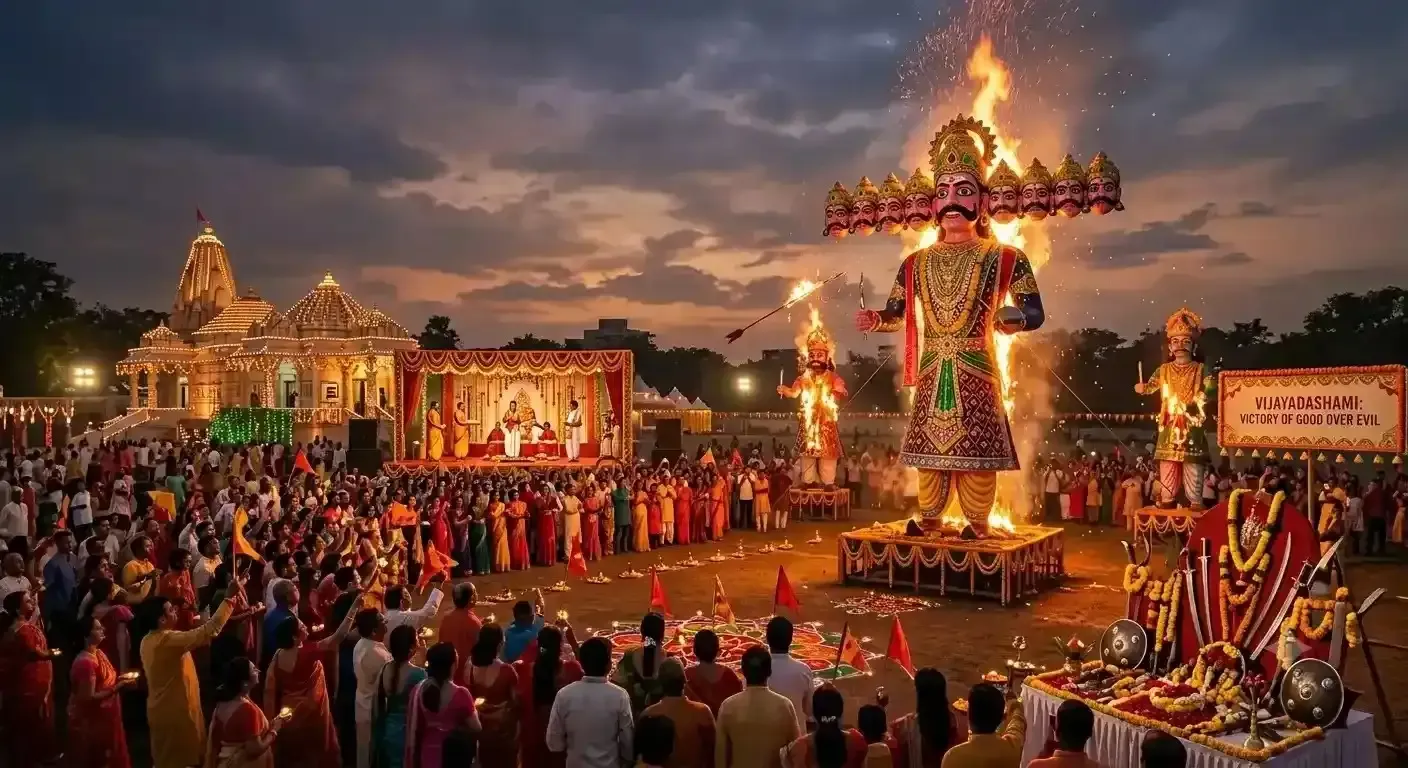
Vijayadashami falls on Tuesday 20 October 2026 in Indonesia. Local Vijay Muhurat, Aparahna and Dashami times for Jakarta, Medan, Surabaya, Denpasar and Ubud, why the puja should wait until Dashami begins, Hindu temples by region and how to mark the day at home.
Quick answer: Dussehra (Vijayadashami) 2026 in Indonesia is on Tuesday 20 October 2026, the same day as India. The Vijay Muhurat, calculated by the Drik Panchang method, is 1:40 PM – 2:29 PM in Jakarta, 2:10 PM – 2:58 PM in Medan, 1:16 PM – 2:05 PM in Surabaya and 2:07 PM – 2:56 PM in Denpasar and Ubud. But Dashami only begins at 2:20 PM in WIB cities and 3:20 PM in Bali, so do the Shami, Aparajita and Vijay puja after that, within the Aparahna. Navratri runs from Sunday 11 to Monday 19 October 2026 in India's calendar.
Editor's note (5 October 2026): The local times on this page were calculated for each city from the Drik Panchang tithi (Dashami from 12:50 PM IST on 20 October to 2:11 PM IST on 21 October 2026, India time), shown in Western Indonesia Time (WIB, UTC+7) or Central Indonesia Time (WITA, UTC+8); Indonesia has no daylight saving. The Vijay Muhurat is the 11th of the 15 daytime muhurtas, calculated by the Drik Panchang method. We do not list 2026 event schedules, because temples and community groups announce their own programmes; please check with them directly.
Indonesia is home to one of the world's largest Hindu populations outside South Asia, but most of it is Balinese Hindu, with its own temple calendar, rituals and festivals. Navratri and Dussehra as they are known in India are kept mainly by Indian Indonesians and Indian expatriates: the Tamil community of Medan, descended from nineteenth-century plantation workers and traders; Sindhi, Punjabi, Gujarati and other North Indian business families in Jakarta and Surabaya; South Indian professionals; and ISKCON devotees, many of them Balinese, in Bali and Java. The Ramayana is a shared bond: it is carved on Balinese temple walls, performed in wayang and Kecak dance, and loved across the archipelago.
Dussehra 2026 in Indonesia: dates and Vijay Muhurat by city
Indonesia spans three time zones. Jakarta, Medan and Surabaya are on WIB (UTC+0700); Bali, including Denpasar and Ubud, is on WITA (UTC+0800). The Dashami tithi starts at the same moment everywhere, which is 2:20 PM in WIB cities and 3:20 PM in Bali, but the sun-based windows differ from city to city.
| Region | City (time zone) | Dussehra date | Vijay Muhurat (Drik Panchang method) | Dashami begins → ends |
|---|---|---|---|---|
| Jakarta | Jakarta (WIB) | Tue 20 Oct | 1:40 PM – 2:29 PM | Tue 20 Oct, 2:20 PM → Wed 21 Oct, 3:41 PM |
| North Sumatra | Medan (WIB) | Tue 20 Oct | 2:10 PM – 2:58 PM | Tue 20 Oct, 2:20 PM → Wed 21 Oct, 3:41 PM |
| East Java | Surabaya (WIB) | Tue 20 Oct* | 1:16 PM – 2:05 PM | Tue 20 Oct, 2:20 PM → Wed 21 Oct, 3:41 PM |
| Bali | Denpasar (WITA) | Tue 20 Oct* | 2:07 PM – 2:56 PM | Tue 20 Oct, 3:20 PM → Wed 21 Oct, 4:41 PM |
| Bali | Ubud (WITA) | Tue 20 Oct* | 2:07 PM – 2:56 PM | Tue 20 Oct, 3:20 PM → Wed 21 Oct, 4:41 PM |
* In Surabaya, Denpasar and Ubud, Dashami overlaps the Aparahna by less than 45 minutes on 20 October. Most calendars give Tuesday 20 October, as shown, but a few may list Wednesday 21 October; follow your temple.
Why the puja should wait until Dashami begins
In every Indonesian city, the Drik-method Vijay Muhurat starts before the Dashami tithi begins. In Jakarta, Surabaya, Denpasar and Ubud it falls mostly or wholly in Navami; in Medan, Dashami begins only minutes into the window. The Shami, Aparajita and Vijay puja belong to Dashami, so do them after Dashami begins at 2:20 PM (WIB) or 3:20 PM (Bali) local time, within the Aparahna (the afternoon period). The table below shows the practical puja window for each city:
| City | Aparahna, 20 Oct | Puja window (Dashami within Aparahna) | Sunset, 20 Oct |
|---|---|---|---|
| Jakarta | 12:51 PM – 3:18 PM | 2:20 PM – 3:18 PM | 5:45 PM |
| Medan | 1:22 PM – 3:46 PM | 2:20 PM – 3:46 PM | 6:10 PM |
| Surabaya | 12:27 PM – 2:55 PM | 2:20 PM – 2:55 PM | 5:22 PM |
| Denpasar | 1:18 PM – 3:45 PM | 3:20 PM – 3:45 PM | 6:13 PM |
| Ubud | 1:17 PM – 3:45 PM | 3:20 PM – 3:45 PM | 6:13 PM |
Key Navratri and Dussehra dates 2026
| Observance | Date (2026) |
|---|---|
| Navratri begins (Ghatasthapana), India | Sunday 11 October |
| Durga Ashtami and Maha Navami, India | Monday 19 October |
| Dussehra / Vijayadashami, India and Indonesia | Tuesday 20 October |
| Dashami tithi, WIB (Jakarta, Medan, Surabaya) | Tue 20 Oct, 2:20 PM → Wed 21 Oct, 3:41 PM |
| Dashami tithi, WITA (Denpasar, Ubud) | Tue 20 Oct, 3:20 PM → Wed 21 Oct, 4:41 PM |
| Bijoya Dashami / Sindoor Khela (India, Bengal tradition) | Wednesday 21 October |
Bengali-tradition Bijoya Dashami and Sindoor Khela fall on Wednesday 21 October 2026 in India (Drik Panchang for Kolkata); any Durga Puja held in Indonesia follows its own committee's calendar.
Hindu temples in Indonesia for Navratri & Dussehra
These temples and organisations have been confirmed to exist in each city or region. We list name and area only; check their own websites or social pages for opening hours and festival plans. Temples and community groups usually announce Navratri garba, Durga Puja, Ramlila and Ravan Dahan programmes a few weeks ahead — check their websites/social pages.
Jakarta
Jakarta's Vijay Muhurat is 1:40 PM – 2:29 PM, but Dashami begins at 2:20 PM, so the best puja window is from 2:20 PM to the end of the Aparahna at 3:18 PM. Sunset is at 5:45 PM. The capital has the country's most varied Indian community, from long-settled Sindhi trading families to Tamil, Telugu, Punjabi and Gujarati professionals.
- Shri Sanathana Dharma Aalayam (Jakarta Murugan Temple) — Kalideres, West Jakarta. Jakarta's first Dravidian-style Indian temple, opened in February 2025, with a large function hall and cultural classrooms.
- Pura Aditya Jaya — Rawamangun, East Jakarta. One of Jakarta's oldest and largest Hindu temples, built in Balinese style and a centre for the city's Balinese and Indonesian Hindu community.
- Gandhi Seva Loka — Jakarta. The oldest Indian association in Indonesia, founded by the Sindhi community in 1947, which runs the Gandhi Memorial Intercontinental School.
During Navratri, Jakarta's Indian families keep the nine-day fast, gather for bhajans and Devi puja at home or in community halls, and Gujarati and North Indian groups often organise garba and dandiya nights. Tamil families honour the Goddess in the South Indian way, with Saraswati Puja and Ayudha Puja near the end of the nine days.
North Sumatra: Medan
Medan's Vijay Muhurat is 2:10 PM – 2:58 PM, and Dashami begins at 2:20 PM, so do the puja from 2:20 PM onwards, within an Aparahna that runs until 3:46 PM. Sunset is at 6:10 PM. Medan has Indonesia's largest and oldest Tamil Hindu community, centred on Kampung Madras, the city's Little India.
- Sri Mariamman Temple — Kampung Madras, Medan. The city's oldest Hindu temple, built in 1884 by early Tamil settlers, with a South Indian gopuram and shrines to Ganesha and Murugan.
- Sree Soepramaniem Nagarattar Temple — Medan Petisah. A Murugan temple built by the Nagarattar Chettiar community and completed in 1892, famous for its century-old wooden chariot.
Medan's Tamil temples keep Navaratri with nightly alankaram of the Goddess, special abhishekam, devotional music and Saraswati Puja, followed by Ayudha Puja, when tools, vehicles and books are blessed. Vijayadashami is also a favoured day for Vidyarambham, when small children write their first letters.
East Java: Surabaya
Surabaya's Vijay Muhurat is 1:16 PM – 2:05 PM, which ends before Dashami begins at 2:20 PM. The puja window is therefore short: from 2:20 PM to the end of the Aparahna at 2:55 PM. Sunset is at 5:22 PM. Because the overlap is under 45 minutes, a few calendars may list Wednesday 21 October; follow your temple.
- Pura Agung Jagat Karana — Krembangan, near Tanjung Perak, Surabaya. The city's main Hindu temple, in Balinese style, which hosts Galungan, Kuningan, Saraswati and other ceremonies.
Surabaya's smaller Indian community mostly marks Navratri with home puja and community gatherings, and families often travel to Jakarta or Bali for larger celebrations.
Bali: Denpasar and Ubud
In Bali the Vijay Muhurat is 2:07 PM – 2:56 PM in both Denpasar and Ubud, but Dashami begins at 3:20 PM WITA. Do the puja from 3:20 PM until the Aparahna ends at 3:45 PM. Sunset is at 6:13 PM. Most calendars give Tuesday 20 October, but a few may list Wednesday 21 October; follow your temple.
- Pura Agung Jagatnatha — central Denpasar, next to Puputan Badung square. Bali's state temple, dedicated to Sang Hyang Widhi, with Ramayana and Mahabharata carvings on its walls.
- ISKCON Sri Sri Jagannatha Gauranga Ashram — Denpasar. A Hare Krishna temple with daily aratis and lectures.
- ISKCON Sri Sri Radha Gopinatha Mandir — Badung regency, near Denpasar.
- Pura Taman Saraswati — central Ubud, off Jalan Raya Ubud. A water temple honouring Saraswati, goddess of knowledge, known for its lotus ponds.
Balinese Hindus have their own calendar, so Navratri and Dussehra are not major island festivals. They are kept by ISKCON communities, Indian residents and visiting Indian families, often with Rama katha, kirtan and home puja. Many visitors also enjoy Ubud's Ramayana-themed dance performances during the season.
How Indonesia celebrates Navratri and Dussehra
For Indian Indonesians, Navratri is mostly a time of temple worship, fasting and family puja rather than large public festivals. Tamil families in Medan and Jakarta follow the South Indian pattern: worship of Durga, Lakshmi and Saraswati over the nine nights, some Golu displays of dolls at home, Saraswati Puja and Ayudha Puja, and Vidyarambham on Vijayadashami. North Indian families keep the vrat, perform Kanya pujan on Ashtami or Navami and recite the Durga Saptashati, while Gujarati families organise garba and dandiya where numbers allow.
Large Ramlila stages and towering Ravan Dahan effigies are rare in Indonesia, but the Ramayana itself is everywhere: in Balinese Kecak and wayang, in temple carvings and in Javanese ballet. Where an Indian group burns a Ravana effigy, it is usually small and supervised. The small Bengali community may come together for Durga Puja with pushpanjali and bhog. Dussehra also opens the season leading to Diwali (Deepavali), one of the biggest Indian festivals in Medan.
Dussehra puja at home
Tuesday 20 October is a working and school day, so many families do a short puja at home. Wait until Dashami has begun, at 2:20 PM in WIB cities and 3:20 PM in Bali, and finish within the Aparahna:
- Aparajita puja: draw an eight-petalled lotus with kumkum or rice flour, place a diya and worship Devi Aparajita, goddess of victory, with flowers, akshat and a prayer for success over obstacles.
- Shami puja: if you can find Shami leaves, or a traditional substitute, offer them to the Devi and share them with family as a sign of prosperity.
- Ayudha Puja / Shastra puja: clean and decorate tools, books, laptops and vehicles, apply kumkum and offer flowers, thanking them for their service.
- Vidyarambham: Vijayadashami is the traditional day for small children to begin learning, writing "Om" or the first letters of the alphabet in rice.
- Rama path: read or listen to the story of Rama's victory, from the Ramcharitmanas or the Valmiki Ramayana.
A simple order: bathe, light a diya, pray to Ganesha, do the Aparajita and Shami puja, then Ayudha puja, offer naivedya (sweets, fruit), do aarti and share prasad. For full step-by-step vidhi and the stories behind the festival, see our Dussehra / Vijayadashami 2026 pillar guide.
Practical tips for Dussehra in Indonesia
- Mind the start of Dashami: the published Vijay Muhurat falls before Dashami in every city, so start the puja after Dashami begins and finish within the Aparahna, as shown above.
- Working day: Tuesday 20 October is a normal working and school day in Indonesia. The puja window is in the mid-afternoon, so plan a short break or keep the puja simple.
- Fireworks and fire: rules on fireworks, open fires and effigy burning are set by local authorities, so check with your city administration and the police before any Ravan Dahan.
- Getting to temples: Jakarta and Medan traffic is heavy on weekday evenings. Allow extra time, consider ride-hailing instead of driving, and expect limited parking at popular temples.
- Temple etiquette in Bali: wear a sarong and sash when entering a Balinese pura and respect any ceremony in progress.
- Muhurat: use your own city's times from the tables above; never convert India's times into Indonesian time.
Frequently asked questions
When is Dussehra 2026 in Indonesia?
Tuesday 20 October 2026, the same day as India. The Dashami tithi begins at 2:20 PM WIB (Jakarta, Medan, Surabaya) and 3:20 PM WITA (Denpasar, Ubud) on 20 October, and ends at 3:41 PM WIB and 4:41 PM WITA on Wednesday 21 October. In Denpasar, Ubud and Surabaya the overlap with the afternoon is short, so most calendars give 20 October but a few may list 21 October; follow your temple.
What is the Vijay Muhurat in Jakarta, Medan and Bali?
Calculated by the Drik Panchang method for 20 October 2026: Jakarta 1:40 PM – 2:29 PM, Medan 2:10 PM – 2:58 PM, Surabaya 1:16 PM – 2:05 PM (all WIB), and Denpasar and Ubud 2:07 PM – 2:56 PM (WITA). In every city most or all of this window falls before Dashami begins, so do the Shami, Aparajita and Vijay puja after Dashami begins, within the Aparahna.
So what time should I actually do the Dussehra puja?
After Dashami begins and before the Aparahna ends on Tuesday 20 October: Jakarta from 2:20 PM to 3:18 PM, Medan from 2:20 PM to 3:46 PM, Surabaya from 2:20 PM to 2:55 PM, and Denpasar and Ubud from 3:20 PM to 3:45 PM local time.
Can I convert India's Dussehra muhurat into Indonesian time?
No. The Vijay Muhurat and Aparahna depend on local sunrise and sunset, so they must be calculated for your own city. Use the local times on this page or your temple's calendar, not India's times shifted by the time difference.
Do Balinese Hindus celebrate Dussehra?
Balinese Hinduism follows its own calendars and festivals, such as Galungan, Kuningan, Saraswati and Nyepi, and Dussehra is not one of its major days. Navratri and Vijayadashami in Indonesia are kept mainly by Indian-origin Hindus, ISKCON devotees and Indian expatriates, though the shared love of the Ramayana links both traditions.
Where will Navratri and Ravan Dahan programmes take place in Indonesia?
Temples and community groups usually announce Navratri garba, Durga Puja, Ramlila and Ravan Dahan programmes a few weeks ahead — check their websites/social pages. The Tamil temples of Medan, the Jakarta Murugan Temple and ISKCON centres in Bali are good places to ask.
Related guides
- Dussehra / Vijayadashami 2026: complete guide
- Navratri 2026: complete guide for NRI families
- Dussehra 2026 Malaysia, state by state
- Dussehra 2026 Singapore, area by area
- Dussehra 2026 in Thailand, city by city
- Dussehra 2026 in Sri Lanka, city by city
- Dussehra 2026 Australia, city by city
- October 2026 Hindu festival calendar
You might also like
Dussehra 2026 in Victoria, BC: Date, Vijay Muhurat, Temples and Navratri Celebrations
Dussehra 2026 in Surrey: Date, Vijay Muhurat, Temples and Navratri Celebrations
Dussehra 2026 in Vancouver: Date, Vijay Muhurat, Temples and Navratri Celebrations