Four Interesting Legends of Shani Dev: Profound Lessons from the Lord of Karma
Shani Dev, revered as the Bhagwan of Karma and the celestial ruler of Saturn, holds a significant place in Sanatana Dharma.
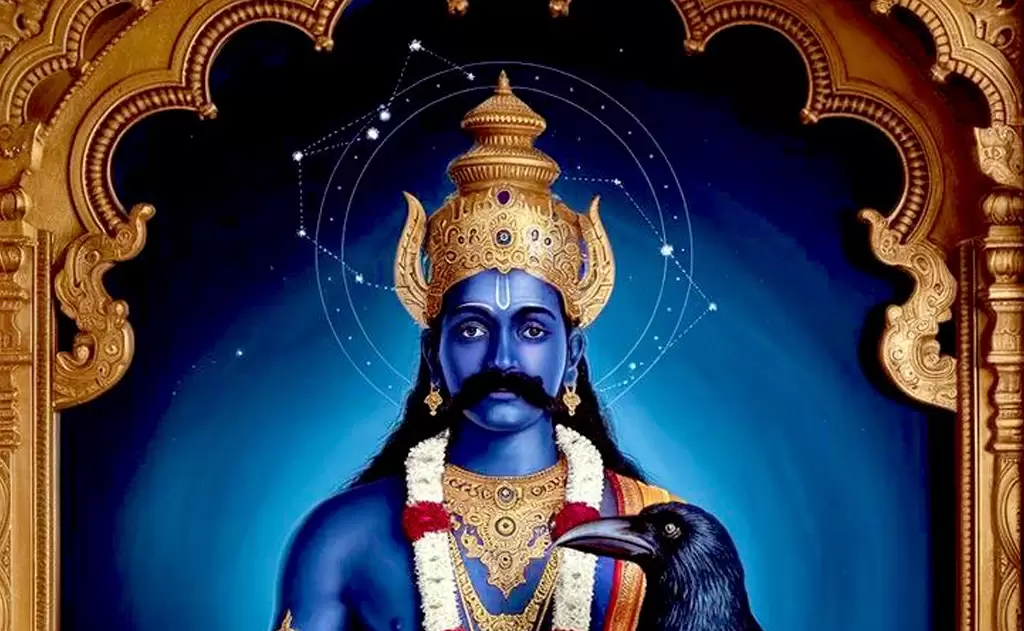
Shani Dev, revered as the Bhagwan of Karma and the celestial ruler of Saturn, holds a significant place in Sanatana Dharma.
Shani Dev, revered as the Bhagwan of Karma and the celestial ruler of Saturn, holds a significant place in Sanatana Dharma. Known for His just and impartial influence, Shani Dev’s role is rooted deeply in the principles of karma – rewarding good deeds and punishing the wrong. His legends are not only fascinating but also imbued with life lessons that inspire reflection. Here are four intriguing stories about Shani Dev and their profound meanings:
- The Birth of Shani Dev
Shani Dev’s origin is as remarkable as His influence. Born to Surya Dev (the Sun God) and Devi Chaya, His striking black complexion is linked to His mother’s intense penance under the scorching sun during her pregnancy. While in her womb, Shani Dev absorbed her devotion to Prabhu Shiva and became a staunch devotee even before His birth. This legend underscores the power of devotion and the spiritual impact of a mother’s penance on her child.
- The Curse of Damini
Shani Dev’s second consort, Devi Damini, plays a pivotal role in shaping His compassionate nature. Legend has it that Damini, feeling neglected while Shani Dev was deeply immersed in meditation on Lord Shiva, cursed Him in anger. She declared that His mere gaze would bring misfortune. To protect His devotees from unintended harm, Shani Dev vowed to keep His gaze downward, symbolizing His sense of responsibility and restraint. This tale teaches us the importance of mindfulness in relationships and the balance between personal devotion and worldly duties.
- Shani Dev and Lord Hanuman
The bond between Shani Dev and Lord Hanuman is one of gratitude and mutual respect. Captured and imprisoned by the demon king Ravana in Lanka, Shani Dev was eventually freed by the mighty Hanuman. In gratitude, Shani Dev blessed Lord Hanuman and His devotees, assuring protection from His inauspicious effects. Worshiping Hanuman, especially on Saturdays, is believed to reduce the challenges associated with Shani’s influence. This legend highlights the virtue of gratitude and the power of devotion as a shield against adversity.
- Piplaad’s Curse
Piplaad, an avatar of Lord Shiva, brought forth a significant transformation in Shani Dev’s approach. When Shani’s influence caused Piplaad’s father’s absence, the young sage cursed Shani to fall from His celestial abode. Seeking forgiveness, Shani Dev vowed to never trouble children below sixteen years of age. This legend reveals Shani Dev’s humility and willingness to atone for His actions, emphasizing fairness and accountability.
Life Lessons from Shani Dev’s Legends
Shani Dev’s stories are timeless reminders of justice, humility, and devotion. While He is often feared for bringing challenges, He is also revered for imparting invaluable life lessons through those experiences. Worshiping Shani Dev, particularly on Saturdays, is believed to align one’s karma and reduce hardships. Devotees often chant the Shani Chalisa, offer black sesame seeds, and light oil lamps to seek His blessings.
Shani Dev’s legends teach us that challenges are not punishments but opportunities for growth. With devotion, discipline, and righteous actions, one can navigate the path of life with grace. Jai Shani Dev! Jai Dhani Dev!
For more divine insights and inspiring stories, visit HinduTone.com.
What does Shani Dev actually govern — and why is His justice called absolute?
In Vedic astrology and Puranic cosmology, Shani Dev presides over the planet Shani (Saturn) and is regarded as the Deva of discipline, perseverance, and retributive justice. The Skanda Purana and Brahma Vaivarta Purana both describe Him as a Kshetrapalaka — a guardian of karmic boundaries — whose role is not to punish arbitrarily but to deliver the precise fruits of past actions, whether from this life or previous janmas.
Unlike other planetary deities who may show partiality based on devotion, Shani Dev operates under the cosmic law of karma with complete impartiality. Even celestial beings such as Surya Dev, Chandra Dev, and Shiva Himself are said, in various Puranic accounts, to have experienced the effects of Shani's transit. This impartiality is why He is addressed respectfully as 'Nyayapriya' — the lover of justice — in Shani Stotra texts recited widely across South and North India.
What is Shani's Dasha and why does it last seven and a half years?
One of the most discussed periods in a devotee's astrological life is the Sade Sati — literally 'seven and a half' in Sanskrit — referring to the seven-and-a-half-year transit of Shani through three consecutive zodiac signs, including the sign in which one's natal Moon (Janma Rashi) sits. The Brihat Parashara Hora Shastra, a foundational text of Vedic astrology, explains that Saturn takes approximately two and a half years to transit each rashi, making the three-sign journey total seven and a half years.
Far from being purely inauspicious, the Sade Sati is understood by experienced Jyotishis as a period of deep karmic reckoning — a time when unresolved actions from past cycles surface for resolution. Many great saints, poets, and leaders across Indian history have undergone their most transformative spiritual growth during their own Sade Sati. The Shani Mahatmya, recited especially on Saturdays in temples dedicated to Shani Dev such as the famous Shani Shingnapur in Maharashtra and Thirunallar in Tamil Nadu, emphasizes surrender and discipline as the surest means to navigate this period.
How does the legend of Shani Dev and King Vikramaditya illuminate the power of humility?
Among the most celebrated Puranic narratives involving Shani Dev is His encounter with the legendary King Vikramaditya of Ujjain, widely regarded as one of the most just and powerful rulers of ancient Bharatavarsha. When Shani Dev's transit came to Vikramaditya's horoscope, the king — despite warnings — underestimated its impact. He subsequently suffered great reversals of fortune: loss of his kingdom, imprisonment in a foreign land, and extreme hardship.
The story, found in varying forms in Kathasaritsagara-related traditions and popular Shani Mahatmya texts, reaches its turning point not through royal power but through the king's complete surrender and recognition of his own ego. When Vikramaditya finally accepted his circumstances with humility and prayed earnestly, Shani Dev released him from misfortune and restored his kingdom. The lesson embedded in this legend is that Shani's trials are not punishments to be escaped but mirrors reflecting one's own pride, attachment, and unresolved karma.
Which sacred sites are most revered for Shani worship, and what makes them spiritually unique?
Shani Shingnapur, located in Ahmednagar district of Maharashtra, is perhaps the most famous Shani Dev temple complex in India, where the deity is worshipped as an unsheltered black stone svayambhu (self-manifested) murti exposed to the open sky — a form that devotees believe represents Shani Dev's unobstructed and impartial vision over all creation. The site draws hundreds of thousands of pilgrims every Saturday, considered Shani's sacred day (Shanivar).
Thirunallar Saneeswarar Temple in Karaikal, Puducherry, is an equally revered site in South India, particularly in the Shaiva Agamic tradition. The presiding deity here, Dharbaranayeswara Shiva, is said to have liberated the legendary King Nala from the curse of Shani — making this temple a destination especially for those undergoing Sade Sati or Shani Dasha. Devotees ritually pour sesame oil (til ka tel) over the Shani murti, as sesame is considered Shani's most sacred offering according to the Navagraha Pujas described in the Grihya Sutra traditions.
What spiritual practices and offerings does tradition prescribe for propitiating Shani Dev?
The Shani Stotra, Shani Kavacham, and Dasharatha Shani Stotra — the last believed to have been composed by King Dasharatha himself to appease Shani during a difficult transit — are among the primary hymns recited in Shani worship. The Dasharatha Shani Stotra appears in the Brahma Purana and addresses Shani Dev by His various names including Krishnanga (dark-limbed), Mandagati (slow-moving, a reference to Saturn's orbit), and Saptarchishmat (associated with seven rays).
Traditional Shani puja prescribes offerings of black sesame seeds, mustard oil, blue or black flowers, iron objects, and urad dal (black lentils) — all items associated with the dark, dense, and slow qualities attributed to Saturn in Ayurvedic and Jyotisha frameworks. Charity performed on Saturdays — particularly feeding the poor, offering footwear or iron implements to workers, or lighting a sesame oil lamp under a peepal tree — is considered especially meritorious. These practices collectively reinforce the broader Dharmic teaching that Shani Dev, more than any other Graha, responds not to ritual alone but to genuine ethical conduct and selfless service.
What deeper philosophical meaning does Shani Dev hold within the framework of Sanatana Dharma?
Shani Dev occupies a unique philosophical position among the Navagrahas because He alone is explicitly identified as the enforcer of Rta — the cosmic moral order — at the individual level. While Yama Dharmaraja governs the soul's fate after death, Shani Dev administers karmic consequences within the span of a lifetime, serving as what several Shaiva texts describe as Dharmarakshaka in human experience.
The very discomfort associated with Shani's influence is, in the Vedantic reading, a form of grace — what the Bhagavata Purana calls 'Shatru-rupa Anugraha,' grace that arrives in the form of an adversary. Shani strips away false identities, material comforts built on unrighteous foundations, and the ego that insulates a soul from its own deeper truth. In this way, devotees across traditions — Shaiva, Vaishnava, and Shakta alike — understand Shani Dev not as a source of fear but as the strict yet compassionate teacher who pushes the soul toward its ultimate liberation, or Moksha.
Frequently Asked Questions
Who is Four Interesting Legends of Shani Dev?
Shani Dev, revered as the Bhagwan of Karma and the celestial ruler of Saturn, holds a significant place in Sanatana Dharma. Known for His just and impartial influence, Shani Dev’s role is rooted deeply in the principles of karma – rewarding good deeds and punishing the wrong.
How is Four Interesting Legends of Shani Dev worshipped?
Through daily puja, mantra chanting, aarti and offerings of flowers, lamps and prasad — on dedicated days and festivals associated with the deity.
What are the benefits of worshipping Four Interesting Legends of Shani Dev?
Devotees seek blessings for protection, prosperity, health, wisdom and inner peace, and a deeper connection with the divine.
Which day is dedicated to Four Interesting Legends of Shani Dev?
Each deity has an associated day and festivals; worshipping on that day, with fasting and mantra, is considered especially auspicious (see the guide above).
You might also like
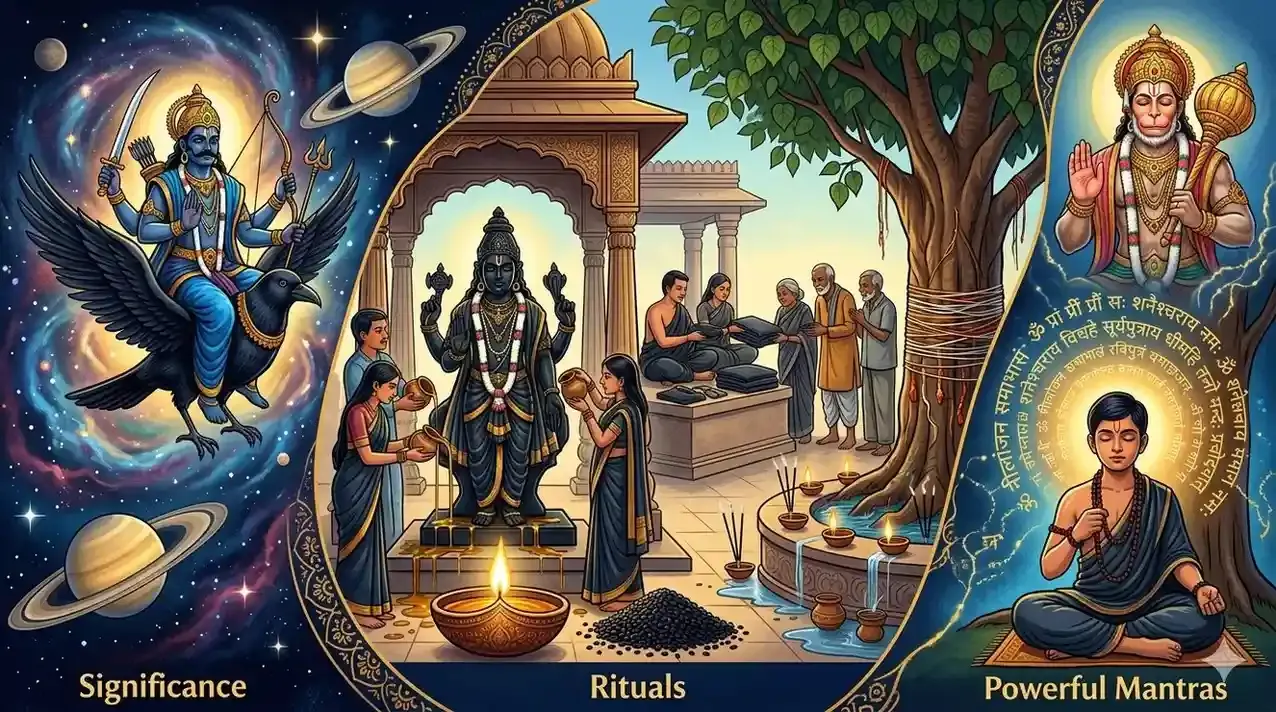
Shani Jayanti 2026: Date, Significance, Rituals & Powerful Mantras

Sacred Hindu Festivals & Temple News: Divine Week — May 2026
Shani Deva Temples Worldwide & Must-Performed Rituals — Complete Devotee's Guide