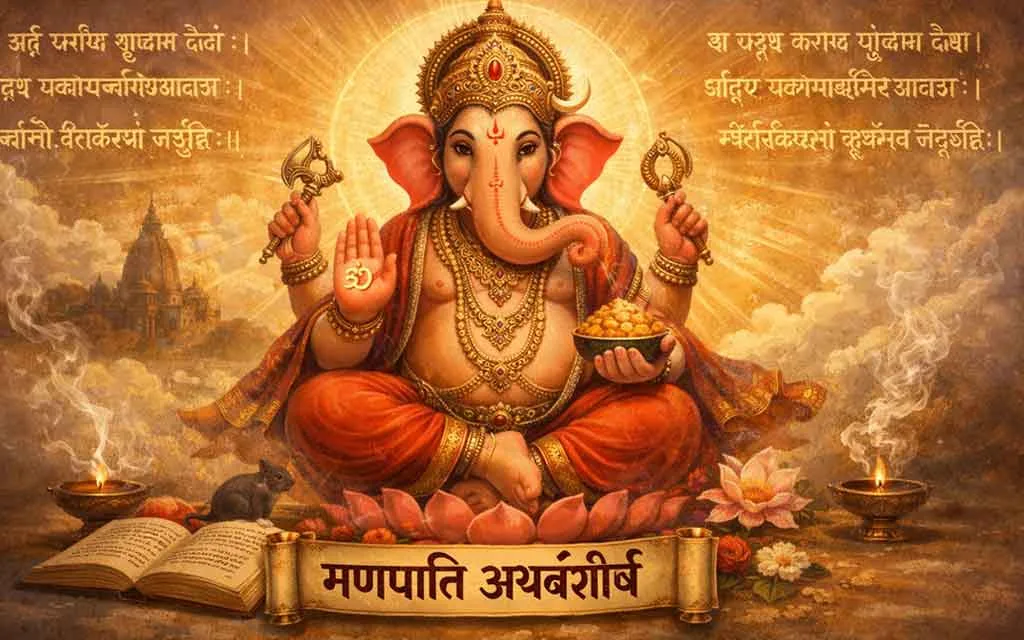
Hindu Beliefs on the Supreme God: Brahman, Ishvara & the Divine — A Complete Devotional Guide
Table of Contents A Devotional Invocation Introduction: The Ocean with a Thousand Names The Supreme in Hindu Thought: One Truth, Many Revelations Brahman: The…

Table of Contents A Devotional Invocation Introduction: The Ocean with a Thousand Names The Supreme in Hindu Thought: One Truth, Many Revelations Brahman: The…
Table of Contents
- A Devotional Invocation
- Introduction: The Ocean with a Thousand Names
- The Supreme in Hindu Thought: One Truth, Many Revelations
- Brahman: The Formless Infinite — The Ground of All Being
- Sat-Chit-Ananda: The Three-Fold Nature of the Supreme
- Neti Neti: Approaching the Infinite Through Sacred Negation
- Ishvara: The Personal Face of the Infinite
- The Trimurthi: Brahma, Vishnu, and Shiva
- Vaishnavism: Lord Vishnu as the Supreme Being
- The Dashavatara: Ten Divine Descents of Vishnu
- Krishna: The Complete Avatar and Supreme Teacher
- Rama: The Ideal of Divine Perfection
- Shaivism: Lord Shiva as Supreme Consciousness
- Shiva's Divine Symbolism: A Language of Liberation
- Shaktism: The Divine Mother as Supreme Power
- The Divine Mother's Many Forms: Durga, Kali, Lakshmi, Saraswati
- Smartism: All Paths Lead to One Supreme
- Advaita Vedanta: The Non-Dual Vision of the Supreme
- The Mahavakyas: The Great Utterances of the Upanishads
- Is Hinduism Monotheistic, Polytheistic, or Beyond Both?
- The Supreme God in the Bhagavad Gita
- The Supreme in the Upanishads: Whispers of the Infinite
- Bhakti: The Heart's Direct Path to the Supreme
- The Great Saints and Their Vision of the Supreme
- Frequently Asked Questions
- A Devotional Closing: The Supreme in Every Breath
1. A Devotional Invocation {#invocation}
Aum. Purnamadah purnamidam Purnaat purnamudachyate. Purnasya purnamaadaaya Purnameva vashishyate.
That is Whole. This is Whole. From the Whole, the Whole arises. When the Whole is taken from the Whole, the Whole alone remains. — Isha Upanishad
Ekam eva advitiyam. One alone. Without a second. — Chandogya Upanishad 6.2.1
Before a single word about God is spoken, let us pause in the silence from which all words arise. For the Supreme — the one the Upanishads call Brahman, the one the devotees call Bhagavan, the one the mystics weep for and the philosophers seek — cannot ultimately be captured in any word, any concept, or any theology.
And yet, in infinite compassion, the Supreme has given us words, scriptures, sacred images, living teachers, and the burning flame of our own deepest longing — all as fingers pointing toward the moon of Truth.
Let these pages be such fingers. Let the moon be your own recognition.
Namo namah. We bow. We open. We begin.
2. Introduction: The Ocean with a Thousand Names {#introduction}
Imagine standing at the edge of an ocean so vast that it has no visible shore — no horizon that the eye can find, no depth the mind can measure. An ocean that is simultaneously perfectly still and the source of all movement. An ocean that contains within itself every wave that has ever risen and every wave that has ever returned.
Now imagine that this ocean has a thousand names. In one language, it is called Brahman. In another, Ishvara. In the language of love, it is called Krishna. In the language of awe, it is Shiva. In the language of grace, it is Devi. In the language of silence, it has no name at all.
Each name points to the same ocean. Each path leads to the same shore. Each seeker — whether philosopher or poet, whether saint or sinner, whether learned or simple — is a wave arising from and returning to the same infinite depth.
This is the Hindu vision of the Supreme God.
It is not a vision that can be reduced to a creed, a formula, or a catechism. It is a living, breathing, ever-deepening encounter between the human soul and the Infinite — an encounter that has been the source of the most extraordinary philosophical insights, the most beautiful devotional poetry, the most transformative spiritual practices, and the most compassionate moral visions the human civilization has ever produced.
For five thousand years and more, the sages of India have been exploring this encounter with extraordinary courage, rigor, and love. What they have discovered — and what they have transmitted through scripture, story, symbol, and living example — is the subject of this devotional guide.
Ekam Sat Vipraha Bahudha Vadanti — "Truth is One; the wise call it by many names." — Rig Veda 1.164.46
3. The Supreme in Hindu Thought: One Truth, Many Revelations {#one-truth}
A Tradition of Profound Theological Diversity
One of the most remarkable things about Hinduism is that it contains, within a single tradition, theological positions that in other traditions would be considered mutually exclusive:
- The absolute impersonal Infinite (Nirguna Brahman) of Advaita Vedanta
- The personal God of love and grace (Saguna Brahman or Ishvara) of devotional traditions
- The male Supreme of Vaishnavism and Shaivism
- The female Supreme of Shaktism
- The immanent God who pervades all things
- The transcendent God beyond all things
- The God who incarnates in human form (avatar theology)
- The God who is beyond all form (nirguna theology)
Far from being contradictions, Hindu philosophical tradition understands these as different facets of the same incomprehensibly vast reality — different windows into the one infinite light, each offering a genuine and valid view, each limited only in the sense that every window limits the view of the sky behind it.
Three Levels of the Supreme
Classical Hindu theology often speaks of the Supreme in three levels or aspects:
Brahman — the absolute, attributeless, formless Ultimate Reality; pure, infinite, self-luminous Consciousness; the ground of all being
Ishvara — the Supreme with attributes; the Personal God who creates, sustains, and dissolves; omniscient, omnipotent, omnipresent; the God who hears prayers and responds with grace
Antaryamin — the Inner Controller; the Supreme as the divine presence dwelling within every individual soul and every particle of creation; the God who is more intimate to you than your own heartbeat
These are not three different Gods. They are three perspectives on the same one Supreme — as the same light appears differently through different lenses without becoming a different light.
4. Brahman: The Formless Infinite — The Ground of All Being {#brahman}
The Most Fundamental Concept in Hindu Theology
Brahman — from the Sanskrit root bṛh, meaning "to expand," "to grow," "to be vast" — is the foundational concept of Hindu theology, the name given by the Upanishadic sages to the ultimate, self-existent Reality that underlies all existence.
Brahman is not a God in the sense of a powerful being among other beings. Brahman is the Being of all beings — the consciousness in which all worlds arise and dissolve, the awareness that illumines all experience, the existence that makes all existing possible.
Brahman is to the universe as the ocean is to its waves: not separate from them, not reducible to any one of them, yet the very substance of which they are all made.
Nirguna Brahman: The Attributeless Absolute
Nirguna Brahman (Sanskrit: nir — without, guna — quality or attribute) is Brahman as the pure, attributeless Absolute — beyond all qualities, beyond all description, beyond all conceptualization.
Every attribute we might assign to Brahman — "Brahman is wise," "Brahman is good," "Brahman is omnipotent" — paradoxically limits Brahman by implying that Brahman has wisdom as opposed to all else that does not. The truly infinite cannot be an instance of any category — not even the category of "the greatest."
This is why the ancient sages approached Nirguna Brahman through silence and through negation — the method of Neti, Neti ("not this, not this") — acknowledging that every statement about the Absolute falls short of the Absolute itself.
The Brihadaranyaka Upanishad declares: "It is not this, not this. It is incomprehensible, for it cannot be comprehended. It is indestructible, for it cannot be destroyed. It is unattached, for it does not attach itself. It is unbound. It does not suffer. It does not fail."
Saguna Brahman: The Supreme with Qualities
Saguna Brahman (Sanskrit: sa — with, guna — quality) is Brahman as approached through attributes — as the Supreme Being with all divine qualities: omniscience, omnipotence, omnipresence, infinite compassion, infinite beauty, infinite wisdom.
This is Brahman as the devotee's beloved — the God who can be prayed to, praised, loved, and surrendered to. Saguna Brahman is the basis of all personal relationship with the Divine in Hinduism — the God who responds to prayer, who incarnates in human form out of love for humanity, who receives the devotee's tears with infinite tenderness.
The great theologian Ramanujacharya insisted that Saguna Brahman — the Supreme with qualities — is not a "lower" or "inferior" understanding of God but a genuine and complete revelation of the Supreme reality. Attributes like love, grace, and beauty are not limitations of God — they are the fullest expression of God's infinite nature.
5. Sat-Chit-Ananda: The Three-Fold Nature of the Supreme {#sat-chit-ananda}
When the Upanishadic sages attempted the closest possible approach to describing the nature of Brahman — knowing that all description falls short — they arrived at three words that, taken together, point toward the ineffable:
Sat — Pure Being
Sat (Sanskrit: to be) is pure, unconditional, absolute Existence — Being itself, prior to any particular being or thing. Brahman is Sat in the sense that it simply is — timelessly, unchangeably, without dependence on anything else for its existence.
Everything in the created universe exists — but its existence is dependent, conditional, temporary. It exists because of causes; it will cease when those causes no longer sustain it. Brahman's existence depends on nothing. It is the Existence from which all existence borrows its being.
Chit — Pure Consciousness
Chit (Sanskrit: to know, to be aware) is pure, self-luminous Consciousness — awareness itself, prior to any particular thought or experience. Brahman is Chit in the sense that it is the knowing light by which everything is known — not a mind that knows things, but the pure awareness that makes all knowing possible.
Human consciousness — your awareness right now — is a ray of this infinite consciousness, temporarily appearing to be confined in a particular body-mind but never truly separate from the ocean of awareness it has always been.
Ananda — Pure Bliss
Ananda (Sanskrit: bliss, joy, delight) is unconditional, uncaused, infinite bliss — joy that depends on no external condition and has no opposite. Brahman is Ananda in the sense that it is the fullness of being in which nothing is lacking, nothing is desired, nothing is feared.
The joy human beings seek in relationships, in achievements, in pleasures — is a pale and flickering reflection of this infinite bliss. The soul's restless search for happiness in the outer world is, at its deepest level, the memory of Ananda — the echo of the ocean heard by the wave.
Sat-Chit-Ananda as a Living Recognition
Together, Sat-Chit-Ananda — Being-Consciousness-Bliss — is the closest the human language can come to naming the nature of Brahman. Not three separate qualities, but one indivisible reality pointing at the same truth from three angles:
Brahman exists as the ground of all existence. Brahman knows as the light of all awareness. Brahman blesses as the joy underlying all joy.
And the most radical teaching of the Upanishads: this Sat-Chit-Ananda is your own deepest nature. The Atman within you — when freed from the obscurations of ignorance — is none other than Brahman itself. You are not searching for Sat-Chit-Ananda. You are Sat-Chit-Ananda, temporarily veiled from its own recognition.
6. Neti Neti: Approaching the Infinite Through Sacred Negation {#neti-neti}
The Method of the Ancient Sages
How do you speak about what cannot be spoken? How do you think about what transcends thought? How do you point toward the Infinite when every finger is finite?
The ancient sages of the Upanishads developed a profound and paradoxical method: Neti, Neti — "Not this, not this."
Attributed to the sage Yajnavalkya in the Brihadaranyaka Upanishad, Neti Neti is the systematic negation of every limited description of Brahman — not to arrive at nihilism, but to free the mind from every false identification so that the truth of Brahman can be recognized directly.
The Practice of Neti Neti
Is Brahman the physical universe? Neti — not this alone. Brahman is the ground of the physical universe, but cannot be reduced to it.
Is Brahman a supreme being in the sky? Neti — not this alone. Brahman is not a being among beings but the Being of all beings.
Is Brahman your mind, your thoughts, your feelings? Neti — not this. Brahman is the awareness that knows the mind, not the mind itself.
Is Brahman your sense of being an individual self? Neti — not this. The individual self is a wave; Brahman is the ocean.
Is Brahman nothingness, the void, annihilation? Neti — not this. Brahman is the fullness from which all forms arise, not the absence of all forms.
What remains after every Neti, every negation? Pure, unobjectifiable, self-luminous awareness — the very awareness that is conducting the inquiry. That is Brahman. That is you, in your deepest nature.
Neti Neti as Love
At the deepest level, Neti Neti is not a cold philosophical exercise. It is an act of supreme love — the love that refuses every substitute for the Beloved, that rejects every lesser satisfaction in its absolute fidelity to the One.
"I will not rest in any description. I will not stop at any concept. I will not be satisfied with any experience, however beautiful, that is not the Real itself."
This is the spirit of the great seeker — and it is, in the Hindu understanding, the spirit that the Supreme itself plants in the hearts of its most beloved devotees.
7. Ishvara: The Personal Face of the Infinite {#ishvara}
The God Who Hears Your Prayer
While Brahman is the formless, attributeless Absolute — the philosophical ground of all existence — most human hearts need something they can relate to with love, speak to in prayer, surrender to in devotion. This is where Ishvara enters the Hindu vision of the Divine.
Ishvara (Sanskrit: ish — to rule, to possess power; vara — the excellent one) is the Supreme as the Personal God — omniscient, omnipotent, omnipresent, and above all, responsive to love and prayer.
Ishvara is Brahman as seen through the divine creative power (maya or shakti) — Brahman in relationship with creation, as the creator, sustainer, and dissolver of all worlds. Ishvara is the God who created the universe not out of necessity or loneliness, but out of the overflowing abundance of divine love — as a lila, a sacred play, a joyful expression of infinite creative freedom.
The Attributes of Ishvara
The Hindu tradition describes Ishvara with six principal divine attributes (bhaga):
Together, these six attributes describe not a God of power alone, but a Supreme Being of complete and perfect excellence — whose power is always in the service of wisdom, whose wisdom is always expressed through love, whose love is the very substance of creation.
Ishvara and Brahman: One Reality, Two Perspectives
The great theologian Adi Shankaracharya reconciled the apparent tension between Nirguna Brahman (the attributeless Absolute) and Saguna Ishvara (the Personal God) with characteristic elegance:
From the perspective of ultimate truth (paramarthika satyam), only Brahman exists — formless, attributeless, infinite. Ishvara — God with qualities and form — belongs to the level of phenomenal reality (vyavaharika satyam): real and absolutely valid within the context of creation and devotion, but ultimately subsumed in the formless Absolute when all veils of maya are dissolved.
For Ramanujacharya and the Vishishtadvaita tradition, however, Ishvara is the Supreme — fully real, not merely a concession to human limitation. The qualities of God — love, grace, wisdom, beauty — are not limitations of the Infinite but the fullest expression of infinite perfection. A truly infinite God must include the capacity for personal love and relationship, not transcend it.
Both views have their profundity. Both have their saints. Both point, with different fingers, at the same moon.
8. The Trimurthi: Brahma, Vishnu, and Shiva {#trimurthi}
One of Hinduism's most iconic theological symbols is the Trimurthi — the divine trinity representing the three fundamental cosmic functions through which Ishvara governs the universe:
Brahma: The Creator
Lord Brahma is the cosmic creator — the divine intelligence through which the universe is brought forth at the dawn of each cosmic cycle (Kalpa). Brahma springs from the navel of Lord Vishnu seated on a lotus — symbolizing that creation itself arises from the sustaining ground of existence.
Brahma wields the four Vedas — one in each of his four hands — representing that creation is an act of sacred knowledge, that the universe is a structured expression of divine wisdom. His four faces look in the four directions, symbolizing the all-encompassing nature of his creative intelligence.
His consort is Saraswati — the goddess of wisdom, speech, learning, and the arts — the divine feminine principle of consciousness that gives form and voice to Brahma's creative vision.
Though Brahma's creative role is cosmologically essential, temple worship of Brahma is relatively rare in contemporary Hinduism — the most famous exception being the ancient Brahma temple at Pushkar in Rajasthan, one of the few Brahma temples in the world.
Vishnu: The Preserver
Lord Vishnu is the great Preserver — the divine principle that sustains, maintains, and protects the universe and its dharmic order. He is the very embodiment of divine grace, mercy, beauty, and love.
Vishnu is depicted as radiant blue — the color of the infinite sky and the boundless ocean — reclining on the cosmic serpent Ananta-Shesha on the primordial ocean of consciousness, the goddess Lakshmi attending at his feet. In his four hands he bears:
- The Conch (Shankha) — whose sacred sound (Om) sustains all creation
- The Discus (Sudarshana Chakra) — the wheel of time and cosmic order that destroys all evil
- The Lotus (Padma) — divine beauty, purity, and the unfolding of spiritual awakening
- The Mace (Kaumodaki) — the power of cosmic law and righteous authority
Vishnu's supreme act of love and grace is his descent in avatars — divine incarnations — whenever the world is threatened by the forces of adharma (unrighteousness). This avatar theology is one of Hinduism's most distinctive and beloved theological contributions.
Shiva: The Destroyer and Liberator
Lord Shiva is the cosmic Destroyer — but Hindu wisdom reveals that Shiva's destruction is the most profound act of mercy in the universe. Shiva destroys not out of malice but out of love: he destroys illusion, dissolves the ego, consumes the bondage of karma, and returns all things to their primordial freedom.
Shiva is simultaneously the most austere and the most tender figure in the Hindu pantheon: the ash-smeared ascetic who meditates alone on Mount Kailasha, and the loving householder who is Parvati's devoted husband; the terrifying Mahakala who dances in the cremation ground, and the gentle Bholenath — the innocent one, easily pleased, quick to forgive.
His symbols constitute one of the most profound spiritual languages in all of human culture — and we explore them in detail in the section on Shaivism below.
9. Vaishnavism: Lord Vishnu as the Supreme Being {#vaishnavism}
Vaishnavism — the tradition of devotion to Lord Vishnu and his avatars — is one of Hinduism's largest, most ancient, and most devotionally rich traditions. With hundreds of millions of followers worldwide, Vaishnavism represents one of history's great experiments in the theology of divine love.
The Theology of Vaishnava Devotion
For the Vaishnava devotee, the relationship between the soul (jiva) and the Supreme (Vishnu/Krishna) is not a cold philosophical arrangement but the most intimate, tender, and transformative relationship possible. The soul longs for the Supreme as a flower turns toward the sun — naturally, inevitably, with its whole being.
Rasa theology — developed by the medieval Vaishnava tradition, especially by Rupa Goswami under the guidance of Chaitanya Mahaprabhu — describes five primary rasas (flavors or moods) of the soul's relationship with the Divine:
The most exalted of these is Madhurya Rasa — the love between Radha and Krishna — which the Vaishnava tradition understands not as ordinary human romance but as the supreme metaphysical archetype: the eternal love between the individual soul and the Supreme, between the finite and the Infinite, between the lover and the Beloved who are ultimately One.
Vishnu's Omnipresence: The Doctrine of Vyuha
Vaishnava theology describes Vishnu's omnipresence through the doctrine of Vyuha (divine emanations) — the understanding that the Supreme Lord pervades all levels of existence:
- Para — the supreme, transcendent form in Vaikuntha
- Vyuha — the four divine expansions who govern cosmic functions
- Vibhava — the avatars who incarnate on earth
- Antaryami — the indwelling presence in every heart
- Archa — the sacred image in temples, in which Vishnu genuinely dwells
This last aspect — the Archa Vigraha — is theologically radical: Vishnu, out of boundless compassion, condescends to make himself accessible through the sacred image in the temple, so that even the simplest devotee can encounter the Supreme directly.
10. The Dashavatara: Ten Divine Descents of Vishnu {#dashavatara}
One of Hinduism's most magnificent theological contributions is the concept of the avatar — the divine descent of the Supreme into created form. The Bhagavata Purana lists twenty-two avatars of Vishnu, of which ten are considered the principal ones — the Dashavatara.
Remarkably, the sequence of the ten avatars has been compared by modern scholars to the evolutionary history of life on earth — from aquatic life to land animals to mammalian primates to fully human forms — millennia before evolutionary biology was articulated as a scientific theory.
The Ten Principal Avatars of Vishnu
The Purpose of Avatars: Krishna's Own Declaration
Lord Krishna articulates the divine purpose of the avatar in one of the Bhagavad Gita's most celebrated verses:
"Whenever and wherever there is a decline in religious practice, O descendant of Bharata, and a predominant rise of irreligion — at that time I descend Myself. To deliver the pious and to annihilate the miscreants, as well as to reestablish the principles of religion, I Myself appear, millennium after millennium." — Bhagavad Gita 4.7–4.8
The avatar is not a theological accident or a mythological conceit. It is the supreme expression of divine compassion — the Infinite choosing to become finite, the Supreme choosing to become accessible, love choosing to become vulnerable, for the sake of the souls who need it.
11. Krishna: The Complete Avatar and Supreme Teacher {#krishna}
Of all Vishnu's avatars, Lord Krishna is considered the most complete (Purna Avatar) — the fullest possible manifestation of the Supreme in human form. In Krishna, the full ocean of divinity poured itself into a single human vessel, and what overflowed was the Bhagavad Gita — the Song of God.
The Many Dimensions of Krishna
Krishna is the most complex, the most intimate, and the most beloved figure in all of Hindu devotion. He is simultaneously:
- The divine child who stole butter and played in the forests of Vrindavan — awakening the tender, parental love of all who behold him
- The divine friend and companion of the cowherds (gopas) — intimate, playful, accessible
- The divine beloved of Radha and the Gopis — whose flute-song draws every soul from its worldly preoccupations into the ecstasy of divine love
- The divine king and warrior who fought on the side of dharma at Kurukshetra
- The divine teacher who revealed the supreme wisdom of the Bhagavad Gita to the bewildered Arjuna
- The divine mystery — Yogeshvara, the Lord of Yoga, whose divine nature is simultaneously accessible and utterly incomprehensible
Radha and Krishna: The Supreme Love
The love between Radha and Krishna is not merely a beautiful story. It is the supreme metaphysical archetype in Vaishnava theology — the eternal love between the individual soul (Radha as jiva) and the Supreme (Krishna as Paramatma), an love so complete, so self-forgetful, so absolute that it reveals the deepest truth of existence: love is not something the Supreme does. Love is what the Supreme is.
The medieval saint-poetess Mirabai expressed this with incomparable beauty:
"I have found my Guru, the beautiful dark one. He has become my breath, my life, my everything. Without Him, even a single moment is an age of suffering. With Him, the whole world becomes Vrindavan."
12. Rama: The Ideal of Divine Perfection {#rama}
Lord Rama — the seventh avatar of Vishnu, hero of the Ramayana, king of Ayodhya — embodies a different facet of the Supreme: not the mystical depth of Krishna but the radiant perfection of Maryada Purushottama — the Supreme Person of Ideal Conduct.
Rama as the Divine Ideal
Rama is the perfect son, the perfect husband, the perfect friend, the perfect king. In every role and every relationship of his extraordinary life, Rama demonstrates the highest possible human conduct — and in doing so, reveals that the Divine does not require the abandonment of human relationships and responsibilities, but their transfiguration into perfect expressions of divine love, duty, and honor.
The Ramayana — Valmiki's original Sanskrit epic and Tulsidas's beloved Ramcharitmanas in Hindi — is not merely literature. For hundreds of millions of Hindus, it is the living word of God — a complete manual of right living, right loving, and right relationship with the Divine.
Ram Nam: The Name That Liberates
"Ram Ram Ram" — the name of Rama — is perhaps the most widely chanted divine name in all of Hinduism. It is the mantra whispered at births and deaths, the greeting exchanged between pilgrims, the word that Mahatma Gandhi breathed with his last breath.
The sage Tulsidas declared: "The name of Rama is worth more than the entire Vedas — for the Vedas lead us to Rama, while the name of Rama leads us directly to liberation."
13. Shaivism: Lord Shiva as Supreme Consciousness {#shaivism}
Shaivism — the tradition of devotion to Lord Shiva — is among the oldest and most philosophically profound of all Hindu traditions. For the Shaiva devotee, Shiva is not merely the destroyer in a cosmic trinity. He is the Supreme Consciousness itself — the source and ground of all existence, the pure awareness in which the universe arises like a dream, the Lord whose grace alone dissolves the soul's bondage and reveals its eternal freedom.
Paramashiva: The Supreme Shiva
In Kashmir Shaivism — perhaps the most philosophically sophisticated school of Shaiva theology, developed by the incomparable Abhinavagupta in the 10th century — Paramashiva is the ultimate reality:
- Absolutely free (Svatantra) — not bound by any law, including the karmic law
- Absolutely conscious (Chit) — pure, self-luminous awareness
- Absolutely blissful (Ananda) — infinite, uncaused joy
- The source of all power (Shakti) — the entire creation is the free, joyful expression of Shiva's infinite creative energy
The universe, in Kashmir Shaivism, is not an illusion. It is Shiva's own nature, spontaneously expressing itself in infinite forms — like a mirror reflecting its own face in a thousand images without any image being separate from the mirror.
Liberation (Mukti) is not the soul "reaching" Shiva — it is Shiva recognizing himself in the soul. The Pratyabhijna (recognition) philosophy: the soul is already Shiva; liberation is simply the recognition of this truth.
The Panchakritya: Shiva's Five Cosmic Acts
In Shaiva theology, Lord Shiva performs five supreme cosmic acts (Panchakritya) — each representing a dimension of divine sovereignty:
The fifth act — Anugraha, divine grace — is considered Shiva's supreme act. All of creation, all of its preservation, and even its dissolution serve this one ultimate purpose: the soul's awakening to its own divine nature. The universe is, from first to last, a drama of grace.
14. Shiva's Divine Symbolism: A Language of Liberation {#shiva-symbolism}
Every element of Shiva's iconography is a profound teaching — a visual language pointing toward the deepest truths of existence. To meditate on the image of Shiva is to receive a complete philosophical education in the nature of the Supreme.
The Third Eye
Shiva's third eye (trikona netra, the "eye of fire") at the center of his forehead represents the eye of inner wisdom — the direct perception of ultimate reality that transcends the dualistic vision of the two physical eyes. When opened, Shiva's third eye burns away all illusion, all falseness, all obscuration — reducing Kama (desire, ego) to ashes in its flame. The Third Eye represents the Supreme's infinite clarity and the soul's potential for direct spiritual vision.
The River Ganges
The sacred River Ganges flowing from Shiva's matted locks (jata) represents the boundless grace of the Supreme flowing down into the world for the purification of all souls. Shiva broke the force of Ganga's descent from heaven on his head — containing in his infinite consciousness what would have overwhelmed the earth — and released it gently for the benefit of all humanity.
The Crescent Moon
The crescent moon adorning Shiva's head represents his mastery over time and mind. The moon waxes and wanes — but Shiva bears it as an ornament, indicating his complete sovereignty over the cycles of time (Kala) that bind all creatures.
The Serpent Vasuki
The serpent coiled around Shiva's neck represents the conquered ego and the mastered Kundalini Shakti — the primordial spiritual energy. Shiva does not destroy the serpent; he wears it as an ornament — symbolizing the transformation of primal energy into spiritual power.
The Damaru
Shiva's small drum (Damaru) represents the primordial sound of creation — Nada Brahma, the cosmic vibration from which all of existence arises. Its two sides represent the duality of creation; the waist where the two halves meet represents the point of supreme unity. When Shiva dances, the Damaru beats, and the universe comes into being.
The Nataraja: The Lord of the Cosmic Dance
Perhaps the most magnificent and philosophically complete image in all of Hindu art is Nataraja — Shiva as the Lord of the Cosmic Dance (Ananda Tandava — the dance of bliss).
In this image, Shiva dances within a ring of fire representing the cosmos. His four arms each carry a symbolic object or gesture. One foot crushes the demon Muyalaka — the dwarf of ignorance — while the other is raised in the gesture of liberation (Abhaya Mudra), pointing upward toward the foot of liberation that grants moksha to all who behold it.
The entire image is a complete, instantaneous revelation of the Hindu metaphysical vision: the universe is the Supreme's dance, creation and dissolution are moments of a single eternal movement, and liberation is the recognition that we ourselves are that dance.
The great physicist Fritjof Capra wrote in The Tao of Physics that the Nataraja image most perfectly captures the modern physicist's vision of the subatomic universe — a universe of constant creation, annihilation, and transformation, with no static entities, only dancing energy. Three thousand years of Hindu iconography had already known what physics was just discovering.
15. Shaktism: The Divine Mother as Supreme Power {#shaktism}
Shaktism is the tradition that places the Divine Mother — Devi, Adi Shakti, the primordial creative energy — at the apex of the divine hierarchy. For the Shakta devotee, the Supreme is not male but female — or more precisely, beyond gender, but most truly approached in the feminine principle of creative, sustaining, transforming power.
Who Is the Divine Mother?
Devi (Sanskrit: goddess; from div, "to shine") is the Supreme Goddess — the original, self-existent feminine power from which all existence arises and into which it will all return. She is simultaneously:
- Maha Lakshmi — the principle of existence, sustenance, and grace
- Maha Saraswati — the principle of consciousness, wisdom, and creative expression
- Maha Kali — the principle of transforming power, dissolution, and liberation
In the Devi Bhagavata Purana and the Devi Mahatmyam (Durga Saptashati) — the supreme scripture of Shaktism — the Goddess declares her own supreme nature:
"I alone am the substrate of the entire world. There is nothing other than Me that is ultimate. All these manifestations are my expressions. Know this and be free."
Shakti and Shiva: Power and Consciousness
One of Shaktism's most profound theological insights is the understanding of the relationship between Shakti and Shiva:
Shiva is pure Consciousness — the static, witnessing awareness that underlies all existence. Shakti is pure Power — the dynamic, creative energy that brings all existence into being.
Neither is complete without the other. Shiva without Shakti is Shava — a corpse, inert and powerless. Shakti without Shiva is blind force, energy without direction or purpose. Together — Consciousness and Power, Shiva and Shakti — they constitute the complete, living, dynamic Supreme.
This is perhaps the most sophisticated theology of divine gender in any spiritual tradition: the Supreme is not masculine or feminine, but the perfect union of both — the eternal dance of consciousness and power, awareness and energy, being and becoming.
16. The Divine Mother's Many Forms: Durga, Kali, Lakshmi, Saraswati {#divine-mother-forms}
The one Divine Mother manifests in an infinite variety of forms — each expressing a different facet of her inexhaustible nature. The most beloved and widely worshipped include:
Durga: The Victorious Mother
Durga (Sanskrit: the one who is difficult to access; also the one who destroys difficulty) is the warrior form of the Divine Mother — the supreme goddess who embodies divine power deployed in the service of righteousness.
Riding her magnificent lion, bearing weapons in her ten arms — gifted by all the gods who acknowledged her supreme power — Durga battles and destroys Mahishasura, the buffalo-demon who represents the ego of cosmic proportions: the pride, the arrogance, the self-delusion that makes itself God.
Durga's victory over Mahishasura — celebrated in the nine-day festival of Navratri and the tenth day of Vijayadashami (Dussehra) — is the eternal story of the soul's victory over its own inner demons, achieved not through its own limited power but through surrender to the infinite power of the Divine Mother.
Kali: The Liberating Darkness
Kali (Sanskrit: from Kala — time, darkness, the all-consuming) is the most misunderstood and yet most profoundly merciful of all the Divine Mother's forms.
Standing on the prostrate body of Shiva, dark as the night beyond all nights, her tongue extended, wearing a garland of severed heads and a skirt of severed arms — Kali is the Divine Mother in her most uncompromising, most liberating form: the one who destroys time itself, who decapitates the ego without mercy, who clears away every last illusion with the sword of supreme wisdom.
The severed heads are not symbols of violence — they are the fifty letters of the Sanskrit alphabet: the entire power of language, thought, and concept, which Kali has mastered and transcended. She wears the mind's creations as a garland — indicating her complete freedom from all mental constructs, including the concept of God itself.
Ramakrishna Paramahamsa — who loved Kali with the totality of his being — saw her not as terrifying but as the most tender of mothers: "She is my Mother. She is the Mother of the Universe. In Her is everything — creation and dissolution, knowledge and ignorance, bondage and liberation."
Lakshmi: The Mother of Abundance
Lakshmi — standing or seated on a lotus, radiant with golden light, showering coins from her hand — is the goddess of all abundance: material prosperity, beauty, grace, love, spiritual wealth, and divine blessings.
Lakshmi is not a goddess of mere material wealth. Her deeper teaching is that all genuine abundance — whether of love, of wisdom, of health, or of material comfort — flows from alignment with the Divine. She dwells wherever there is purity of heart, gratitude, and righteous living — and departs from wherever there is arrogance, ingratitude, and moral pollution.
Diwali — the festival of lights — is the supreme celebration of Lakshmi, when households are illumined, cleaned, and made beautiful to welcome the Divine Mother's presence.
Saraswati: The Mother of Wisdom
Saraswati — seated on a white lotus, clothed in white, bearing a veena (musical instrument), a book of the Vedas, prayer beads, and a water pot — is the goddess of learning, speech, wisdom, music, and all creative arts.
She is the divine principle of consciousness expressing itself through knowledge and beauty — the Goddess who gives language its power, music its transcendence, wisdom its clarity, and artistic creation its capacity to point beyond itself toward the Infinite.
Her festival, Vasant Panchami, celebrated at the arrival of spring, is the day when students offer their books, pens, and musical instruments at her feet — acknowledging that all true learning and all genuine creativity are gifts of the Divine.
17. Smartism: All Paths Lead to One Supreme {#smartism}
Smartism — the broad, philosophically inclusive tradition shaped primarily by Adi Shankaracharya's teachings — offers perhaps the most explicitly pluralistic approach to the Supreme in all of Hindu theology.
The Panchayatana Puja
The central practice of Smartism is the Panchayatana Puja — the simultaneous worship of five (sometimes six) principal deities as equally valid manifestations of the one Brahman:
- Ganesha — the remover of obstacles, lord of beginnings, deity of wisdom and success
- Vishnu — the sustainer and preserver of dharmic order
- Shiva — the destroyer of illusion and grantor of liberation
- Devi — the divine mother, supreme creative power
- Surya — the sun, the visible form of divine light and life-giving energy
- Skanda (Murugan) — the divine warrior and lord of spiritual knowledge (added in some traditions)
For the Smarta, to debate whether Shiva or Vishnu is "more supreme" is to miss the entire point — like arguing whether the blue of the sky is more real than the clouds floating through it. All are expressions of Brahman. The form through which any individual seeker approaches the Divine is simply the form through which the Infinite has chosen to make itself accessible to that particular soul, at that particular moment of their journey.
Shankaracharya's Genius
Adi Shankaracharya (c. 788–820 CE) — the philosopher-monk who walked the length of India debating, reforming, and unifying Hindu thought — was perhaps the greatest systematic theologian in Hindu history. His commentaries on the Upanishads, Bhagavad Gita, and Brahma Sutras remain definitive to this day.
His Smartist vision was simultaneously philosophically rigorous at the highest level (Advaita non-dualism) and practically accessible at the level of devotion (Panchayatana Puja). He demonstrated that the path of the philosopher and the path of the devotee are not rivals but companions — different expressions of the same passionate engagement with the Supreme Truth.
18. Advaita Vedanta: The Non-Dual Vision of the Supreme {#advaita}
Advaita Vedanta — "not-two, end of knowledge" — is the most radical, the most comprehensive, and in many ways the most influential philosophical school in all of Hindu history. Its central teaching is at once the simplest and the most disorienting truth that has ever been articulated:
There is only One.
Not "God and the world are one in a vague, poetic sense." Not "God is present in everything." But the most absolute possible non-dualism: Brahman alone exists. The apparent multiplicity of gods, worlds, souls, and experiences arises within Brahman like a dream arises within the dreamer — vivid while it lasts, but leaving no permanent stain on the pure awareness in which it occurred.
The Three Pillars of Advaita
1. Brahman is the only Reality (Brahma Satyam) The formless, attributeless, self-luminous Brahman is the one and only ultimate reality. Everything else — including the universe, including individual souls, including the gods themselves — is real at the phenomenal level but ultimately lacks independent existence apart from Brahman.
2. The World Is Appearance (Jagan Mithya) The multiplicity of the created universe — Jagat — is Mithya: not "false" in the simple sense, but not ultimately real in the way that Brahman is real. The world is like a dream, or like the apparent snake seen in a rope in dim light. The seeing is real; the snake is not. The experience of the world is real; the world's apparent independence from Brahman is the illusion.
3. The Individual Soul Is None Other Than Brahman (Jivo Brahmaiva Na Aparah) The individual soul — the jiva, the apparent individual consciousness — is not a separate entity that needs to "reach" Brahman. It is Brahman, always and already — temporarily veiled from its own recognition by the power of maya and avidya. Liberation is not the soul's journey to God. It is the soul's recognition of what it has always been.
This is the Advaita revolution — the most radical rethinking of the God-human relationship in human thought: the seeker and the Sought are One.
19. The Mahavakyas: The Great Utterances of the Upanishads {#mahavakyas}
The philosophical heart of Advaita Vedanta — and of the entire Upanishadic vision of the Supreme — is crystallized in four Mahavakyas (Great Utterances), one drawn from each of the four Vedas. These are not theological propositions to be believed. They are direct transmissions of the Supreme Reality — pointers of such precision that a single genuine understanding of any one of them is said to be equivalent to liberation.
Tat Tvam Asi: The Heart of the Teaching
"That Thou Art" — Tat Tvam Asi — is perhaps the most famous and the most profound of the four Mahavakyas. In the Chandogya Upanishad, the sage Uddalaka Aruni teaches his son Shvetaketu through a series of beautiful, natural examples — the salt dissolved invisibly in water, the rivers losing their names in the ocean, the seed containing invisibly within itself the entire tree to come.
With each example, the teaching deepens: the Infinite pervades the finite as its very substance, yet transcends the finite entirely. The divine ground of existence is not far away. It is the innermost reality of all things — and most intimately, the innermost reality of you.
"That which is the finest essence — this whole world has that as its soul. That is Reality. That is Atman. That thou art, Shvetaketu."
20. Is Hinduism Monotheistic, Polytheistic, or Beyond Both? {#monotheism}
This question — asked by scholars, students, and curious seekers for centuries — reveals more about the limitations of Western theological categories than it does about Hinduism itself.
Let us examine each category honestly:
Is Hinduism Polytheistic? At the surface level — where an uninformed observer sees temples filled with many deities, each given distinct worship — Hinduism might appear polytheistic. But this appearance is deeply misleading. Hindu theology has never posited many genuinely independent, equally ultimate divine beings competing for cosmic supremacy. The many deities are always understood as expressions, aspects, or manifestations of the one Supreme Reality.
Is Hinduism Monotheistic? In the devotional traditions (Vaishnavism, Shaivism, Shaktism), there is clearly one Supreme Personal God — Vishnu, Shiva, or Devi — to whom all worship ultimately flows. In this sense, yes. But Hindu monotheism is far more fluid, inclusive, and non-exclusivist than the Abrahamic monotheisms. It does not insist that all other approaches to the Divine are false.
Is Hinduism Henotheistic? The scholar Max Müller coined this term to describe the Vedic practice of treating whichever deity is being worshipped in the moment as the Supreme — without denying the reality of other deities. This accurately captures something important about the Vedic approach.
Is Hinduism Monistic? At the philosophical level of Advaita Vedanta, yes — emphatically. There is only one Reality. This is the most philosophically precise answer.
Is Hinduism Panentheistic? The view that God contains the universe within Godself but also transcends it — as in Vishishtadvaita — matches what philosophers call panentheism.
The honest answer is that Hinduism transcends all these categories — not because it is philosophically confused, but because it is philosophically vast enough to hold perspectives that smaller frameworks cannot simultaneously accommodate. It is a tradition that has been exploring the nature of the Divine for longer than any other living tradition — and what it has found is too large for any single theological label to contain.
21. The Supreme God in the Bhagavad Gita {#bhagavad-gita}
The Bhagavad Gita — the Song of God — is the most beloved, most widely studied, and most universally applicable of all Hindu scriptures. In it, the Supreme reveals itself through the voice of Lord Krishna — friend, teacher, charioteer, and God — to the bewildered warrior Arjuna on the battlefield of Kurukshetra.
The Supreme's Self-Revelation
Throughout the Gita's eighteen chapters, Krishna reveals layer after layer of the Supreme's nature:
"I am the taste of water, O son of Kunti. I am the light of the sun and the moon. I am the sacred syllable Om in the Vedic mantras. I am the sound in ether, and ability in man." — Bhagavad Gita 7.8
"I am the source of all spiritual and material worlds. Everything emanates from Me. The wise who know this perfectly engage in My devotional service and worship Me with all their hearts." — Bhagavad Gita 10.8
"Of all that is material and all that is spiritual in this world, know for certain that I am both its origin and dissolution." — Bhagavad Gita 7.6
The Vishvarupa: The Cosmic Form
The climax of Krishna's self-revelation comes in Chapter 11 — the Vishvarupa Darshana — when he grants Arjuna divine eyes to behold his universal cosmic form.
What Arjuna sees is beyond description: infinite, blazing like a thousand simultaneous suns, containing within itself all gods, all worlds, all time, all creatures. The beginning of the universe and its end. The devouring mouth of time and the compassionate face of the beloved. All in one impossible, magnificent, terrifying, beautiful vision.
Arjuna trembles and prays: "You are the original personality, the Godhead. You know everything, and You are all that is knowable. You are above the material modes. O limitless form, this whole cosmic manifestation is pervaded by You!"
The Supreme's Final Teaching
After all his revelations — cosmic form, divine philosophy, yogic teachings — Krishna delivers the simplest, most complete, most personal teaching of all:
"Always think of Me, be devoted to Me, worship Me, bow down to Me. So shall you come to Me. I promise you truly, for you are dear to Me." — Bhagavad Gita 18.65
"Abandon all varieties of dharma and simply surrender unto Me alone. I shall liberate you from all sinful reactions. Do not fear." — Bhagavad Gita 18.66
The Supreme God of the Bhagavad Gita is not a cold philosophical principle. It is a personal God of infinite love — who calls the soul "dear to Me," who personally promises liberation, who asks not for philosophical achievement but for the simple, complete gift of the heart.
22. The Supreme in the Upanishads: Whispers of the Infinite {#upanishads}
The Upanishads — 108 ancient philosophical texts arising from the direct spiritual experiences of the forest sages — are the philosophical bedrock of Hindu theology. They approach the Supreme not through dogma or creed but through direct inquiry, direct experience, and the transmission of wisdom from realized teacher to receptive student.
Key Upanishadic Teachings on the Supreme
From the Isha Upanishad: "All this — whatever exists in this changing universe — should be covered by the Lord. Protect yourself through this detachment. Do not covet what belongs to others." The Supreme pervades and inhabits all things.
From the Kena Upanishad: "That which is not thought by the mind, but by which the mind thinks — know that alone as Brahman, not this which people here worship." The Supreme is the witness of all thought, not an object of thought.
From the Mundaka Upanishad: "Brahman, indeed, is this immortal being. In front is Brahman, behind is Brahman, to the right and to the left. It spreads forth above and below. Brahman alone is this universe. Brahman alone is this All." The Supreme is omnipresent — the very space in which all things exist.
From the Taittiriya Upanishad: "He who knows Brahman becomes Brahman." Knowledge of the Supreme is not merely intellectual — it is a transformation of being.
From the Chandogya Upanishad: "In the beginning, my dear, this world was just Being — One only, without a second." The Supreme is the primordial reality from which all multiplicity arises.
23. Bhakti: The Heart's Direct Path to the Supreme {#bhakti}
All the philosophy, all the theology, all the cosmology — it serves one purpose: to prepare the heart for Bhakti — the direct, living, transformative love of God.
Bhakti (Sanskrit: to share, to participate, to love) is the soul's natural response to the recognition of the Divine. When the mind understands what the Upanishads teach — that the Supreme is infinite, perfect, all-loving, and the very ground of one's own being — the heart naturally overflows with love, gratitude, and devotion.
The Narada Bhakti Sutras define Bhakti as: "The highest love for God." Not love for what God can give. Not love as spiritual strategy. But pure, unconditional, self-forgetful love for the Supreme — love that asks nothing, expects nothing, and in its very purity becomes the supreme form of worship.
Para Bhakti: The Love That Is Liberation
Para Bhakti — supreme devotion — is the love that has been utterly purified of self-interest. The devotee in Para Bhakti does not love God for heaven, or for liberation, or even for love's own sweet fruits. They love God simply because God is — and the soul cannot help but love what is infinitely lovable.
In this state, the Upanishadic philosophy and the devotional heart merge into one: to love God completely is to know God completely. To know God completely is to recognize one's own nature as God. The lover, the act of love, and the Beloved dissolve into a single, undivided, infinite bliss.
Mirabai sang it from the depths: "I have nothing to give You, my Lord. Only this heart. Take it. Make it Yours. I am already Yours — whether You take me or leave me. The love itself is the liberation."
24. The Great Saints and Their Vision of the Supreme {#saints}
Throughout Hindu history, the Supreme has drawn forth — from the hearts of its most beloved devotees — visions, utterances, and lives of such extraordinary beauty that they stand among the highest achievements of the human spirit.
Adi Shankaracharya: The Supreme as Pure Being
Shankaracharya saw the Supreme as Nirguna Brahman — the pure, attributeless, infinite awareness that is the ground of all existence. His Vivekachudamani and his magnificent devotional poems (including the Bhaja Govindam — "Worship Govinda" — composed for the benefit of ordinary devotees) demonstrate that the greatest philosopher and the most tender devotee can dwell in the same heart.
His prayer to the Supreme: "Oh Lord, forgive my three sins. I have in contemplation clothed in form Thee who art formless. I have in praise described Thee who art ineffable. And in visiting temples, I have ignored Thine omnipresence."
Ramakrishna Paramahamsa: The Supreme as Living Reality
Sri Ramakrishna (1836–1886) of Dakshineswar did not philosophize about God. He lived in God — as a continuous, direct, overwhelming experience of the Divine Presence. He worshipped the Divine Mother Kali as a living being, experiencing her appearing before him, speaking with him, touching him. He practiced the paths of Islam and Christianity and found the same Supreme Reality at the end of each. He demonstrated, through the living experiment of his own consciousness, that Ekam Sat Vipraha Bahudha Vadanti — Truth is One, the approaches are many.
Swami Vivekananda: The Supreme in Every Being
Swami Vivekananda — Ramakrishna's greatest disciple — brought the Hindu vision of the Supreme to the world stage. At the 1893 Parliament of Religions in Chicago, he began: "Sisters and brothers of America" — and the hall erupted in two minutes of spontaneous applause. He had addressed not an audience but a family — because in the Advaita vision he embodied, all beings are members of one divine family.
His supreme teaching: "Each soul is potentially divine. The goal is to manifest this divinity within — by controlling nature, external and internal. Do this either by work, or worship, or psychic control, or philosophy — by one or more or all of these — and be free."
Ramana Maharshi: The Supreme as the Self
Ramana Maharshi (1879–1950) of Tiruvannamalai is perhaps the clearest mirror of the Supreme that the modern world has been given. Liberated spontaneously at age sixteen through a direct confrontation with death, he spent the remaining fifty-four years of his life simply being — abiding in the unbroken recognition of the Atman-Brahman, his presence radiating such peace and clarity that thousands were transformed simply by sitting in his company.
He taught one thing, in a thousand ways: "The Self — Atman — is Brahman. Know the Self. Be the Self. This is liberation."
25. Frequently Asked Questions {#faq}
Q: Who is the Supreme God in Hinduism? The answer depends on the tradition. In Vaishnavism, the Supreme God is Lord Vishnu (or his avatar Krishna/Rama). In Shaivism, it is Lord Shiva. In Shaktism, it is the Divine Mother (Devi). In Advaita Vedanta, the Supreme is the formless Brahman — pure, infinite Consciousness. All these traditions ultimately point to one Supreme Reality, approached differently according to philosophical orientation and devotional temperament.
Q: What is the difference between Brahman and God in Hinduism? Brahman is the impersonal, formless, ultimate Reality — pure Being-Consciousness-Bliss (Sat-Chit-Ananda). When approached as the Personal God — with qualities like love, omniscience, and grace — Brahman is called Ishvara. In Advaita Vedanta, Brahman and Ishvara are the same Reality viewed from different perspectives: Brahman from the perspective of absolute truth, Ishvara from the perspective of devotional relationship.
Q: Do Hindus worship many gods or one God? At the philosophical level, Hinduism is strictly non-dual — there is only one ultimate Reality. The many deities are understood as different aspects or expressions of this one Supreme. Hinduism is often described as "one God with many faces." The apparent polytheism of popular practice is actually a sophisticated theological system of approaching the one Infinite through its infinite expressions.
Q: What does Om mean in relation to the Supreme? Om (Aum) is the primordial sound — the sonic symbol of Brahman. The Mandukya Upanishad teaches that Om encompasses all of existence: past, present, and future, and that which transcends time. Om is not merely a symbol of God but is understood as the vibration of divine consciousness itself — the sound through which Brahman expresses itself in the material universe.
Q: Is the Hindu God personal or impersonal? Both — and this is precisely Hinduism's distinctive contribution to world theology. At the highest philosophical level, the Supreme is Nirguna (beyond all qualities). But this same Supreme, out of infinite compassion, makes itself accessible as Saguna Ishvara — the Personal God who hears prayers, incarnates in human form, and loves the devotee with infinite tenderness. The impersonal and the personal are not contradictory but complementary views of the same infinite Reality.
Q: Why does Hinduism have so many gods? Each deity in the Hindu pantheon illuminates a different facet of the one infinite Supreme — like different colored lenses through which the same white light appears in different hues. Additionally, different human temperaments are naturally drawn to different expressions of the Divine. The vast diversity of Hindu deities reflects the tradition's conviction that the Infinite cannot be fully captured in any single image, name, or concept — and that all genuine paths to the Divine are valid.
Q: What is avatar theology in Hinduism? An avatar (avatara — Sanskrit for "descent") is the direct incarnation of the Supreme into human or other form, undertaken out of divine compassion to restore cosmic order (dharma) when it has been overwhelmed by ignorance and evil. The ten principal avatars of Vishnu (Dashavatara) represent the Supreme's repeated, compassionate intervention in the drama of existence — the Infinite choosing to become finite for the love of the finite.
Q: What is the Hindu teaching on the relationship between the individual soul and God? Different schools answer this differently. Advaita Vedanta: the individual soul (Atman) is ultimately identical with the Supreme (Brahman) — the apparent separation is a result of ignorance. Vishishtadvaita: the soul is a real part of God — like a cell of the divine body. Dvaita: the soul and God are eternally distinct, with the soul dwelling in eternal loving relationship with God. All three agree that the soul's ultimate destiny is intimacy with the Supreme — whether through identity, union, or loving relationship.
26. A Devotional Closing: The Supreme in Every Breath {#closing}
We have traveled far together in these pages — through the formless depths of Nirguna Brahman and the loving face of Ishvara, through the creative splendor of Brahma and the sustaining grace of Vishnu, through the liberating fire of Shiva and the infinite compassion of the Divine Mother, through the great philosophical peaks of the Upanishads and the tender valleys of Bhakti.
And now, perhaps, we arrive at the place where all these paths have always been leading — not a place outside yourself, but the place that is most truly yourself.
The Supreme is not at the end of this article. The Supreme is not in the next temple you visit, or the next book you read, or the next practice you undertake. The Supreme is here — this very awareness in which these words are arising and dissolving, this very knowing by which you recognize their meaning, this very aliveness that makes it possible for you to be seeking at all.
The Upanishads whisper it in the forest: "Tat Tvam Asi" — That Thou Art. Krishna declares it on the battlefield: "I am the Self seated in the hearts of all creatures." Shiva reveals it in the silence of the mountain: you are what you are seeking. The Divine Mother embraces you in the darkness: I was never absent from you. Ramana Maharshi points it out with a smile: "Who is looking for God? Find that one."
Every breath you take is the Supreme breathing. Every act of love you offer is the Supreme loving. Every moment of genuine understanding is the Supreme knowing itself through your eyes. Every prayer you have ever sent into the darkness was received — because the one who prayed and the one who received were never two.
Ekam eva advitiyam — One alone. Without a second.
And that One is what you are.
Sarvam Khalvidam Brahma — "All this is indeed Brahman." — Chandogya Upanishad 3.14.1
Aum Shanti. Shanti. Shanti.
This article is offered as an act of devotion by HinduTone — a sacred space for seekers everywhere on the eternal path of return to the One.
Related Articles on HinduTone:
- Hindu Beliefs on Soul and Rebirth: Atman, Karma & Samsara Explained
- What Is Moksha? The Four Paths to Liberation in Hinduism
- Karma Explained: The Hindu Law of Cause and Effect
- Hindu Beliefs on Death and the Afterlife
- The Bhagavad Gita: A Complete Chapter-by-Chapter Devotional Guide
- Navratri: Nine Sacred Nights of the Divine Mother
Published on HinduTone.com — Your devotional home for Hindu spirituality, culture, and sacred wisdom. © HinduTone | www.hindutone.com
Frequently asked questions
What is the difference between Brahman and Ishvara in Hinduism?
Brahman is the absolute, attributeless, formless Ultimate Reality, the ground of all being. Ishvara is the Supreme with attributes, the Personal God who creates, sustains and dissolves, and who hears prayers and responds with grace.
What do Nirguna and Saguna Brahman mean?
Nirguna Brahman is Brahman without qualities, beyond all description and approached through silence and negation. Saguna Brahman is Brahman approached through divine qualities such as compassion and beauty, the God a devotee can pray to and love.
What is Neti Neti?
Neti Neti means "not this, not this". It is the method of approaching the Infinite by negation, acknowledging that every statement about the Absolute falls short of the Absolute itself.
Is Hinduism monotheistic or polytheistic?
Hinduism holds that Truth is One and the wise call it by many names, as the Rig Veda says. Many forms such as Krishna, Shiva and Devi are understood as different windows onto the same infinite Supreme.
What are the three levels of the Supreme in Hindu theology?
Classical theology speaks of Brahman, the formless Absolute; Ishvara, the Supreme with attributes; and Antaryamin, the Inner Controller dwelling within every soul. These are three perspectives on one Supreme, not three different Gods.
How do Hindus abroad, such as NRI families, teach children about the many names of God?
Families can explain the image of an ocean with a thousand names: Brahman, Ishvara, Krishna, Shiva and Devi all point to the same shore. Sharing the Rig Veda line that Truth is One while the wise call it by many names helps children see Hindu diversity as unity.
You might also like
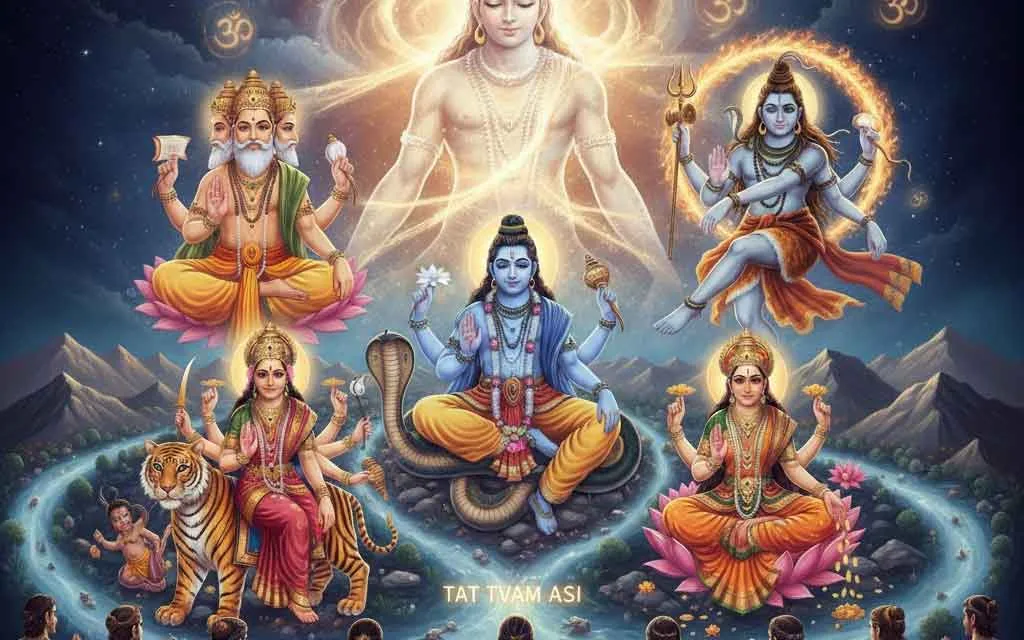
Hindu Beliefs on the Supreme God: A Devotional Journey into the Infinite Divine
Rudram Chamakam: The Complete Guide to the Supreme Shiva Hymn
Surya Jayanti 2026: The Festival of the Sun God — Complete Guide to Significance, Rituals & Mantras