Indonesian President says his recent DNA test revealed that he has Indian ancestry
In a heartwarming and surprising revelation, Indonesian President Prabowo Subianto shared that a recent DNA test confirmed his Indian ancestry.
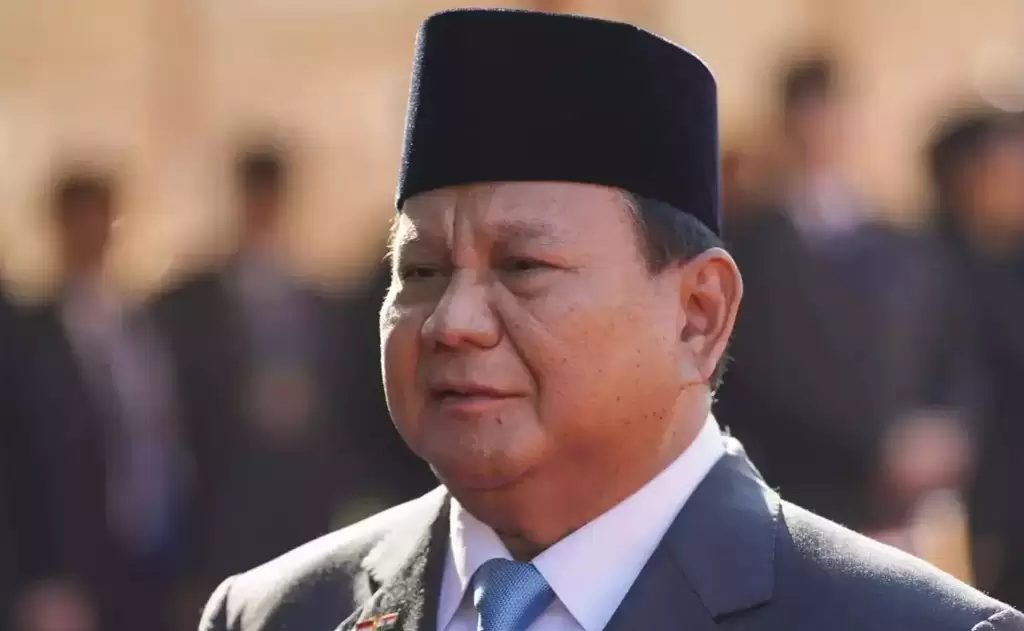
In a heartwarming and surprising revelation, Indonesian President Prabowo Subianto shared that a recent DNA test confirmed his Indian ancestry.
In a heartwarming and surprising revelation, Indonesian President Prabowo Subianto shared that a recent DNA test confirmed his Indian ancestry. This candid statement, made during a banquet hosted by President Droupadi Murmu, sparked waves of laughter and joy among dignitaries, including Prime Minister Narendra Modi, who couldn't contain his amusement. 😄
President Subianto humorously remarked, “Everybody knows when I hear Indian music, I start dancing,” leaving the audience in fits of laughter and adding a lighter note to the formal event. His admiration for Indian culture, combined with his acknowledgment of shared roots, reflects the profound and ancient ties between India and Indonesia.
Historical and Cultural Links Between India and Indonesia India and Indonesia share a rich tapestry of connections that go back thousands of years:
Shared Heritage: The influence of Indian culture is deeply rooted in Indonesian traditions, evident in the prominence of Ramayana and Mahabharata in Javanese culture. Religious Harmony: Hindu-Buddhist heritage played a key role in shaping Indonesia's art, architecture, and traditions, with iconic monuments like Borobudur and Prambanan reflecting Indian influence. Trade and Commerce: Historical trade routes brought Indian merchants and culture to Indonesia, fostering a lasting bond. Strengthening Modern Ties President Subianto’s public admiration for Prime Minister Modi reflects the growing strategic, economic, and cultural partnership between the two nations. From joint initiatives in defense to collaborative efforts in trade and renewable energy, the Indo-Indonesian relationship is on an upward trajectory.
Why This Matters This revelation is more than just a personal anecdote—it highlights the soft power of Indian culture globally and its influence in shaping relationships. President Subianto's humorous yet heartfelt remarks have created a buzz, trending across social media platforms and sparking discussions about the intertwined histories of India and Southeast Asia.
Key Takeaways: President Subianto's DNA revelation emphasizes the ancient bonds between India and Indonesia. His love for Indian music and culture showcases India’s global cultural impact. The growing friendship between the leaders promises stronger bilateral relations. Stay tuned for more updates on this remarkable story as India and Indonesia continue to deepen their ties, blending history, culture, and modern diplomacy. 🌟
How did Hinduism and Sanskrit shape the foundations of Indonesian civilization?
Long before Islam became the dominant religion of the Indonesian archipelago, Hindu and Buddhist kingdoms ruled for over a thousand years, leaving an indelible mark on the region's language, law, and cosmology. The Kutai Kingdom of East Kalimantan, dated to approximately the 4th century CE, is widely regarded as one of the earliest Indianized polities in Southeast Asia, with its Sanskrit inscriptions on stone pillars — known as yupas — directly mirroring Vedic sacrificial traditions. The great Majapahit Empire (1293–1527 CE), centered in East Java, considered itself the inheritor of a sacred Hindu world order, and its court poet Mpu Prapanca composed the Nagarakretagama, a Sanskrit-influenced text that catalogued the empire's divine geography.
Sanskrit's influence on the Javanese, Balinese, and Old Malay languages is so pervasive that linguists estimate thousands of Sanskrit loanwords survive in modern Bahasa Indonesia to this day — words like 'bahasa' itself (from Sanskrit 'bhasha', meaning speech), 'raja' (king), 'dewa' (deity), and 'karma.' The Dharmashastra tradition, particularly the Manusmriti, informed early Indonesian legal codes. This is not mere cultural borrowing — it represents a centuries-long transmission of an entire civilizational framework rooted in the Vedic worldview.
What role does the Ramayana play in living Indonesian culture today?
Unlike many parts of the world where the Ramayana exists only in textual or academic form, in Indonesia it remains a living, breathing performance tradition. The Ramayana Ballet performed at the Prambanan Temple complex near Yogyakarta — a UNESCO World Heritage Site dedicated to the Trimurti of Brahma, Vishnu, and Shiva — draws thousands of visitors annually and has been staged continuously for decades. Dancers in elaborate costumes enact the story of Rama, Sita, Hanuman, and Ravana against the backdrop of the illuminated temple towers, some of which date to the 9th century CE.
In Bali, which remains a Hindu-majority island with over four million practicing Hindus, the Kecak fire dance dramatises the Sundara Kanda of the Valmiki Ramayana in a form unique to Balinese artistic tradition. Wayang kulit — the ancient shadow puppet theatre — routinely performs episodes from both the Ramayana and Mahabharata, with puppeteers (dalang) considered spiritually elevated figures who undergo years of ritual training. The presence of these epics in Indonesian public life is not nostalgic preservation; it is an ongoing cultural inheritance that shapes moral education, community identity, and ritual practice.
What does Prabowo Subianto's ancestry reveal about the movement of Indian communities into maritime Southeast Asia?
Indian traders, scholars, and priests began settling in the Indonesian archipelago as early as the 1st century CE, arriving via ancient maritime routes across the Bay of Bengal. These were not isolated visitors but communities that established lasting presences — intermarrying with local populations, building temples, transmitting Sanskrit learning, and serving as religious advisors to royal courts. The process, which historians call 'Indianisation' or 'Sanskritisation' of Southeast Asia, was driven less by conquest and more by trade, religious prestige, and voluntary cultural exchange.
Tamil merchants from South India were particularly prominent in this network, and inscriptions in both Old Tamil and Sanskrit have been found across Sumatra and the Malay Peninsula. The Chola naval expeditions of the 11th century CE, under Rajendra Chola I, reached as far as Srivijaya in Sumatra, though these were commercial and strategic ventures rather than colonisation. President Subianto's Javanese heritage, now confirmed to carry Indian genetic markers, is thus consistent with a documented historical reality — that the elite and mercantile classes of ancient Java absorbed Indian lineages over many generations.
How does Bali preserve an unbroken Hindu tradition in a Muslim-majority country?
Bali's Hinduism, known locally as Agama Hindu Dharma, represents a remarkable continuity of Shaiva-Vaishnava traditions blended with indigenous Balinese animist practices and Buddhist influences. When the Majapahit Empire collapsed in the 15th and 16th centuries under pressure from the rising Islamic Sultanates of Java, a significant portion of the Hindu scholarly and priestly class — Brahmins, court poets, artists, and nobles — migrated to Bali, carrying with them manuscripts, ritual traditions, and temple iconography. This migration effectively preserved a medieval Javanese-Hindu civilizational core that no longer exists on the mainland.
Today, Bali's landscape is defined by over ten thousand temples (pura), including the supreme state temple Pura Besakih on the slopes of Mount Agung, considered the 'mother temple' of the island. The Balinese ritual calendar, based on the 210-day Pawukon cycle combined with the Saka lunar calendar of Indian origin, governs a near-continuous round of offerings, processions, and purification rites. The Indian government has actively engaged with Bali's Hindu community through cultural diplomacy, and the island is often cited internationally as proof that Hindu civilizational traditions are globally resilient.
What is the significance of Borobudur and Prambanan as monuments of shared Indo-Indonesian heritage?
Borobudur, constructed in central Java during the 8th–9th century CE under the Shailendra dynasty, is the largest Buddhist monument in the world and a UNESCO World Heritage Site. Its design is a three-dimensional mandala representing Mount Meru, the cosmic axis-mountain described in both the Puranas and Buddhist cosmological texts. The monument's galleries are carved with over 2,500 relief panels depicting Jataka tales, Bodhisattva narratives, and scenes from daily Javanese life — all rendered within an architectural grammar derived from Vastu Shastra principles.
Prambanan, built roughly contemporaneously under the Hindu Mataram Kingdom, is a Shaiva temple complex whose central shrine — the Shikhara tower dedicated to Shiva Mahadeva — rises 47 metres and is decorated with reliefs from the Ramayana. The juxtaposition of Borobudur and Prambanan within the same geographic and temporal context reflects the extraordinary pluralism of ancient Javanese civilisation, which accommodated both Shaiva Hinduism and Mahayana Buddhism within a shared cultural framework. Both monuments represent India's greatest contribution to world architectural heritage beyond its own borders, and their existence substantiates the deep civilizational kinship that President Subianto's personal revelation has brought back into public conversation.
Frequently Asked Questions
What is Indonesian President says his recent DNA test?
In a heartwarming and surprising revelation, Indonesian President Prabowo Subianto shared that a recent DNA test confirmed his Indian ancestry. This candid statement, made during a banquet hosted by President Droupadi Murmu, sparked waves of laughter and joy among dignitaries, including Prime Minister Narendra Modi, who couldn't contain his amusement.
What are the key points about Indonesian President says his recent DNA test?
😄 President Subianto humorously remarked, “Everybody knows when I hear Indian music, I start dancing,” leaving the audience in fits of laughter and adding a lighter note to the formal event. His admiration for Indian culture, combined with his acknowledgment of shared roots, reflects the profound and ancient ties between India and Indone
Why does Indonesian President says his recent DNA test matter in Hinduism?
It reflects core values of Sanatana Dharma and offers practical and spiritual guidance that remains relevant across generations.
How can devotees apply Indonesian President says his recent DNA test in daily life?
By reflecting on its teaching, incorporating the related practices or observances into daily routine, and approaching it with sincere devotion and understanding.
You might also like
Maha Shivratri 2026 Vrat Recipes — Sabudana Khichdi, Singhada Halwa, Phalahara Foods Complete Fasting Guide
Gita Jayanti 2026 Prasad Recipes — Tulsi-Honoring Sweets, Krishna's Favourites & December 10 Bhog Plate
Maha Kumbh 2025 Legacy — 13 Months Later: Records, Spiritual Impact, NRI Pilgrim Stories & Next Ardh Kumbh 2027 Preview