Karthika Masam Celebrations and Events in Canada 2026: A Guide for Devotees Across the Country
Karthika Masam 2026 begins just after Diwali (8 November) and runs to 8 December. Canadian dates for Karthika Somavaram, Tulsi Vivah and Karthika Pournami, with home rituals and where to worship from Toronto to Vancouver.
Karthika Masam 2026 begins just after Diwali (8 November) and runs to 8 December. Canadian dates for Karthika Somavaram, Tulsi Vivah and Karthika Pournami, with home rituals and where to worship from Toronto to Vancouver.
Quick answer: Karthika Masam 2026 runs from 10 November to 8 December 2026, starting just after Diwali on Sunday 8 November (Govardhan Puja is Monday 9 November and Bhai Dooj Tuesday 10 November in Canada). The Karthika Somavaram Mondays are 16, 23, 30 November and 7 December, Tulsi Vivah is Saturday 21 November and Karthika Pournami is Tuesday 24 November. Because 2026 has an extra lunar month, everything falls about three weeks later than last year.
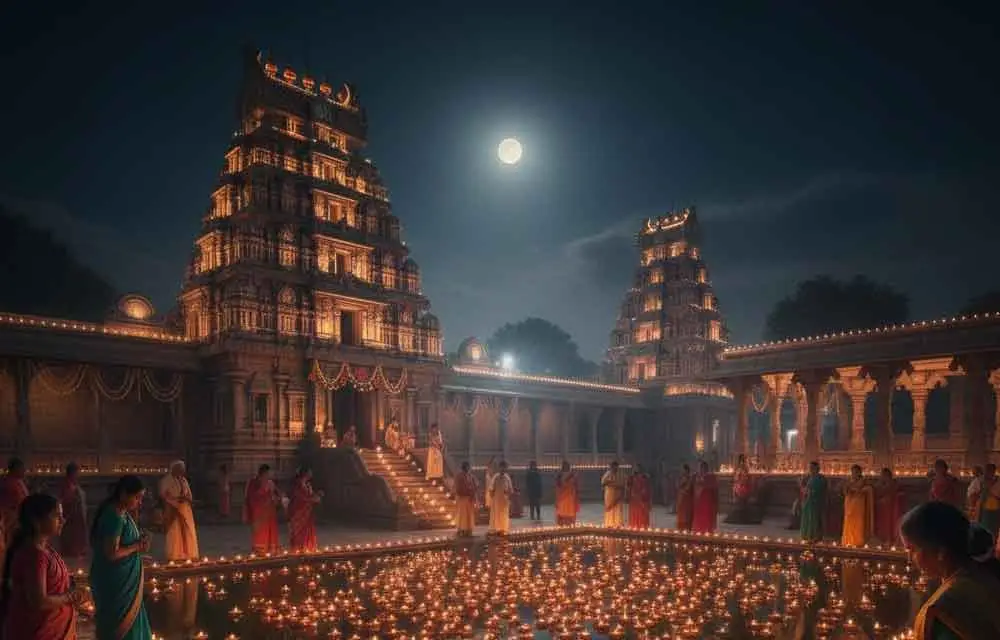
Karthika Masam is one of the most sacred months of the Hindu calendar. In Canada, where large Hindu communities live in the Greater Toronto Area, Metro Vancouver, Calgary, Edmonton, Ottawa and Montreal, the month blends ancient discipline with Canadian life: lamps lit against early November darkness, Monday fasts kept around work and school, and temple deepotsavams that bring Telugu, Kannada, Tamil, Gujarati and North Indian families together.
Karthika Masam 2026 by country
By the local panchang (Drik Panchang rules for US and Canadian sunrise), Karthika Masam 2026 begins on Monday 9 November, so North America has five Karthika Somavarams — 9, 16, 23 and 30 November and 7 December — and the Pournami tithi is current on the evening of Monday 23 November. Temples that follow the Indian calendar keep 10 November and four Mondays; follow your temple.
- Karthika Masam 2026 USA — dates, Somavarams and Pournami city by city
- Karthika Masam 2026 UK — dates, Somavarams and Pournami city by city
- Karthika Masam 2026 Canada — dates, Somavarams and Pournami city by city
- Karthika Masam 2026 Australia — dates, Somavarams and Pournami city by city
- Karthika Masam 2026 Dubai & UAE — dates, Somavarams and Pournami city by city
The spiritual significance of Karthika Masam
Kartika is dear to both Lord Shiva and Lord Vishnu. The Skanda Purana praises it as the greatest of months, and the Puranas teach that lamps lit, fasts kept and charity given in Kartika bring manifold merit. Karthika Pournami celebrates the victory of light over darkness, and Lord Vishnu awakens from His four-month sleep on Prabodhini Ekadashi, opening the season of weddings and Tulsi Vivah.
For Canadian Hindus the month is a bridge to cultural roots. As the evenings close in well before 5 pm, lighting a deepam every dusk brings warmth and a sense of rhythm. Families fast on Mondays (Somavara Vratham), take an early bath in place of the traditional river snanam, and chant Om Namah Shivaya and Om Namo Narayanaya. In 2026 the month begins right after Diwali, so the festive lights of Deepavali flow straight into a month of quieter devotion.
Mythological roots
According to the Shiva Purana, Lord Shiva destroyed the three flying cities of the demon Tripurasura on Kartika Purnima, earning the name Tripurari; the night is therefore called Tripurari Pournami, and the gods are said to have celebrated with lamps. The month is also the Damodara month of Vaishnavas, remembering the child Krishna bound by Mother Yashoda, and the time of Tulasi Devi's sacred marriage to Lord Vishnu.
In Andhra Pradesh, Telangana, Tamil Nadu and Karnataka, the month is known for lighting 365 wicks on Karthika Pournami, Vanabhojanam (a sattvic meal under amla trees), and Koti Deepotsavam, the lighting of a crore lamps. These customs travelled with immigrants to Canada and have grown from home shrines into temple celebrations over the decades.
Karthika Masam 2026 dates for Canada
| Observance | Date in Canada |
|---|---|
| Dhanteras | Friday 6 November 2026 |
| Narak Chaturdashi | Saturday 7 November 2026 |
| Diwali / Lakshmi Puja | Sunday 8 November 2026 |
| Govardhan Puja / Bali Pratipada | Monday 9 November 2026 |
| Bhai Dooj | Tuesday 10 November 2026 |
| Karthika Masam begins (Indian reckoning) | Tuesday 10 November 2026 |
| 1st Karthika Somavaram | Monday 16 November 2026 |
| Devuthani (Prabodhini) Ekadashi | Friday 20 November 2026 |
| Tulsi Vivah | Saturday 21 November 2026 |
| 2nd Karthika Somavaram | Monday 23 November 2026 |
| Karthika Pournami | Tuesday 24 November 2026 |
| 3rd Karthika Somavaram | Monday 30 November 2026 |
| 4th Karthika Somavaram | Monday 7 December 2026 |
| Karthika Amavasya (month ends) | Tuesday 8 December 2026 |
North Indian families following the purnimanta calendar observe Kartik from about 26 October to 24 November 2026, ending on the same full moon.
Timing tips across Canadian time zones
Always use local sunrise and sunset rather than India time. On Diwali evening, 8 November 2026, sunset is about 4:59 pm in Toronto, 4:58 pm in Calgary and 4:40 pm in Vancouver; Lakshmi Puja is done in the Pradosh Kaal after local sunset. For exact muhurats, Ekadashi parana and Purnima timings, select your city on Drik Panchang or follow your temple's calendar.
How Canadian Hindus observe Karthika Masam
Temples become focal points, with daily aartis, bhajans, Somavaram abhishekam and annadanam. Families light diyas at home every evening, and many combine the month's emphasis on daana (giving) with modern seva such as donating to food banks or winter clothing drives. Live-streamed pujas help devotees who live far from a temple or cannot travel on snowy weekday evenings.
Where to worship: city by city
The temples and organisations below are long-established in their communities. Their 2026 Karthika programmes had not been announced when this guide was updated, so check their notices or call before you go.
Toronto and the GTA
The Sringeri Vidya Bharati Foundation temple in Stroud, north of Toronto, is known for its Karthika observances, including Somavaram pujas and Karthika Pournami deepotsavam. ISKCON Toronto observes the Damodara month with nightly lamp offerings and the Damodarashtakam. The GTA's many Venkateswara, Shiva, Murugan and Mandir communities across Brampton, Mississauga, Scarborough, Markham and Richmond Hill also hold Kartika programmes, and Telugu and Kannada associations often organise weekend bhajans or Vanabhojanam-style potlucks.
Vancouver and the Lower Mainland
The Lakshmi Narayan Mandir in Surrey and other temples in the region hold Tulasi archana and Kartika pujas, and ISKCON Vancouver observes the Damodara month. Indian grocery and puja shops in Surrey and South Vancouver stock diyas, wicks and Tulasi plants for the season.
Calgary and Edmonton
In Alberta, the Hindu Society of Calgary and the BAPS Shri Swaminarayan Mandir in Calgary are important community centres, and ISKCON communities in Calgary and Edmonton offer Damodara lamp offerings. Cold weather means most gatherings are indoors, so community halls host bhajan evenings and Somavaram pujas.
Ottawa and Montreal
The Hindu Temple of Ottawa-Carleton serves a wide community and typically marks Somavarams and Karthika Pournami. Montreal's Hindu temples, including its Tamil Murugan temples, hold Kartika worship in their own traditions. Contact your local temple for its 2026 schedule.
Key rituals and vratas
- Daily deepam: light a cotton-wick ghee or sesame-oil lamp at dawn and dusk, especially at the threshold and before the Tulasi plant.
- Somavara Vratham: fast on Mondays and perform abhishekam to a Shiva Lingam with water, milk and bilva leaves.
- Tulasi Puja: water and worship the Tulasi plant daily; keep it indoors near a sunny window in the Canadian cold.
- Karthika Snanam: an early bath at home before sunrise with a prayer invoking the sacred rivers.
- Vanabhojanam: traditionally a meal under an amla tree; in Canada, a community potluck indoors with an amla or Tulasi plant works well.
- Karthika Pournami: light 365 wicks at home or join a temple deepotsavam on 24 November.
- Gadapa puja: decorating and worshipping the threshold with turmeric, kumkum and a lamp each evening.
In apartments and condos, check smoke-alarm rules; battery tea lights placed beside a single real ghee lamp at the altar are a safe compromise.
Sattvic food for Karthika Masam
Many families avoid onion, garlic and non-vegetarian food for the month, and some take only one meal a day (ekabhuktam) or eat after sunset on Mondays (nakta vratam). Popular dishes include pongal, payasam, sabudana khichdi, akki rotti, fruit and nuts. Temples serve annadanam with pongal and other prasadam at community events.
Families, young people and inclusivity
Canadian-born children often connect most with hands-on traditions: drawing a rangoli at the door, lighting the evening lamp, or helping prepare the Tulsi Vivah decorations. Mantra and panchang apps make it easy to keep track of dates, and hybrid temple events let families join priests in India for Karthika Pournami. Most temple programmes welcome friends of all faiths, making the month a lovely way to share Hindu culture with neighbours and colleagues.
Frequently asked questions
When is Karthika Masam 2026 in Canada?
Karthika Masam 2026 runs from 10 November to Karthika Amavasya on 8 December in the Telugu and Kannada calendar. In Canada, Bali Pratipada / Govardhan Puja falls on Monday 9 November, so a few temple calendars may begin the month a day earlier; follow your temple.
Why is Karthika Masam later than usual in 2026?
2026 has an extra lunar month (Adhika Masa), so Diwali and Karthika Masam fall about three weeks later than in the previous year.
When is Karthika Pournami 2026 in Canada?
Karthika Pournami (Kartika Purnima) is on Tuesday 24 November 2026 in Canada.
What are the Karthika Somavaram dates in 2026?
The Mondays of Karthika Masam 2026 are 16, 23 and 30 November and 7 December.
When are Prabodhini Ekadashi and Tulsi Vivah in Canada?
Devuthani (Prabodhini) Ekadashi is on Friday 20 November and Tulsi Vivah on Saturday 21 November 2026 in Canada.
How can I do Karthika Snanam in a Canadian winter?
Take an early bath at home before sunrise, adding a little Ganga jal or a few tulsi leaves to the water, and chant a river-invocation prayer. Light a lamp before the Tulasi plant afterwards. The intention matters more than the river.
Embracing the divine light of Karthika Masam in Canada
Karthika Masam 2026 in Canada is a month of spiritual renewal that begins with the lights of Diwali on 8 November and ends at Karthika Amavasya on 8 December. Whether you join a temple deepotsavam in the GTA, a Tulasi puja in Surrey or a Monday abhishekam in Calgary, or simply light one lamp at your own doorway each evening, may the month bring peace and blessings to your family.
Editor's note (4 October 2026)
This guide has been rewritten for 2026 using Drik Panchang dates for Canada. Event schedules, times and claims from earlier editions have been removed because they do not apply to 2026. Please check with your local temple or association for 2026 programmes.
Related guides
You might also like
Gita Jayanti 2026 Prasad Recipes — Tulsi-Honoring Sweets, Krishna's Favourites & December 20 Bhog Plate
Maha Shivratri 2026 Vrat Recipes — Sabudana Khichdi, Singhada Halwa, Phalahara Foods Complete Fasting Guide
Shani Deva Temples Worldwide & Must-Performed Rituals — Complete Devotee's Guide