
Holi 2026: Festival of Colors, Love, and Triumph of Good Over Evil – Complete Guide to History, Legends, Significance, Vrat, Rituals & Celebrations
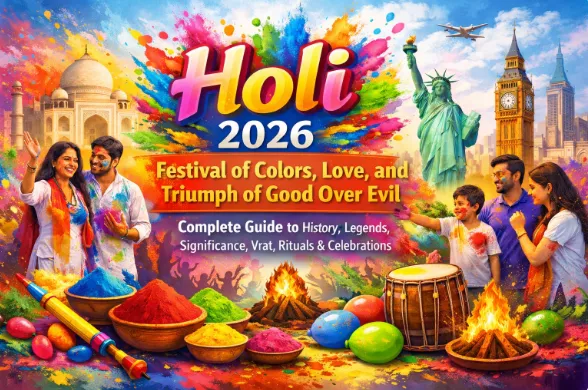
Holi 2026: Festival of Colors, Love, and Triumph of Good Over Evil – Complete Guide to History, Legends, Significance, Vrat, Rituals & Celebrations Holi 2026 Date | Holika Dahan 2026 | Rangwali Holi 2026 | Holi History Legends Prahlad Holika Radha Krishna | Holi Vrat Vidhi Rules | Holi Rituals Traditions Lathmar Holi Brij Holi | Happy Holi Wishes Images Hari Om, dear devotees! As spring blooms and winter fades, the vibrant Holi 2026 arrives on Wednesday, March 4, 2026, with Holika Dahan (Choti Holi) on the evening of Tuesday, March 3, 2026.
Holi 2026: Festival of Colors, Love, and Triumph of Good Over Evil – Complete Guide to History, Legends, Significance, Vrat, Rituals & Celebrations
Holi 2026 Date | Holika Dahan 2026 | Rangwali Holi 2026 | Holi History Legends Prahlad Holika Radha Krishna | Holi Vrat Vidhi Rules | Holi Rituals Traditions Lathmar Holi Brij Holi | Happy Holi Wishes Images
Hari Om, dear devotees! As spring blooms and winter fades, the vibrant Holi 2026 arrives on Wednesday, March 4, 2026, with Holika Dahan (Choti Holi) on the evening of Tuesday, March 3, 2026. Known as the Festival of Colors, Festival of Love, and Festival of Spring, Holi is one of Hinduism's most joyous celebrations. Streets explode with gulal (colored powders), water balloons fly, music fills the air, and people embrace in forgiveness and unity – "Bura Na Mano, Holi Hai!"
In 2026, Holi falls on the full moon day (Purnima) of Phalguna month, symbolizing renewal, harvest bounty, and divine play. From Mathura-Vrindavan's divine Braj Holi to urban revelries, this festival unites millions. This comprehensive SEO-optimized guide for www.hindutone.com explores Holi's profound history, mythological stories, spiritual importance, vrat rules, rituals, regional traditions, and devotional essence – a heartfelt journey into bhakti and ananda.
Holi 2026 Dates and Muhurat: When is Holi Celebrated?
Holi is a two-day festival, but in Braj region (Mathura, Vrindavan, Barsana), celebrations span weeks.
- Holika Dahan (Choti Holi): Tuesday, March 3, 2026 (evening) – Bonfire ritual symbolizing evil's destruction.
- Rangwali Holi (Dhulandi/Dhuleti): Wednesday, March 4, 2026 – Main day of colors, water play, and feasting.
Purnima Tithi begins March 2 evening and ends March 3. Holika Dahan muhurat typically evening after sunset. Check local panchang for exact timings.
Holi marks spring's arrival, end of winter, and harvest joy. In 2026, plan early for Braj's extended festivities starting late February.
The Divine Legends of Holi: Stories of Devotion, Love, and Victory
Holi's roots lie in ancient puranas, blending triumph over evil with eternal love.
The Legend of Prahlad, Holika, and Hiranyakashipu: Triumph of Bhakti
From Bhagavata Purana and Vishnu Purana comes the central story. Demon king Hiranyakashipu, granted boons making him nearly invincible, demanded worship as god. His son Prahlad, devoted to Lord Vishnu, refused.
Enraged, Hiranyakashipu tried killing Prahlad multiple ways – elephants, snakes, cliffs – but Vishnu protected him. Finally, sister Holika, immune to fire, sat in pyre with Prahlad. Prahlad chanted "Om Namo Narayanaya," emerging unharmed; Holika burned as her boon failed in misuse.
Lord Vishnu as Narasimha (half-man, half-lion) slayed Hiranyakashipu at twilight, on threshold, with claws – bypassing boons.
Holika Dahan commemorates this: bonfire burns evil, Prahlad's faith triumphs. It teaches unwavering bhakti destroys ego and adharma.
Radha-Krishna's Divine Play: Festival of Eternal Love
In Braj, Holi celebrates Radha-Krishna's ras lila. Young Krishna, dark-complexioned, complained to Yashoda why Radha was fair. Playfully, she suggested coloring Radha's face.
Krishna applied colors to Radha and gopis, starting playful tradition. In Vrindavan, Krishna teased Radha's village (Barsana), leading to Lathmar Holi – women "beat" men with sticks in jest.
This symbolizes divine love transcending barriers, unity in play, and soul's union with Supreme.
Other Legends: Kamadeva's Sacrifice and More
One tale links Holi to Kamadeva, god of love. To awaken Shiva from meditation for Parvati's marriage and world's balance, Kamadeva shot arrow at Shiva. Enraged Shiva burned him to ashes; later revived. Holi's bonfire sometimes represents this, colors passion's revival.
In some regions, Holi ties to Shiva-Parvati or agricultural fertility rites from Vedic times.
These stories make Holi profound: victory of good, devotion's power, love's celebration.
Spiritual Significance and Importance of Holi in Hinduism
Holi holds deep meaning in Sanatan Dharma.
- Triumph of Good Over Evil → Holika Dahan reminds dharma prevails; bhakti protects from adversity.
- Arrival of Spring and Renewal → Phalguna Purnima welcomes Vasanta Ritu – nature's rebirth, shedding winter gloom.
- Forgiveness and Unity → Colors erase social barriers; enemies become friends, fostering harmony.
- Divine Love and Bhakti → Radha-Krishna play inspires prema bhakti – selfless devotion.
- Harvest Festival → Celebrates good crops, prosperity.
Scriptures like Bhavishya Purana mention Holi-like festivals. It promotes satvik joy, community bonding, ego dissolution.
In Kali Yuga, Holi revives childlike innocence, connecting to divine through play.
Holi Vrat: Fasting Rules, Vidhi, and Benefits
Though not strict like Ekadashi, many observe vrat for purity.
Holi Vrat Vidhi
- Wake Brahmi Muhurta, bathe, wear clean clothes.
- Set altar with Radha-Krishna or Vishnu idols.
- Sankalp for vrat.
- Offer tulsi, flowers, fruits.
- Chant Vishnu Sahasranama or Krishna mantras.
- Partial fast: fruits, milk, sabudana, potatoes (no grains, onion-garlic).
- Some nirjala till Holika Dahan.
- Break with thandai, gujiya post-play.
Rules
- Satvik food only.
- Avoid non-veg, alcohol.
- Maintain brahmacharya thoughts.
- Charity, forgiveness.
Benefits: Purifies karma, enhances bhakti, brings prosperity, removes obstacles.
For rigorous, follow like Phalguna Purnima vrat.
Traditional Rituals and Customs of Holi
Holi rituals blend devotion and joy.
Holika Dahan (Choti Holi)
Evening of March 3, 2026:
- Collect wood days ahead.
- Place Holika-Prahlad effigies.
- Apply tilak, circle fire 7 times with grains.
- Light during muhurat amid mantras.
- Sing bhajans, dance.
- Take embers home for protection.
Symbolizes burning negativity.
Rangwali Holi (Dhulandi)
March 4, 2026:
- Morning puja to Radha-Krishna.
- Play with organic colors, pichkari, balloons.
- Apply gulal, embrace "Happy Holi!"
- Feast: gujiya, mathri, thandai, malpua.
- Evening visits, music.
Unique Regional Traditions
- Lathmar Holi (Barsana/Nandgaon): Women playfully hit men.
- Phoolon Wali Holi (Vrindavan): Flowers instead of colors at Banke Bihari.
- Laddu Holi (Barsana): Sweets thrown.
- Huranga (Dauji, Baldeo): Playful wrestling post-Holi.
In Punjab, linked to Hola Mohalla.
Grand Celebrations: Braj Holi in Mathura-Vrindavan 2026
Braj's Holi lasts weeks:
- Laddu/Lathmar in Barsana.
- Phoolon in Vrindavan.
- Widow Holi in Vrindavan.
- Temples like Banke Bihari, Dwarkadhish burst with colors.
Plan pilgrimage for divine darshan.
Modern Celebrations, Eco-Friendly Holi, and Safety Tips
Use natural colors. Avoid waste. Celebrate responsibly.
Conclusion: Embrace the Colors of Devotion
Holi 2026 invites surrender to joy, forgiveness, bhakti. As colors blend, hearts unite in Narayana's love.
🌸 For More Devotional Journey, Follow
- Temples
/temples/ - Tirumala Updates
/tirumala/ - Sabarimala Yatra
/category/sabarimala-yatra/ - Pooja, Slokas & Mantras
/pooja-slokas-and-mantras/ - Hindu Gods
/hindu-gods/
Happy Holi! May Radha-Krishna bless with eternal ananda.
You might also like

12 Jyotirlinga Yatra 2026: Pilgrimage Guide, Itinerary & Costs | HinduTone

Hindu Festival Calendar 2026–2027: Complete Year Guide | HinduTone

Guru Purnima 2026: Date, Tithi, Vidhi & Mantras | HinduTone
