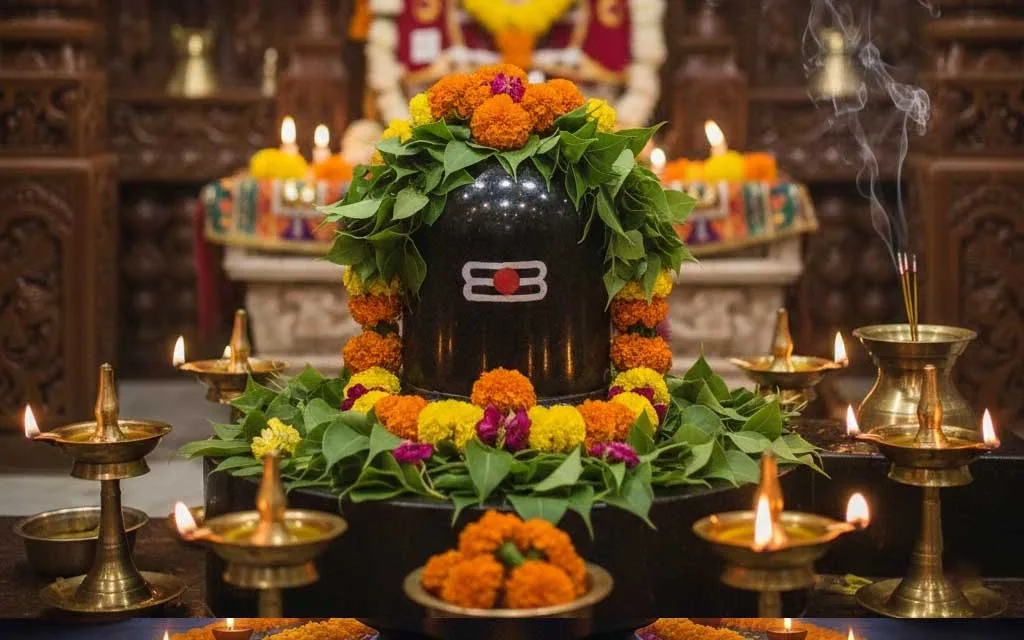
Hombale Films Releases Shiva Shambho Swayambho Promo – Watch Now
The devotional fervor is sweeping across hearts as Hombale Films unleashes a soul-stirring offering to Lord Shiva.

The devotional fervor is sweeping across hearts as Hombale Films unleashes a soul-stirring offering to Lord Shiva. The official promo for the enchanting song Shiva Shambho Swayambho has arrived, igniting a wave of bhakti and divine energy among devotees everywhere. Har Har Mahadev!
This spiritually uplifting devotional track is a modern re-adaptation of the timeless Carnatic kriti “Bho Shambo”, originally composed by the revered saint and musician Swami Dayananda Saraswathi in the melodious raga Revati. The composition beautifully invokes the supreme essence of Lord Shiva—the eternal, self-manifested (Swayambho) form of Shambho, the auspicious one who is the destroyer of ignorance and the bestower of peace.
In this promo, experience the pure vibrations of devotion that capture Mahadev's boundless grace: the cosmic dancer, the compassionate yogi, the one who resides in every atom of the universe. Sung with heartfelt reverence by Narayan Sharma, the track features music production by Sachin Bagli and Narayan Sharma, violin by Narayan Sharma himself, guitar by Sunil Silvester, and backing vocals by Satvik Rao. Mixed and mastered at Warmtone Studios, with creative direction adding layers of visual and auditory sanctity, this song promises to elevate the soul and immerse listeners in Shiva's divine presence.
As the promo teases the profound bhakti that lies ahead, devotees are already chanting Om Namah Shivaya in anticipation. The full video song is set to release on 15th February at 10 AM, a moment when the air will resonate with the sacred chants of Shiva Shambho Swayambho.
Watch the official promo here and let the devotional wave wash over you:
Stay tuned for the full release—mark your calendars, gather your loved ones, and prepare to surrender to the divine rhythm of Lord Shiva. Jai Bholenath! Har Har Mahadev! [image: 🔱]
#ShivaShambhoSwayambho #HombaleFilms #DevotionalSong #LordShiva #HarHarMahadev
The Origin and Spiritual Depth of the Carnatic Kriti 'Bho Shambo'
The original composition 'Bho Shambo Shiva Shambo Swayambho' is a celebrated Carnatic kriti attributed to Swami Dayananda Saraswathi, rendered in the raga Revati — a pentatonic scale of singular meditative quality. Revati's sparse, introspective structure makes it a natural vessel for Shaiva devotion, as its notes seem to dissolve the boundary between the singer and the Supreme. The kriti's very opening syllable 'Bho' is a vocative address to Lord Shiva, an ancient Sanskrit convention found across Vedic hymns and Agamic liturgy.
The lyrical content of the original draws directly from Shaiva philosophy: Shiva is addressed as Swayambhu — the self-originated, the one who owes his existence to no prior cause — a concept elaborated in the Shiva Purana's Vidyeshvara Samhita. He is simultaneously Shambho, the embodiment of auspiciousness (sham meaning welfare, bhu meaning the ground or source). These are not merely poetic epithets; they encode the Advaitic understanding that Shiva is both the substratum and the fullness of creation.
What Does 'Swayambho' Mean and Why Is It Central to Shiva's Identity?
The Sanskrit term Swayambhu (स्वयम्भू) literally means 'self-manifested' or 'self-born,' from swayam (self) and bhu (to become or arise). Unlike creation that emerges from a prior cause, Shiva as Swayambhu is uncaused, eternal, and self-luminous — a description that aligns with the Vedantic concept of Brahman as described in the Mandukya Upanishad and Kaivalya Upanishad. The term is most powerfully embodied in the form of the Jyotirlingas: twelve luminous pillars of light where Shiva is said to have spontaneously manifested, with no human installation or consecration required.
Among the most revered Swayambhu Lingas in India are the Jyotirlinga at Somnath in Gujarat, the Mahakaleshvara at Ujjain in Madhya Pradesh, and the Vishvanatha at Varanasi in Uttar Pradesh. Each of these is believed to be a site where Shiva revealed himself unbidden, as pure, self-originating divine light (jyotis). Devotional compositions like 'Bho Shambo' and its modern adaptation 'Shiva Shambho Swayambho' invoke precisely this unbounded, self-revealing nature of Shiva, reminding listeners that the divine is not distant but perpetually self-manifesting within and around all existence.
Raga Revati and the Ancient Science of Devotional Sound
In the Carnatic classical tradition, raga Revati belongs to the Hanumatodi parent scale (Melakarta 8) and uses only five notes (audava-audava: five ascending, five descending), lending it a quality that Indian musicologists describe as karuna (compassionate pathos) and shanta (serene peace). These are precisely the rasas that Shaiva bhakti literature, from the Tevaram hymns of the Tamil Nayanmars to the Sanskrit stotras of Adi Shankaracharya, seeks to cultivate in the heart of the devotee.
Ancient Sanskrit texts on music theory, including the Sangita Ratnakara of Sarangadeva (13th century), discuss how specific ragas resonate with particular times, emotions, and cosmic forces. Raga Revati is traditionally associated with evening and early night — the hours when Shiva's own energy, as Mahakala (the great lord of time and darkness), is considered especially accessible. Choosing this raga for a Shivaratri composition is thus not merely an aesthetic decision but a liturgically informed one, aligning sound with sacred time.
Hombale Films and the Rising Tradition of Devotional Cinema and Media
Hombale Films, best known for large-scale cinematic productions from the Kannada film industry including the KGF franchise, entering the devotional music space represents a significant cultural moment. Large production houses bringing professional resources — orchestration, visual direction, studio-quality mastering — to bhakti content elevates the presentation of devotional art to audiences accustomed to high production standards.
This trend echoes a long historical pattern in which royal courts and wealthy patrons (shreni) funded the finest musicians, poets, and architects to produce devotional work of the highest quality — from the Vijayanagara Empire's patronage of Carnatic composers to the great temple gopurams of Tamil Nadu erected by the Chola and Nayaka dynasties. When institutions of contemporary culture invest in dharmic content with sincerity and craft, it serves the same social function: making the sacred beautiful and accessible to the widest possible audience.
Maha Shivaratri 2026: The Night of Shiva's Supreme Grace
Maha Shivaratri, observed on the chaturdashi (fourteenth lunar day) of the Krishna Paksha (waning fortnight) in the month of Phalguna, is among the most sacred nights in the Shaiva calendar. The Shiva Purana describes this as the night on which Shiva performed the Tandava Nritya — the cosmic dance that simultaneously sustains and dissolves the universe. Devotees observe a night-long jaagaran (vigil), conducting four praharas (three-hour watches) of worship, each corresponding to one of Shiva's four cardinal aspects.
The Skanda Purana and Padma Purana both record the narrative of a hunter who, unknowingly, offered Shiva bilva (Aegle marmelos) leaves and kept a night-long fast — and was liberated by this inadvertent worship. This legend underlines Shivaratri's central teaching: that sincere, whole-hearted attention to Shiva — whether through formal puja, chanting, music, or simple wakefulness in his name — carries transformative grace. Devotional releases like 'Shiva Shambho Swayambho' serve as a modern continuation of this tradition, providing a contemporary medium through which millions can keep vigil and direct their consciousness toward the Mahadeva.
How to Engage With Devotional Music as a Spiritual Practice
In the Bhakti tradition, conscious listening to devotional music is itself a form of shravanam — one of the nine limbs of bhakti enumerated by the sage Narada in the Narada Bhakti Sutras and echoed in the Bhagavata Purana's Saptama Skandha. Shravanam is not passive background listening; it involves directing the mind entirely toward the divine subject of the music, allowing the words, melody, and rhythm to become a single-pointed meditation.
Practical guidance from the tradition suggests that devotional tracks like 'Shiva Shambho Swayambho' be listened to in a clean, quiet space, ideally after lighting a deepa (lamp) before a Shiva image or Shivalinga. Repeating the central mantra Om Namah Shivaya or Har Har Mahadev silently between verses deepens absorption. The Shivaratri vigil of 2026 offers an ideal occasion to incorporate such a composition into personal or community sadhana, allowing professional artistry and heartfelt bhakti to reinforce each other in the pursuit of Shiva's grace.
Frequently Asked Questions
When is the full Shiva Shambho Swayambho video song releasing?
The full video song is set to release on 15th February at 10 AM, following the official promo from Hombale Films.
Who composed the original Carnatic kriti behind Shiva Shambho Swayambho?
The song is a modern re-adaptation of the Carnatic kriti Bho Shambo, composed by Swami Dayananda Saraswathi in raga Revati.
Who sings and produces Shiva Shambho Swayambho?
Narayan Sharma sings the track and plays violin, with music production by Sachin Bagli and Narayan Sharma. Sunil Silvester plays guitar, Satvik Rao provides backing vocals, and it was mixed and mastered at Warmtone Studios.
What does Swayambho mean in relation to Lord Shiva?
Swayambhu means self-manifested or self-born, describing Shiva as uncaused and eternal. It is embodied in the Jyotirlingas, such as Somnath, Mahakaleshvara at Ujjain and Vishvanatha at Varanasi.
Why is raga Revati suited to a Maha Shivaratri song?
Revati is a five-note raga of the Hanumatodi parent scale, associated with karuna and shanta rasas. It is traditionally linked with evening and early night, the hours when Shiva as Mahakala is considered especially accessible.
How can devotees listen to devotional music as a spiritual practice?
Listen in a clean, quiet space, ideally after lighting a lamp before a Shiva image or Shivalinga. Silently repeating Om Namah Shivaya or Har Har Mahadev between verses deepens absorption, in the spirit of shravanam.
Share this with family and friends
Send it on WhatsApp, post it, or copy the link.
More from Maha Shivaratri 2026
- Maha Shivaratri Four Prahar Puja — The Complete Night-by-Night Ritual Guide
- Devotion in the Sands: The Inspiring Story of a Karnataka Couple Crafting 1008 Shiva Lingams Every Maha Shivaratri
- Isha Foundation's Mahashivratri 2026 Sets New Record as Most Viewed Celebration on YouTube
- The 33rd Mahashivratri at Isha Yoga Center
- Maha Shivaratri 2026 Celebrations in New Zealand: How the Hindu Community Honored Lord Shiva Yesterday – A Complete Guide to Cities, Temples, and Events
You might also like
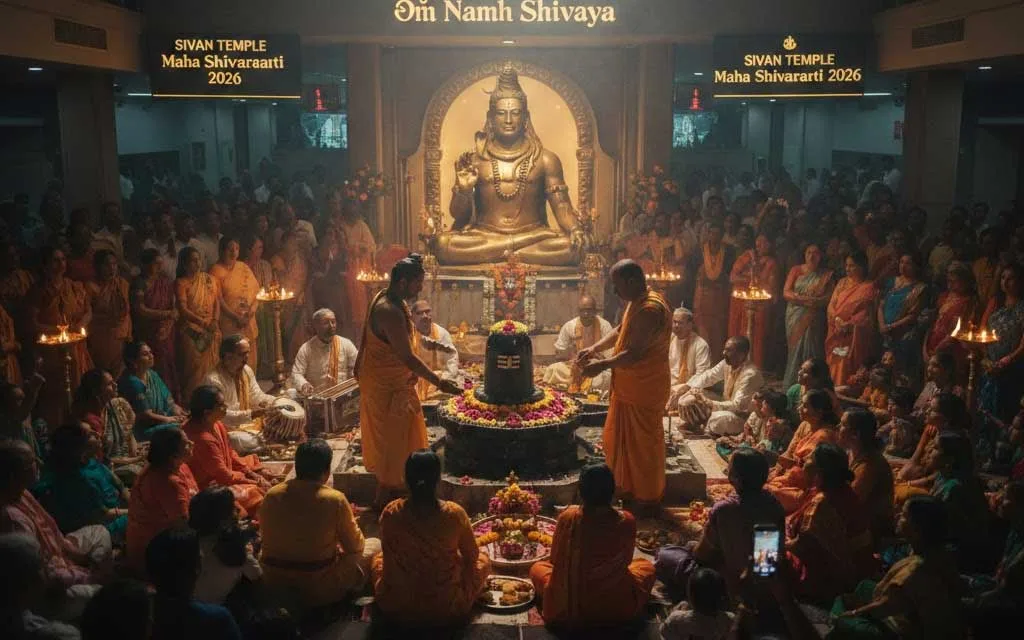
Maha Shivaratri 2026 Celebrations in Germany: How the Hindu Community Honored Lord Shiva Yesterday – A Complete Guide to Cities, Temples, and Events
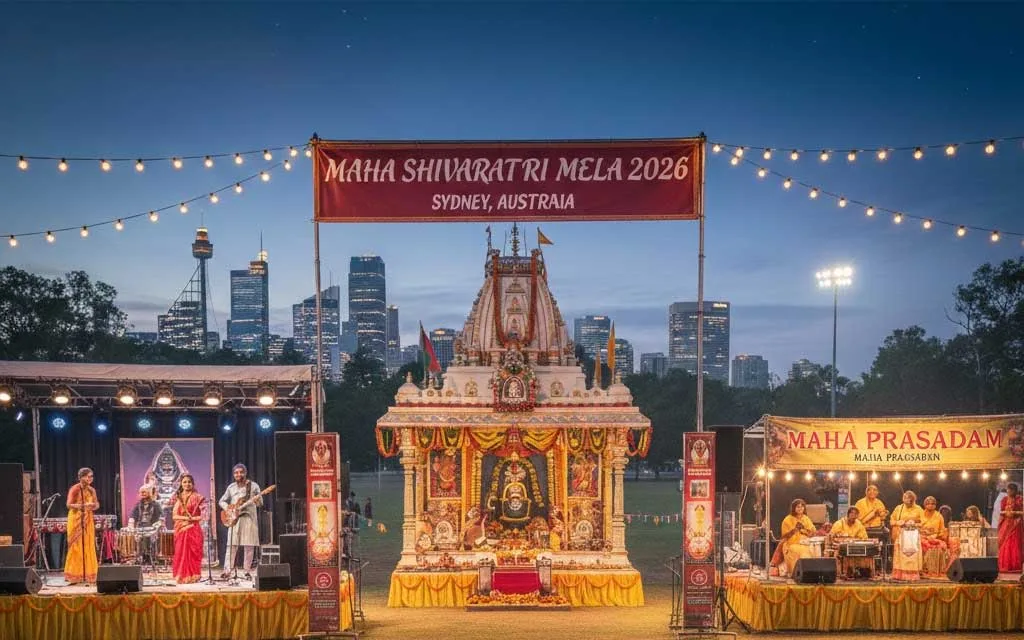
Maha Shivaratri 2027 Celebrations in Australia: How the Hindu Diaspora Honored Lord Shiva Yesterday – A Complete Guide to Cities, Temples, and Events
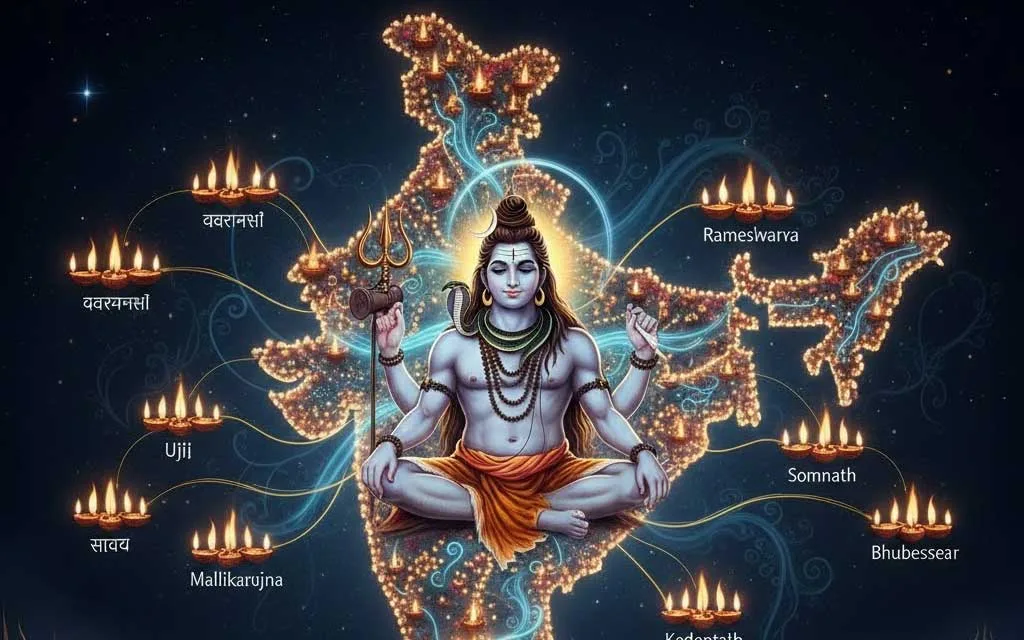
Maha Shivaratri 2027 Celebrations in India: How the Nation Honored Lord Shiva Yesterday – A Complete Guide to Temples, Cities, and Rituals