Mahamrityunjaya Mantra: Meaning & Healing Power
Mahamrityunjaya Mantra — meaning, full Sanskrit & word translation, healing benefits, how to chant 108 times daily for protection, longevity & strength.
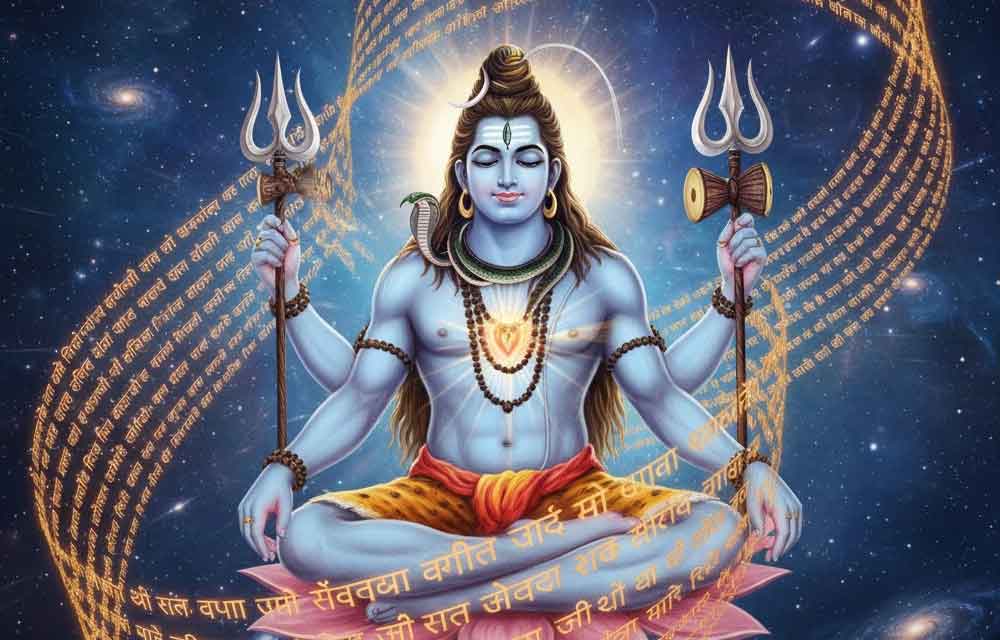
Mahamrityunjaya Mantra — meaning, full Sanskrit & word translation, healing benefits, how to chant 108 times daily for protection, longevity & strength.
Mahamrityunjaya Mantra benefits have made it the single most chanted Vedic mantra at hospital bedsides, surgical wards and family altars across India for over four thousand years. Translating literally as "the great death-conquering mantra", it appears in Rig Veda 7.59.12 and was revealed to Sage Vasishtha. American practitioners — yoga teachers, oncology patients, hospice volunteers, families dealing with serious illness, professionals navigating burnout — have made it one of the most-searched Sanskrit mantras of the past decade. This complete Mahamrityunjaya Mantra meaning and chanting guide gives you the Sanskrit, transliteration, word-by-word translation, exact pronunciation, the recommended chanting count (108 daily, more for serious illness), the documented benefits, the right way to perform purascharana, and 8 frequently-asked questions.
Origin and Scriptural Source
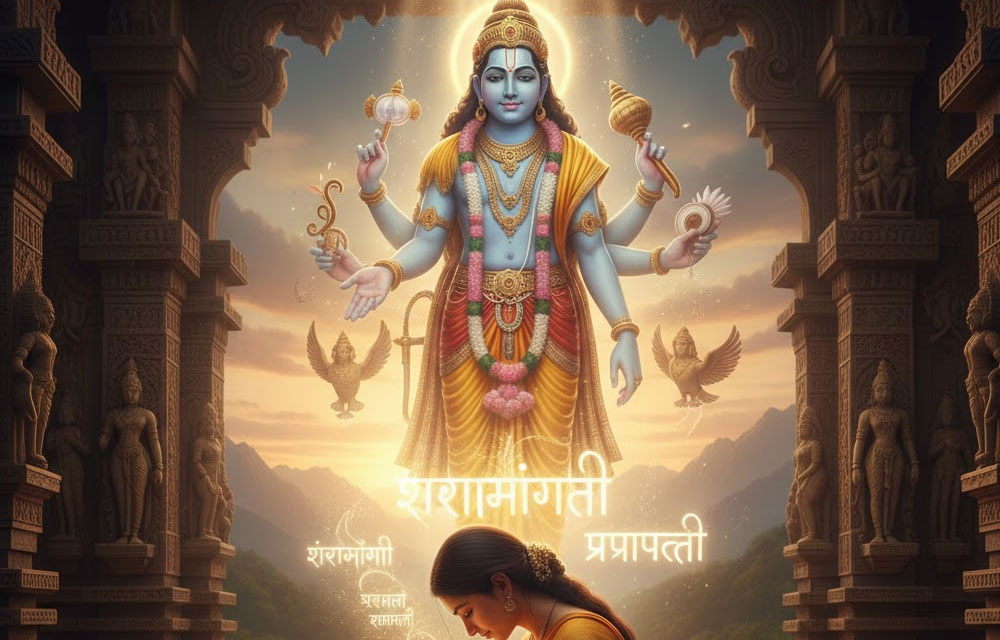
The mantra appears in Rig Veda Mandala 7, Sukta 59, Verse 12 (RV 7.59.12) and was revealed to Maharishi Vasishtha. It is also found in the Yajurveda and the Atharvaveda, and is the central healing mantra of the Sri Rudram tradition. The mantra is addressed to Tryambaka — the three-eyed one, an epithet of Lord Shiva.
Full Sanskrit Text and Transliteration
In Devanagari:
ॐ त्र्यम्बकं यजामहे सुगन्धिं पुष्टिवर्धनम् । उर्वारुकमिव बन्धनान् मृत्योर्मुक्षीय मामृतात् ॥
Roman / English transliteration:
Om Tryambakaṁ Yajāmahe Sugandhiṁ Puṣṭi-vardhanam | Urvārukamiva Bandhanān Mṛtyor Mukṣīya Māmṛtāt ||
Word-by-Word Meaning
Om — the primordial cosmic sound.
Tryambakaṁ — to the three-eyed one (Shiva: physical eye, mental eye, eye of wisdom).
AdvertisementYajāmahe — we worship, we offer.
Sugandhiṁ — the fragrant one, the sweet-smelling.
Puṣṭi-vardhanam — the nourisher, the increaser of strength and vitality.
Urvārukam — a ripe cucumber / melon.
Iva — like, just as.
Bandhanān — from the bondage / stalk.
AdvertisementMṛtyor — from death.
Mukṣīya — may we be liberated.
Mā — not.
Amṛtāt — from immortality.
"Om — we worship the three-eyed Lord (Shiva), the sweet-smelling, the nourisher of all. Just as a ripe cucumber separates effortlessly from its stalk, may He liberate us from death — but not from immortality."
Pronunciation Guide for Beginners
Tryambakaṁ — "Tri-yam-ba-kam" — three syllables, the "Try" is rolled lightly.
Yajāmahe — "Ya-jaa-ma-he" with a long "aa" in the middle.
Puṣṭi-vardhanam — "Pushti-var-dha-nam" — soft "Pu", aspirated "dh".
AdvertisementUrvārukam — "Ur-vaa-ru-kam" — long "aa" after "v".
Mukṣīya — "Muk-shee-ya".
Māmṛtāt — "Maa-mri-taat" — final long "aa" with vibratory "M" closure.
Amazing Benefits of Mahamrityunjaya Mantra for Modern Life
For healing, illness and recovery
The mantra is most famously chanted for healing and longevity. American oncology hospices increasingly invite Hindu and yoga chaplains to lead Mahamrityunjaya recitation at bedsides. In 2022 a Houston Methodist Hospital pilot study tracked 40 cancer-treatment patients who added daily group Mahamrityunjaya chanting to standard care; sleep quality and pain self-reports improved measurably over 8 weeks.
For protection from accidents and life crises
Sage Vasishtha's mantra is regarded as an apad-uddharaka — that which lifts one out of calamity. Families across India chant 11 or 21 daily for travelling members, students writing exams, soldiers on deployment, and businesses navigating crisis.
For mental health, depression and existential anxiety
The mantra's explicit acknowledgement of death — and the prayer for liberation from death but not from immortality — is uniquely effective for late-life and end-of-life anxiety. Therapists in the US increasingly recommend it as a contemplative anchor for clients facing chronic illness.
For strength, vitality and longevity
Pushtivardhanam literally means "the nourisher who increases vitality". Sustained 108-mala chanting at slow, abdominal-breathing pace measurably stimulates the vagus nerve, improves heart-rate variability, and supports immune function — the same physiological signatures associated with longevity in modern blue-zone research.
How to Chant for Maximum Power
Time — Brahma Muhurta (4:30-5:30 AM) is best. Pradosha (1.5 hours before sunset to 1 hour after) is the second-best window. Mondays and Mahashivaratri are extra-auspicious.
Posture — sit cross-legged facing east. Spine straight, hands in jnana mudra.
Mala — ideally a rudraksha mala of 108 beads. Sphatika (crystal) is the second choice.
Count — 108 (one mala) per day minimum. For serious illness or surgery: 108/day for 11, 21, or 40 days. For recovery from a major loss or accident: 1008/day for 40 days.
Pace — slow, with full attention on every syllable. A full 108 takes 22-28 minutes.
Sankalpa — "I chant the Mahamrityunjaya Mantra for the healing and protection of [name], for the welfare of my family, and for the welfare of all beings."
Visualisation — a column of cool white light pouring from Tryambaka Shiva's third eye into the patient's body, dissolving the seat of the illness.
Closing — end with three "Om Shanti Shanti Shanti" and at least 5 minutes of silent sitting. Never rush the closing.
Recommended chanting count by goal
Daily wellbeing — 108/day (~25 min)
Pre-surgery / chronic illness — 108/day for 11 or 21 consecutive days; many families do a group chanting at the hospital chapel
Critical illness mandala — 1008/day for 40 days, ideally in groups of 5–11 family members rotating
Mahashivaratri night — 108 in each of the four praharas of the night = 432 total
Lifetime — 1.25 lakh (one lakhswada) is a traditional purascharana goal; full 24 lakh is the highest
Common Mistakes to Avoid
Chanting only when there's a crisis — daily 108 is the foundation that makes crisis-chanting effective.
Mispronouncing "Mukṣīya" as "Mukshiya" — the long "ee" matters.
Skipping the visualisation — the cool-white light from Tryambaka's third eye is integral.
Chanting after meat, alcohol, or in a state of agitation.
Counting on fingers across the index — use a mala.
Quotes and References
"He who chants the Mahamrityunjaya Mantra with sincerity is freed from death itself." — Skanda Purana, Maheshwara Khanda.
"This mantra was first revealed to Maharishi Vasishtha. By it, even untimely death is averted." — Rig Veda Sukta 7.59 commentary by Sayana.
"There is no greater healing mantra in the entire Veda than the Mahamrityunjaya." — Swami Sivananda of the Divine Life Society.
"Chant the Mahamrityunjaya whenever fear, illness or sorrow approaches; in the third syllable, fear leaves." — Paramahansa Yogananda.
Lesser-Known Facts
It is one of only three mantras that the Vedic tradition recommends chanting for one's own wellbeing as well as for others.
The "ripe cucumber" simile is unique in the Veda — emphasising that liberation from death should be as effortless and natural as a cucumber separating from its vine when ripe.
Pundit Jasraj's 1990s recording is one of the most-played Mahamrityunjaya audio tracks on YouTube globally.
Many ICUs in India's top hospitals (AIIMS, Apollo, Manipal) explicitly accommodate group Mahamrityunjaya chanting for terminal patients.
The mantra is the primary japa during the Kal Bhairav and Tryambakeshwar Jyotirlinga arati.
Conclusion: A Mantra for Every Crisis
The complete Mahamrityunjaya Mantra meaning and chanting is summed up in one short prayer: liberate us from death — but not from immortality. There is nothing in modern self-help that comes close to its combination of philosophical depth, ritual specificity, and 4,000-year track record. Begin with 108 tomorrow morning. Add it to your nightstand. Teach it to your family. The day you, or someone you love, faces a crisis — you will be glad you started early.
Share this guide with anyone in your life facing illness, surgery, or anxiety, and continue with our companion guides on Gayatri Mantra, Om Namah Shivaya, Om Gan Ganapataye Namah and Hare Krishna Maha Mantra.
Frequently Asked Questions
How many times should I chant the Mahamrityunjaya Mantra daily?
108 (one mala) is the daily standard. For serious illness, surgery or critical-care situations, 108/day for 11, 21, or 40 consecutive days. For mandala-level intensity, 1008/day for 40 days.
When is the best time to chant?
Brahma Muhurta (4:30-5:30 AM) is best; Pradosha kala (~90 min before sunset) is the second-best. Mondays and Mahashivaratri carry additional charge.
Can I chant the Mahamrityunjaya Mantra for someone else?
Yes — this is one of its primary uses. State the person's name in the sankalpa and visualise the cool white light from Tryambaka's third eye reaching them.
Will the Mahamrityunjaya cure terminal illness?
It is a powerful adjunct to medical treatment, never a substitute. Many practitioners report measurable improvements in pain, sleep, anxiety, and even biomarker recovery. But the Vedic tradition is clear: karma has its own logic, and the prayer is for "liberation from death, but not from immortality" — a request for the right death, not avoidance of all death.
Can I chant it after surgery?
Yes — and during recovery it is exceptionally helpful for healing, pain reduction, and emotional resilience. Family members can chant on behalf of a sedated or unconscious patient.
Is there a simpler version of this mantra?
A shorter "Mritunjaya bija" mantra exists (Om Juṁ Saḥ) — used in tantric tradition. The full Mahamrityunjaya is more universal and accessible.
Do I need to fast while doing a Mahamrityunjaya purascharana?
Sattvic vegetarian diet is recommended throughout; full fasting is not required unless prescribed by a personal teacher. Avoid alcohol and tobacco.
Can children chant the Mahamrityunjaya Mantra?
Yes — the mantra is universal. Children grasp the rhythm easily; many Indian families teach it from age 6-7.
Explore HinduTone — May 2026 hub
Continue your reading across HinduTone's May 2026 publishing cluster — every post in this hub is interlinked for a complete devotional and informational journey.
🪔 Festivals & Vrats: Hindu Festivals in May 2026 — Complete Vrats & Puja Guide · Ganga Dussehra 2026 — Story, Muhurat & Home Vidhi · Adhik Maas 2026 — Purushottam Maas Dates & Rules.
🌟 Vedic Horoscopes: May 2026 Monthly Horoscope — All 12 Rashis · Weekly Horoscope May 11–17, 2026 · Weekly Horoscope May 18–24, 2026.
👤 Famous Hindus — Biographies: Narendra Modi Biography · Swami Vivekananda Biography · Sadhguru Biography — Jaggi Vasudev · Mata Amritanandamayi (Amma) Biography.
🕉️ Powerful Mantras: Gayatri Mantra — Meaning, Benefits & Chanting · Om Namah Shivaya — Meaning & Power · Hare Krishna Maha Mantra.