Māheśvarī
Māheśvarī (माहेश्वरी) is a Sanskrit-origin Hindu girl-name meaning “She who is the great sovereign power of Maheśvara”. Find pronunciation, origin, deity association, popularity and similar Hindu baby names.
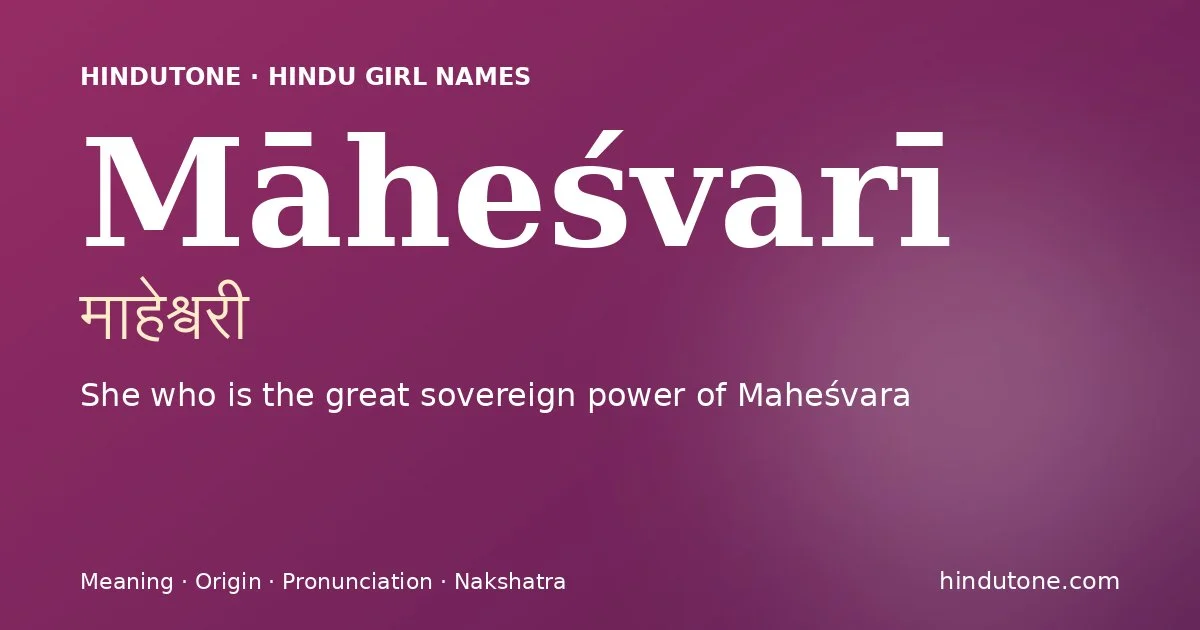
Māheśvarī (माहेश्वरी) is a Sanskrit-origin Hindu girl-name meaning “She who is the great sovereign power of Maheśvara”. Find pronunciation, origin, deity association, popularity and similar Hindu baby names.
Māheśvarī (माहेश्वरी, IAST: Māheśvarī) is a Sanskrit-origin Hindu girl-name meaning “She who is the great sovereign power of Maheśvara”. From Māheśvara (of Mahā-Īśvara, the Great Lord Śiva) and the feminine īśvarī (sovereign lady), this name honors Lalitā as the supreme divine power inseparable from and equal to Śiva himself.
Meaning, etymology & significance
Māheśvara is a title of Śiva meaning 'the Great Lord' (mahā + Īśvara), and Māheśvarī is his feminine counterpart and śakti — not subordinate to him but coequal, being the very energy that activates his otherwise static consciousness. In the Śākta understanding, without Śakti, Śiva is śava (a corpse); Māheśvarī is that animating power.
Māheśvarī is one of the celebrated Saptamātṛkās (seven divine mothers) and is also a prominent name of Pārvatī in the Purāṇas and Devī Māhātmya. Pronounced 'maa-hesh-va-ree,' it is widely used as a given name and surname across India and carries immediate recognition and reverence.
Scriptural source
Māheśvarī appears in the Lalitha Sahasranama, among the sacred names of Lalitha.
Māheśvarī — Name Facts
- Meaning
- She who is the great sovereign power of Maheśvara
- Gender
- Hindu girl name
- Nakshatra
- Magha
- Rashi
- Simha (Leo)
- Numerology
- 1
Frequently asked questions
What does the name Māheśvarī mean?
Māheśvarī is a Sanskrit-origin Hindu girl name meaning “She who is the great sovereign power of Maheśvara”.
Is Māheśvarī a boy or girl name?
Māheśvarī is traditionally a Hindu girl name.
Which nakshatra and rashi suit the name Māheśvarī?
By the first-syllable rule of Vedic naming, Māheśvarī aligns with the Magha nakshatra, under the Simha (Leo) rashi.
What is the numerology number of Māheśvarī?
The Chaldean name number of Māheśvarī is 1.
Explore more: Magha nakshatra names · Simha rashi names · Hindu girl names with M · All Hindu names A–Z