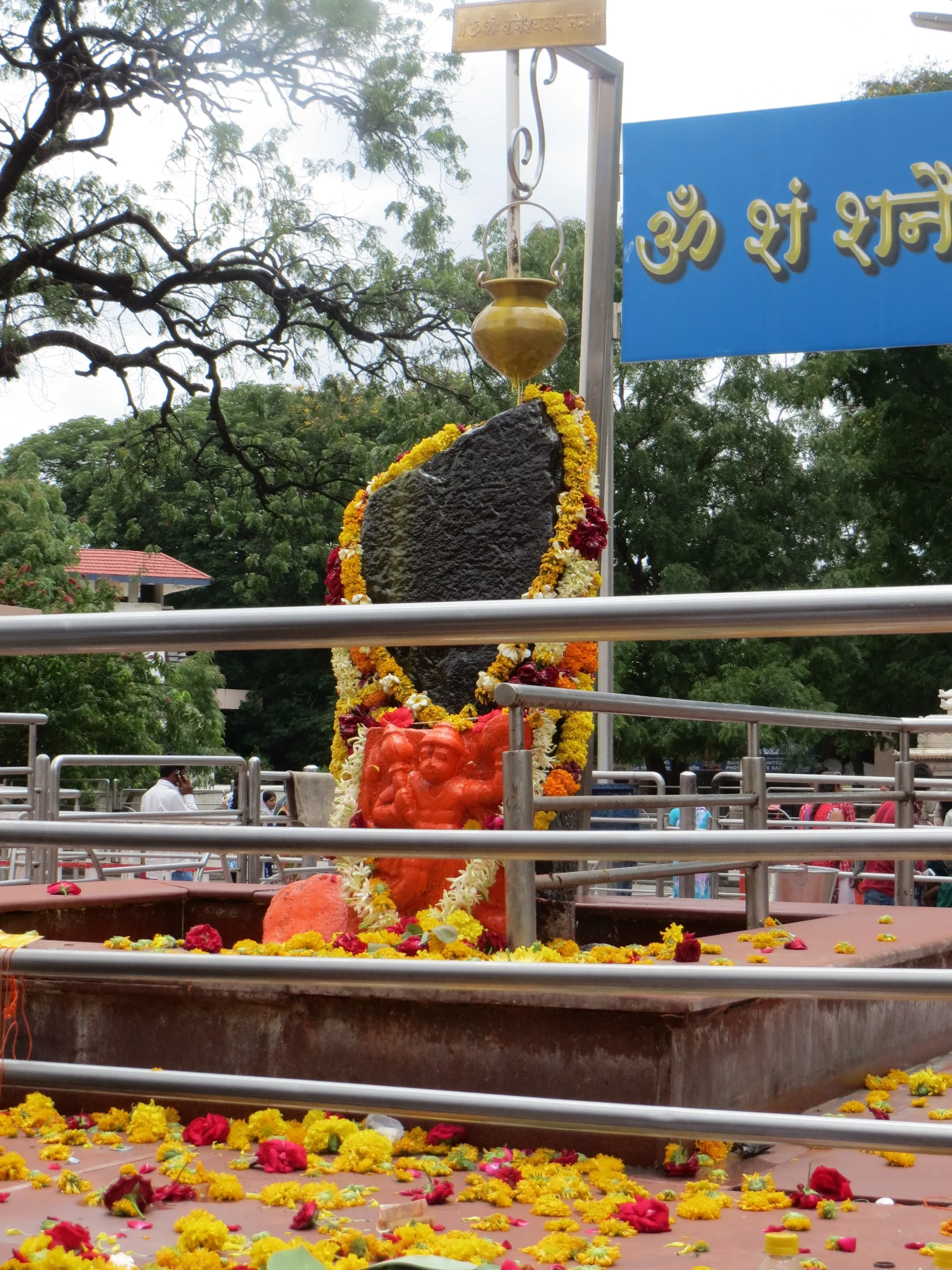
Panchamukha Hanuman: The Five-Faced Form, Legend and Worship
Panchamukha Hanuman is the mighty five-faced form Lord Hanuman assumed to slay Ahiravana and rescue Rama and Lakshmana. Learn the sacred legend, the meaning of the five faces, and how devotees worship this powerful protector.

Panchamukha Hanuman is the mighty five-faced form Lord Hanuman assumed to slay Ahiravana and rescue Rama and Lakshmana. Learn the sacred legend, the meaning of the five faces, and how devotees worship this powerful protector.
Quick answer: Panchamukha Hanuman is the five-faced (pancha-mukha) form of Lord Hanuman, revered as a supreme protector who removes fear and vanquishes negativity. He assumed this form in the Ramayana to blow out five lamps burning in five directions simultaneously, so he could slay the demon Ahiravana and free Rama and Lakshmana from the netherworld. His five faces are Hanuman, Narasimha, Garuda, Varaha and Hayagriva, each guarding a direction.
Among the many awe-inspiring forms of Lord Hanuman, none is more majestic or protective than Panchamukha Hanuman, the five-faced (pancha-mukha) form. With five radiant faces gazing in five directions and ten arms bearing divine weapons, this form embodies the complete strength, devotion and guardianship of the great vanara. Devotees turn to Panchamukha Hanuman to dissolve fear, defeat enemies seen and unseen, and be shielded from every kind of negativity.
This form is not merely symbolic. It arose at a decisive moment in the Ramayana, when Rama and Lakshmana themselves needed rescuing and only Hanuman's boundless power could accomplish the impossible. To understand Panchamukha Hanuman is to enter one of the most thrilling and devotional episodes of the epic.
The Legend of Panchamukha Hanuman: The Ahiravana Episode
The origin of the five-faced form is tied to the story of Ahiravana (also called Mahiravana), a powerful sorcerer-demon and a devotee of the goddess who ruled Patala, the netherworld. During the great war in Lanka, Ravana sought the help of Ahiravana, his ally and kinsman, to strike at Rama and Lakshmana.
Through his mastery of illusion and dark magic, Ahiravana crept into the camp of the vanaras and abducted the sleeping Rama and Lakshmana, carrying them down to his kingdom in Patala. There he planned to sacrifice the two princes before his presiding deity to gain even greater power.
Hanuman, ever vigilant and devoted, followed the trail into the netherworld to rescue his beloved lord. But Ahiravana had bound his own life-force to a set of five lamps burning in five different directions at once. The condition was clear: the demon could only be slain if all five lamps were extinguished at the very same instant. A single lamp left burning would keep him alive and invincible.
No ordinary being could blow out five lamps facing five directions in one breath. So Hanuman, drawing upon his divine nature, expanded into a colossal form with five faces, each turned toward one of the directions. In one mighty, simultaneous act he extinguished all five flames, and in that instant Ahiravana's power failed. Hanuman slew the demon, lifted Rama and Lakshmana onto his shoulders, and bore them safely back to the world above.
This is why Panchamukha Hanuman is worshipped above all as the remover of danger and the vanquisher of hidden evil: he rescued the divine princes themselves from the depths of Patala.
The Five Faces of Panchamukha Hanuman
Each of the five faces is not an arbitrary form but an aspect associated with Lord Vishnu, and each guards one of the directions. Together they signify Hanuman's mastery over all directions, all elements and the whole of creation. The traditional set of five faces is as follows.
| Face | Direction | Represents / Significance |
|---|---|---|
| Hanuman (Vanara) | East | The original vanara face, embodying devotion, courage and dispelling sin |
| Narasimha | South | The man-lion of Vishnu; removes fear and destroys evil and enemies |
| Garuda | West | The divine eagle; removes obstacles, black magic and poison, grants swiftness |
| Varaha | North | The boar of Vishnu; bestows prosperity, wealth and protection |
| Hayagriva | Upward (Urdhva) | The horse-faced form; grants knowledge, wisdom and good fortune |
In this way the five faces unite the might of several of Vishnu's avatars in a single form. Facing East, South, West, North and upward, Hanuman becomes a shield in every direction, leaving no gap through which harm can pass.
Symbolism of the Five Faces
Beyond the directions, devotees understand the five faces as symbolising mastery over the five elements (earth, water, fire, air and space) and the five senses. Just as Hanuman controlled the five lamps and the five directions, the worshipper prays for control over the restless senses and the elemental forces of life, so that the mind may be steadied in devotion.
The Ten Arms and Divine Weapons
Panchamukha Hanuman is generally depicted with ten arms, each holding a sacred weapon or emblem. These typically include weapons and symbols associated with the powers of the five faces, such as a discus, a mace, a sword, a shield, a noose, a goad, a thunderbolt-like weapon and the flag of dharma, among others.
- Weapons of protection, signifying that no enemy or evil can overcome the devotee under his care
- Symbols of divine power drawn from the aspects of Vishnu present in the five faces
- The mace (gada), Hanuman's own signature weapon, representing unshakeable strength
- Emblems of blessing and grace, showing that he both destroys evil and bestows well-being
The exact weapons vary between traditions and temple icons, but their meaning is constant: complete, all-directional protection for those who take refuge in him.
Significance and Benefits of Worshipping Panchamukha Hanuman
Panchamukha Hanuman is revered as one of the most powerful protective deities. Devotees worship this form for a range of spiritual and worldly blessings.
- Protection from fear, danger, accidents and the influence of evil forces
- Victory over enemies, obstacles and hostile circumstances
- Removal of negativity, black magic, ill-will and inauspicious influences
- Courage, strength of mind and unshakeable devotion
- Success in difficult undertakings where ordinary effort seems insufficient
- Peace, prosperity and the steadying of a restless, fearful mind
Because the five faces guard all directions, this form is especially invoked when a devotee feels surrounded by troubles on every side, just as Rama and Lakshmana were surrounded in the darkness of Patala until Hanuman came to their aid.
How Panchamukha Hanuman Is Worshipped
Worship of Panchamukha Hanuman follows the loving, disciplined pattern of Hanuman bhakti in general, with a special emphasis on protection.
Auspicious Days
- Tuesdays and Saturdays are considered especially sacred to Lord Hanuman and are favoured for his worship
- Hanuman Jayanti, the celebration of Hanuman's birth, is observed with great devotion
- Full-moon and other auspicious days are chosen by many devotees for special rituals
Forms of Worship
- Lighting a lamp before an image or idol of Panchamukha Hanuman and offering flowers, sindoor and incense
- Reciting the Hanuman Chalisa and other stotras in his praise
- Chanting the Panchamukhi Hanuman Kavacham, a protective hymn traditionally recited for safety and the removal of fear
- Observing simple vows, fasting and offering prayers for protection of the family and home
The Panchamukhi Hanuman Kavacham is a well-known protective composition addressed to this five-faced form, chanted by devotees seeking a shield against fear and harm. Many devotees also invoke him with the sacred remembrance Om Namo Bhagavate Panchavadanaya, honouring the five-faced Lord. It is best learned and recited under proper guidance and with sincere devotion, rather than treated as a mere formula.
A Guardian in Every Direction
Panchamukha Hanuman stands as an eternal reminder that devotion, when it is total, becomes invincible. Hanuman did not seek this awesome form for his own glory; he took it in service, to save his lord. That selfless love is the true source of his power, and it is what he awakens in every heart that turns to him.
When we bow before the five faces gazing in five directions, we pray to be protected on every side, to be freed from fear, and to be given the courage to serve what is good with a whole heart. May the mighty five-faced Lord guard us all. Jai Hanuman!
Frequently Asked Questions
Who is Panchamukha Hanuman?
Panchamukha Hanuman is the five-faced (pancha-mukha) form of Lord Hanuman, worshipped as a supreme protector. His five faces are Hanuman, Narasimha, Garuda, Varaha and Hayagriva, each facing a direction and drawing on the power of aspects of Vishnu.
Why did Hanuman take the five-faced form?
He assumed the five-faced form during the Ramayana to slay the demon Ahiravana, who had abducted Rama and Lakshmana to Patala. Ahiravana could only be killed by extinguishing five lamps in five directions at the same instant, which Hanuman accomplished with his five faces in a single breath.
What are the five faces of Panchamukha Hanuman?
The five faces are Hanuman (East), Narasimha (South), Garuda (West), Varaha (North) and Hayagriva (upward or urdhva). Together they represent mastery over all directions and unite the powers of several forms of Vishnu.
What do the five faces symbolise?
Each face guards one direction, giving all-directional protection. The five faces are also understood as mastery over the five elements and the five senses, symbolising complete control and the steadying of the mind.
What are the benefits of worshipping Panchamukha Hanuman?
Devotees worship him for protection from fear and danger, victory over enemies and obstacles, removal of negativity and black magic, courage, strength of mind and success in difficult tasks.
What is the Panchamukhi Hanuman Kavacham?
The Panchamukhi Hanuman Kavacham is a traditional protective hymn addressed to the five-faced form of Hanuman. Devotees chant it seeking a shield against fear, harm and evil influences, ideally under proper guidance.
When is Panchamukha Hanuman worshipped?
Tuesdays and Saturdays are especially sacred to Lord Hanuman, and Hanuman Jayanti is an important day for his worship. Devotees also choose full-moon and other auspicious days for special prayers.
Why is Panchamukha Hanuman shown with ten arms?
The ten arms hold divine weapons and emblems drawn from the powers of his five faces, such as the mace, discus, sword and other sacred symbols. They signify his complete, all-directional power to protect devotees and destroy evil.
You might also like

Devi Mahatmya (Durga Saptashati / Chandi Path): The Complete Guide
The Ten Mahavidyas — the ten wisdom goddesses
Importance of Bilva Leaves in Lord Shiva Worship