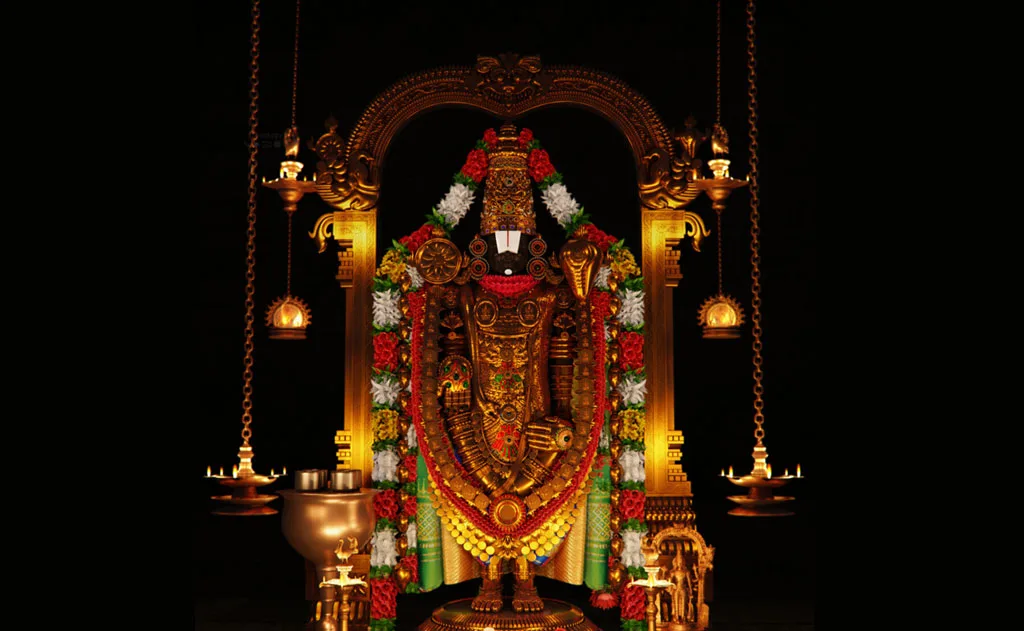
Lalita Ashtottara Shatanamavali: 108 Names of Goddess Lalita (Rajatachala Shringagra) with Meaning
The Sri Lalita Ashtottara Shatanamavali, the 108 names of Goddess Lalita Tripurasundari beginning 'rajatachala shringagra madhyasthayai namo namah', in full: the dhyana verse and every name in Devanagari and IAST from the sanskritdocuments.org text, with a plain-English meaning for each name and how to offer them on Fridays and full-moon days.
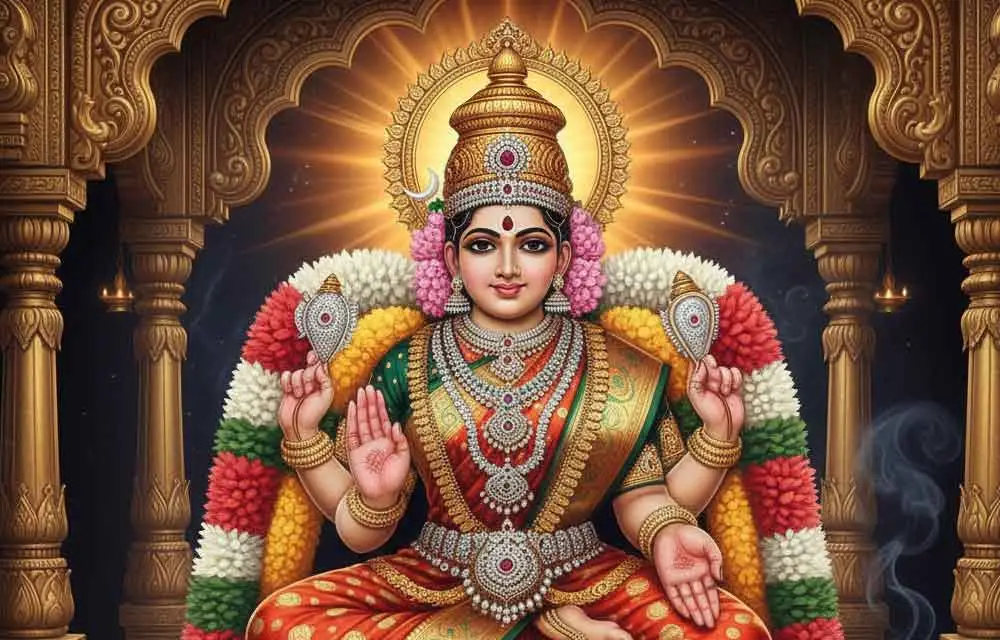
The Sri Lalita Ashtottara Shatanamavali, the 108 names of Goddess Lalita Tripurasundari beginning 'rajatachala shringagra madhyasthayai namo namah', in full: the dhyana verse and every name in Devanagari and IAST from the sanskritdocuments.
Quick answer: The Lalita Ashtottara Shatanamavali is the list of 108 names of Goddess Lalita Tripurasundari, beginning 'rajatachala shringagra madhyasthayai namo namah' and ending 'mahadeva ratautsukya mahadevyai namo namah'. It is offered with kumkum or flowers, especially on Fridays, full-moon days and in Navaratri, as a shorter companion to the Lalita Sahasranama.
Last updated: 20 October 2026. The Sanskrit below is the complete text published by sanskritdocuments.org (file lalitaa108naam.itx, transliterated and proofread by Sujatha Beladakere; Author field: Traditional), converted to Devanagari and IAST by software from the source, with no word typed by hand; five letters are corrected as explained in the editor's note. Our own plain-English meaning follows every group of nine names.
Lalita Ashtottara: dhyana verse and 108 names
The source opens with the bija (seed) mantra and a dhyana verse, the meditation on the Goddess's form, and then gives the 108 names in the dative form ('to her who dwells...'), each followed by 'namo namah'. We give them in groups of nine, Devanagari first and then IAST, with the meaning of each name, numbered.
Bija mantra and dhyana verse
ॐ ऐं ह्रीं श्रीं ।
सिन्दूरारुणविग्रहां त्रिनयनां माणिक्यमौलिस्फुरत्
तारानायकशेखरां स्मितमुखीमापीनवक्षोरुहाम् ।
पाणिभ्यामतिपूर्णरत्नचषकं रक्तोत्पलं विभ्रतीं
सौम्यां रत्नघटस्थरक्तचरणां ध्यायेत् परामम्बिकाम् ॥
oṃ aiṃ hrīṃ śrīṃ |
sindūrāruṇavigrahāṃ trinayanāṃ māṇikyamaulisphurat
tārānāyakaśekharāṃ smitamukhīmāpīnavakṣoruhām |
pāṇibhyāmatipūrṇaratnacaṣakaṃ raktotpalaṃ vibhratīṃ
saumyāṃ ratnaghaṭastharaktacaraṇāṃ dhyāyet parāmambikām ||
Meaning: Om aim hrim shrim (the seed syllables of the Goddess). I meditate on the supreme Mother: her body red as vermilion, three-eyed, her ruby crown shining with the crescent moon, smiling, full-bosomed, holding in her hands a jewelled cup brimming over and a red lotus, gentle, her red feet resting on a jewelled pot.
Names 1 to 36: the Goddess from head to foot
Names 1 to 9
रजताचलशृङ्गाग्रमध्यस्थायै नमो नमः ।
हिमाचलमहावंशपावनायै नमो नमः ।
शङ्करार्धाङ्गसौन्दर्यशरीरायै नमो नमः ।
लसन्मरकतस्वच्छविग्रहायै नमो नमः ।
महातिशयसौन्दर्यलावण्यायै नमो नमः ।
शशाङ्कशेखरप्राणवल्लभायै नमो नमः ।
सदापञ्चदशात्मैक्यस्वरूपायै नमो नमः ।
वज्रमाणिक्यकटककिरीटायै नमो नमः ।
कस्तूरीतिलकोल्लासनिटिलायै नमो नमः ।
rajatācalaśṛṅgāgramadhyasthāyai namo namaḥ |
himācalamahāvaṃśapāvanāyai namo namaḥ |
śaṅkarārdhāṅgasaundaryaśarīrāyai namo namaḥ |
lasanmarakatasvacchavigrahāyai namo namaḥ |
mahātiśayasaundaryalāvaṇyāyai namo namaḥ |
śaśāṅkaśekharaprāṇavallabhāyai namo namaḥ |
sadāpañcadaśātmaikyasvarūpāyai namo namaḥ |
vajramāṇikyakaṭakakirīṭāyai namo namaḥ |
kastūrītilakollāsaniṭilāyai namo namaḥ |
Meaning: 1 Who dwells at the centre of the peak of the silver mountain (Kailasa). 2 Who sanctifies the great line of Himavan, as his daughter. 3 Whose lovely body is one half of Shankara's. 4 Whose form is clear and radiant like a shining emerald. 5 Of surpassing beauty and grace. 6 Beloved as life itself of the moon-crested Shiva. 7 Ever one with the fifteen-syllable mantra (panchadashi). 8 Whose crown and bracelets are of diamonds and rubies. 9 Whose forehead shines with a tilaka of musk.
Names 10 to 18
भस्मरेखाङ्कितलसन्मस्तकायै नमो नमः ।
विकचांभोरुहदललोचनायै नमो नमः ।
शरच्चांपेयपुष्पाभनासिकायै नमो नमः ।
लसत्काञ्चनताटङ्कयुगलायै नमो नमः ।
मणिदर्पणसङ्काशकपोलायै नमो नमः ।
ताम्बूलपूरितस्मेरवदनायै नमो नमः ।
सुपक्वदाडिमीबीजरदनायै नमो नमः ।
कंबुपूगसमच्छायकन्धरायै नमो नमः ।
स्थूलमुक्ताफलोदारसुहारायै नमो नमः ।
bhasmarekhāṅkitalasanmastakāyai namo namaḥ |
vikacāṃbhoruhadalalocanāyai namo namaḥ |
śaraccāṃpeyapuṣpābhanāsikāyai namo namaḥ |
lasatkāñcanatāṭaṅkayugalāyai namo namaḥ |
maṇidarpaṇasaṅkāśakapolāyai namo namaḥ |
tāmbūlapūritasmeravadanāyai namo namaḥ |
supakvadāḍimībījaradanāyai namo namaḥ |
kaṃbupūgasamacchāyakandharāyai namo namaḥ |
sthūlamuktāphalodārasuhārāyai namo namaḥ |
Meaning: 10 Whose head is marked with lines of sacred ash. 11 With eyes like the petals of a blossoming lotus. 12 Whose nose is like the champaka flower of autumn. 13 Wearing a pair of shining golden ear-ornaments. 14 Whose cheeks are like jewelled mirrors. 15 Whose smiling mouth is filled with tambula. 16 Whose teeth are like the seeds of a ripe pomegranate. 17 Whose neck has the lines of a conch and the grace of the areca palm. 18 Wearing a fine necklace of large pearls.
Names 19 to 27
गिरीशबद्धमाङ्गल्यमङ्गलायै नमो नमः ।
पद्मपाशाङ्कुशलसत्कराब्जायै नमो नमः ।
पद्मकैरवमन्दारसुमालिन्यै नमो नमः ।
सुवर्णकुंभयुग्माभसुकुचायै नमो नमः ।
रमणीयचतुर्बाहुसंयुक्तायै नमो नमः ।
कनकाङ्गदकेयूरभूषितायै नमो नमः ।
बृहत्सौवर्णसौन्दर्यवसनायै नमो नमः ।
बृहन्नितंबविलसज्जघनायै नमो नमः ।
सौभाग्यजातशृङ्गारमध्यमायै नमो नमः ।
girīśabaddhamāṅgalyamaṅgalāyai namo namaḥ |
padmapāśāṅkuśalasatkarābjāyai namo namaḥ |
padmakairavamandārasumālinyai namo namaḥ |
suvarṇakuṃbhayugmābhasukucāyai namo namaḥ |
ramaṇīyacaturbāhusaṃyuktāyai namo namaḥ |
kanakāṅgadakeyūrabhūṣitāyai namo namaḥ |
bṛhatsauvarṇasaundaryavasanāyai namo namaḥ |
bṛhannitaṃbavilasajjaghanāyai namo namaḥ |
saubhāgyajātaśṛṅgāramadhyamāyai namo namaḥ |
Meaning: 19 Whose auspicious mangalya was tied by Girisha (Shiva). 20 Whose lotus hands hold the lotus, the noose and the goad. 21 Garlanded with lotus, white water-lily and mandara flowers. 22 Of graceful form, likened by the poets to a pair of golden vessels. 23 Endowed with four lovely arms. 24 Adorned with golden armlets and bracelets. 25 Wearing a lovely garment of gold. 26 Graceful in form and gait. 27 Whose slender waist is the beauty born of good fortune.
Names 28 to 36
दिव्यभूषणसन्दोहरञ्जितायै नमो नमः ।
पारिजातगुणाधिक्यपदाब्जायै नमो नमः ।
सुपद्मरागसङ्काशचरणायै नमो नमः ।
कामकोटिमहापद्मपीठस्थायै नमो नमः ।
श्रीकंठनेत्रकुमुदचन्द्रिकायै नमो नमः ।
सचामररमावाणीवीजितायै नमो नमः ।
भक्तरक्षणदाक्षिण्यकटाक्षायै नमो नमः ।
भूतेशालिङ्गनोद्भूतपुलकाङ्ग्यै नमो नमः ।
अनङ्गजनकापाङ्गवीक्षणायै नमो नमः ।
divyabhūṣaṇasandoharañjitāyai namo namaḥ |
pārijātaguṇādhikyapadābjāyai namo namaḥ |
supadmarāgasaṅkāśacaraṇāyai namo namaḥ |
kāmakoṭimahāpadmapīṭhasthāyai namo namaḥ |
śrīkaṃṭhanetrakumudacandrikāyai namo namaḥ |
sacāmararamāvāṇīvījitāyai namo namaḥ |
bhaktarakṣaṇadākṣiṇyakaṭākṣāyai namo namaḥ |
bhūteśāliṅganodbhūtapulakāṅgyai namo namaḥ |
anaṅgajanakāpāṅgavīkṣaṇāyai namo namaḥ |
Meaning: 28 Adorned with a wealth of divine ornaments. 29 Whose lotus feet surpass the parijata flower. 30 Whose feet glow like fine rubies. 31 Seated on the great lotus seat of Kamakoti (Kanchi). 32 The moonlight that opens the lily of Shrikantha's (Shiva's) eyes. 33 Fanned with chowries by Lakshmi and Sarasvati. 34 Whose kindly glance protects her devotees. 35 Whose body thrills at the embrace of Bhutesha (Shiva). 36 Whose side-glance gave life again to Ananga (Kama).
Names 37 to 72: the queen of the Sri Chakra
Names 37 to 45
ब्रह्मोपेन्द्रशिरोरत्नरञ्जितायै नमो नमः ।
शचीमुख्यामरवधूसेवितायै नमो नमः ।
लीलाकल्पितब्रह्माण्डमण्डलायै नमो नमः ।
अमृतादिमहाशक्तिसंवृतायै नमो नमः ।
एकातपत्रसाम्राज्यदायिकायै नमो नमः ।
सनकादिसमाराध्यपादुकायै नमो नमः ।
देवर्षिभिस्स्तूयमानवैभवायै नमो नमः ।
कलशोद्भवदुर्वासःपूजितायै नमो नमः ।
मत्तेभवक्त्रषड्वक्त्रवत्सलायै नमो नमः ।
brahmopendraśiroratnarañjitāyai namo namaḥ |
śacīmukhyāmaravadhūsevitāyai namo namaḥ |
līlākalpitabrahmāṇḍamaṇḍalāyai namo namaḥ |
amṛtādimahāśaktisaṃvṛtāyai namo namaḥ |
ekātapatrasāmrājyadāyikāyai namo namaḥ |
sanakādisamārādhyapādukāyai namo namaḥ |
devarṣibhisstūyamānavaibhavāyai namo namaḥ |
kalaśodbhavadurvāsaḥpūjitāyai namo namaḥ |
mattebhavaktraṣaḍvaktravatsalāyai namo namaḥ |
Meaning: 37 Whose feet are coloured by the crest-jewels of Brahma and Upendra (Vishnu) bowing before her. 38 Served by Shachi and the other wives of the gods. 39 Who creates the sphere of the universe in play. 40 Surrounded by the great powers beginning with Amrita. 41 Who gives sovereignty under a single royal umbrella. 42 Whose sandals are worshipped by Sanaka and the other sages. 43 Whose glory is praised by the divine sages. 44 Worshipped by Agastya, the sage born from a pot, and by Durvasa. 45 Tender towards the elephant-faced (Ganesha) and the six-faced (Skanda).
Names 46 to 54
चक्रराजमहायन्त्रमध्यवर्तिन्यै नमो नमः ।
चिदग्निकुण्डसंभूतसुदेहायै नमो नमः ।
शशाङ्कखण्डसंयुक्तमकुटायै नमो नमः ।
मत्तहंसवधूमन्दगमनायै नमो नमः ।
वन्दारुजनसन्दोहवन्दितायै नमो नमः ।
अन्तर्मुखजनानन्दफलदायै नमो नमः ।
पतिव्रताङ्गनाभीष्टफलदायै नमो नमः ।
अव्याजकरुणापूरपूरितायै नमो नमः ।
नितान्तसच्चिदानन्दसंयुक्तायै नमो नमः ।
cakrarājamahāyantramadhyavartinyai namo namaḥ |
cidagnikuṇḍasaṃbhūtasudehāyai namo namaḥ |
śaśāṅkakhaṇḍasaṃyuktamakuṭāyai namo namaḥ |
mattahaṃsavadhūmandagamanāyai namo namaḥ |
vandārujanasandohavanditāyai namo namaḥ |
antarmukhajanānandaphaladāyai namo namaḥ |
pativratāṅganābhīṣṭaphaladāyai namo namaḥ |
avyājakaruṇāpūrapūritāyai namo namaḥ |
nitāntasaccidānandasaṃyuktāyai namo namaḥ |
Meaning: 46 Who dwells at the centre of the Sri Chakra, the king of yantras. 47 Whose lovely body arose from the fire-pit of consciousness. 48 Whose crown bears the crescent moon. 49 Whose gait is slow and graceful like that of a swan. 50 Saluted by hosts of devotees. 51 Who gives the fruit of bliss to those who turn within. 52 Who fulfils the wishes of devoted wives. 53 Full with a flood of compassion that asks no reason. 54 Ever united with being, consciousness and bliss.
Names 55 to 63
सहस्रसूर्यसंयुक्तप्रकाशायै नमो नमः ।
रत्नचिन्तामणिगृहमध्यस्थायै नमो नमः ।
हानिवृद्धिगुणाधिक्यरहितायै नमो नमः ।
महापद्माटवीमध्यनिवासायै नमो नमः ।
जाग्रत्स्वप्नसुषुप्तीनां साक्षिभूत्यै नमो नमः ।
महापापौघपापानां विनाशिन्यै नमो नमः ।
दुष्टभीतिमहाभीतिभञ्जनायै नमो नमः ।
समस्तदेवदनुजप्रेरकायै नमो नमः ।
समस्तहृदयांबुजनिलयायै नमो नमः ।
sahasrasūryasaṃyuktaprakāśāyai namo namaḥ |
ratnacintāmaṇigṛhamadhyasthāyai namo namaḥ |
hānivṛddhiguṇādhikyarahitāyai namo namaḥ |
mahāpadmāṭavīmadhyanivāsāyai namo namaḥ |
jāgratsvapnasuṣuptīnāṃ sākṣibhūtyai namo namaḥ |
mahāpāpaughapāpānāṃ vināśinyai namo namaḥ |
duṣṭabhītimahābhītibhañjanāyai namo namaḥ |
samastadevadanujaprerakāyai namo namaḥ |
samastahṛdayāṃbujanilayāyai namo namaḥ |
Meaning: 55 Shining with the light of a thousand suns. 56 Who dwells in the house of chintamani jewels. 57 Untouched by loss, growth or excess. 58 Who lives in the midst of the great lotus forest. 59 The witness of waking, dream and deep sleep. 60 Destroyer of the flood of the gravest sins. 61 Who breaks the fear of the wicked and every great fear. 62 Who moves all gods and demons to act. 63 Who dwells in the lotus of every heart.
Names 64 to 72
अनाहतमहापद्ममन्दिरायै नमो नमः ।
सहस्रारसरोजातवासितायै नमो नमः ।
पुनरावृत्तिरहितपुरस्थायै नमो नमः ।
वाणीगायत्रीसावित्रीसन्नुतायै नमो नमः ।
रमाभूमिसुताराध्यपदाब्जायै नमो नमः ।
लोपामुद्रार्चितश्रीमच्चरणायै नमो नमः ।
सहस्ररतिसौन्दर्यशरीरायै नमो नमः ।
भावनामात्रसन्तुष्टहृदयायै नमो नमः ।
सत्यसम्पूर्णविज्ञानसिद्धिदायै नमो नमः ।
anāhatamahāpadmamandirāyai namo namaḥ |
sahasrārasarojātavāsitāyai namo namaḥ |
punarāvṛttirahitapurasthāyai namo namaḥ |
vāṇīgāyatrīsāvitrīsannutāyai namo namaḥ |
ramābhūmisutārādhyapadābjāyai namo namaḥ |
lopāmudrārcitaśrīmaccaraṇāyai namo namaḥ |
sahasraratisaundaryaśarīrāyai namo namaḥ |
bhāvanāmātrasantuṣṭahṛdayāyai namo namaḥ |
satyasampūrṇavijñānasiddhidāyai namo namaḥ |
Meaning: 64 Whose temple is the great lotus of the heart centre (anahata). 65 Who dwells in the thousand-petalled lotus (sahasrara). 66 Who lives in the city from which there is no return to rebirth. 67 Praised by Vani (Sarasvati), Gayatri and Savitri. 68 Whose lotus feet are worshipped by Lakshmi and by Bhumisuta, the daughter of the Earth. 69 Whose feet are worshipped by Lopamudra, wife of the sage Agastya. 70 Whose body has the beauty of a thousand Ratis. 71 Whose heart is pleased by mere contemplation. 72 Who grants the attainment of true and complete knowledge.
Names 73 to 108: the victorious Mother
Names 73 to 81
श्रीलोचनकृतोल्लासफलदायै नमो नमः ।
श्रीसुधाब्धिमणिद्वीपमध्यगायै नमो नमः ।
दक्षाध्वरविनिर्भेदसाधनायै नमो नमः ।
श्रीनाथसोदरीभूतशोभितायै नमो नमः ।
चन्द्रशेखरभक्तार्तिभञ्जनायै नमो नमः ।
सर्वोपाधिविनिर्मुक्तचैतन्यायै नमो नमः ।
नामपारायणाभीष्टफलदायै नमो नमः ।
सृष्टिस्थितितिरोधानसङ्कल्पायै नमो नमः ।
श्रीषोडशाक्षरीमन्त्रमध्यगायै नमो नमः ।
śrīlocanakṛtollāsaphaladāyai namo namaḥ |
śrīsudhābdhimaṇidvīpamadhyagāyai namo namaḥ |
dakṣādhvaravinirbhedasādhanāyai namo namaḥ |
śrīnāthasodarībhūtaśobhitāyai namo namaḥ |
candraśekharabhaktārtibhañjanāyai namo namaḥ |
sarvopādhivinirmuktacaitanyāyai namo namaḥ |
nāmapārāyaṇābhīṣṭaphaladāyai namo namaḥ |
sṛṣṭisthititirodhānasaṅkalpāyai namo namaḥ |
śrīṣoḍaśākṣarīmantramadhyagāyai namo namaḥ |
Meaning: 73 Whose gracious eyes give joy and its fruit. 74 Who dwells in Manidvipa, the jewel island in the ocean of nectar. 75 The power that broke Daksha's sacrifice. 76 Shining as the sister of Shrinatha (Vishnu). 77 Who removes the suffering of the devotees of Chandrashekhara (Shiva). 78 Pure consciousness, free from every limiting adjunct. 79 Who fulfils the wishes of those who recite her names. 80 Whose resolve is creation, preservation and withdrawal. 81 Who dwells within the sixteen-syllable mantra (shodashi).
Names 82 to 90
अनाद्यन्तस्वयंभूतदिव्यमूर्त्यै नमो नमः ।
भक्तहंसपरिमुख्यवियोगायै नमो नमः ।
मातृमण्डलसंयुक्तललितायै नमो नमः ।
भण्डदैत्यमहासत्त्वनाशनायै नमो नमः ।
क्रूरभण्डशिरच्छेदनिपुणायै नमो नमः ।
धात्रच्युतसुराधीशसुखदायै नमो नमः ।
चण्डमुण्डनिशुंभादिखण्डनायै नमो नमः ।
रक्ताक्षरक्तजिह्वादिशिक्षणायै नमो नमः ।
महिषासुरदोर्वीर्यनिग्रहायै नमो नमः ।
anādyantasvayaṃbhūtadivyamūrtyai namo namaḥ |
bhaktahaṃsaparimukhyaviyogāyai namo namaḥ |
mātṛmaṇḍalasaṃyuktalalitāyai namo namaḥ |
bhaṇḍadaityamahāsattvanāśanāyai namo namaḥ |
krūrabhaṇḍaśiracchedanipuṇāyai namo namaḥ |
dhātracyutasurādhīśasukhadāyai namo namaḥ |
caṇḍamuṇḍaniśuṃbhādikhaṇḍanāyai namo namaḥ |
raktākṣaraktajihvādiśikṣaṇāyai namo namaḥ |
mahiṣāsuradorvīryanigrahāyai namo namaḥ |
Meaning: 82 A divine form without beginning or end, self-born. 83 The name as printed speaks of her foremost, swan-like devotees; its exact sense is uncertain in this reading. 84 Lalita, surrounded by the circle of the Mothers. 85 Who destroys the great strength of the demon Bhanda. 86 Skilled in severing the head of the cruel Bhanda. 87 Who gives happiness to Brahma, Achyuta (Vishnu) and Indra. 88 Who struck down Chanda, Munda, Nishumbha and the others. 89 Who subdued Raktaksha, Raktajihva and the other demons. 90 Who curbed the might of Mahishasura's arms.
Names 91 to 99
अभ्रकेशमहोत्साहकारणायै नमो नमः ।
महेशयुक्तनटनतत्परायै नमो नमः ।
निजभर्तृमुखांभोजचिन्तनायै नमो नमः ।
वृषभध्वजविज्ञानभावनायै नमो नमः ।
जन्ममृत्युजरारोगभञ्जनायै नमो नमः ।
विधेयमुक्तविज्ञानसिद्धिदायै नमो नमः ।
कामक्रोधादिषड्वर्गनाशनायै नमो नमः ।
राजराजार्चितपदसरोजायै नमो नमः ।
सर्ववेदान्तसंसिद्धसुतत्वायै नमो नमः ।
abhrakeśamahotsāhakāraṇāyai namo namaḥ |
maheśayuktanaṭanatatparāyai namo namaḥ |
nijabhartṛmukhāṃbhojacintanāyai namo namaḥ |
vṛṣabhadhvajavijñānabhāvanāyai namo namaḥ |
janmamṛtyujarārogabhañjanāyai namo namaḥ |
vidheyamuktavijñānasiddhidāyai namo namaḥ |
kāmakrodhādiṣaḍvarganāśanāyai namo namaḥ |
rājarājārcitapadasarojāyai namo namaḥ |
sarvavedāntasaṃsiddhasutatvāyai namo namaḥ |
Meaning: 91 The cause of great joy to Shiva, whose hair is the sky. 92 Devoted to dancing with Mahesha. 93 Who contemplates the lotus face of her own Lord. 94 Who meditates on the wisdom of the bull-bannered Shiva. 95 Who breaks birth, death, old age and disease. 96 Who grants knowledge and attainment to the disciplined and the free. 97 Who destroys the six inner enemies beginning with desire and anger. 98 Whose lotus feet were worshipped by Rajaraja (Kubera). 99 The true essence established by all of Vedanta.
Names 100 to 108
श्रीवीरभक्तविज्ञानविधानायै नमो नमः ।
अशेषदुष्टदनुजसूदनायै नमो नमः ।
साक्षाच्छ्रीदक्षिणामूर्तिमनोज्ञायै नमो नमः ।
हयमेधाग्रसम्पूज्यमहिमायै नमो नमः ।
दक्षप्रजापतिसुतवेषाढ्यायै नमो नमः ।
सुमबाणेक्षुकोदण्डमण्डितायै नमो नमः ।
नित्ययौवनमाङ्गल्यमङ्गलायै नमो नमः ।
महादेवसमायुक्तशरीरायै नमो नमः ।
महादेवरतौत्सुक्यमहादेव्यै नमो नमः ।
śrīvīrabhaktavijñānavidhānāyai namo namaḥ |
aśeṣaduṣṭadanujasūdanāyai namo namaḥ |
sākṣācchrīdakṣiṇāmūrtimanojñāyai namo namaḥ |
hayamedhāgrasampūjyamahimāyai namo namaḥ |
dakṣaprajāpatisutaveṣāḍhyāyai namo namaḥ |
sumabāṇekṣukodaṇḍamaṇḍitāyai namo namaḥ |
nityayauvanamāṅgalyamaṅgalāyai namo namaḥ |
mahādevasamāyuktaśarīrāyai namo namaḥ |
mahādevaratautsukyamahādevyai namo namaḥ |
Meaning: 100 Who ordains wisdom for her heroic devotees. 101 Who slays every wicked demon. 102 Dear to Dakshinamurti himself. 103 Whose glory is worshipped in the foremost of horse sacrifices. 104 Radiant in the form of the daughter of Daksha Prajapati (Sati). 105 Adorned with the flower arrows and the sugarcane bow. 106 Ever youthful, ever auspicious in her married grace. 107 Whose body is united with Mahadeva. 108 The great Goddess, eager for the love of Mahadeva.
Closing offering and colophon
श्रीजगदम्बार्पणमस्तु ।
॥ इति श्रीललिताष्टोत्तरशतनामावलिः सम्पूर्णा ॥
śrījagadambārpaṇamastu |
|| iti śrīlalitāṣṭottaraśatanāmāvaliḥ sampūrṇā ||
Meaning: May this be an offering to Shri Jagadamba, the Mother of the world. Thus ends the Shri Lalita Ashtottara Shatanamavali.
The plan of the 108 names
Like the Lalita Sahasranama, this namavali first describes the Goddess from her crown to her feet (names 1 to 30), then the court of the Sri Chakra and the inner worship of the heart (31 to 81), and finally her victories over Bhanda, Mahishasura and the other demons and her oneness with Shiva (82 to 108).
| Names | Theme |
|---|---|
| 1 to 7 | Daughter of Himavan, half of Shiva, one with the fifteen-syllable mantra |
| 8 to 30 | her crown, face, ornaments and lotus feet |
| 31 to 54 | seated at Kamakoti, served by the gods, at the centre of the Sri Chakra |
| 55 to 81 | the inner Goddess: witness of the three states, dweller in the heart and the sahasrara |
| 82 to 101 | destroyer of Bhanda, Chanda, Munda, Mahishasura; remover of birth and death |
| 102 to 108 | dear to Dakshinamurti, holder of the sugarcane bow, ever united with Mahadeva |
When is it traditionally chanted?
- On Fridays: the Goddess's day. See our guide to Friday in Hinduism and the Friday rituals guide for NRI families.
- On full-moon days: in the Sri Vidya tradition the Purnima is especially dear to Lalita. The next are Sharad Purnima on Sunday 25 October 2026 and Kartika Purnima on Tuesday 24 November 2026 (dates for India).
- In Navaratri and on Lalita Panchami: this year's Lalita Panchami fell on 15 October 2026.
How to offer the 108 names (kumkum archana)
- Place an image of Lalita Devi or a Sri Chakra before you and light a lamp.
- Keep a small bowl of kumkum (or 108 flowers). Read the dhyana verse once while picturing the Goddess.
- Say each name and, at 'namo namah', offer a pinch of kumkum at the feet of the image.
- After the 108 names, offer naivedyam and aarti; the kumkum is then shared as prasadam.
- On a longer day, recite the Lalita Pancharatnam or the Devi Suktam before the names.
Pronunciation help
- The names are long compounds; read them in parts: 'rajatācala-śṛṅgāgra-madhyasthāyai' (rajata-achala, the silver mountain; shringa-agra, peak; madhya-sthayai, to her who stands in the middle).
- A line over a vowel (ā, ī, ū) means it is held twice as long; ṛ is a short 'ri'; ś and ṣ are both 'sh' sounds; c is always 'ch'.
- The source writes some nasals as ṃ before a consonant ('kaṃbu', 'nitaṃba'); they are said 'kambu', 'nitamba'.
Traditional beliefs about the 108 names
Devotees traditionally believe that offering these names with devotion:
- invites the Mother's compassion, 'a flood that asks no reason' (name 53);
- brings harmony to the home and to married life, as many Friday worshippers hold;
- turns the mind inward, as names 59 to 66 describe the Goddess within the heart.
These are matters of faith, not promises. The names are an offering of devotion, not a way to guarantee any outcome.
Tips for NRI families
- A Friday family habit. Twelve minutes on a Friday evening is enough; let each person read nine names.
- Learn the dhyana verse. It is the same verse that opens the Lalita Sahasranama, so it carries over to the longer practice.
- Other Devi prayers. Pair it with the 108 names of Durga, the Bhavani Ashtakam or the Devi Aparadha Kshamapana Stotram, and explore the Durga hub and Lakshmi hub.
Frequently asked questions
What is the Lalita Ashtottara Shatanamavali?
It is a list of 108 names of Goddess Lalita Tripurasundari, each offered with 'namo namah' (salutation again and again), beginning 'rajatachala shringagra madhyasthayai namo namah'. It is used for kumkum archana and flower worship, a short form of the worship done with the thousand names of the Lalita Sahasranama.
Is this the same as the Lalita Sahasranama?
No. The Lalita Sahasranama has 1,000 names from the Brahmanda Purana. This list of 108 names follows a similar plan, describing the Goddess from head to foot and then her cosmic and victorious deeds, and some names closely echo the Sahasranama, but it is a separate text. The source names no Purana and no author.
When is it traditionally chanted?
Most families chant it on Fridays and on full-moon days, during Navaratri, and on Lalita Panchami. The next full moons are Sharad Purnima on Sunday 25 October 2026 and Kartika Purnima on Tuesday 24 November 2026 (dates for India; check your local panchang).
Why does each name end in 'namo namah'?
'Namo namah' means 'salutation, salutation'. Our source prints every name this way; some printed editions instead frame each name as 'om ... namah'. This page keeps the form printed in the source, and either way of offering the names is in use.
How long does it take?
About 10 to 12 minutes, a little longer with kumkum archana. The names are long compounds, so it helps to read the IAST once slowly before chanting.
What are the benefits of chanting it?
Devotees traditionally believe it brings the Mother's grace, peace in the home and steadiness in devotion, and name 79 itself says she fulfils the wishes of those who recite her names. These are matters of faith, not guaranteed results.
Editor's note (20 October 2026)
This page was published on 20 October 2026 at the address readers and search engines were already requesting. The Sanskrit is the full text of the Lalita Ashtottara Shatanamavali on sanskritdocuments.org (file lalitaa108naam.itx; Author field: Traditional; the source names no Purana). sanskritdocuments.org has no second copy of this namavali, so we checked it against the Lalita Sahasranama on the same site (lalita1000.itx), which shares its dhyana verse and some of its names, and corrected five plain typing slips: in the dhyana verse 'smitamamukhīm' is printed 'smitamukhīm' (smiling), as in the Sahasranama and as the metre requires; in name 33 'sañcāramara-' is printed 'sacāmara-' (with chowries), as in Sahasranama name 614; in name 63 'hṛdayāmbhūja' is printed 'hṛdayāmbuja' (lotus of the heart); in name 79 'nāmapārayaṇa' is printed 'nāmapārāyaṇa' (recitation of the names), as in Sahasranama name 732; and in name 96 'vijñana' is printed 'vijñāna' (knowledge). Names 83 ('bhaktahaṃsaparimukhyaviyogāyai') and 99 ('sutatvāyai') are kept as printed; our meaning of name 83 is marked as uncertain. The source's running counts after every tenth name are left out, and its separators in 'om aim hrim shrim' are shown as spaces. No other letter is changed. The meanings are our own.
Related guides
You might also like
Saraswati Ashtottara Shatanamavali: 108 Names of Goddess Saraswati with Meaning
Lalita Sahasranama — Complete Guide to the 1000 Names of Devi Lalita Tripura Sundari, Sri Vidya Tradition, Friday Practice & 30-Day NRI Guide for 2026
Lalita Pancharatnam (Pratah Smarami Lalita): Full Text with Meaning