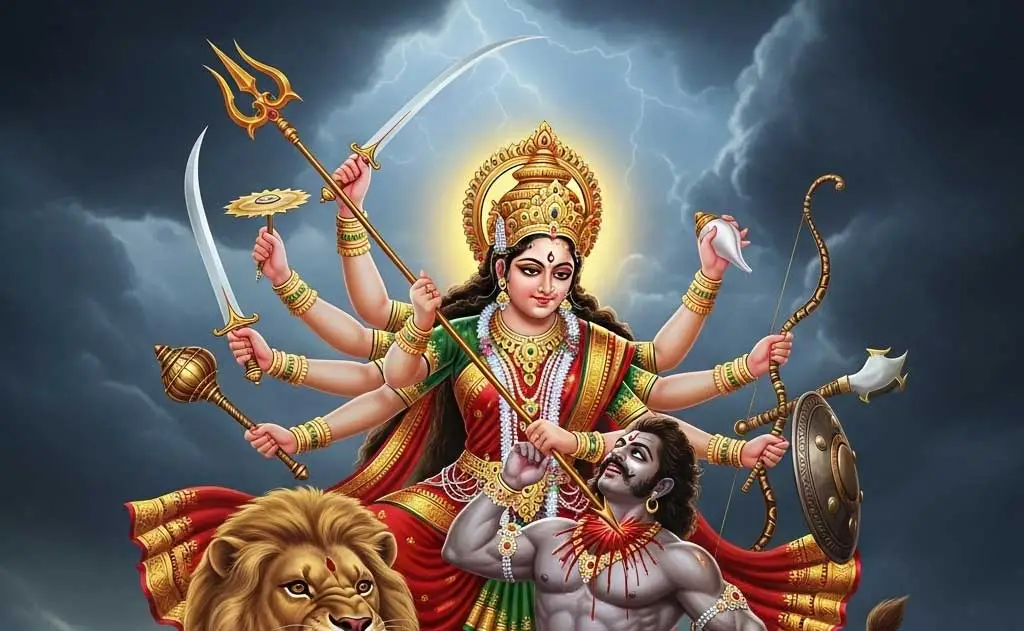
Dasharatha Shani Stotram (Namah Krishnaya Nilaya): Full Text with Meaning
The Shani Stotram of King Dasharatha, 'namah krishnaya nilaya', is the prayer with which Dasharatha is said to have pleased Shani. Here are all 11 verses in Devanagari and IAST from sanskritdocuments.org, with our own verse-by-verse meaning, the story behind it, when it is traditionally recited on Saturdays and how to recite it.
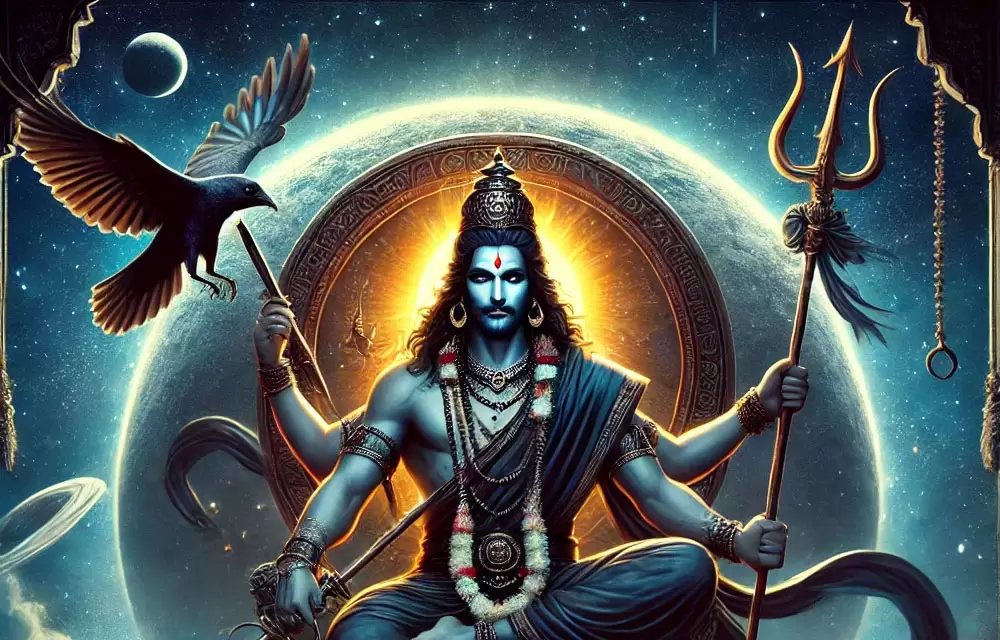
The Shani Stotram of King Dasharatha, 'namah krishnaya nilaya', is the prayer with which Dasharatha is said to have pleased Shani. Here are all 11 verses in Devanagari and IAST from sanskritdocuments.
Quick answer: The Dasharatha Shani Stotram is a Sanskrit prayer of 11 verses beginning 'namah krishnaya nilaya', with which King Dasharatha, Rama's father, is said to have pleased Shani (Saturn). Verses 1 to 7 salute Shani's dark, stern form; verses 8 to 11 describe the power of his gaze and ask for his grace. It is traditionally recited on Saturdays, on Shani Trayodashi and during Sade Sati.
Last updated: 20 October 2026. The Sanskrit below is the stotra as published by sanskritdocuments.org (file shanaishcharastotram.itx, from the Grantha/Tamil book 'Adityadi Navagraha Stotra'; colophon: composed by King Dasharatha), converted to Devanagari and IAST by software from the source, with no word typed by hand and no letter changed. Our own plain-English meaning follows every verse.
Dasharatha Shani Stotram: full text with meaning
The source gives the stotra twice: inside a 61-verse story (as verses 30 to 41) and again on its own, numbered 1 to 11. We print the separately numbered stotra. Each verse appears in Devanagari and then in IAST transliteration, followed by its meaning.
Opening
अथ श्रीशनिस्तोत्रम् ।
atha śrīśanistotram |
Meaning: Here begins the Shri Shani Stotram.
Salutations to Shani's form (verses 1 to 7)
Verse 1
दशरथ उवाच ।
नमः कृष्णाय नीलाय शिखिकण्ठनिभाय च ।
नमो नीलमुखाब्जाय नीलोत्पलनिभाय च ॥ १॥
daśaratha uvāca |
namaḥ kṛṣṇāya nīlāya śikhikaṇṭhanibhāya ca |
namo nīlamukhābjāya nīlotpalanibhāya ca || 1||
Meaning: Dasharatha said: Salutations to the dark one, the blue one, whose colour is like a peacock's neck; salutations to the one whose face is like a blue lotus, whose hue is that of the blue water-lily.
Verse 2
नमो निर्मांसदेहाय दीर्घश्मश्रुजटाय च ।
नमो विशालनेत्राय शुष्कोदर भयानक ॥ २॥
namo nirmāṃsadehāya dīrghaśmaśrujaṭāya ca |
namo viśālanetrāya śuṣkodara bhayānaka || 2||
Meaning: Salutations to the one of lean body, with long beard and matted hair; salutations to the wide-eyed one, O you of sunken belly, fearsome one.
Verse 3
नमः परुषनेत्राय स्थूलरोम्णे नमो नमः ।
नमो नित्यं क्षुधार्ताय अतृप्ताय नमो नमः ॥ ३॥
namaḥ paruṣanetrāya sthūlaromṇe namo namaḥ |
namo nityaṃ kṣudhārtāya atṛptāya namo namaḥ || 3||
Meaning: Salutations to the stern-eyed one, to the one with thick hair on his body, salutations again and again; salutations to the one who is ever hungry and never satisfied, salutations again and again.
Verse 4
नमो दीर्घाय शुष्काय कालदंष्ट्राय ते नमः ।
नमस्ते घोररूपाय दुर्निरीक्ष्याय ते नमः ॥ ४॥
namo dīrghāya śuṣkāya kāladaṃṣṭrāya te namaḥ |
namaste ghorarūpāya durnirīkṣyāya te namaḥ || 4||
Meaning: Salutations to the tall one, the gaunt one, to you whose teeth are like those of Time; salutations to you of terrifying form, so hard to look upon.
Verse 5
नमो घोराय रौद्राय भीषणाय करालिने ।
नमस्ते सर्वभक्षाय वलीमुख नमोस्तु ते ॥ ५॥
namo ghorāya raudrāya bhīṣaṇāya karāline |
namaste sarvabhakṣāya valīmukha namostu te || 5||
Meaning: Salutations to the fierce one, the wrathful one, the dreadful one, the formidable one; salutations to you who consume all; O wrinkle-faced one, salutations to you.
Verse 6
सूर्यपुत्र नमस्तेऽस्तु भास्कराभयदायिने ।
अधोदृष्टे नमस्तेऽस्तु संवर्तक नमो नमः ॥ ६॥
sūryaputra namaste'stu bhāskarābhayadāyine |
adhodṛṣṭe namaste'stu saṃvartaka namo namaḥ || 6||
Meaning: O son of the Sun, salutations to you, who give freedom from fear even to the Sun; salutations to you whose gaze is turned downward; O Samvartaka, fire of the world's dissolution, salutations again and again.
Verse 7
नमो मन्दगते तुभ्यं निस्त्रिंशाय नमो नमः ।
नमो दुःसहदेहाय नित्ययोगरताय च ॥ ७॥
namo mandagate tubhyaṃ nistriṃśāya namo namaḥ |
namo duḥsahadehāya nityayogaratāya ca || 7||
Meaning: Salutations to you who move slowly, to the one like a sharp sword, salutations again and again; salutations to the one whose body is hard to bear, ever devoted to yoga.
The power of Shani's gaze, and the prayer for grace (verses 8 to 11)
Verse 8
ज्ञानदृष्टे नमस्तेऽस्तु कश्यपात्मजसूनवे ।
तुष्टो ददासि त्वं राज्यं क्रुद्धो हरसि तत् क्षणात् ॥ ८॥
jñānadṛṣṭe namaste'stu kaśyapātmajasūnave |
tuṣṭo dadāsi tvaṃ rājyaṃ kruddho harasi tat kṣaṇāt || 8||
Meaning: Salutations to you whose sight is knowledge, grandson of Kashyapa. When pleased, you give a kingdom; when angered, you take it away that very moment.
Verse 9
देवासुरमनुष्याश्च सिद्धविद्याधरोरगाः ।
त्वयावलोकिताः सर्वे दैन्यमाशु व्रजन्ति ते ॥ ९॥
devāsuramanuṣyāśca siddhavidyādharoragāḥ |
tvayāvalokitāḥ sarve dainyamāśu vrajanti te || 9||
Meaning: Gods, demons and humans, siddhas, vidyadharas and serpents: all of them, when you turn your gaze on them, quickly fall into misery.
Verse 10
ब्रह्मा शक्रो यमश्चैव ऋषयः सप्त सागराः ।
राज्यभ्रष्टा भवन्तीह तव दृष्ट्यावलोकिताः ॥ १०॥
brahmā śakro yamaścaiva ṛṣayaḥ sapta sāgarāḥ |
rājyabhraṣṭā bhavantīha tava dṛṣṭyāvalokitāḥ || 10||
Meaning: Brahma, Indra and Yama, the seven seers and the seven seas lose their place here when your gaze falls on them.
Verse 11
देशाश्च नगरग्रामाः द्वीपाश्च गिरयस्तथा ।
सरितः सागराः सर्वे नाशं यान्ति समूलतः ।
प्रसादं कुरु मे सौरे वरदोऽसि महाबल ॥ ११॥
deśāśca nagaragrāmāḥ dvīpāśca girayastathā |
saritaḥ sāgarāḥ sarve nāśaṃ yānti samūlataḥ |
prasādaṃ kuru me saure varado'si mahābala || 11||
Meaning: Countries, cities and villages, islands and mountains, rivers and seas: all go to ruin, root and all. Be gracious to me, O son of the Sun; you are the giver of boons, O mighty one.
Colophon
॥ इति श्रीशनिस्तोत्रम् ॥
|| iti śrīśanistotram ||
Meaning: Thus ends the Shri Shani Stotram.
The story behind the stotra
In the source's frame story, the sage Suta tells the other sages a hymn that Shiva once taught Parvati on Mount Kailasa. King Dasharatha of the Raghu dynasty learned from his astrologers that Shani, at the end of the Krittika constellation, was about to break through Rohini's cart (Rohini-shakata), an event said to bring twelve years of terrible famine. When Vasishtha and the other sages told him that not even Indra or Brahma could prevent it, Dasharatha took up his divine bow, rode his chariot up to the region of the stars and set a weapon of destruction to his bow against Shani.
Shani, the story says, was pleased by the king's courage and offered him a boon. Dasharatha asked that Shani never break Rohini's cart and that no famine ever come to his kingdom, and Shani granted it. Then Dasharatha laid down his bow, folded his hands, remembered Sarasvati and Ganesha, and sang this stotra. Pleased again, Shani offered a second boon. When Dasharatha asked him to trouble no one, Shani replied that the planets afflict by their nature, but promised that he would not trouble those who recite this stotra with devotion, in his transits, in the birth chart or in his periods.
| In the full source text | Verses |
|---|---|
| Frame story: Suta, Shiva's teaching, Dasharatha and Rohini's cart | 5 to 29 |
| The stotra (printed above as verses 1 to 11) | 30 to 41 |
| Shani's boons and the way to worship on Saturday | 42 to 52 |
| Dasharatha's return, twelve names of Shani and the phalashruti | 53 to 61 |
The worship the story describes includes reciting the stotra on Saturday after bathing, worship with shami leaves, an iron image of Shani, and offerings of rice cooked with urad dal and black sesame, with gifts given in Shani's name. Families follow their own customs.
When is it traditionally recited?
- On Saturdays: Saturday (Shanivar) is Shani's day. See our Saturday guide, the step-by-step Shanivar puja at home and the Shani Dev puja vidhi. The coming Saturdays include 24 October 2026 (a trayodashi tithi, which many families keep as Shani Trayodashi; see the panchang for exact timings), 31 October, 14 November and 28 November (dates for New Delhi; check your local panchang abroad).
- During Sade Sati and Saturn periods: see Sade Sati in 2026 and our guide to Shani Deva.
- In Navagraha worship: with the Navagraha Stotram and at a Navagraha shanti puja.
- With Hanuman worship: many families pray to Hanuman on Saturdays as well; see Hanuman worship on Saturday.
How to recite it at home
- On Saturday, after bathing, sit before a picture of Shani or simply light a lamp with sesame oil, facing west if you can.
- Offer a flower or a few black sesame seeds, and remember Shani as the stern but just teacher of karma.
- Recite the 11 verses slowly. Verses 1 to 7 are salutations; let each 'namaḥ' be a bow.
- With verse 11, ask simply for grace: 'prasādaṃ kuru me saure', 'be gracious to me, O son of the Sun'.
- Close with the Shani Chalisa if your family recites it, or with a prayer to Hanuman.
Pronunciation help
- In the IAST, a line over a vowel (ā, ī, ū) means it is held twice as long; ṇ, ṭ and ḍ are made with the tongue curled back; ś and ṣ are both 'sh' sounds; c is always 'ch'.
- 'Śikhikaṇṭhanibhāya' (verse 1) is shi-khi-kanṭh-a-ni-bhaa-ya: 'like a peacock's neck'.
- 'Saure' (verse 11) means 'O son of Surya'; Shani is also called Sauri.
Traditional beliefs about the Dasharatha Shani Stotram
In the story, Shani promises that he will not trouble those who recite this stotra with devotion. Devotees traditionally believe that reciting it on Saturdays:
- eases the hardships associated with Shani's transits, Sade Sati and Saturn periods;
- brings patience, discipline and steadiness, the virtues Shani is said to teach;
- turns fear of Shani into respect, as Dasharatha's own prayer does.
These are matters of faith, not guarantees. Astrology and the stotra's promises are traditional beliefs; in difficult times, please also seek practical, medical, legal or financial help as needed.
Tips for NRI families
- Tell the story first. Children enjoy the tale of Dasharatha riding his chariot to the stars, and it explains why the prayer asks for grace rather than fearing Shani.
- Keep it simple on weekdays abroad. Even a sesame-oil lamp and the 11 verses on Saturday evening follow the tradition.
- Read more about Rama's family. Dasharatha's story continues in the Ramayana; see the Rama hub.
Frequently asked questions
Who composed the Dasharatha Shani Stotram?
The source on sanskritdocuments.org ends 'composed by King Dasharatha' (Dasharatha-maharaja-kritam). In its frame story, the sage Suta tells the hymn to other sages as Shiva once taught it to Parvati, and Dasharatha, Rama's father, recites it to Shani.
Is it from the Padma Purana?
Many popular books say so. The sanskritdocuments.org text, taken from a Grantha/Tamil collection of Navagraha stotras, names no Purana, so we do not state one. A different Shani stotra in the same collection, also with Dasharatha as its rishi, is said there to be from the Brahmanda Purana.
When is it traditionally recited?
On Saturdays (Shanivar), on Shani Trayodashi and Shani Amavasya, during Sade Sati and other Saturn periods in one's horoscope, and in Navagraha worship.
Does it remove Shani dosha?
In the frame story Shani promises not to trouble those who recite it with devotion. Devotees recite it in that faith; it is a prayer, not a guarantee, and it is no substitute for practical, medical, legal or financial help in difficult times.
Why does the stotra describe Shani as fearsome?
Verses 1 to 7 praise Shani's traditional form: dark, gaunt, slow-moving, with a downward gaze. Verses 8 to 11 explain why he is honoured: his gaze can lift up or bring down even gods and kings, so the singer asks only for his grace. Many teachers read this as the stern justice of karma, which is why Shani is also called a just judge.
How long does it take?
About 3 minutes for the 11 verses.
Editor's note (20 October 2026)
This page was published on 20 October 2026 at the address readers and search engines were already requesting. The Sanskrit is the stotra section of the Shanaishchara Stotram on sanskritdocuments.org (file shanaishcharastotram.itx, transliterated and proofread by KSR Ramachandran, with an English translation by Usha Rani Sanka, from the Grantha/Tamil book 'Adityadi Navagraha Stotra'). Its colophon reads 'composed by King Dasharatha'; the file names no Purana. Popular books often attribute this stotra to the Padma Purana, but we could not confirm that from this source, so the page does not state it. A different Shani stotra on the same site (shani), also with Dasharatha as its rishi, says it is from the Brahmanda Purana; it is not printed here. The source prints the stotra twice. We print the separately numbered version; inside the full story the same verses read 'sthūlaroṃṇe', 'karāḻine', 'bhāskaro'bhayadāyine' and 'namo'stu te' where the separate version has 'sthūlaromṇe', 'karāline', 'bhāskarābhayadāyine' and 'namostu te'. No letter is changed. In the story's directions for worship, the recipient of the gifts is named by a hereditary term; we say 'gifts given in Shani's name'. The meanings are our own; the source's English translation is not reproduced.
Related guides
You might also like
Keelaka Stotram (Kilakam) of the Durga Saptashati: Full Text with Meaning
Gajendra Moksha Stotram (Srimad Bhagavatam 8.3): Full Text with Meaning
Dwadasa Jyotirlinga Stotram (Adi Shankaracharya): Full Text with Meaning