Saraswati Ashtottara Shatanamavali — 108 Names of Goddess Saraswati (With Meanings)
The Saraswati Ashtottara Shatanamavali is a garland of the 108 names of Goddess Saraswati, the deity of learning, speech, music and wisdom. Discover the well-known names with meanings, the significance of the archana, and how and when devotees chant it.

The Saraswati Ashtottara Shatanamavali is a garland of the 108 names of Goddess Saraswati, the deity of learning, speech, music and wisdom. Discover the well-known names with meanings, the significance of the archana, and how and when devotees chant it.
Quick answer: The Saraswati Ashtottara Shatanamavali is a devotional litany of the 108 names of Goddess Saraswati, the Hindu deity of knowledge, learning, speech, music, arts and wisdom. Each name is recited in the form "Om <name> namah" as an archana (name-by-name offering), praising a different quality of the goddess. It is chanted especially on Vasant Panchami, during Navaratri Saraswati Puja, at Vijayadashami and Vidyarambham, and by students and artists before study, exams or performance to seek clarity, memory, eloquence and wisdom.
Goddess Saraswati is revered across the Hindu tradition as the presiding deity of knowledge, learning, speech, music, the arts and wisdom. Among the many ways devotees invoke her, the Saraswati Ashtottara Shatanamavali holds a special place: it is a garland of 108 sacred names, each recited as a devotional offering that praises a distinct aspect of the goddess.
The word Ashtottara Shatanamavali literally means "a garland (avali) of names (nama) numbering one hundred and eight (ashtottara shata, 108)." Recited name by name, it becomes an archana — an intimate act of worship in which each name is offered at the feet of the goddess with the phrase "Om <name> namah."
Who is Goddess Saraswati?
Saraswati is worshipped as the goddess of vidya (knowledge), vak (speech), sangita (music) and the fine arts. In the Puranic tradition she is described as the consort of Brahma, the creator, and is regarded as the very embodiment of learning and pure wisdom that makes creation intelligible.
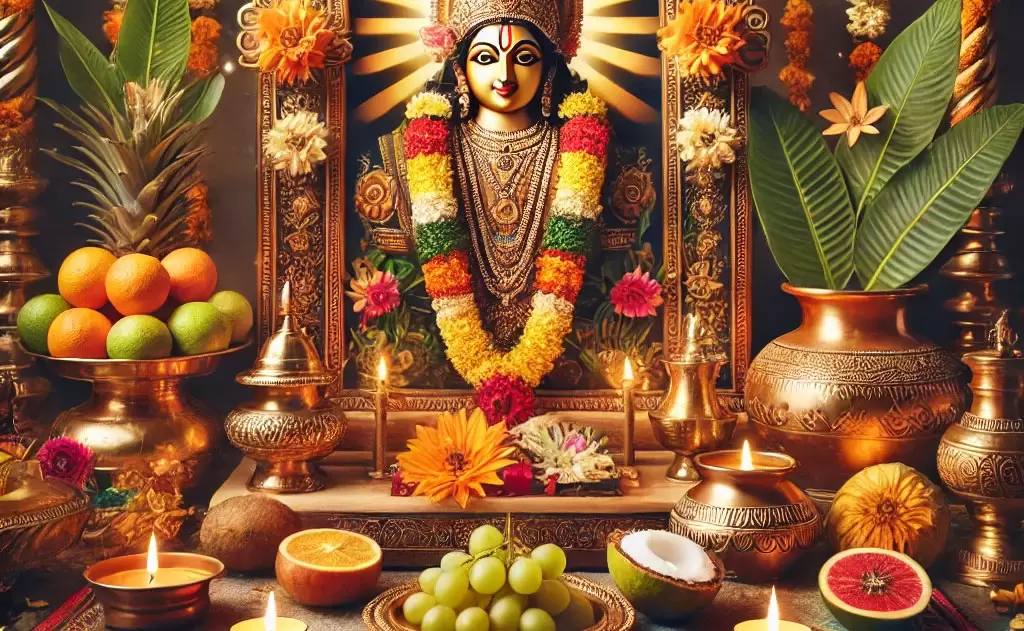
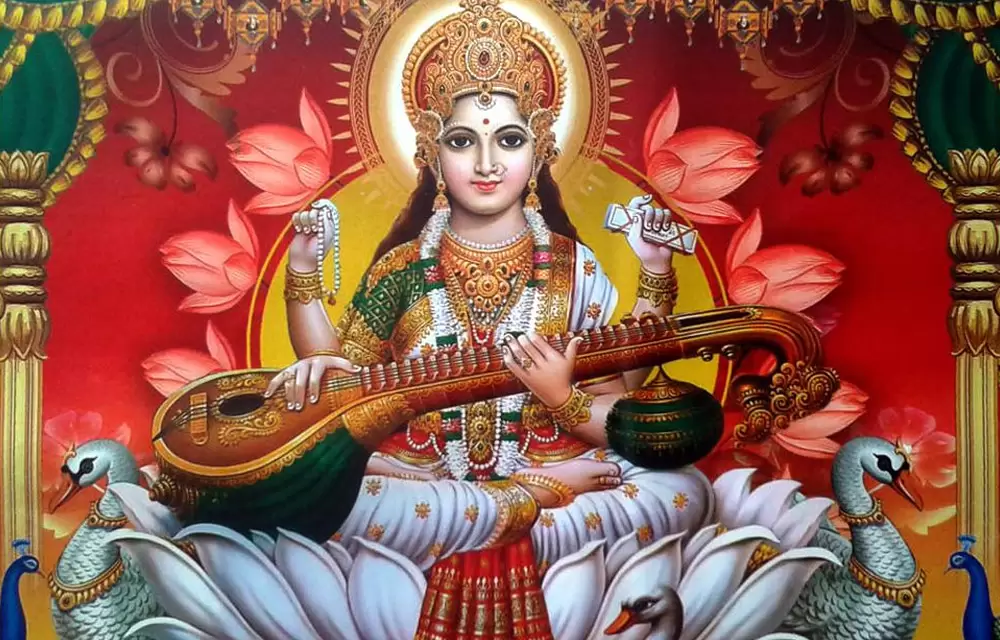
Her iconography is serene and instantly recognisable. She is usually shown seated on a white lotus, clad in a spotless white garment that symbolises purity and the freedom of true knowledge from darkness. In her hands she typically holds a veena (the stringed instrument representing music and the arts), a pustaka (book or manuscript representing the scriptures and learning), and often a japamala (rosary). Her vahana, or mount, is the hamsa, the swan, said to possess the discernment to separate milk from water — a symbol of the wisdom that distinguishes the eternal from the transient.
What is the Ashtottara Shatanamavali?
An Ashtottara Shatanamavali is a well-loved form of Hindu devotional literature in which a deity is praised through 108 of their names. The number 108 is considered highly auspicious in Hindu and yogic tradition and recurs across mantras, rosaries and rituals.
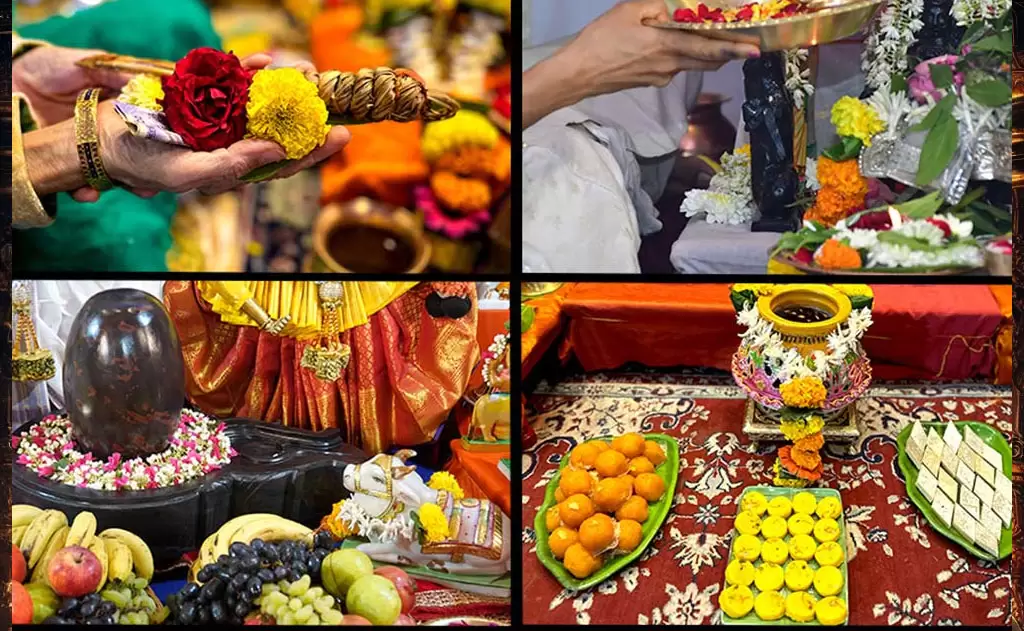
Unlike a flowing hymn, the Namavali is structured as a list. Each of the 108 names is chanted with the prefix "Om" and the suffix "namah" (meaning "I bow" or "salutations"), so a devotee moves through the garland one salutation at a time. Many worshippers pair each name with an offering — a flower, a petal, or a grain of rice (akshata) — placed before the image of the goddess, which is why the practice is called archana.
Well-Known Names of Goddess Saraswati (With Meanings)
The table below presents a selection of well-known and widely recognised names of the goddess drawn from the tradition of praising Saraswati. Each is shown in its chanting form along with its meaning. This is a representative selection, not the complete list of 108, and focuses on names that are broadly attested and easy to understand.
| Name (chanting form) | Meaning |
|---|---|
| Om Saraswatyai namah | The flowing one; goddess of learning and eloquence |
| Om Sharadayai namah | Sharada, the giver of essence and autumn's clarity; a beloved name of the goddess |
| Om Vagdevyai namah | The goddess (devi) of speech (vak) |
| Om Vagishwaryai namah | The mistress and ruler of speech |
| Om Brahmyai namah | Brahmi, the power and consort associated with Brahma |
| Om Vanyai namah | Vani, the embodiment of speech and voice |
| Om Bharatyai namah | Bharati, goddess of eloquence and learning |
| Om Vidyadharyai namah | The bearer and holder of knowledge (vidya) |
| Om Veenapanaye namah | She who holds the veena in her hand |
| Om Veenadharinyai namah | The bearer of the veena, deity of music |
| Om Hamsavahinyai namah | She whose vehicle is the hamsa (swan) |
| Om Pustakadharinyai namah | The bearer of the sacred book |
| Om Shuklavastrayai namah | She who is clad in white garments (purity) |
| Om Vidyarupinyai namah | The very form and embodiment of knowledge |
| Om Medhayai namah | Medha, the power of intellect and retentive memory |
| Om Buddhyai namah | Buddhi, the faculty of understanding and discernment |
| Om Kamalayai namah | The lotus, symbol of purity and grace |
| Om Kamalasanayai namah | She who is seated upon the lotus |
| Om Padmasanayai namah | She seated on the lotus seat |
| Om Shwetambaradharayai namah | She who wears white robes |
| Om Jnanamudrayai namah | She who bears the gesture (mudra) of knowledge |
| Om Aksharayai namah | The imperishable; also the essence of the syllable |
| Om Gayatryai namah | Associated with the Gayatri, the sacred verse |
| Om Savitryai namah | Savitri, the illuminating and inspiring one |
| Om Sarvavidyayai namah | She who is all forms of knowledge |
| Om Sarvashastramayyai namah | She who embodies all the scriptures and sciences |
| Om Vidyadhidevyai namah | The presiding deity of learning |
| Om Sumangalyai namah | The bestower of all that is auspicious |
| Om Vishuddhayai namah | The utterly pure one |
| Om Shubhayai namah | The auspicious and gracious one |
| Om Shantayai namah | The tranquil, peaceful one |
| Om Vagvibhavayai namah | She whose glory shines through speech and eloquence |
A note on names: the tradition of Saraswati's 108 names appears in more than one recension, so the exact wording and order of individual names can vary between sources. The names above are chosen for being widely recognised; devotees who wish to perform the complete archana should follow a trusted printed Namavali or the guidance of their family priest or teacher.
The Significance of the 108 Names
Each name in the garland highlights a facet of the goddess: some describe her form (holding the veena, seated on the lotus, robed in white), some name her as the very substance of a faculty (Medha as intellect, Buddhi as understanding, Vani as speech), and some celebrate her as auspiciousness and peace themselves. Chanting them in sequence is a way of contemplating the goddess in all her dimensions rather than as a single fixed image.
Because Saraswati represents knowledge that removes the darkness of ignorance, her worship is regarded as suitable for anyone seeking clarity of mind — students, teachers, scholars, writers, musicians, dancers and artists of every kind.
When and How the Namavali is Chanted
The Saraswati Ashtottara Shatanamavali is chanted throughout the year, but certain occasions are especially associated with the worship of the goddess of learning.
- Vasant Panchami — the spring festival widely observed as Saraswati's day, when the goddess is worshipped and children are often introduced to learning.
- Navaratri Saraswati Puja — during the nine nights, especially in the concluding days when books, instruments and tools of learning are placed before the goddess.
- Vijayadashami and Vidyarambham — the day on which many families formally begin a child's education, with the child guided to write the first letters as an offering to the goddess.
- Before study, examinations or performances — students and artists invoke her for concentration, memory and success.
- As a daily or weekly practice — devotees may chant the Namavali as part of regular worship to cultivate wisdom and steadiness of mind.
The archana is generally performed in a simple, unhurried way. Devotees typically follow these steps:
- Sit facing an image or picture of the goddess after a bath, in clean surroundings and clean clothes, preferably white or light-coloured.
- Light a lamp and, if available, offer incense and flowers, and settle the mind with a short prayer.
- Chant each name in the form "Om <name> namah," ideally offering a flower, petal or grain of akshata (turmeric-tinted rice) with each name.
- Complete all the names of the garland with attention and devotion, then conclude with a short prayer or the Saraswati dhyana verse and a bow.
- Distribute or partake of the prasada, and where relevant, place books and instruments before the goddess as a mark of dedicating one's learning to her.
Benefits of Reciting the Saraswati Ashtottara Shatanamavali
Devotees turn to the Namavali for the gifts that the goddess of learning is believed to bestow. In devotional understanding, sincere and regular chanting is said to support:
- Growth in knowledge, learning and scholarship.
- Sharper memory (medha) and clearer understanding (buddhi).
- Eloquence and command over speech and language.
- Skill and inspiration in music, the arts and creative work.
- Concentration, calm and focus, especially valued before study and examinations.
- An inner sense of purity, peace and devotion cultivated through the practice itself.
As with all devotional practice, the tradition places the emphasis on sincerity, regularity and a receptive mind. The chanting is understood as a support for one's own effort and study, not a substitute for it.
Conclusion
The Saraswati Ashtottara Shatanamavali offers devotees a beautiful and accessible way to draw near to the goddess of wisdom. Through 108 gentle salutations — each honouring a name such as Sharada, Vagdevi, Brahmi, Vani, Bharati, Veenapani or Medha — the worshipper contemplates knowledge, speech, music and grace in all their forms. Whether chanted on Vasant Panchami, during Navaratri, at Vidyarambham, or before opening a book, it remains a cherished prayer for anyone who seeks the light of learning and the blessings of Goddess Saraswati.
Frequently Asked Questions
What is the Saraswati Ashtottara Shatanamavali?
It is a devotional litany of the 108 sacred names of Goddess Saraswati, the deity of knowledge, learning, speech, music and the arts. Each name is chanted as "Om <name> namah" as an archana, praising a different quality of the goddess.
What does Ashtottara Shatanamavali mean?
It means "a garland of 108 names." Ashtottara shata means one hundred and eight, and namavali means a garland or string of names. So the Namavali is the goddess praised through 108 of her names.
When is the best time to chant the Saraswati Namavali?
It is chanted especially on Vasant Panchami, during Navaratri Saraswati Puja, at Vijayadashami and Vidyarambham, and by students and artists before study, examinations or performances. It can also be recited daily or weekly as part of regular worship.
What are some of the well-known names of Saraswati?
Widely recognised names include Saraswati, Sharada, Vagdevi, Vagishwari, Brahmi, Vani, Bharati, Vidyadhari, Veenapani, Hamsavahini, Pustakadharini, Vidyarupini, Medha and Buddhi, among others. Each highlights a form or quality of the goddess.
Who can chant the Saraswati Ashtottara Shatanamavali?
Anyone seeking knowledge and clarity of mind may chant it. It is especially cherished by students, teachers, scholars, writers, musicians, dancers and artists who seek the goddess's blessings for learning and creativity.
What benefits are associated with reciting it?
Devotees chant it to seek growth in knowledge and learning, sharper memory and understanding, eloquence of speech, skill in music and the arts, and concentration and calm before study or exams. The tradition stresses sincerity and regular effort.
Are the 108 names always exactly the same?
The tradition appears in more than one recension, so the exact wording and order of individual names can vary between sources. Devotees who wish to perform the complete archana should follow a trusted printed Namavali or the guidance of their priest or teacher.
How is the archana performed?
Sitting before an image of the goddess in clean surroundings, the devotee lights a lamp, offers flowers and incense, and chants each name as "Om <name> namah," ideally offering a flower or grain of rice with each name, before concluding with a prayer and a bow.