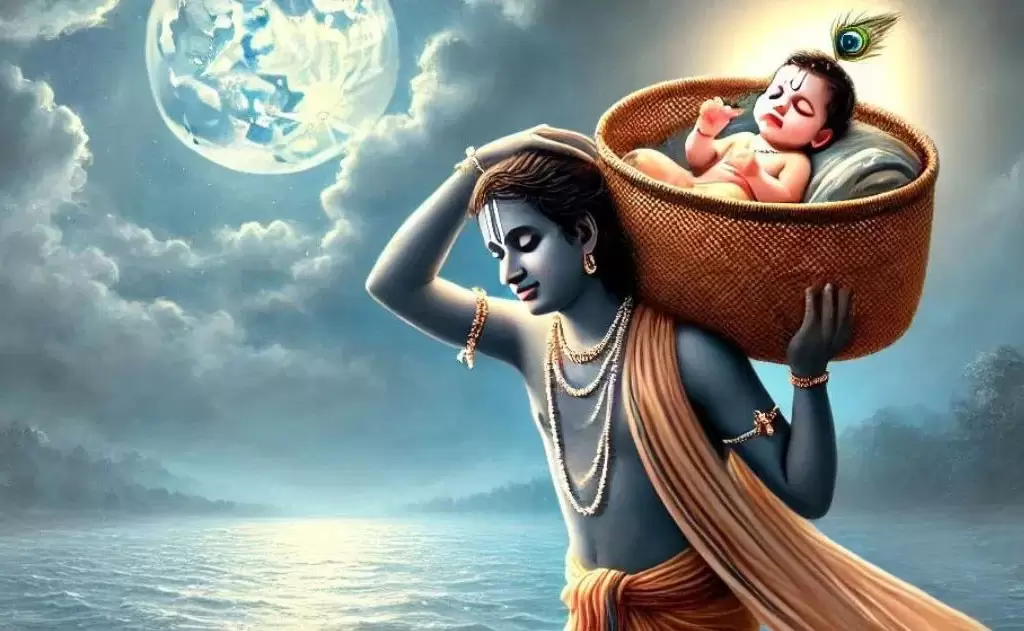
Katyayani Mantra for Marriage: Word-by-Word Meaning, the Gopis' Vrata and a Gentle Guide for NRI Families
The Katyayani mantra is the prayer the gopis of Vrindavan offered to the Goddess, and families still recite it when praying for a good life partner for a son or daughter. Here is the text with word-by-word meaning, the vrata story as commonly told, when and how families chant it, the Rama mantra for harmony after marriage, and a gentle guide for NRI families.
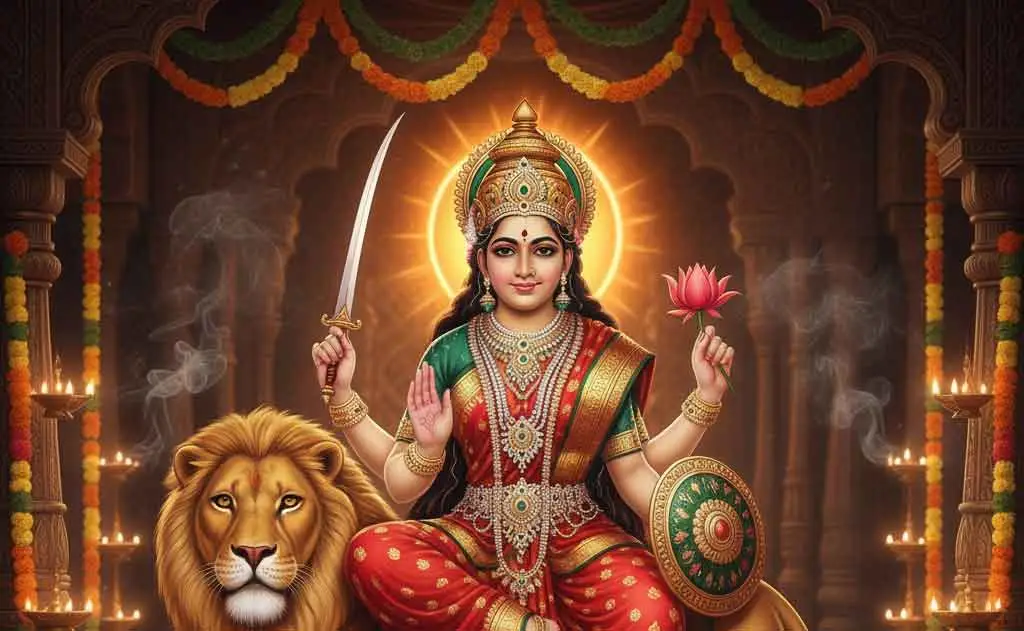
The Katyayani mantra is the prayer the gopis of Vrindavan offered to the Goddess, and families still recite it when praying for a good life partner for a son or daughter. Here is the text with word-by-word meaning, the vrata story as commonly told, when and how families chant it, the Rama mantra for harmony after marriage, and a gentle guide for NRI families.
Quick answer: The Katyayani mantra for marriage is the prayer of the gopis in the Bhagavata Purana (10.22.4). It means: "O Katyayani, great Maya, great Yogini, supreme Goddess: O Devi, make the son of Nanda Gopa my husband. Salutations to you." Families recite it, often in the month of Margashirsha, on Navratri Day 6 or on Fridays or Tuesdays, as a prayer for a good life partner and a happy marriage for a son or daughter alike. It is a prayer offered with faith, never a guarantee.
Every year, thousands of people search for a "mantra for early marriage". Behind each search is a real person: a daughter in Dallas whose relatives keep asking, a son in Seattle who has not met the right person, a mother in Vijayawada lying awake wondering whether she has done enough. This guide is written for all of them, gently and without pressure. There is no deadline in the eyes of the Goddess, and no one should be made to feel ashamed of their age or their path.
The Katyayani vrata prayer
This is the prayer exactly as it appears in the Bhagavata Purana, from our verified source list:
कात्यायनि महामाये महायोगिन्यधीश्वरि। नन्दगोपसुतं देवि पतिं मे कुरु ते नमः॥
kātyāyani mahāmāye mahāyoginyadhīśvari| nandagopasutaṃ devi patiṃ me kuru te namaḥ||
Meaning: "O Katyayani, O great Maya, great Yogini and supreme Ruler: O Goddess, make the son of Nanda Gopa my husband. Salutations to you."
Word-by-word meaning
| Word | Meaning |
|---|---|
| Katyayani | O Katyayani, the Goddess, called by the name of the sage Katyayana |
| Mahamaye | O Great Maya, the great divine power |
| Mahayogini | O great Yogini, mistress of yoga |
| Adhishvari | O supreme Ruler, sovereign Goddess |
| Nandagopa-sutam | the son of Nanda the cowherd, that is, Krishna |
| Devi | O Goddess |
| Patim | as husband |
| Me | my, for me |
| Kuru | make, grant |
| Te namah | salutations to you |
Notice how the prayer is built. Three-quarters of it is praise: the gopis first recognise who the Goddess is, the great power behind the world and the queen of all yogic discipline. Only then do they make their request, and they end with a bow. That order, praise, request, surrender, is a beautiful model for any prayer.
The story of the gopis' Katyayani vrata (as commonly told)
The Bhagavata Purana tells how, in the first month of the cool season, the month of Margashirsha, the young gopis of Nanda's village in Vraja kept a vow to Goddess Katyayani. Their hearts were set on Krishna.
Each day they rose before dawn and walked together to the Yamuna, singing of Krishna on the way. They bathed in the cold river, made an image of the Goddess out of sand on the bank, and worshipped her with sandal paste, flowers, incense, lamps and simple offerings, eating only plain food through the month. As they worshipped, they recited this prayer, asking Katyayani to make Krishna their husband.
As the story is commonly told, Krishna was moved by their single-minded devotion, came to them and assured them that their prayer had been heard. For devotees, the heart of the story is not a transaction with the Goddess, but the purity, discipline and love with which the gopis prayed, and the Lord's response to that love.
This is why Katyayani is so dear to families who pray for a good marriage, and why her day in Navratri carries such warmth. Read more in our Navratri 2026 Day 6 Maa Katyayani guide and the Navratri Day 6 Katyayani puja rituals guide.
How families traditionally recite the Katyayani mantra
Customs differ by region and family, so treat the following as common practice rather than rules:
- Margashirsha month: following the gopis' own vow, some families recite the prayer daily through this month, often in the early morning.
- Navratri Day 6: the sixth day of Navratri is dedicated to Maa Katyayani. In 2026 it falls on Friday 16 October in India, and many families chant the prayer as part of the day's puja.
- Fridays or Tuesdays: both are traditional days for the Goddess. Choose whichever your family follows.
- Simple method: after a bath, light a lamp before an image of the Goddess (or of Parvati, Durga or Lalita if that is your family's form), offer a flower and kumkum, and chant 11, 21 or 108 times on a mala. Then offer your prayer in your own words.
Who chants it? Some young women recite it themselves, as the gopis did. Very often, parents or grandparents recite it on behalf of a son or a daughter. Because the words are in the gopis' voice, some parents chant it as the gopis' prayer offered for their child, while others pray to Katyayani in their own language for a good partner for their son or daughter. Both are sincere, and your family priest can guide you.
A simple English prayer for a son or daughter
For parents who want to add a prayer in their own words, here is one you can adapt:
"Mother Katyayani, as the gopis prayed to you by the Yamuna, I pray to you for my child. Guide them to a partner who is kind, honest and respectful, who will share their joys and sorrows and walk with them in dharma. Give my child the wisdom to choose well and the freedom to choose. Give me the patience to trust your timing, and keep our family loving through the waiting. Salutations to you."
For harmony after marriage: the Rama mantra
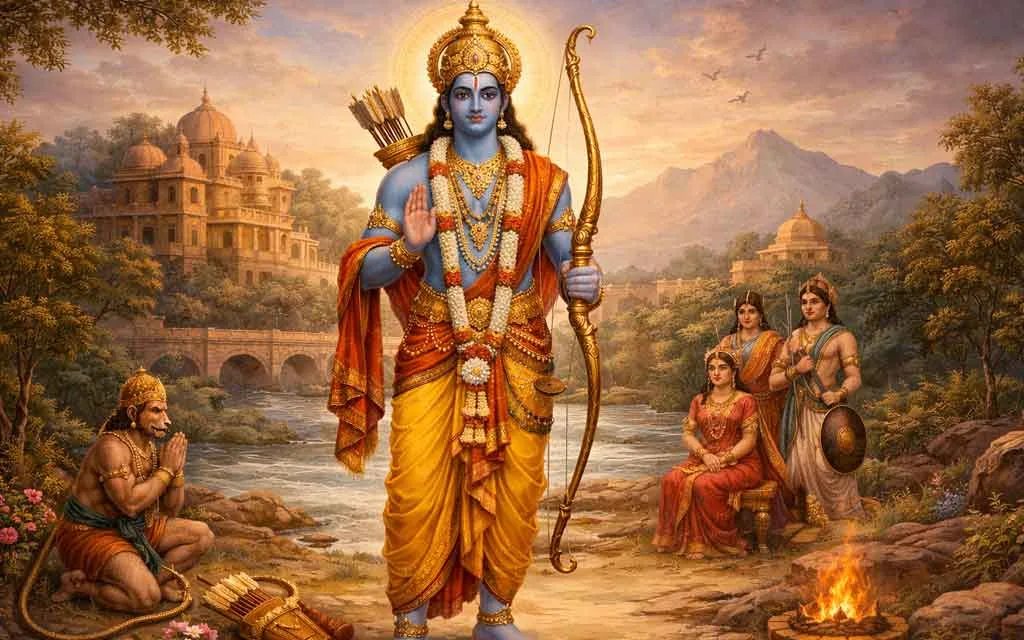
Finding a partner is one prayer; building a happy marriage is a lifelong one. For harmony within a marriage, many families turn to Sita and Rama, held up as the ideal of faithfulness and dharma in family life. A simple, joyful chant of Rama's name is sung in homes and bhajan groups everywhere:
श्री राम जय राम जय जय राम॥
śrī rāma jaya rāma jaya jaya rāma||
Meaning: "Glory to Sri Rama; victory to Rama; victory, victory to Rama." It is a simple chant of Rama's name, celebrating him and the dharma he stands for.
How to chant: couples can chant it together for a few minutes in the evening, or 108 times on a mala on a day of their choosing. Many find that praying together, even briefly, softens arguments and builds gentleness. For more prayers, see our mantras for marriage and a strong relationship.
For NRI families: matching across countries
For Indian families abroad, the search for a life partner has its own particular textures. Parents in India and children in the USA may have very different ideas of what a good match looks like. Time zones turn family discussions into late-night video calls. Questions of where the couple will live, whose career will move, and how visas, green card queues or an H-1B transfer will fit into the picture can weigh heavily on everyone.
A few gentle principles, rooted in dharma:
- Consent comes first. A marriage in dharma is a free union of two willing people. Prayer is never a way to push a son or daughter towards a match they do not want.
- No shame about age. Careers, studies, immigration journeys and simple life circumstances mean that people marry at many different ages. Comments like "you are getting late" cause real pain. The gopis prayed with love, not anxiety; let your family's prayer carry that same spirit.
- Respect both voices. Parents bring experience and care; children bring knowledge of their own hearts and of the life they live abroad. The best matches often come when both are heard.
- Patience is part of the prayer. Trust in the Goddess means trusting her timing, too.
- Be practical and honest. Share real information about careers, values, health and plans for where to live. Prayer complements, but never replaces, honest conversation, careful judgement and, where a move between countries is involved, proper immigration or legal advice and preparation.
- Beware of paid guarantees. Be cautious of anyone who charges large sums for rituals that promise a marriage within a fixed time. Faith is never for sale.
If you are a young person reading this while your parents pray on your behalf, consider joining them one Friday, even over a video call. Praying together, rather than arguing, can open the door to the conversation you both need.
What the Katyayani mantra is, and what it is not
The Katyayani prayer is a centuries-old expression of longing, devotion and hope. Reciting it can bring peace, focus your intention and connect you to a beautiful story of love for the Divine. It is not a spell. It does not guarantee a husband, a wife, a marriage or a particular date. The gopis' story itself is about the purity of their devotion, not about forcing an outcome.
Pray sincerely, live well, stay open, and let the Goddess guide the rest. For other ways to pray for family life, see our guide on which god to pray for job, marriage, health and more.
Frequently asked questions
What is the Katyayani mantra for marriage?
It is the prayer the young gopis of Vraja offered to Goddess Katyayani in the Bhagavata Purana (10.22.4). Addressing her as the great Maya and the supreme Yogini, they ask her to make Krishna, the son of Nanda, their husband. Families today recite it as a prayer for a good life partner and a happy marriage.
Is there a Katyayani mantra for early marriage?
Many people search for a mantra for early marriage, but no mantra controls timing, and there is no 'late' in the eyes of the Goddess. Devotees recite the Katyayani prayer for the right partner at the right time, with faith and patience. Every person's path is different, and a good marriage matters far more than an early one.
How many times should I chant the Katyayani mantra?
Families commonly chant it 11, 21 or 108 times, often on a mala after lighting a lamp. Quality matters more than quantity: a few chants with full attention are better than many in a hurry. Follow your family custom or priest's guidance.
Which day is best to chant the Katyayani mantra?
By custom, families chant it during the month of Margashirsha, on Navratri Day 6 (dedicated to Maa Katyayani), and on Fridays or Tuesdays as their family tradition prefers. It can also be chanted daily in a quiet moment.
Can parents chant the Katyayani mantra for a son?
Yes. Many parents pray to Goddess Katyayani for a good partner for a son or a daughter alike. The vrata prayer is in the gopis' voice, so some parents chant it as the gopis' prayer offered on their child's behalf, while others pray to Katyayani in their own words or chant the Rama mantra for a harmonious marriage.
Does the Katyayani mantra guarantee marriage?
No. It is a prayer, not a ritual guarantee. Devotees offer it with faith and leave the outcome to the Goddess. A good marriage also needs honest conversation, mutual respect, the free consent of both people and sensible decisions by the families.
Editor's note (7 October 2026)
The Katyayani prayer is from the Bhagavata Purana (10.22.4) and the Rama chant is a widely sung devotional chant; both are reproduced from our verified source list, with English meanings that follow the words of the texts. The gopis' story is given as commonly told. Customs about days and counts vary by region and family, so follow your family tradition or priest. The Navratri Day 6 date is for India. This guide offers prayer as support, never as a guarantee of marriage.
Related guides
- Navratri 2026 Day 6: Maa Katyayani mantra, colour and puja vidhi
- Navratri Day 6: Maa Katyayani puja complete rituals guide
- Powerful mantras for marriage and a strong relationship
- Which god to pray for: job, marriage, health, money, studies
- Navratri 2026 complete guide for NRIs
- Tulsi Vivah 2026: the divine marriage of Vishnu and Tulsi
- Hindu prayers and mantras while waiting for green card approval
You might also like
Navratri Mantras Before Garba: Durga and Amba Prayers, Day-Wise Naam Mantras and a Family Sankalpa
Bhairav Chalisa: Lyrics in Hindi with Meaning, Bhairav Aarti and How to Recite
Ram Chalisa: Lyrics in Hindi with Meaning, Ram Stuti Aarti and How to Recite