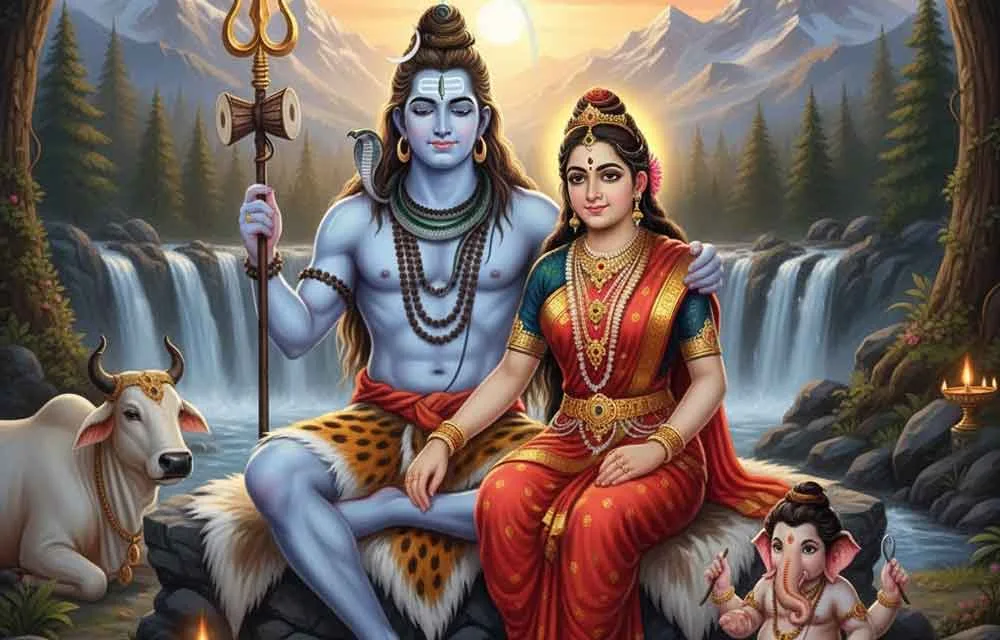
Venkateswara Ashtottaram: 108 Names of Lord Venkateswara (Srinivasa) with Meaning
The Sri Venkateswara Ashtottara Shatanamavali, the 108 names of Lord Venkateswara beginning 'om sri venkatesaya namah, om srinivasaya namah', in full: every name in Devanagari and IAST from the sanskritdocuments.org text (Brahmanda Purana, per its colophon), with a plain-English meaning for each name and how to offer them at home on Saturdays.
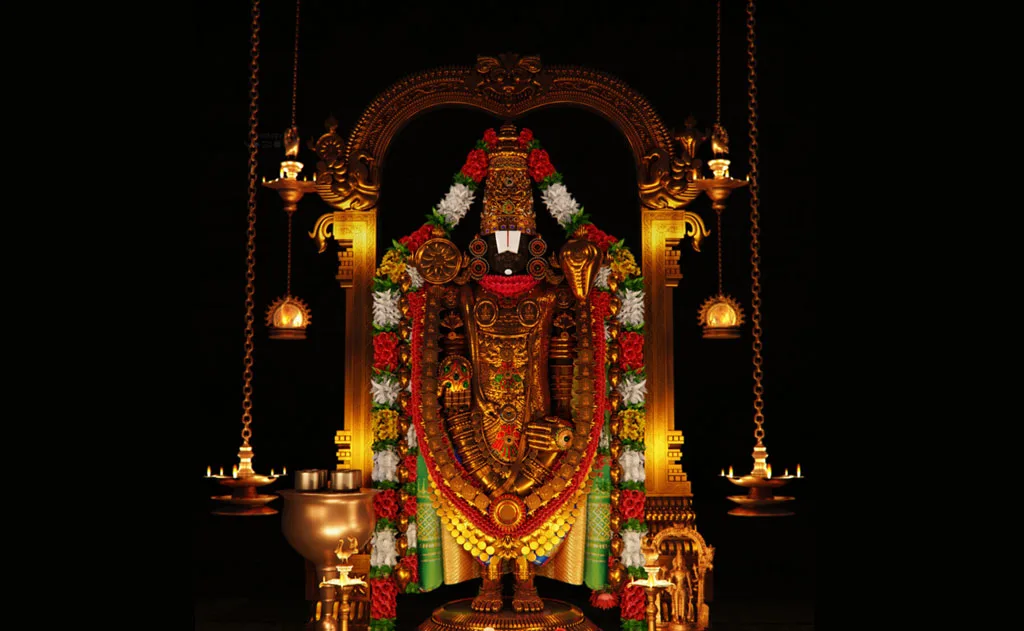
The Sri Venkateswara Ashtottara Shatanamavali, the 108 names of Lord Venkateswara beginning 'om sri venkatesaya namah, om srinivasaya namah', in full: every name in Devanagari and IAST from the sanskritdocuments.
Quick answer: The Venkateswara Ashtottaram (Sri Venkateswara Ashtottara Shatanamavali) is the list of 108 names of Lord Venkateswara, each offered as 'om ... namah', beginning 'om sri venkatesaya namah' and ending 'om seshasailaya namah'. It is chanted in Venkateswara puja, especially on Saturdays, with a flower, a tulasi leaf or a few grains of akshata offered at each name.
Last updated: 20 October 2026. The Sanskrit below is the complete text published by sanskritdocuments.org (file venkat108ver3brahmANDa.itx, transliterated and proofread by Malleswara Rao Yellapragada; Author field: Traditional; colophon: from the Brahmanda Purana), converted to Devanagari and IAST by software from the source, with no name typed by hand; two names are corrected as explained in the editor's note. Our own plain-English meaning follows every group of nine names.
Venkateswara Ashtottara Shatanamavali: all 108 names
The names are given in groups of nine, first in Devanagari and then in IAST transliteration, followed by the meaning of each name, numbered. Each name is in the dative form ('to Venkatesha') framed by 'om' and 'namah' (salutation). The source prints a running count after every tenth name; we leave the counts out.
Names 1 to 36
Names 1 to 9
ॐ श्री वेङ्कटेशाय नमः
ॐ श्रीनिवासाय नमः
ॐ लक्ष्मीपतये नमः
ॐ अनामयाय नमः
ॐ अमृतांशाय नमः
ॐ जगद्वंद्याय नमः
ॐ गोविंदाय नमः
ॐ शाश्वताय नमः
ॐ प्रभवे नमः
oṃ śrī veṅkaṭeśāya namaḥ
oṃ śrīnivāsāya namaḥ
oṃ lakṣmīpataye namaḥ
oṃ anāmayāya namaḥ
oṃ amṛtāṃśāya namaḥ
oṃ jagadvaṃdyāya namaḥ
oṃ goviṃdāya namaḥ
oṃ śāśvatāya namaḥ
oṃ prabhave namaḥ
Meaning: 1 Sri Venkatesha: the glorious lord of the Venkata hill. 2 Srinivasa: in whom Shri (Lakshmi) dwells. 3 Lakshmipati: husband of Lakshmi. 4 Anamaya: free from every illness. 5 Amritamsha: whose very nature is nectar. 6 Jagadvandya: worshipped by the whole world. 7 Govinda: protector of cows, known through the Vedas. 8 Shashvata: the eternal. 9 Prabhu: the Lord.
Names 10 to 18
ॐ शेषाद्रिनिलयाय नमः
ॐ देवाय नमः
ॐ केशवाय नमः
ॐ मधुसूदनाय नमः
ॐ अमृताय नमः
ॐ माधवाय नमः
ॐ कृष्णाय नमः
ॐ श्रीहरये नमः
ॐ ज्ञानपंजराय नमः
oṃ śeṣādrinilayāya namaḥ
oṃ devāya namaḥ
oṃ keśavāya namaḥ
oṃ madhusūdanāya namaḥ
oṃ amṛtāya namaḥ
oṃ mādhavāya namaḥ
oṃ kṛṣṇāya namaḥ
oṃ śrīharaye namaḥ
oṃ jñānapaṃjarāya namaḥ
Meaning: 10 Sheshadrinilaya: who dwells on Sheshadri, the hill of Shesha. 11 Deva: the shining god. 12 Keshava: of beautiful hair, slayer of Keshi. 13 Madhusudana: slayer of the demon Madhu. 14 Amrita: the immortal. 15 Madhava: consort of Ma (Lakshmi). 16 Krishna: the dark one who draws all hearts. 17 Srihari: Hari, remover of sorrow. 18 Jnanapanjara: the shelter of knowledge.
Names 19 to 27
ॐ श्रीवत्सवक्षसे नमः
ॐ सर्वेशाय नमः
ॐ गोपालाय नमः
ॐ पुरुषोत्तमाय नमः
ॐ गोपीश्वराय नमः
ॐ परंज्योतिषये नमः
ॐ वैकुंठपतये नमः
ॐ अव्ययाय नमः
ॐ सुधातनवे नमः
oṃ śrīvatsavakṣase namaḥ
oṃ sarveśāya namaḥ
oṃ gopālāya namaḥ
oṃ puruṣottamāya namaḥ
oṃ gopīśvarāya namaḥ
oṃ paraṃjyotiṣaye namaḥ
oṃ vaikuṃṭhapataye namaḥ
oṃ avyayāya namaḥ
oṃ sudhātanave namaḥ
Meaning: 19 Srivatsavakshas: bearing the Srivatsa mark on his chest. 20 Sarvesha: lord of all. 21 Gopala: protector of cows. 22 Purushottama: the supreme person. 23 Gopishvara: lord of the gopis. 24 Paramjyoti: the supreme light. 25 Vaikunthapati: lord of Vaikuntha. 26 Avyaya: the imperishable. 27 Sudhatanu: whose body is nectar.
Names 28 to 36
ॐ यादवेंद्राय नमः
ॐ नित्ययौवनरूपवते नमः
ॐ चतुर्वेदात्मकाय नमः
ॐ विष्णवे नमः
ॐ अच्युताय नमः
ॐ पद्मिनीप्रियाय नमः
ॐ धरापतये नमः
ॐ सुरपतये नमः
ॐ निर्मलाय नमः
oṃ yādaveṃdrāya namaḥ
oṃ nityayauvanarūpavate namaḥ
oṃ caturvedātmakāya namaḥ
oṃ viṣṇave namaḥ
oṃ acyutāya namaḥ
oṃ padminīpriyāya namaḥ
oṃ dharāpataye namaḥ
oṃ surapataye namaḥ
oṃ nirmalāya namaḥ
Meaning: 28 Yadavendra: chief of the Yadavas. 29 Nityayauvanarupavan: of ever-youthful form. 30 Chaturvedatmaka: whose self is the four Vedas. 31 Vishnu: the all-pervading. 32 Achyuta: who never falls. 33 Padminipriya: beloved of Padmini (Lakshmi, Padmavati). 34 Dharapati: lord of the earth. 35 Surapati: lord of the gods. 36 Nirmala: the spotless.
Names 37 to 72
Names 37 to 45
ॐ देवपूजिताय नमः
ॐ चतुर्भुजाय नमः
ॐ चक्रधराय नमः
ॐ त्रिधाम्ने नमः
ॐ त्रिगुणाश्रयाय नमः
ॐ निर्विकल्पाय नमः
ॐ निष्कलङ्काय नमः
ॐ निरंतकाय नमः
ॐ निरंजनाय नमः
oṃ devapūjitāya namaḥ
oṃ caturbhujāya namaḥ
oṃ cakradharāya namaḥ
oṃ tridhāmne namaḥ
oṃ triguṇāśrayāya namaḥ
oṃ nirvikalpāya namaḥ
oṃ niṣkalaṅkāya namaḥ
oṃ niraṃtakāya namaḥ
oṃ niraṃjanāya namaḥ
Meaning: 37 Devapujita: worshipped by the gods. 38 Chaturbhuja: four-armed. 39 Chakradhara: bearer of the discus. 40 Tridhama: whose abode spans the three worlds. 41 Trigunashraya: support of the three gunas. 42 Nirvikalpa: beyond every distinction of the mind. 43 Nishkalanka: without blemish. 44 Nirantaka: beyond death. 45 Niranjana: untainted.
Names 46 to 54
ॐ निराभासाय नमः
ॐ नित्यतृप्ताय नमः
ॐ निरुपद्रवाय नमः
ॐ गदाधराय नमः
ॐ शार्ङ्गपाणये नमः
ॐ नंदकिने नमः
ॐ शङ्खधारकाय नमः
ॐ अनेकमूर्तये नमः
ॐ अव्यक्ताय नमः
oṃ nirābhāsāya namaḥ
oṃ nityatṛptāya namaḥ
oṃ nirupadravāya namaḥ
oṃ gadādharāya namaḥ
oṃ śārṅgapāṇaye namaḥ
oṃ naṃdakine namaḥ
oṃ śaṅkhadhārakāya namaḥ
oṃ anekamūrtaye namaḥ
oṃ avyaktāya namaḥ
Meaning: 46 Nirabhasa: beyond all appearances. 47 Nityatripta: ever content. 48 Nirupadrava: free from every trouble. 49 Gadadhara: bearer of the mace. 50 Sharngapani: who holds the bow Sharnga. 51 Nandaki: bearer of the sword Nandaka. 52 Shankhadharaka: bearer of the conch. 53 Anekamurti: of many forms. 54 Avyakta: the unmanifest.
Names 55 to 63
ॐ कटिहस्ताय नमः
ॐ वरप्रदाय नमः
ॐ अनेकात्मने नमः
ॐ दीनबांधवे नमः
ॐ आर्तलोकाभयप्रदाय नमः
ॐ आकाशराजवरदाय नमः
ॐ योगिहृत्पद्ममंदिराय नमः
ॐ दामोदराय नमः
ॐ जगत्पालाय नमः
oṃ kaṭihastāya namaḥ
oṃ varapradāya namaḥ
oṃ anekātmane namaḥ
oṃ dīnabāṃdhave namaḥ
oṃ ārtalokābhayapradāya namaḥ
oṃ ākāśarājavaradāya namaḥ
oṃ yogihṛtpadmamaṃdirāya namaḥ
oṃ dāmodarāya namaḥ
oṃ jagatpālāya namaḥ
Meaning: 55 Katihasta: whose hand rests on his hip, as in the image at Tirumala. 56 Varaprada: giver of boons. 57 Anekatma: the self of many beings. 58 Dinabandhu: friend of the helpless. 59 Artalokabhayaprada: who gives fearlessness to the distressed. 60 Akasharajavarada: who blessed King Akasha Raja, father of Padmavati. 61 Yogihritpadmamandira: whose temple is the lotus heart of the yogis. 62 Damodara: bound at the waist with a rope (as the child Krishna). 63 Jagatpala: protector of the world.
Names 64 to 72
ॐ पापघ्नाय नमः
ॐ भक्तवत्सलाय नमः
ॐ त्रिविक्रमाय नमः
ॐ शिंशुमाराय नमः
ॐ जटामकुटशोभिताय नमः
ॐ शङ्खमध्योल्लसन्मञ्जूकिङ्किण्यद्यकरकंदकाय नमः
ॐ नीलमेघश्यामतनवे नमः
ॐ बिल्वपत्रार्चनप्रियाय नमः
ॐ जगद्व्यापिने नमः
oṃ pāpaghnāya namaḥ
oṃ bhaktavatsalāya namaḥ
oṃ trivikramāya namaḥ
oṃ śiṃśumārāya namaḥ
oṃ jaṭāmakuṭaśobhitāya namaḥ
oṃ śaṅkhamadhyollasanmañjūkiṅkiṇyadyakarakaṃdakāya namaḥ
oṃ nīlameghaśyāmatanave namaḥ
oṃ bilvapatrārcanapriyāya namaḥ
oṃ jagadvyāpine namaḥ
Meaning: 64 Papaghna: destroyer of sin. 65 Bhaktavatsala: tender towards his devotees. 66 Trivikrama: who measured the worlds in three strides. 67 Shimshumara: the cosmic form of the dolphin-shaped constellation that holds the stars. 68 Jatamakutashobhita: shining with a high crown. 69 A long descriptive name of an ornament bright with lovely tinkling bells, beginning 'in the midst of the conch'; its last part is printed differently in the two source texts (see the editor's note). 70 Nilameghashyamatanu: whose body is dark like a rain cloud. 71 Bilvapatrarchanapriya: who loves worship with bilva leaves. 72 Jagadvyapi: who pervades the world.
Names 73 to 108
Names 73 to 81
ॐ जगत्कर्त्रे नमः
ॐ जगत्साक्षिणे नमः
ॐ जगत्पतये नमः
ॐ चिंतितार्थप्रदाय नमः
ॐ जिष्णवे नमः
ॐ दाशरथाय नमः
ॐ दशरूपवते नमः
ॐ देवकीनंदनाय नमः
ॐ शौरये नमः
oṃ jagatkartre namaḥ
oṃ jagatsākṣiṇe namaḥ
oṃ jagatpataye namaḥ
oṃ ciṃtitārthapradāya namaḥ
oṃ jiṣṇave namaḥ
oṃ dāśarathāya namaḥ
oṃ daśarūpavate namaḥ
oṃ devakīnaṃdanāya namaḥ
oṃ śauraye namaḥ
Meaning: 73 Jagatkarta: maker of the world. 74 Jagatsakshi: witness of the world. 75 Jagatpati: lord of the world. 76 Chintitarthaprada: who grants what is longed for. 77 Jishnu: the victorious. 78 Dasharatha: the son of Dasharatha (Rama). 79 Dasharupavan: who took ten forms. 80 Devakinandana: son of Devaki. 81 Shauri: descendant of Shura (Krishna).
Names 82 to 90
ॐ हयग्रीवाय नमः
ॐ जनार्दनाय नमः
ॐ कन्याश्रवणतारेज्याय नमः
ॐ पीतांबरधराय नमः
ॐ अनघाय नमः
ॐ वनमालिने नमः
ॐ पद्मनाभाय नमः
ॐ मृगयासक्तमानसाय नमः
ॐ अश्वारूढाय नमः
oṃ hayagrīvāya namaḥ
oṃ janārdanāya namaḥ
oṃ kanyāśravaṇatārejyāya namaḥ
oṃ pītāṃbaradharāya namaḥ
oṃ anaghāya namaḥ
oṃ vanamāline namaḥ
oṃ padmanābhāya namaḥ
oṃ mṛgayāsaktamānasāya namaḥ
oṃ aśvārūḍhāya namaḥ
Meaning: 82 Hayagriva: the horse-headed form, lord of knowledge. 83 Janardana: protector of people. 84 Kanyashravanatarejya: worshipped on the Shravana star in the solar month of Kanya, traditionally regarded as his birth star. 85 Pitambaradhara: wearing yellow silk. 86 Anagha: the sinless. 87 Vanamali: wearing the garland of forest flowers. 88 Padmanabha: from whose navel the lotus springs. 89 Mrigayasaktamanasa: whose mind was set on the hunt (in the legend he met Padmavati while hunting). 90 Ashvarudha: riding a horse.
Names 91 to 99
ॐ खड्गधारिणे नमः
ॐ धनार्जनसमुत्सुकाय नमः
ॐ घनसारसन्मध्यकस्तूरि तिलकोज्ज्वलाय नमः
ॐ सच्चिदानंदरूपाय नमः
ॐ जगन्मङ्गलदायकाय नमः
ॐ यज्ञरूपाय नमः
ॐ यज्ञभोक्त्रे नमः
ॐ चिन्मयाय नमः
ॐ परमेश्वराय नमः
oṃ khaḍgadhāriṇe namaḥ
oṃ dhanārjanasamutsukāya namaḥ
oṃ ghanasārasanmadhyakastūri tilakojjvalāya namaḥ
oṃ saccidānaṃdarūpāya namaḥ
oṃ jaganmaṅgaladāyakāya namaḥ
oṃ yajñarūpāya namaḥ
oṃ yajñabhoktre namaḥ
oṃ cinmayāya namaḥ
oṃ parameśvarāya namaḥ
Meaning: 91 Khadgadhari: bearing a sword. 92 Dhanarjanasamutsuka: eager to gather wealth (in the legend, to repay the loan taken from Kubera for his wedding). 93 Ghanasarasanmadhyakasturitilakojjvala: radiant with a tilaka of camphor and musk. 94 Sacchidanandarupa: whose form is being, consciousness and bliss. 95 Jaganmangaladayaka: who brings auspiciousness to the world. 96 Yajnarupa: the form of sacrifice. 97 Yajnabhokta: who receives the sacrifice. 98 Chinmaya: pure consciousness. 99 Parameshvara: the supreme Lord.
Names 100 to 108
ॐ परमार्थप्रदायकाय नमः
ॐ शांताय नमः
ॐ श्रीमते नमः
ॐ दोर्दंडविक्रमाय नमः
ॐ परात्पराय नमः
ॐ परब्रह्मणे नमः
ॐ श्रीविभवे नमः
ॐ जगदीश्वराय नमः
ॐ शेषशैलाय नमः
oṃ paramārthapradāyakāya namaḥ
oṃ śāṃtāya namaḥ
oṃ śrīmate namaḥ
oṃ dordaṃḍavikramāya namaḥ
oṃ parātparāya namaḥ
oṃ parabrahmaṇe namaḥ
oṃ śrīvibhave namaḥ
oṃ jagadīśvarāya namaḥ
oṃ śeṣaśailāya namaḥ
Meaning: 100 Paramarthapradayaka: giver of the highest goal. 101 Shanta: the peaceful. 102 Shriman: the glorious, with Shri. 103 Dordandavikrama: of mighty arms and valour. 104 Paratpara: higher than the highest. 105 Parabrahma: the supreme Brahman. 106 Srivibhu: the all-pervading Lord with Shri. 107 Jagadishvara: lord of the universe. 108 Sheshashaila: the lord of the Shesha hill.
Colophon
इति श्री ब्रह्मांड पुराणानांतर्गत श्री वेङ्कटेश्वर अष्टोत्तर शतनामावळि सम्पूर्णम्
iti śrī brahmāṃḍa purāṇānāṃtargata śrī veṅkaṭeśvara aṣṭottara śatanāmāvaḻi sampūrṇam
Meaning: Thus ends the Sri Venkateshvara Ashtottara Shatanamavali, contained in the Brahmanda Purana.
Who is Lord Venkateswara?
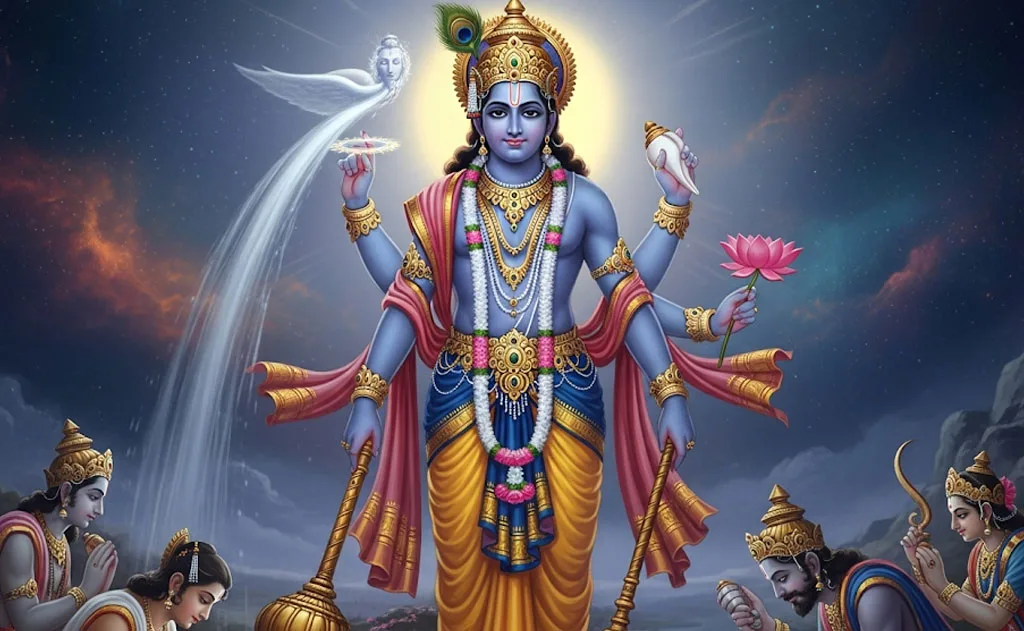
Venkateswara, 'lord of the Venkata hill', is the form of Vishnu worshipped at Tirumala in Andhra Pradesh, where he stands with Lakshmi on his chest. He is also called Srinivasa, Balaji and Govinda. The names in this list move between three themes: Vishnu's universal names (Keshava, Madhava, Purushottama, Trivikrama), the names of his avatars (Dasharatha's son Rama, Devaki's son Krishna, Hayagriva), and names that belong only to Tirumala. Read more on our Vishnu hub.
| Names | What they describe |
|---|---|
| 1 to 10 | Venkatesha, Srinivasa and Lakshmipati, the lord who lives on Sheshadri |
| 11 to 36 | Vishnu's classic names: Keshava, Madhava, Govinda, Purushottama, Achyuta |
| 37 to 54 | the four-armed Lord with discus, conch, mace, bow and sword; beyond all qualities |
| 55 to 60 | the Tirumala image (hand on the hip, hand giving boons) and the blessing of King Akasha Raja |
| 61 to 81 | the Lord of the world and his avatars, Rama and Krishna |
| 82 to 93 | Hayagriva, the Shravana star, and the Tirumala legend of the hunt, the horse and the loan |
| 94 to 108 | the supreme Brahman, the peaceful Lord of the Shesha hill |
When is it traditionally chanted?
- On Saturdays: the main day of Venkateswara worship in many Telugu and Tamil homes. See our guide to Saturday in Hinduism.
- On Vaikuntha Ekadashi: on Sunday 20 December 2026 (date for India; check your local panchang abroad), when the northern gate of Vishnu temples is opened. See the Vaikuntha Ekadashi 2026 guide.
- With the morning prayers: after the Venkatesa Suprabhatam or with the mantra 'Om Namo Venkatesaya'.
- At Tirumala festivals: the November 2026 Tirumala calendar lists the festivals at the temple, many of which families follow at home.
How to offer the 108 names at home
- Place an image of Venkateswara (with Lakshmi, or with Sridevi and Bhudevi) and light a lamp.
- Keep 108 flowers, tulasi leaves or a small bowl of akshata (rice mixed with turmeric) ready.
- Say each name slowly, 'om sri venkatesaya namah', and offer a flower or a few grains at 'namah'.
- After the 108 names, offer naivedyam (a simple sweet, fruit or milk) and do aarti.
- If you wish, add the 108 names of Lakshmi from our Lakshmi Ashtottara Shatanamavali, since Srinivasa means 'the one in whom Lakshmi dwells'.
Pronunciation help
- In the IAST, a line over a vowel (ā, ī, ū) means it is held twice as long; ṅ before k or g is the 'ng' sound in 'veṅkaṭa'.
- ṭ, ḍ and ṇ are said with the tongue curled back; ś and ṣ are both 'sh' sounds; c is always 'ch'.
- The source writes some nasals as ṃ before a consonant ('goviṃdāya', 'jagadvaṃdyāya'); they are said 'govindāya' and 'jagadvandyāya'.
Traditional beliefs about the 108 names
Devotees traditionally believe that chanting the names of Venkateswara with devotion:
- brings the protection of the Lord who 'gives fearlessness to the distressed' (name 59);
- helps devotees far from Tirumala feel close to the temple and its daily worship;
- steadies the mind and deepens devotion, one name at a time.
These are matters of faith, not promises. The names are an offering of love, not a way to guarantee money, jobs, visas or health.
Tips for NRI families
- Find a temple near you. Our Venkateswara and Balaji temples guide lists well-known temples in India and abroad.
- Share the work. Divide the 108 names among family members, nine or twelve each, so that children take part.
- Go further. Add the Govindashtakam, the Sudarshana Ashtakam or, on a long Saturday, the Vishnu Sahasranama.
Frequently asked questions
What is the Venkateswara Ashtottaram?
Ashtottara means 'one hundred and eight'. The Venkateswara Ashtottara Shatanamavali is a list of 108 names of Lord Venkateswara (Srinivasa, Balaji), each said as 'om ... namah', beginning 'om sri venkatesaya namah, om srinivasaya namah, om lakshmipataye namah'. It is used for archana, with a flower, tulasi leaf or akshata offered at each name.
Where does this list come from?
The colophon of the sanskritdocuments.org text says it is contained in the Brahmanda Purana. The file names no composer (Author field: Traditional). The same names also exist in verse form as the Venkateshvara Ashtottara Shatanama Stotram, which we used to check the text.
When is it traditionally chanted?
Many Telugu and Tamil families chant it on Saturdays, the day most closely associated with Venkateswara worship, especially in the Purattasi (Kanya) month, and on Vaikuntha Ekadashi, which falls on Sunday 20 December 2026 (date for India). It can be offered any day as part of a morning or evening puja.
Why do some names tell a story?
Several names recall the legend of Tirumala: Akasharajavarada (who blessed King Akasha Raja), Mrigayasaktamanasa (who went hunting and met Padmavati), Ashvarudha (riding a horse) and Dhanarjanasamutsuka (eager to gather wealth, remembered in the story of the loan from Kubera). Others, like Katihasta and Varaprada, describe the posture of the image at Tirumala.
How long does it take?
About 8 to 10 minutes at an easy pace, a little longer if you offer a flower or tulasi leaf with each name. A 108-bead mala helps you keep count if you chant from memory.
Will chanting the 108 names solve my problems?
Devotees traditionally believe that chanting the names of Venkateswara with faith brings his protection and grace, and the names themselves call him the friend of the helpless and the giver of fearlessness. It is an act of worship, not a guarantee of any worldly result.
Editor's note (20 October 2026)
This page was published on 20 October 2026 at the address readers and search engines were already requesting. The names are the full text of the Venkateshvara Ashtottara Shatanamavali on sanskritdocuments.org (file venkat108ver3brahmANDa.itx; Author field: Traditional; colophon: contained in the Brahmanda Purana). We compared it with the same names in verse form on sanskritdocuments.org (venkaTeshvara108strbrahmANDa.itx) and corrected two plain typing slips that the verse form confirms: name 50 is printed 'sārangapāṇaye' in the source and given here as 'śārṅgapāṇaye' (who holds the bow Sharnga), and the first word of name 69, printed 'śaṅkamadyo-', is given as 'śaṅkhamadhyo-' (in the midst of the conch). The rest of name 69 is kept exactly as the namavali prints it ('-kiṅkiṇyadyakarakaṃdakāya'); the verse form reads '-kiṅkiṇyādhyakarandakaḥ', and because the two texts differ we have not altered it, and our meaning of that name is deliberately general. Name 93 keeps the source's space. No other letter is changed. The meanings are our own. The stories behind names 60, 89 and 92 are given in the brief form in which they are commonly told; the namavali itself only names them.
Related guides
You might also like
Saraswati Ashtottara Shatanamavali: 108 Names of Goddess Saraswati with Meaning
Lalita Ashtottara Shatanamavali: 108 Names of Goddess Lalita (Rajatachala Shringagra) with Meaning
Shatpadi Stotram (Vishnu Shatpadi, Avinayam Apanaya Vishno) by Adi Shankaracharya: Full Text with Meaning