Govindashtakam (Satyam Jnanam Anantam): Lyrics with Meaning by Adi Shankaracharya
Govindashtakam, traditionally attributed to Adi Shankaracharya, sings of Krishna in two voices at once: the infinite Brahman of the Upanishads and the mischievous child of Gokula. Here is the full text in Devanagari and IAST with a simple English meaning of every verse, how to chant it, and what it means to devotees.
Govindashtakam, traditionally attributed to Adi Shankaracharya, sings of Krishna in two voices at once: the infinite Brahman of the Upanishads and the mischievous child of Gokula. Here is the full text in Devanagari and IAST with a simple English meaning of every verse, how to chant it, and what it means to devotees.
Quick answer: Govindashtakam is an eight-verse Sanskrit hymn to Sri Krishna as Govinda, traditionally attributed to Adi Shankaracharya. It begins 'Satyam jnanam anantam', the Upanishadic words for Brahman, and in every verse sets Krishna's infinite nature beside a scene from his childhood in Gokula and Vrindavan. Each verse ends 'bow to Govinda, the supreme bliss'. Devotees chant it in the morning or evening, on Ekadashi and Thursdays, or at Krishna festivals.
This is a hymn of beautiful paradoxes. The one who is beyond all space crawls in a cowherd's courtyard. The one who needs no food steals butter. The one who is Time itself dances on the serpent Kaliya. For Shankara's tradition, these are not contradictions: the formless Brahman and the dark child of Yashoda are the same reality, seen by the eye of wisdom and the eye of love.
Below is every verse in Devanagari and IAST, each followed by a plain-English meaning. For a gentler companion hymn by the same traditional author, see Achyutashtakam (Achyutam Keshavam) with meaning, and for the sweetness of Krishna in eight verses, Madhurashtakam.
Govindashtakam: full stotram with meaning
The text follows sanskritdocuments.org. The meanings are our own devotional renderings: faithful to the words, with a little explanation where a story lies behind a phrase. Many lines play on sound and double meanings that no translation can fully carry.
Verse 1
सत्यं ज्ञानमनन्तं नित्यमनाकाशं परमाकाशं
गोष्ठप्राङ्गणरिङ्खणलोलमनायासं परमायासम् ।
मायाकल्पितनानाकारमनाकारं भुवनाकारं
क्ष्मामानाथमनाथं प्रणमत गोविन्दं परमानन्दम् ॥ १॥
satyaṃ jñānamanantaṃ nityamanākāśaṃ paramākāśaṃ
goṣṭhaprāṅgaṇariṅkhaṇalolamanāyāsaṃ paramāyāsam |
māyākalpitanānākāramanākāraṃ bhuvanākāraṃ
kṣmāmānāthamanāthaṃ praṇamata govindaṃ paramānandam || 1||
Bow down to Govinda, the supreme bliss. He is Truth, Knowledge and the Infinite, eternal, beyond space and yet the highest space. He crawled playfully about the courtyards of the cowherd village, needing no effort yet seeming to strive so hard. Formless, he appears in many forms shaped by maya, and the whole world is his form; he is the Lord of Earth and Lakshmi, and has no lord above him.
Verse 2
मृत्स्नामत्सीहेति यशोदाताडनशैशव सन्त्रासं
व्यादितवक्त्रालोकितलोकालोकचतुर्दशलोकालिम् ।
लोकत्रयपुरमूलस्तम्भं लोकालोकमनालोकं
लोकेशं परमेशं प्रणमत गोविन्दं परमानन्दम् ॥ २॥
mṛtsnāmatsīheti yaśodātāḍanaśaiśava santrāsaṃ
vyāditavaktrālokitalokālokacaturdaśalokālim |
lokatrayapuramūlastambhaṃ lokālokamanālokaṃ
lokeśaṃ parameśaṃ praṇamata govindaṃ paramānandam || 2||
Bow down to Govinda, the supreme bliss. When Yashoda scolded him, 'You have eaten mud!', the little child was frightened, and when he opened his mouth she saw the fourteen worlds, ringed by the Lokaloka mountains. He is the central pillar holding up the city of the three worlds, the light of all worlds who needs no other light, the Lord of the worlds, the Supreme Lord.
Verse 3
त्रैविष्टपरिपुवीरघ्नं क्षितिभारघ्नं भवरोगघ्नं
कैवल्यं नवनीताहारमनाहारं भुवनाहारम् ।
वैमल्यस्फुटचेतोवृत्तिविशेषाभासमनाभासं
शैवं केवलशान्तं प्रणमत गोविन्दं परमानन्दम् ॥ ३॥
traiviṣṭaparipuvīraghnaṃ kṣitibhāraghnaṃ bhavarogaghnaṃ
kaivalyaṃ navanītāhāramanāhāraṃ bhuvanāhāram |
vaimalyasphuṭacetovṛttiviśeṣābhāsamanābhāsaṃ
śaivaṃ kevalaśāntaṃ praṇamata govindaṃ paramānandam || 3||
Bow down to Govinda, the supreme bliss. He slew the mighty enemies of the gods, lifted the burden from the earth, and cures the disease of worldly existence. He is liberation itself. He ate butter, yet needs no food, and he swallows the worlds. He shines through a mind made pure and clear, yet he is beyond all appearance; he is auspicious, alone and perfectly at peace.
Verse 4
गोपालं प्रभुलीलाविग्रहगोपालं कुलगोपालं
गोपीखेलनगोवर्धनधृतिलीलालालितगोपालम् ।
गोभिर्निगदितगोविन्दस्फुटनामानं बहुनामानं
गोपीगोचरपथिकं प्रणमत गोविन्दं परमानन्दम् ॥ ४॥
gopālaṃ prabhulīlāvigrahagopālaṃ kulagopālaṃ
gopīkhelanagovardhanadhṛtilīlālālitagopālam |
gobhirnigaditagovindasphuṭanāmānaṃ bahunāmānaṃ
gopīgocarapathikaṃ praṇamata govindaṃ paramānandam || 4||
Bow down to Govinda, the supreme bliss. He is Gopala, the cowherd: a Lord who took the form of a cowherd for his divine play, the guardian of his clan. Amid the games of the gopis he held up Govardhana hill as play and cherished the cowherds. The cows themselves called him clearly by the name Govinda; he has countless names, and he walks the paths where the gopis can see him.
Verse 5
गोपीमण्डलगोष्ठीभेदं भेदावस्थमभेदाभं
शश्वद्गोखुरनिर्धूतोद्गतधूलीधूसरसौभाग्यम् ।
श्रद्धाभक्तिगृहीतानन्दमचिन्त्यं चिन्तितसद्भावं
चिन्तामणिमहिमानं प्रणमत गोविन्दं परमानन्दम् ॥ ५॥
gopīmaṇḍalagoṣṭhībhedaṃ bhedāvasthamabhedābhaṃ
śaśvadgokhuranirdhūtodgatadhūlīdhūsarasaubhāgyam |
śraddhābhaktigṛhītānandamacintyaṃ cintitasadbhāvaṃ
cintāmaṇimahimānaṃ praṇamata govindaṃ paramānandam || 5||
Bow down to Govinda, the supreme bliss. In the circle of gopis he seemed to be many, standing in difference while shining as the One without difference. His good fortune was to be grey with the dust raised by the hooves of cows. He is bliss grasped through faith and devotion, beyond thought, yet his true being is the object of meditation; his glory is that of the wish-fulfilling gem.
Verse 6
स्नानव्याकुलयोशिद्वस्त्रमुपादायागमुपारूढं
व्यादित्सन्तीरथ दिग्वस्त्रा ह्युपुदातुमुपाकर्षन्तम् ।
निर्धूतद्वयशोकविमोहं बुद्धं बुद्धेरन्तस्थं
सत्तामात्रशरीरं प्रणमत गोविन्दं परमानन्दम् ॥ ६॥
snānavyākulayośidvastramupādāyāgamupārūḍhaṃ
vyāditsantīratha digvastrā hyupudātumupākarṣantam |
nirdhūtadvayaśokavimohaṃ buddhaṃ buddherantasthaṃ
sattāmātraśarīraṃ praṇamata govindaṃ paramānandam || 6||
Bow down to Govinda, the supreme bliss. As commonly told in the Bhagavatam, when the gopis were bathing he took their garments, climbed a tree, and drew them towards him as they came, without clothes, to take them back. He removes the twin sorrows and delusion; he is awareness itself, dwelling at the heart of the intellect, and his only body is pure existence.
Verse 7
कान्तं कारणकारणमादिमनादिं कालमनाभासं
कालिन्दीगतकालियशिरसि मुहुर्नृत्यन्तं नृत्यन्तम् ।
कालं कालकलातीतं कलिताशेषं कलिदोषघ्नं
कालत्रयगतिहेतुं प्रणमत गोविन्दं परमानन्दम् ॥ ७॥
kāntaṃ kāraṇakāraṇamādimanādiṃ kālamanābhāsaṃ
kālindīgatakāliyaśirasi muhurnṛtyantaṃ nṛtyantam |
kālaṃ kālakalātītaṃ kalitāśeṣaṃ kalidoṣaghnaṃ
kālatrayagatihetuṃ praṇamata govindaṃ paramānandam || 7||
Bow down to Govinda, the supreme bliss. He is lovely, the cause of all causes, the first and yet without beginning, Time itself and yet beyond appearance. Again and again he danced on the hoods of the serpent Kaliya in the Yamuna. He is Time and beyond all measures of time, knows all, destroys the faults of the Kali age, and is the cause behind the movement of past, present and future.
Verse 8
वृन्दावनभुवि वृन्दारकगणवृन्दाराध्यं वन्देऽहं
कुन्दाभामलमन्दस्मेरसुधानन्दं सुहृदानन्दम् ।
वन्द्याशेषमहामुनिमानसवन्द्यानन्दपदद्वन्द्वं
वन्द्याशेषगुणाब्धिं प्रणमत गोविन्दं परमानन्दम् ॥ ८॥
vṛndāvanabhuvi vṛndārakagaṇavṛndārādhyaṃ vande'haṃ
kundābhāmalamandasmerasudhānandaṃ suhṛdānandam |
vandyāśeṣamahāmunimānasavandyānandapadadvandvaṃ
vandyāśeṣaguṇābdhiṃ praṇamata govindaṃ paramānandam || 8||
I bow to him who is worshipped by the hosts of gods in the land of Vrindavana. His gentle smile, pure as jasmine, is a nectar of bliss, and he is the joy of his friends. His two feet are adored in the minds of all the great sages; he is an ocean of praiseworthy virtues. Bow down to Govinda, the supreme bliss.
Closing verse (phala) and colophon
गोविन्दाष्टकमेतदधीते गोविन्दार्पितचेता यो
गोविन्दाच्युत माधव विष्णो गोकुलनायक कृष्णेति ।
गोविन्दाङ्घ्रिसरोजध्यानसुधाजलधौतसमस्ताघो
गोविन्दं परमानन्दामृतमन्तःस्थं स तमभ्येति ॥
॥ इति श्रीमच्छङ्कराचार्यविरचितं श्रीगोविन्दाष्टकं सम्पूर्णम् ॥
govindāṣṭakametadadhīte govindārpitacetā yo
govindācyuta mādhava viṣṇo gokulanāyaka kṛṣṇeti |
govindāṅghrisarojadhyānasudhājaladhautasamastāgho
govindaṃ paramānandāmṛtamantaḥsthaṃ sa tamabhyeti ||
|| iti śrīmacchaṅkarācāryaviracitaṃ śrīgovindāṣṭakaṃ sampūrṇam ||
Whoever recites this Govindashtakam with a mind offered to Govinda, calling 'Govinda, Achyuta, Madhava, Vishnu, Lord of Gokula, Krishna', has every fault washed away by the nectar-water of meditation on Govinda's lotus feet, and reaches that Govinda, the nectar of supreme bliss who dwells within. Thus ends the Sri Govindashtakam composed by Sri Shankaracharya.
How and when to chant Govindashtakam
Best time and setting
Traditionally, chant after a bath, seated before an image of Krishna or a lit lamp. The early morning and the evening lamp-lighting time are the most common. Ekadashi, Thursdays and Krishna festivals are favoured, and many devotees also chant it during the month of Kartika. For busy families abroad, a fixed few minutes before dinner or bedtime works well.
How many times
- Once a day, slowly and with understanding, is a complete practice.
- Three times is common in evening puja.
- On special days some devotees chant it eleven times, or repeat just the refrain as a short japa.
A simple sankalpa
Hold a little water in your right palm and say in your own words: 'For the love of Sri Govinda, and to understand him as both the infinite and the dear child of Gokula, I chant the Govindashtakam today.' Release the water and begin.
Pronunciation tips in plain English
- The lines are long. Breathe at the small vertical bar in the middle of each verse and again at the end of the line.
- Learn the refrain first. Once it is secure, each verse becomes three new lines leading back to familiar ground.
- The 'jn' sound in jnanam is usually said 'gny' or 'dny' depending on region; follow your family's custom.
- A line over a vowel means it is held long; the many long 'a' sounds give the hymn its stately flow.
- Listen to a recording by a trained reciter a few times before chanting alone.
Significance and traditional benefits
Govindashtakam is often described as Advaita set to music. Its first words, satyam jnanam anantam, recall the Taittiriya Upanishad's famous description of Brahman as truth, knowledge and the infinite. Shankara's tradition teaches that this one reality is our own deepest Self. Yet the hymn never becomes dry philosophy: in the same breath it shows Krishna frightened of his mother's scolding, grey with cow-dust, and smiling a jasmine-white smile at his friends.
Traditionally, devotees believe that chanting it with love and attention:
- purifies the mind of restlessness and faults, as the closing verse describes;
- joins devotion and wisdom, so that love for Krishna deepens into understanding;
- helps the reciter rest in inner peace, the 'supreme bliss' named in every refrain;
- and, in the words of the phala verse, leads the devotee to Govinda who dwells within.
These are expressions of faith, offered as tradition hands them down. No hymn guarantees particular results; the gift is understood to come by grace.
Story and context: the infinite in a cowherd's courtyard
As commonly told, Adi Shankaracharya travelled across India teaching that Brahman alone is real, yet he also composed warm hymns to Shiva, Devi, Vishnu, Ganesha and Krishna. Govindashtakam is among the hymns traditionally attributed to him, and it shows why he is loved as both philosopher and devotee.
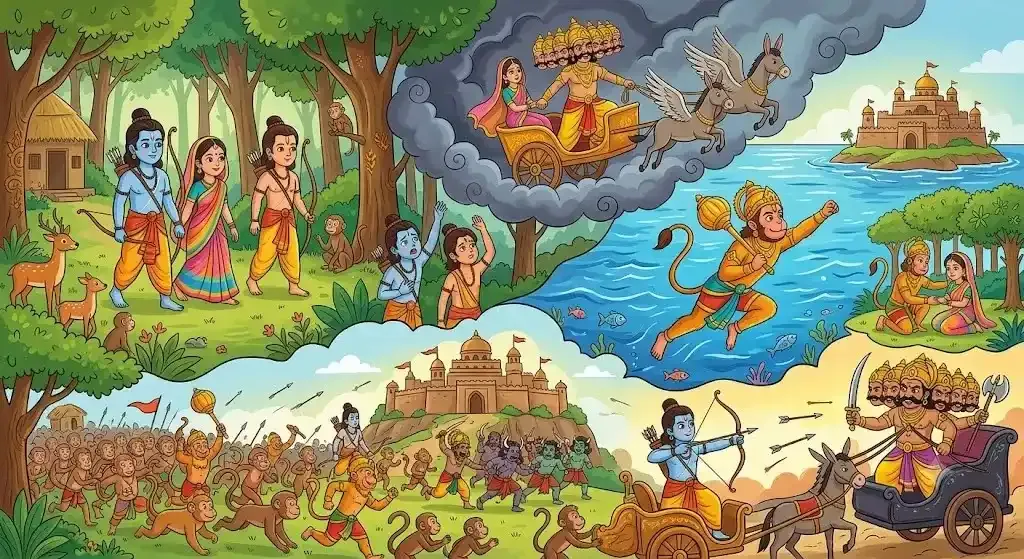
The verses are full of stories from the Bhagavata Purana: Yashoda seeing the universe in little Krishna's mouth, the butter thief, the lifting of Govardhana, the dance on Kaliya, the play with the gopis, and Vrindavan's cows. Shankara places each scene beside an Upanishadic truth, so that the child who is scolded is also the pillar of the three worlds. The effect is to teach the heart and the mind together.
For readers drawn to Krishna's teaching, the Bhagavad Gita makes the same point in Krishna's own words. See our Bhagavad Gita guide to all 18 chapters and the guide to Gita Jayanti and Mokshada Ekadashi.
Frequently asked questions
What is the meaning of Govindashtakam?
Govindashtakam means 'eight verses on Govinda'. Each verse praises Krishna both as the formless, infinite Brahman and as the playful cowherd child of Gokula, and each ends with the refrain 'bow to Govinda, the supreme bliss'.
Who wrote Govindashtakam?
Govindashtakam is traditionally attributed to Adi Shankaracharya, and the colophon of the standard text names him. Its opening words echo the Taittiriya Upanishad's description of Brahman as truth, knowledge and the infinite, which fits Shankara's Advaita teaching.
What are the benefits of chanting Govindashtakam?
Devotees believe it purifies the heart and turns the mind towards Govinda. The closing verse says that one who recites it with a mind offered to Govinda is washed of faults by meditation on his feet and reaches Govinda, the bliss within. These are traditional beliefs, not guaranteed outcomes.
When is the best time to chant Govindashtakam?
Morning after a bath or evening lamp-lighting time are traditional. Many devotees chant it on Ekadashi, on Thursdays, or during Krishna festivals, but it may be chanted on any day.
Can women and children chant Govindashtakam?
Yes. It is a devotional stotra open to everyone. Its long lines can be challenging, so children often begin with the refrain and the first verse and add more over time.
How many times should Govindashtakam be chanted?
Once a day with understanding is a complete practice. Some devotees chant it three times in their evening puja. The closing verse emphasises a mind offered to Govinda rather than a fixed count.
Editor's note
Editor's note (7 October 2026): This page has been restored at its original address after the earlier version was lost. The Sanskrit text in Devanagari and IAST follows sanskritdocuments.org; minor recitation variants exist between printed editions. The English meanings are our own devotional renderings, and some lines carry wordplay that admits more than one reading. Authorship is given as traditionally attributed. Traditional benefits are described as beliefs, not guarantees.
Related guides
You might also like
Achyutashtakam (Achyutam Keshavam): Lyrics with Meaning, How to Chant and Significance
Ganesha Pancharatnam Stotram (Mudakaratta Modakam): Lyrics and Meaning
Madhurashtakam (Adharam Madhuram): Lyrics, Meaning and How to Recite