

Andal Ammawari Story: From Devotee to Goddess – The Hidden Story Behind Dhanurmasam
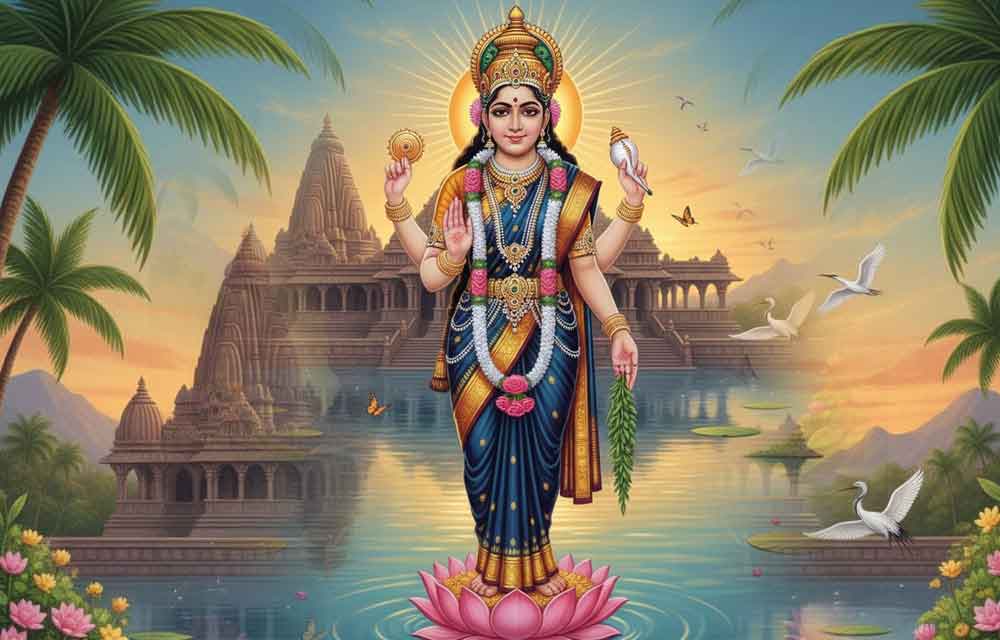
The extraordinary tale of a young girl whose pure love transformed her from a devotee into a revered goddess
In the sacred land of Tamil Nadu, over 1,200 years ago, a miracle unfolded that would forever change the spiritual landscape of India. This is the story of Andal, the only female Alwar among the twelve Vaishnava saints, whose unconditional love for Lord Vishnu earned her a place not just in history, but in divinity itself.
Her story is intimately woven with Dhanurmasam, the sacred month when her divine compositions echo through temples across South India every dawn. But who was this remarkable soul? How did a young girl become Goda Devi, the goddess who merged with her beloved Lord?
Prepare to be moved by a tale of devotion so pure, it transcends the boundaries between human and divine.
The Miraculous Birth: A Flower Among Flowers
The Prayer of a Childless Saint
In the 8th century CE, in the holy town of Srivilliputhur (present-day Tamil Nadu), lived a devoted Vaishnava saint named Vishnuchitta, later known as Periyalvar. He was a humble gardener who dedicated his life to serving Lord Ranganatha at the local temple. Every day, he would lovingly tend to his garden, selecting the most beautiful flowers to offer at the Lord’s feet.
Despite his spiritual wealth, Vishnuchitta’s heart carried one sorrow—he had no child to share his devotion with. Night after night, he prayed to Lord Vishnu, not for personal gain, but for a soul who could join him in his service to the divine.
The Divine Gift
One blessed morning, as Vishnuchitta walked through his tulasi garden in the pre-dawn darkness, he noticed something extraordinary. Beneath the sacred tulasi plant, nestled among the morning dew, lay a beautiful infant girl, glowing with an ethereal radiance.
His heart overflowing with joy and wonder, Vishnuchitta carefully lifted the child. She opened her eyes, and in that moment, he knew—this was no ordinary child. This was Lord Vishnu’s answer to his prayers, a divine soul sent to earth.
He named her Kodai (the one who adorned herself with a garland), but the world would come to know her as Andal (the one who rules) or Goda Devi (the goddess who was found).
Growing Up in Divine Love: A Childhood Unlike Any Other
A Garden of Devotion
Andal grew up surrounded by flowers, prayers, and stories of Lord Vishnu. Her father would tell her enchanting tales of Krishna’s childhood in Vrindavan, of Rama’s righteousness in Ayodhya, and of Vishnu’s various avatars. Each story planted seeds of devotion in her young heart.
Unlike other children who played with toys, Andal’s playground was the temple garden. Her playmates were the flowers, her toys were the garlands meant for the Lord, and her imagination was filled with visions of Krishna, the dark-complexioned Lord with the enchanting flute.
The Secret of the Garlands
As Andal blossomed into a beautiful young girl, her love for Lord Vishnu deepened into something extraordinary. Every day, she would help her father make fresh flower garlands for the deity. But unknown to anyone, Andal had a secret.
Before her father could take the garlands to the temple, young Andal would secretly try them on, imagining herself as Krishna’s bride. She would stand before a mirror, draping the garlands around her neck, adorning herself as she would on her wedding day with her beloved Lord.
“Am I beautiful enough for my Krishna?” she would whisper to her reflection. “Will these flowers please Him when I meet Him as His bride?”
After admiring herself, she would carefully return the garlands, ensuring they looked untouched, her secret safe—or so she thought.
The Discovery That Changed Everything
One fateful day, a temple priest noticed something unusual. As he was about to place the garland on Lord Ranganatha’s idol, he saw a strand of long dark hair caught in the flowers. Shocked and upset, he immediately informed Vishnuchitta.
Vishnuchitta was mortified. The garlands meant for the Lord had been contaminated! But how? He watched carefully the next day and discovered his beloved daughter’s secret ritual.
His initial reaction was one of horror. “Andal! What have you done? These garlands are meant for the Lord! They must be pure and untouched!”
Tears streamed down Andal’s innocent face. “Appa, I am so sorry! But I love Him so much. I wanted to see if I was beautiful enough for Him. I wanted to offer Him only the best.”
Heartbroken but duty-bound, Vishnuchitta prepared a fresh garland that day, vowing to keep Andal away from the offerings.
The Lord’s Divine Approval
That night, Vishnuchitta had a dream that would change everything. Lord Ranganatha Himself appeared before him, not with anger, but with infinite love and a gentle smile.
“Vishnuchitta,” the Lord spoke, “why do you stop my beloved from adorning herself with the garlands? Do you not know that I have been waiting for ages for such pure love? I accept no garland unless it has been worn by Andal first. From tomorrow, bring me only the garlands that have touched her body, been blessed by her love.”
Vishnuchitta woke up with tears of joy. His daughter was not just a devotee—she was the Lord’s chosen one, His eternal beloved!
The Tiruppavai: Songs That Awakened a Nation
The Divine Inspiration
As Andal grew into womanhood, her love for Krishna transformed into intense spiritual poetry. During one Dhanurmasam (Margashirsha month), the sacred month dedicated to Lord Vishnu, teenage Andal composed thirty exquisite Tamil verses collectively known as the Tiruppavai.
These weren’t just poems—they were the outpourings of a soul completely immersed in divine love. Each verse captured the essence of devotion, describing how young girls (gopis) would observe the Pavai Nombu (a vow during Dhanurmasam) to win Lord Krishna’s blessings.
The Power of Tiruppavai
The Tiruppavai begins with the famous verse:
“Margazhi thingal madhi nirainda nannalaal…” (In the month of Margazhi, on an auspicious full moon night…)
Through these thirty pasurams (verses), Andal:
- Wakes up her friends before dawn
- Describes the cold winter mornings of Dhanurmasam
- Speaks of taking holy baths in sacred ponds
- Sings praises of Lord Krishna
- Expresses her longing to serve Him
- Culminates in the divine union with the Lord
The Tiruppavai is considered so sacred that it is recited daily in Vishnu temples across South India during Dhanurmasam, especially before dawn. Even today, over 1,200 years later, millions wake up in the dark winter mornings, light their lamps, and sing Andal’s words with the same devotion she poured into them.
The Nachiyar Tirumozhi: Love’s Boldest Expression
Not content with just the Tiruppavai, Andal composed another work—the Nachiyar Tirumozhi, consisting of 143 verses. Here, her devotion reached unprecedented heights. She boldly declared herself as Krishna’s bride, expressing her deep longing with a courage rarely seen in spiritual literature.
In these verses, Andal:
- Dreams of marrying Krishna
- Experiences the pangs of separation
- Shares her restless nights waiting for her beloved
- Describes elaborate wedding fantasies
- Eventually surrenders completely to divine will
Her words were revolutionary. While male saints wrote about devotion as servants to God, Andal wrote as a lover, as a bride awaiting her divine husband. This Madhura Bhakti (sweet devotion) opened new dimensions in Vaishnavism.
The Refusal to Marry: A Stand for Divine Love
The Earthly Proposals
As Andal matured into a young woman of extraordinary beauty and intelligence, marriage proposals poured in from distinguished families. Kings and wealthy merchants sought her hand for their sons. Her reputation as a learned scholar and poetess had spread far and wide.
But to everyone’s surprise, Andal refused every single proposal.
“I am already married,” she would say with a serene smile. “I belong to Lord Ranganatha of Srirangam. I wear His garland. I sing His praise. I dream of no other husband.”
Her Father’s Dilemma
Vishnuchitta was torn. As a father, he worried about his daughter’s future in conventional terms. As a devotee, he understood her spiritual conviction. But society had expectations, and questions arose.
“Your daughter has lost her mind in devotion,” people whispered. “She needs to be practical,” others advised. “What future does she have without marriage?” they questioned.
But Andal remained unmoved. Her heart belonged to Krishna, and she would accept no substitute—no matter how prestigious the earthly match.
The Dream That Sealed Her Destiny
One night, Lord Ranganatha appeared in Vishnuchitta’s dream once again.
“The time has come,” the Lord declared. “Bring Andal to me in Srirangam. She is my eternal consort. She belongs here beside me. Our separation has lasted long enough.”
When Vishnuchitta shared this divine message with Andal, her face lit up with a joy that transcended all earthly happiness. Her prayers were finally answered. Her beloved was calling her home.
The Divine Wedding: When Earth Touched Heaven
The Journey to Srirangam
With great celebration, Vishnuchitta organized a grand procession to take Andal to Srirangam Temple, about 65 kilometers from Srivilliputhur. This was no ordinary wedding procession—it was a divine union witnessed by thousands.
Andal was adorned in the finest silk sarees, bedecked with jewels, and seated on a magnificently decorated palanquin. Devotees lined the streets, singing her praises. Musicians played divine melodies. The air itself seemed to vibrate with spiritual energy.
Throughout the journey, Andal sang verses from the Tiruppavai and Nachiyar Tirumozhi. Her face glowed not with the nervousness of a typical bride, but with the serene confidence of a soul returning home.
The Sacred Moment
When the procession reached the magnificent Srirangam Temple, the massive gates were opened wide. Andal stepped down from her palanquin and walked slowly, gracefully toward the sanctum sanctorum where Lord Ranganatha awaited.
The temple priests, the gathered devotees, Vishnuchitta—everyone watched in awe as Andal approached the deity.
She stood before her beloved Lord Ranganatha, the same deity to whom she had offered garlands since childhood, the same Lord she had dreamed of marrying in countless visions.
The Merger: Devotee Becomes Divine
What happened next has been described by witnesses and passed down through generations as the greatest miracle in Vaishnavite history.
As Andal stood before the Lord with folded hands and closed eyes, chanting His names in ecstatic devotion, a brilliant divine light enveloped the sanctum. The radiance was so intense that everyone had to shield their eyes.
When the light subsided and devotees could see again, Andal was gone.
She had merged completely with Lord Ranganatha. The devotee had become one with the divine. The bride had united with her eternal husband. Andal had achieved what yogis meditate lifetimes to attain—complete merger with the Supreme.
Vishnuchitta collapsed, tears streaming down his face—tears not of sorrow, but of overwhelming spiritual joy. His daughter had achieved the ultimate goal of human existence. She hadn’t died; she had transcended into divinity.
The Legacy: Why Andal Matters Today
The Only Female Alwar
In the Vaishnavite tradition, there are twelve Alwars—saints who are considered to have been blessed with the supreme experience of divine union with Lord Vishnu. Andal is the only woman among them, yet her influence rivals and often surpasses the others.
Why? Because her path was different.
While male Alwars approached God with reverence, respect, and sometimes fear, Andal approached Him as an equal—as a lover, as a bride, as someone who belonged with Him by divine right. This radical approach democratized devotion, showing that God could be loved intimately, personally, without the barriers of protocol or formality.
Andal’s Revolutionary Feminism
Centuries before modern feminism, Andal represented:
Autonomy: She refused to be married off according to societal expectations, choosing instead her own path—even if that path was spiritual.
Voice: She composed poetry that was bold, personal, and unapologetic about feminine desire (albeit divine).
Agency: She took initiative in her devotion, not waiting to be taught but expressing her love naturally and powerfully.
Equality: She placed herself as Krishna’s bride, not His servant, asserting spiritual equality between human and divine, female and male.
The Dhanurmasam Connection
Andal’s Tiruppavai is inseparable from Dhanurmasam. Here’s why this month is so special:
- Divine Timing: Andal composed the Tiruppavai during Dhanurmasam, making this month eternally associated with her.
- Dawn Rituals: The practice of waking before dawn during Dhanurmasam comes directly from Andal’s verses where she wakes her friends to worship Krishna.
- Community Devotion: Just as Andal sang with her friends (gopis), Dhanurmasam encourages collective worship, strengthening community bonds.
- Winter Austerity: The cold winter mornings mentioned in Tiruppavai represent the difficulties devotees willingly endure for divine love.
- Personal Connection: When you sing Tiruppavai during Dhanurmasam, you’re not just reciting ancient poetry—you’re channeling Andal’s own voice, her own longing, her own love.
Andal in Different Traditions
In Tamil Culture
Andal is revered as “Tamil Thai” (Tamil Mother) in Tamil Nadu. Her Tamil compositions are considered literary masterpieces, taught in schools and recited in homes. Every December-January, her statues are taken in procession through streets, and devotees gather in thousands to sing her verses.
In Telugu States (Andhra Pradesh & Telangana)
Known as Goda Devi or Andal Ammawaru, she holds a special place in Telugu Vaishnavite hearts. Major temples in Hyderabad, Vijayawada, and Tirupati conduct elaborate celebrations during Dhanurmasam, where her story is narrated and her songs sung in Telugu translation.
The Tirumala Tirupati Devasthanam has a separate shrine for Andal, and devotees believe that praying to her brings the blessings of Lord Venkateshwara more easily—after all, she merged with Him!
Pan-Indian Reverence
While her roots are South Indian, Andal’s influence has spread across India:
- ISKCON temples worldwide sing her praises
- Scholars study her works for their theological depth
- Feminist theologians celebrate her as a spiritual revolutionary
- Musicians compose new renditions of her verses
Andal Temples: Sacred Spaces of Divine Love
Srivilliputhur Andal Temple
The birthplace temple where Andal grew up is now a major pilgrimage site. The temple tower (gopuram) is so magnificent that it appears on the Tamil Nadu government emblem. Devotees visit to seek blessings for marriage, children, and spiritual growth.
Srirangam Ranganathaswamy Temple
At the sanctum where Andal merged with the Lord, there’s a separate shrine for her. She is depicted standing beside Lord Ranganatha, no longer as a devotee, but as His divine consort.
Temples Across South India
Almost every major Vishnu temple has a shrine for Andal. Devotees offer bangles, flowers, and silk sarees to her, treating her as a beloved daughter of the community.
Life Lessons from Andal’s Story
1. Love Without Conditions
Andal didn’t love God for blessings, wealth, or even salvation. She loved Him purely, expecting nothing but the joy of loving. This teaches us that true devotion needs no rewards.
2. Courage to Choose Your Path
Despite societal pressure, Andal followed her heart. She teaches us that spiritual conviction sometimes requires standing alone against popular opinion.
3. Devotion as a Daily Practice
Andal’s life was filled with small daily acts of love—making garlands, singing songs, imagining her Lord. Spirituality isn’t about grand gestures; it’s built in daily moments.
4. The Power of Pure Intention
When Andal wore the garlands meant for God, her intention was pure love, not disrespect. The Lord saw her heart, not her actions. This teaches us that purity of intention matters most.
5. Gender is No Barrier to Divinity
Andal proved that spirituality transcends gender. Her merger with the divine shows that the soul has no gender, and divine love is available to all equally.
6. Express Your Devotion Creatively
Andal wrote poetry. Your expression might be music, art, service, or simply living with kindness. Find your unique way to express devotion.
How to Connect with Andal’s Energy Today
During Dhanurmasam
- Wake up early and sing Tiruppavai: Even if you don’t know Tamil, listen to recordings with translation. Feel her words awakening your spiritual consciousness.
- Create garlands: Whether real flowers or paper crafts with children, recreate Andal’s childhood practice with love.
- Read her story to children: Pass on this beautiful legacy to the next generation.
- Visit Andal temples: Make a pilgrimage if possible, or visit local Vishnu temples and pay respects to Andal.
Year-Round Practices
- Offer bangles to Andal: In temples, devotees offer new bangles to her idol, symbolizing celebrating her as an eternal bride.
- Study Tiruppavai: Read commentaries to understand the deep philosophical meanings behind her seemingly simple verses.
- Practice Madhura Bhakti: Develop a personal, intimate relationship with God, seeing Him as your closest companion.
- Support women’s spiritual education: Honor Andal by empowering other women in their spiritual journeys.
The Theological Significance
Jeevathma-Paramathma Union
Andal’s story is the perfect illustration of the soul’s journey to God. Theologians interpret her life as:
- Birth in the garden: The soul taking human form in the material world
- Growing up in devotion: The spiritual seeker’s journey
- Refusal of earthly marriage: Renunciation of material attachments
- The divine call: Grace calling the soul back home
- The merger: Ultimate liberation (moksha) and oneness with God
The Concept of Surrender (Prapatti)
Andal exemplifies complete surrender. She didn’t perform complex rituals or severe austerities. She simply loved, completely and without reservation. This is the essence of Prapatti—absolute surrender to divine will—that Vaishnavism emphasizes.
The Gopi Bhava
Andal adopted the “gopi bhava”—the consciousness of the cowherd girls of Vrindavan who loved Krishna. This represents the highest form of devotion where the devotee sees themselves as belonging completely to God, with no separate existence or desire apart from Him.
Frequently Asked Questions About Andal
Q: Is Andal’s story historical or mythological? A: Andal is a historical figure who lived in the 8th-9th century CE. Her compositions are documented, and her impact on Tamil literature and Vaishnavism is well-established. The miraculous elements are matters of faith, but the person was certainly real.
Q: Why is she called by different names? A: Kodai was her birth name; Andal means “she who rules”; Goda Devi means “the goddess who was found/given”; Nachiyar means “lady” or “goddess.” Each name reflects a different aspect of her identity.
Q: Can unmarried girls pray to Andal? A: Absolutely! Unmarried girls especially connect with Andal as she represents their spiritual aspirations. Many pray to her for a good life partner with divine qualities.
Q: What’s the difference between Andal and Mirabai? A: Both were female Krishna devotees who refused earthly marriage, but Andal lived in 8th century Tamil Nadu and merged with Vishnu’s form, while Mirabai lived in 16th century Rajasthan. Both are celebrated for their devotional poetry.
Q: Do I need to know Tamil to appreciate Andal? A: Not at all! Translations of Tiruppavai exist in most Indian languages. The emotion and devotion transcend linguistic barriers. What matters is connecting with her spirit.
Andal’s Message for Modern Times
In today’s fast-paced, materialistic world, Andal’s story offers profound wisdom:
In a world of conditional love, she teaches unconditional devotion. In a society of compromises, she demonstrates unwavering conviction. In an age of instant gratification, she exemplifies patient longing. In times of gender inequality, she stands as proof of spiritual equality. In moments of spiritual doubt, she reminds us that divine love is real, accessible, and transformative.
Conclusion: The Eternal Bride
Andal’s story is not just history—it’s a living tradition that touches millions of hearts every Dhanurmasam. When the cold pre-dawn darkness of Margashirsha month envelops India, and devotees wake to sing her verses, Andal’s presence becomes palpable in homes and temples.
She wasn’t a princess or a scholar or a renunciant in the traditional sense. She was simply a girl who loved God so purely, so completely, that the boundaries between devotee and divine dissolved.
Her message is timeless: Love transforms everything. Pure devotion breaks all barriers. The path to God is not through complexity but through the simplicity of a heart that beats only for Him.
This Dhanurmasam, as you wake before dawn, light your lamp, and perhaps stumble through the verses of Tiruppavai in whatever language you know—remember that you’re not alone. You’re joining a 1,200-year-old tradition of devotees who have been awakened by a young girl’s love, a love so powerful it made her immortal.
Andal Ammawaru ki jai! Victory to the divine bride who showed us that the greatest spiritual achievement is not conquest but surrender, not seeking but loving, not reaching but merging.
Share this story with someone who needs to hear about divine love today. Let Andal’s legacy inspire another heart.
Visit HinduTone.com for more inspiring stories of saints, festivals, and spiritual wisdom that connect ancient traditions with modern life.
Related Articles on HinduTone.com
- Dhanurmasam Daily Rituals: Complete Family Guide
- Vaikunta Ekadashi: The Most Sacred Day of Dhanurmasam
- Tiruppavai Explained: Verse-by-Verse Meaning
- Female Saints of Hinduism: Breaking Divine Glass Ceilings
- Love as a Spiritual Path: From Mirabai to Andal
Related posts:
 The Birth of Lord Ganesha: The Elephant-Headed God
 The Story of Savitri and Satyavan: Love Conquers Death
 The Story of Ambarisha and Durvasa
 The Story of Narasimha: The Fierce Protector of Devotees
 The Story of Amrit and the Demons: Why Rahu and Ketu Are Considered Malefic
 The Immortal Boy Who Defeated Death: Rishi Markandeya’s Divine Story



 ︎
︎

