Swami Vivekananda Biography: Life & Teachings
Swami Vivekananda biography — his life from Naren Datta to the 1893 Chicago speech, Ramakrishna Mission, Vedanta teachings & global Hindu legacy.
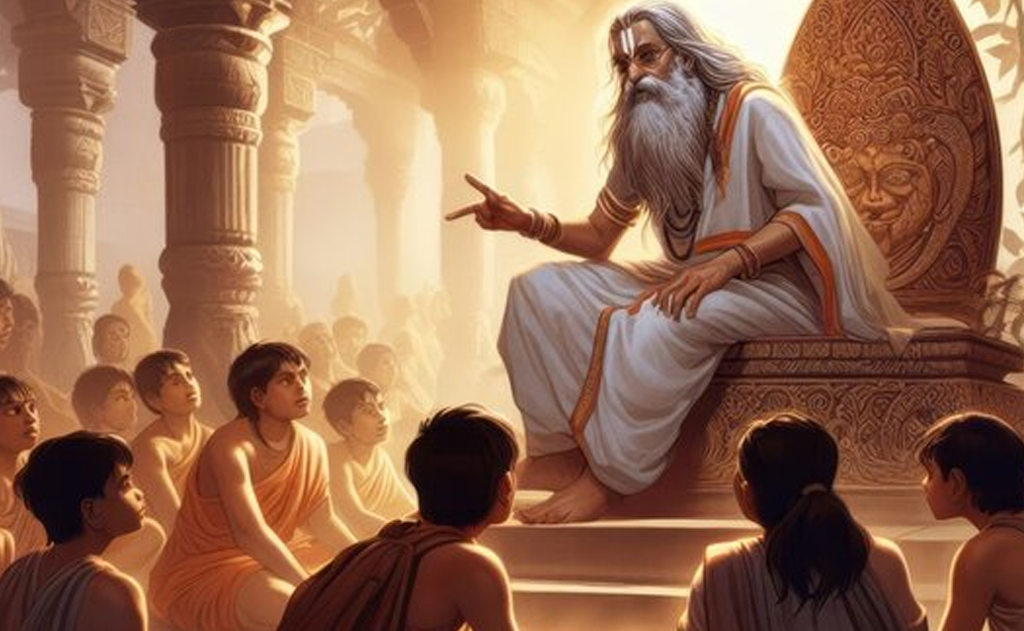
Swami Vivekananda biography — his life from Naren Datta to the 1893 Chicago speech, Ramakrishna Mission, Vedanta teachings & global Hindu legacy.
Swami Vivekananda biography is more than the life-story of a saint — it is the moment Sanatana Dharma stepped onto the world stage. In just 39 short years (1863–1902) Narendranath Datta of Calcutta became the disciple of the mystic Sri Ramakrishna Paramahamsa, walked all of India as an unknown wandering monk, electrified the West with a single 1893 speech in Chicago, founded the Ramakrishna Mission and the Belur Math, and lit the spiritual flame that has guided generations of Hindus, from Aurobindo to Mahatma Gandhi to Subhas Chandra Bose to Narendra Modi. Read on for the full Swami Vivekananda life and teachings — from his luminous childhood and meeting with Ramakrishna, through his parivrajaka years, the Chicago Parliament of Religions, his work in the West, his return to India, the founding of the Mission, and the eternal teachings he left behind.
Birth and Early Life of Narendranath Datta
He was born Narendranath Datta on 12 January 1863 in the well-to-do Datta household at Simla, north Calcutta. His father Vishwanath Datta was an Anglicised attorney at the Calcutta High Court; his mother Bhuvaneshwari Devi was a deeply pious lady who told Naren the stories of the Ramayana and Mahabharata. Both worlds shaped him.
A boy of two natures
From childhood Naren was simultaneously an unusually gifted student of Western philosophy (Spencer, Hume, Mill, Kant) and an instinctive Hindu mystic — already as a child he would meditate spontaneously and once told his classmates he saw a "strange light" between his eyebrows whenever he closed them.
A musician, athlete and scholar
At Scottish Church College he excelled in philosophy, was a trained vocalist and tabla player, was a champion swimmer and gymnast, and tested every authority figure with his sharp intellect. By his late teens he was a member of the rationalist Brahmo Samaj and openly skeptical about idol worship.
The Meeting with Sri Ramakrishna Paramahamsa
In November 1881, the eighteen-year-old Naren first met Sri Ramakrishna at Dakshineswar. He asked the saint the question he had asked everyone else: "Sir, have you seen God?" Ramakrishna replied without hesitation: "Yes, my child, I have seen Him as I see you here, only more clearly. And not only that — I can show Him to you."
That answer began a five-year apprenticeship that broke down every prejudice Naren had imported from Western rationalism, and remade him from a sceptical Brahmo into the most original Vedantin of the modern age. Ramakrishna himself would later say of him: "Naren is not an ordinary soul. He is a nitya-siddha — an eternally perfect being — born to share the wisdom of Vedanta with the world."
Sannyasa and the Wandering Years (1886–1893)
After Sri Ramakrishna's death from throat cancer on 16 August 1886, the young disciples gathered at Baranagar Math under Naren's leadership and took formal sannyasa, adopting new names. Narendranath became Swami Vivekananda.
Walking the length and breadth of Bharat
From 1888 to 1893 he was a parivrajaka — a wandering monk with only a kamandalu and a few books. He walked from the Himalayas to Kanyakumari, sharing the company of kings, weavers, sweepers and scholars alike. At Kanyakumari, in December 1892, he swam to a rock far from the shore and sat in three days of intense meditation. From that "rock-meditation" emerged the resolve to attend the World's Parliament of Religions in Chicago.
The Chicago Speech of 11 September 1893
On 11 September 1893, the unknown thirty-year-old monk in saffron robes stepped onto the platform of the Parliament of Religions at the Art Institute of Chicago. He opened with five words that brought a 7,000-strong audience to its feet for two minutes of unbroken applause:
"Sisters and Brothers of America!"
In the addresses that followed over the eleven-day Parliament he introduced America — and through America the world — to the universalism of Hinduism. He explained that every soul is potentially divine, that all religions are paths to the same Truth, and that the future belonged to a science-friendly, dharma-grounded spirituality. The American press christened him "the cyclonic Hindu monk".
Three Years in the West (1893–1896)
Vivekananda spent the next three years lecturing across the United States and the United Kingdom. He founded the Vedanta Society of New York in 1894 — the first such organisation outside India — and trained Western disciples including J. J. Goodwin (who recorded his lectures verbatim), Sara Bull, Ole Bull, Josephine MacLeod, and the Irish-born Margaret Noble who would later become Sister Nivedita.
Practical Vedanta
In England in 1896 he delivered the four landmark lectures later compiled as Practical Vedanta — distilling the Upanishadic teaching of Tat Tvam Asi for the modern world. These remain among the most-read Vedanta texts in any language.
Return to India and the Founding of Ramakrishna Mission
When he stepped off the boat at Colombo and then Pamban on 15 January 1897, India received him as a returning hero. From Madras to Calcutta his journey was a continuous vijaya yatra. On 1 May 1897 he founded the Ramakrishna Mission at Belur — a body that would carry forward two intertwined tasks: atmano mokshartham, jagaddhitaya cha — for one's own liberation and for the welfare of the world.
Belur Math
On 9 December 1898, Vivekananda consecrated the new Belur Math headquarters on the western bank of the Ganga. Today it remains the global headquarters of the Order, with hundreds of branches running schools, hospitals, disaster-relief and rural-uplift programmes worldwide.
The Final Years and Mahasamadhi
A second tour of the West (1899–1900) followed, including a stay at Ridgely Manor in New York and lectures in California. By 1901 his health had deteriorated sharply — diabetes, asthma, insomnia. On the evening of 4 July 1902 at Belur Math, after a day of teaching Sanskrit grammar to the young brahmacharis and a long meditation, he entered mahasamadhi at the age of 39 years, 5 months and 24 days — exactly fulfilling his own often-stated prediction that he would not live past forty.
Core Teachings of Swami Vivekananda
Practical Vedanta — the truth that "each soul is potentially divine" must transform daily life, not stay in books.
Karma Yoga — work itself, performed without attachment to fruits, is a path to liberation.
Service to humanity is service to God — "Jiva is Shiva."
Education that builds character — "Education is the manifestation of the perfection already in man."
Universal religion — all paths reach the same summit; difference is divine richness.
Strength — "Strength is life, weakness is death." Spiritual life requires fearless strength of body and mind.
Advertisement
Famous Quotes by Swami Vivekananda
"Arise, awake, and stop not till the goal is reached." — a paraphrase of the Katha Upanishad that became his lifelong mantra.
"Each soul is potentially divine. The goal is to manifest this divinity within by controlling nature, external and internal." — Raja Yoga, Introduction.
"You cannot believe in God until you believe in yourself." — Lectures from Colombo to Almora, 1897.
"Anything that makes you weak — physically, intellectually and spiritually, reject as poison." — Letters of Swami Vivekananda.
Interesting Facts and Lesser-Known Stories
His grandfather Durgacharan Datta took sannyasa at age 25 — the renunciate impulse ran in the blood.
His real birth name "Narendra" means "lord of men"; "Vivekananda" means "the bliss of discrimination" (between the real and the unreal).
He was a connoisseur of music; the bhajan "Khandana Bhava-Bandhana" that the Ramakrishna Order sings every evening was composed by him.
At Khetri, the Maharaja granted him 100 pounds for the Chicago trip on the condition that he would adopt the title "Swami Vivekananda" instead of "Vividishananda" — and so the world remembers him by that name.
In Chicago, he initially had no place to stay; a rich Boston lady, Kate Sanborn, hosted him after a chance meeting on a train.
His birth anniversary, 12 January, is celebrated as National Youth Day in India since 1985.
Legacy and Impact on Hinduism, India and the World
No single individual has done more for the modern image of Hinduism than Swami Vivekananda. He decisively retired the colonial caricature of Hindus as "idolaters and weak fatalists", replacing it with the image of a confident, scientifically rigorous, humanitarian dharma. He was a direct inspiration for Sri Aurobindo, Mahatma Gandhi (who carried his books on the Salt March), Subhas Chandra Bose (who called him "the maker of modern India"), and PM Narendra Modi (who has said Vivekananda is the deepest single influence of his life).
The Ramakrishna Mission and the Vedanta Societies he founded continue to operate over 200 centres worldwide, running hospitals, schools, technical institutes, women's programmes and disaster-response teams. The Vivekananda Rock Memorial at Kanyakumari and the Vivekananda Kendra founded by Eknath Ranade in 1972 carry his service-as-worship mission forward.
Conclusion: A Cyclonic Monk Who Awoke a Civilisation
The complete Swami Vivekananda life and teachings arc — from the brilliant, restless boy of Simla to the saffron-robed monk who told America "Sisters and Brothers", to the householder of Belur Math who left his body at thirty-nine — is the story of how Sanatana Dharma rediscovered its atmashakti and walked back into the world with grace, science and compassion. His message remains the simplest and the hardest: arise, awake, and stop not till the goal is reached.
Share this article with seekers in your circle — and continue your study with our biographies of Narendra Modi, Chanakya and the existing comprehensive guide to Adi Shankaracharya.
Frequently Asked Questions
When was Swami Vivekananda born and when did he die?
He was born Narendranath Datta on 12 January 1863 in Calcutta and entered mahasamadhi on 4 July 1902 at Belur Math, aged 39.
Who was Swami Vivekananda's guru?
Sri Ramakrishna Paramahamsa of Dakshineswar (1836–1886) was his guru. Their five-year discipleship reshaped Vivekananda's entire spiritual outlook.
What is the famous Chicago speech of 1893?
On 11 September 1893 he addressed the World's Parliament of Religions in Chicago. His opening "Sisters and Brothers of America" drew a two-minute standing ovation and his addresses through the eleven-day Parliament introduced Vedanta to the West.
What is the Ramakrishna Mission?
Founded by Vivekananda on 1 May 1897, it is a worldwide monastic and humanitarian organisation headquartered at Belur Math, with over 200 centres running schools, hospitals and welfare programmes.
Why is 12 January celebrated as National Youth Day in India?
The Government of India declared Vivekananda's birth anniversary as National Youth Day in 1985, recognising his lifelong call to youth — "Arise, awake, and stop not till the goal is reached."
What were Swami Vivekananda's main teachings?
Practical Vedanta, Karma Yoga, the divinity of every soul, education for character, service to humanity as service to God, and the harmony of all religions.
What did Vivekananda mean by "Practical Vedanta"?
That the Upanishadic insight "Tat Tvam Asi" (you are That) must transform daily action — not remain a textual abstraction. Service, work and ethics are the testing ground.
Did Swami Vivekananda meet famous Western thinkers?
Yes — among others he met William James, Robert Ingersoll, Nikola Tesla, Lord Kelvin, Helmholtz, the Roosevelts, and was hosted at Harvard, Columbia and Oxford. Tesla in particular was deeply interested in his exposition of akasha and prana.
Explore HinduTone — May 2026 hub
Continue your reading across HinduTone's May 2026 publishing cluster — every post in this hub is interlinked for a complete devotional and informational journey.
🪔 Festivals & Vrats: Hindu Festivals in May 2026 — Complete Vrats & Puja Guide · Ganga Dussehra 2026 — Story, Muhurat & Home Vidhi · Adhik Maas 2026 — Purushottam Maas Dates & Rules.
🌟 Vedic Horoscopes: May 2026 Monthly Horoscope — All 12 Rashis · Weekly Horoscope May 11–17, 2026 · Weekly Horoscope May 18–24, 2026.
👤 Famous Hindus — Biographies: Narendra Modi Biography · Sadhguru Biography — Jaggi Vasudev · Mata Amritanandamayi (Amma) Biography.
🕉️ Powerful Mantras: Gayatri Mantra — Meaning, Benefits & Chanting · Om Namah Shivaya — Meaning & Power · Mahamrityunjaya Mantra — Healing Mantra · Hare Krishna Maha Mantra.